


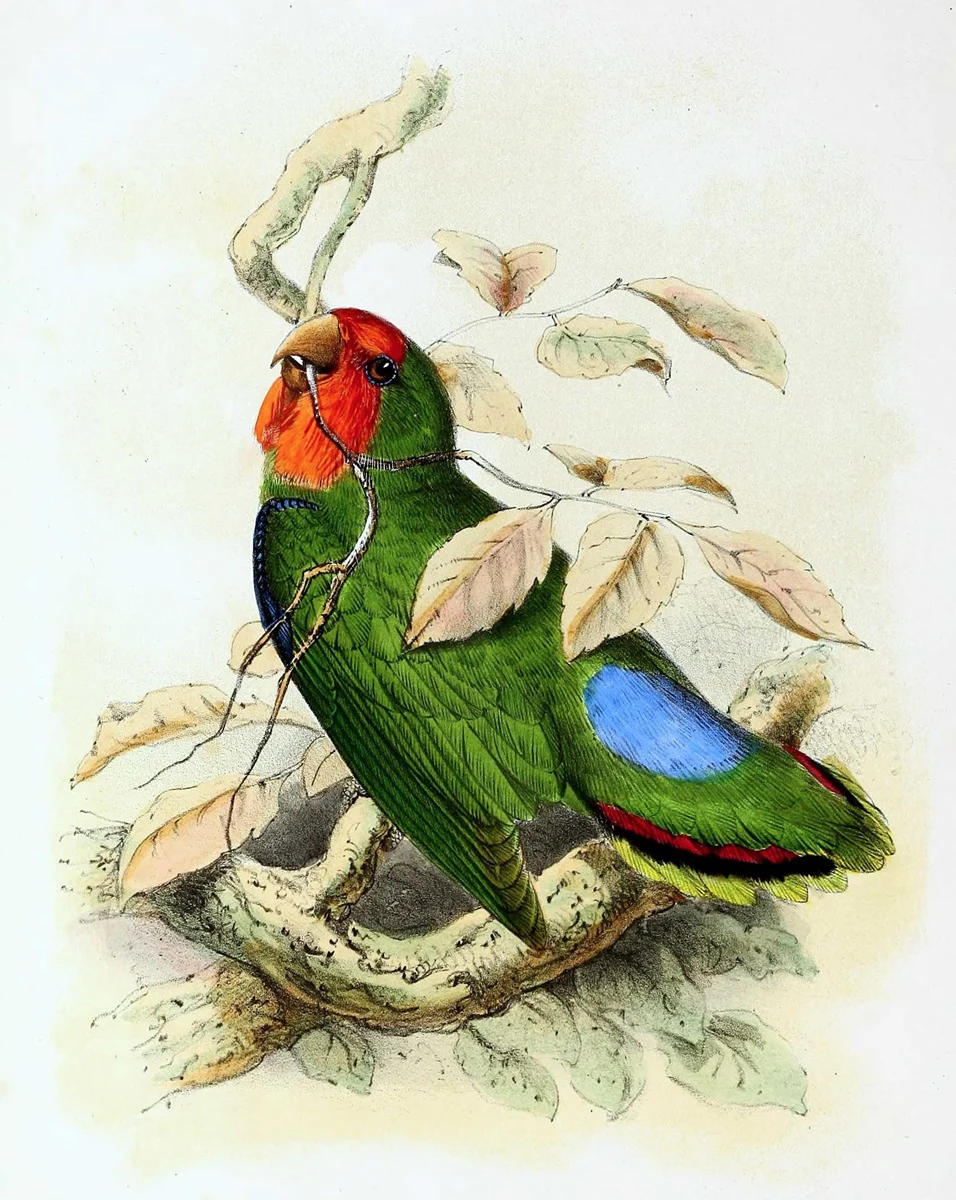
The Red-headed Lovebird, Agapornis pullarius, stands as a captivating yet largely unfamiliar member of the parrot family, often overshadowed by its more commonly encountered relatives in the pet trade. Unlike the widely popular Peach-faced or Fischer’s Lovebirds, this species is a rarity in captivity, primarily due to its inherently stress-prone nature and specific environmental requirements, making it a challenging subject for aviculture. This article delves into the intricate details of Agapornis pullarius, from its natural origins and ecological role to its conservation status and the complexities surrounding its existence both in the wild and in human care.
Natural Habitat and Geographical Distribution
Hailing exclusively from the African continent, the Red-headed Lovebird’s natural range spans a broad, albeit patchy, band across West and Central Africa. Its distribution stretches from the western sub-Saharan regions, encompassing countries such as Guinea, Sierra Leone, Liberia, and Côte d’Ivoire, eastward through Ghana, Togo, Benin, Nigeria, Cameroon, and the Central African Republic, extending as far as Ethiopia in the east. This expansive territory highlights the species’ adaptability to various ecological conditions within its preferred biome, yet it also underscores the fragmented nature of its habitat due to human activities.
The species exhibits a strong preference for tropical lowland savannahs, an environment characterized by grasslands interspersed with scattered trees and shrubs, rather than dense primary forests. These savannahs offer a crucial balance of open foraging areas and vital tree cover for roosting and nesting. While they appreciate the presence of trees, providing shelter and food sources, Agapornis pullarius avoids the deep, dark canopy of untouched rainforests, suggesting a preference for lighter, more open environments. Within its natural range, the Red-headed Lovebird is largely sedentary, meaning it does not undertake extensive seasonal migrations, instead remaining within a defined territory. However, local movements can occur in response to food availability, particularly during periods of drought or abundance. These lovebirds are typically observed in pairs or small family flocks, though larger aggregations of up to a few dozen individuals can form, especially around abundant food sources or communal roosting sites. They inhabit elevations up to 2,000 meters (approximately 6,550 feet), though they are more commonly found at lower altitudes, where their preferred savannah habitats are more prevalent. The specific environmental conditions of these savannahs, including seasonal rainfall patterns and vegetation types, profoundly influence the birds’ breeding cycles and foraging strategies.
Physical Characteristics and Distinctive Features

The Red-headed Lovebird is undeniably a visually striking small parrot, reaching an adult size of up to 15 centimeters (6 inches) in length and weighing around 45 grams. Its plumage is dominated by two vibrant colors: a brilliant emerald green covering the body, providing excellent camouflage amidst the foliage, and a vivid scarlet red adorning its face and beak. This distinctive red mask gives the species its common names: Red-headed and Red-faced Lovebird. Complementing these primary hues, a subtle dash of blue can often be observed on its lower back, adding another layer of visual appeal, along with a small band of red on its tail feathers.
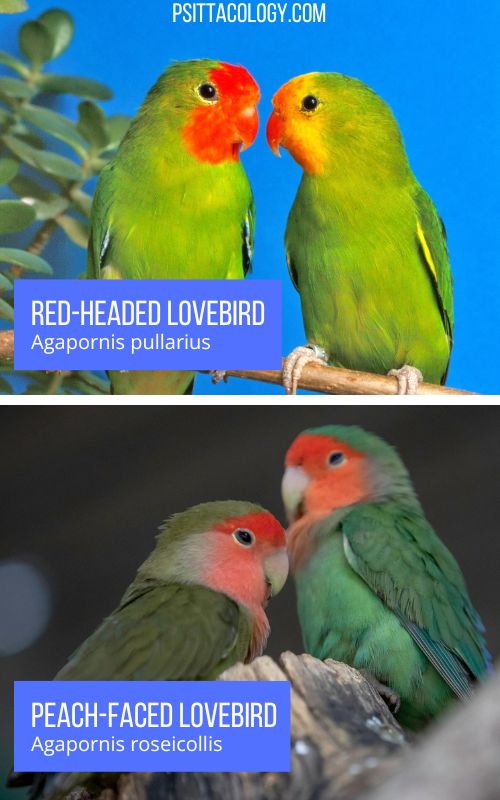
A common point of confusion arises when distinguishing Agapornis pullarius from the Peach-faced Lovebird (Agapornis roseicollis), which shares a somewhat similar facial coloration. However, a crucial differentiating feature lies in the beak color: the Red-headed Lovebird possesses a striking red beak, whereas the Peach-faced Lovebird’s beak is typically a pale, beige hue. This seemingly minor detail is a reliable indicator for identification, particularly for aviculturists and ornithologists.
Sexual dimorphism, though subtle, is present in Agapornis pullarius. The male typically exhibits a more intensely colored, brighter scarlet face and beak, contributing to his striking appearance. In contrast, the female’s facial coloration tends to be less vibrant, often leaning more towards an orange-red than a true scarlet, and her beak color is also a slightly duller shade. This difference, while not always immediately apparent to the untrained eye, allows for visual sexing by experienced observers.
Three subspecies of Agapornis pullarius are generally recognized, each with slight variations in coloration and geographical distribution:
- Agapornis pullarius pullarius (the nominate subspecies): Found across a wide part of the species’ western and central range.
- Agapornis pullarius ugandae: Inhabits the eastern parts of the range, notably Uganda, and exhibits minor differences in plumage intensity.
- Agapornis pullarius tabulae (sometimes referred to as A. p. guineensis by some sources): Found in a more restricted area, particularly around plateaus and mountainous regions, with slightly deeper green body plumage.
These subspecies highlight the species’ adaptive radiation across its varied African habitats.
Diet and Foraging Behavior
Like many parrot species, the Red-headed Lovebird is primarily granivorous, relying heavily on a diet of seeds. Its preference for grass seeds is well-documented, making it a significant consumer of both wild grasses and cultivated crops. This dietary habit has unfortunately positioned Agapornis pullarius as a perceived agricultural pest in parts of its natural range, particularly where millet and other cereal grains are grown by local farmers. Their tendency to feed on these crops can lead to conflict with human populations, sometimes resulting in retaliatory killings.

Beyond grass seeds, these lovebirds supplement their diet with a variety of other plant materials. They are known to forage for wild fruits, such as figs and guava, when available. These fruits provide essential vitamins, minerals, and moisture, particularly crucial during dry seasons when seeds might be scarcer. Their foraging behavior typically involves active searching among grasses and trees, utilizing their strong beaks to crack open seeds and pluck fruits. This varied diet ensures they obtain a broad spectrum of nutrients necessary for their health and reproductive success. The availability of diverse food sources directly impacts their population dynamics and local movements.
Conservation Status and Threats
Despite its widespread distribution, the conservation status of Agapornis pullarius presents a complex picture. The International Union for Conservation of Nature (IUCN) Red List currently classifies the Red-headed Lovebird as a species of "Least Concern." This designation typically implies a relatively stable and numerous population globally, not immediately threatened with extinction. However, this broad classification often masks local realities, and the IUCN itself notes that the species is locally uncommon in many parts of its natural range.
A deeper analysis reveals significant threats that are contributing to a probable decline in its population size. Foremost among these is habitat destruction. Extensive deforestation for agricultural expansion, logging, and infrastructure development across West and Central Africa is eroding the tropical lowland savannahs that Agapornis pullarius calls home. The conversion of natural landscapes into monoculture farms or urban areas directly removes essential foraging, roosting, and nesting sites. This loss of habitat is exacerbated by climate change, which can alter rainfall patterns and vegetation composition, further stressing existing populations.
Another major threat stems from the conflict with farmers. As mentioned, the lovebirds’ preference for grass seeds extends to agricultural crops like millet, leading farmers to view them as pests. This perception often results in the killing of birds to protect harvests, a practice that, while localized, contributes to the overall decline.
Perhaps one of the most significant historical and ongoing pressures on the Red-headed Lovebird population has been the capture for the pet trade. The original article highlights a staggering figure: almost 40,000 Red-headed Lovebirds were exported from their natural range since 1975. This intensive trapping, often conducted without sustainable practices, has undoubtedly depleted wild populations. While Agapornis pullarius is listed under CITES Appendix II, meaning international trade is regulated to prevent overexploitation, illegal trapping and smuggling remain persistent issues. The high mortality rates associated with capture, transport, and acclimatization in captivity further amplify the impact of this trade on wild numbers. A 2018 study, referenced in the source, provided crucial data supporting the scale of this historical trade, underscoring the long-term impact on the species.
Ornithological texts, such as "Parrots: a guide to parrots of the world" by Parr & Juniper (2010), corroborate these concerns, stating: "Abundance also varies owing to nomadic habits, but a genuine overall decline appears to have occurred in many areas this century. Trapped for live bird trade with large numbers in captivity outside range." This quote emphasizes that despite any localized nomadic fluctuations, a clear trend of decline is evident, with the pet trade being a primary driver.
The "Least Concern" status, therefore, should not be interpreted as an absence of threat. Instead, it serves as a critical reminder that even broadly distributed species can face significant localized pressures that, if unchecked, could lead to more severe conservation concerns in the future. Urgent conservation measures, including habitat protection, community engagement to mitigate human-wildlife conflict, and stricter enforcement against illegal wildlife trade, are crucial for the long-term survival of Agapornis pullarius.
The Red-Headed Lovebird in Aviculture: A Challenging Endeavor
In stark contrast to its numerous lovebird cousins, such as the Fischer’s Lovebird (Agapornis fischeri) or the Peach-faced Lovebird, Agapornis pullarius is remarkably uncommon in aviculture. It is not a species typically encountered in pet stores or by casual bird enthusiasts. Instead, its presence in captivity is largely confined to highly dedicated parrot breeders and specialized aviaries, often as an aviary bird rather than a household pet.
The primary reason for

