


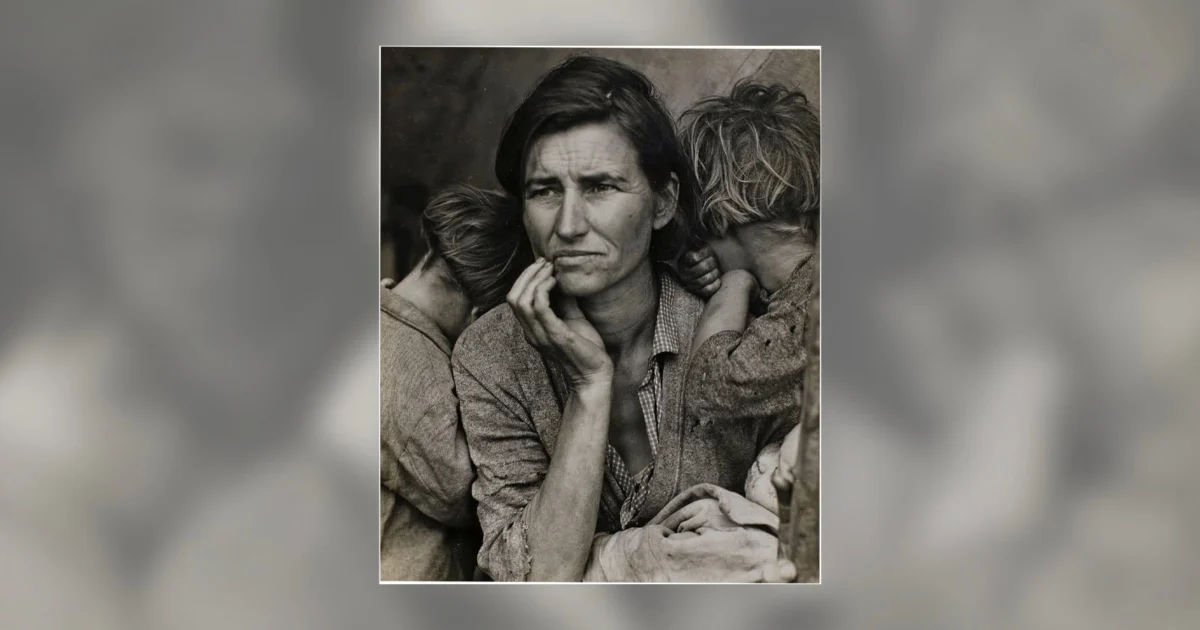
The current Sotheby’s online auction for prints and photographs has drawn significant attention from the global art market, featuring a selection of rare, high-value works. Among the most notable lots is a historically significant, early print of Dorothea Lange’s 1936 masterpiece, Migrant Mother. Valued between $100,000 and $150,000, the piece offers a rare glimpse into the formative history of one of the most recognizable images in American photography. Alongside the Lange print, the auction showcases a monumental work by Hiroshi Sugimoto, Radio City Music Hall, New York City, which carries an estimated value between $200,000 and $300,000.
The Historical Significance of Migrant Mother
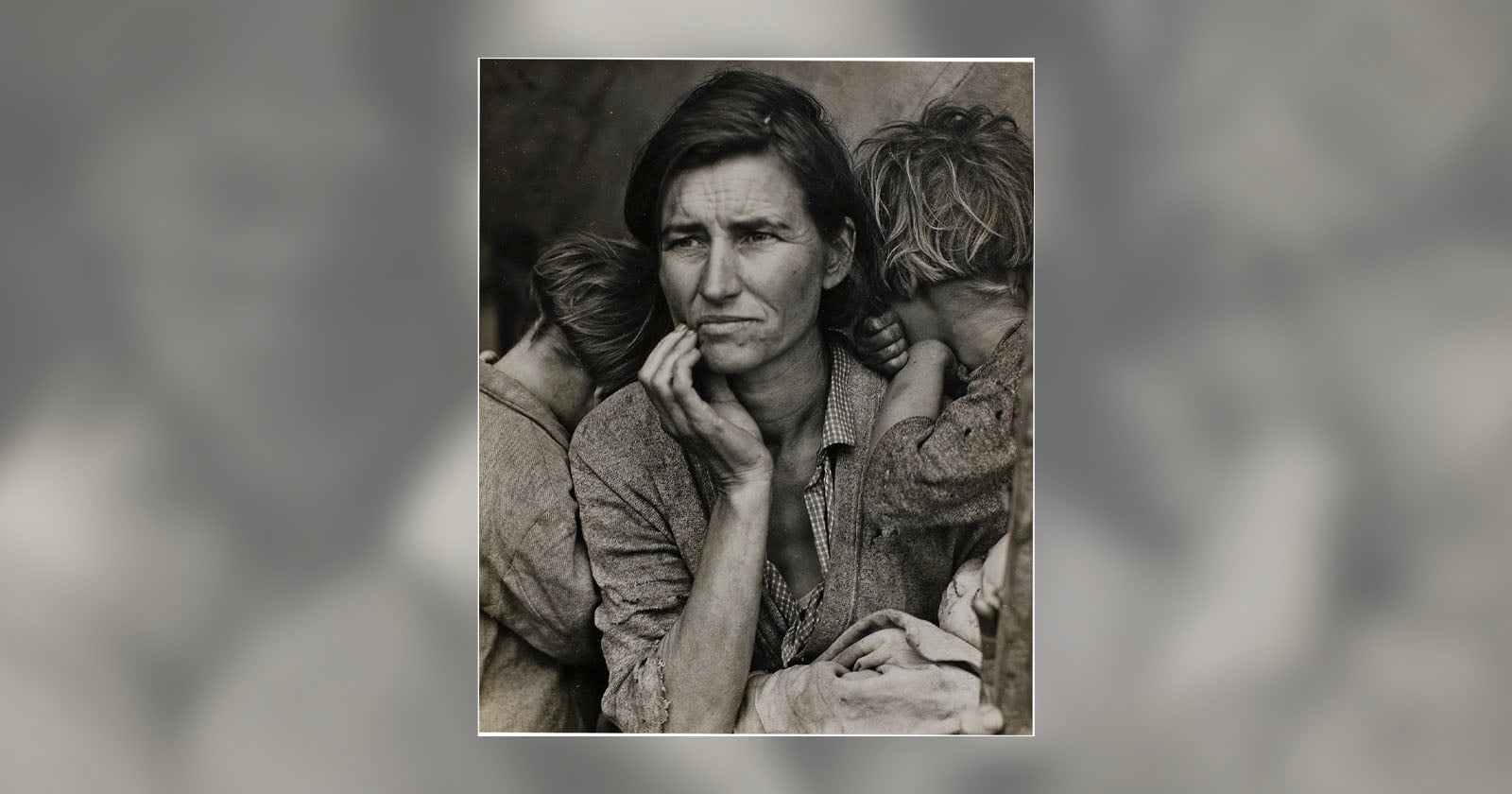
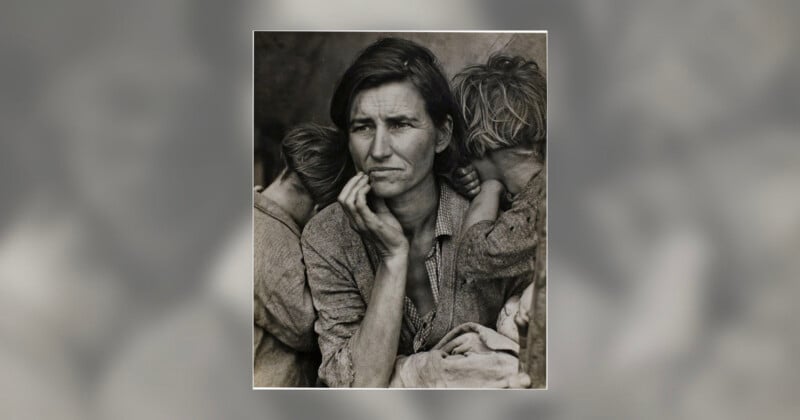
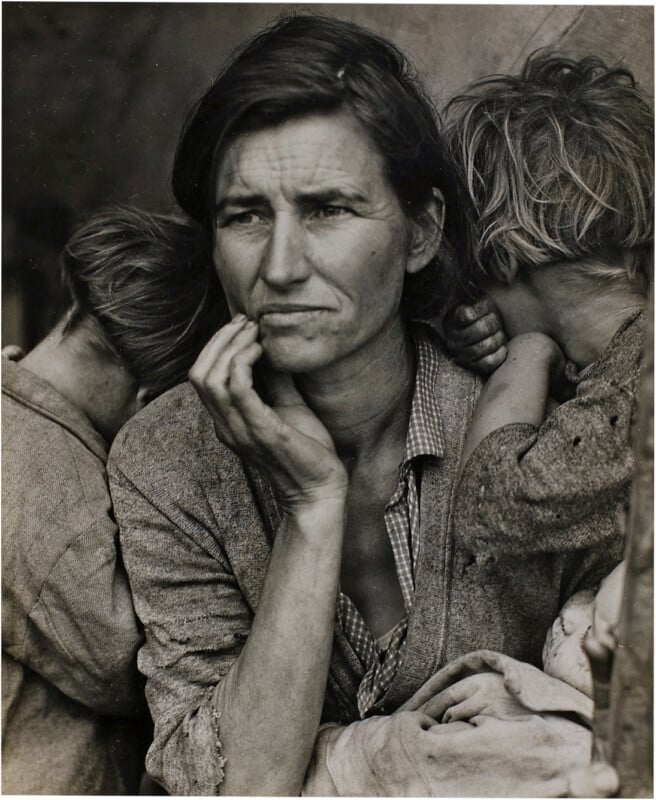
Dorothea Lange’s Migrant Mother is widely regarded as a cornerstone of 20th-century documentary photography. The image depicts Florence Owens Thompson, a destitute pea picker, surrounded by her children in a makeshift camp in Nipomo, California. The photograph has transcended its original purpose as a piece of journalistic evidence to become a universal symbol of the human cost of the Great Depression.
The print currently offered at auction is identified as being produced between 1936 and 1937, shortly after the negative was captured. Its provenance and physical characteristics set it apart from the thousands of later reproductions that have circulated in textbooks, archives, and galleries over the last nine decades. Crucially, this specific print retains the Resettlement Administration’s credit stamp and, notably, the tip of Florence Owens Thompson’s thumb in the lower right corner. This detail was cropped out of the versions most commonly seen in public archives, making this original print a vital artifact for scholars and collectors interested in the evolution of Lange’s editing process.
Chronology of a Masterpiece
The trajectory of this image began in March 1936, a period when the United States was attempting to recover from the economic devastation of the 1930s. Lange, then working for the Resettlement Administration—a federal agency later subsumed into the Farm Security Administration—was documenting the plight of displaced agricultural workers in the American West.
- March 1936: Lange encounters the camp near Nipomo, California, while driving through the state. She initially drives past the site but experiences a sudden professional compulsion to return.
- March 1936: Over the course of a brief session, Lange captures a series of images, starting with wide shots and moving into the intimate, tight compositions that would define her legacy.
- March 10-11, 1936: The San Francisco News publishes a series of articles on the conditions of California migrant workers. Migrant Mother appears on March 11, accompanied by the headline "What Does the ‘New Deal’ Mean to This Mother and Her Child?"
- 1936–1937: The print currently at auction is produced, serving as one of the earliest physical representations of the negative.
- October 2026: The photograph makes its first-ever appearance at a public auction, signaling a rare opportunity for private collectors to acquire a primary-source document of American social history.
Contextualizing the Market Value
The valuation of $100,000 to $150,000 for a single print of Migrant Mother reflects the intersection of historical importance and scarcity. In the art market, "early prints"—those created near the time of the exposure—are prioritized over later reprints, even when the later prints are authorized. These objects carry a material connection to the photographer’s initial vision.
When compared to other iconic images, such as Steve McCurry’s Afghan Girl or various works by Ansel Adams, the market for Lange’s work remains robust. Collectors are increasingly seeking works that capture defining moments of the 20th century, particularly those with a clear, documented provenance. The presence of the Resettlement Administration stamp provides a layer of institutional authentication that significantly bolsters the item’s investment potential.
Hiroshi Sugimoto and the Art of Time
The auction also features a high-profile work by contemporary Japanese photographer Hiroshi Sugimoto. His 1980 work, Radio City Music Hall, New York City, is part of his acclaimed Theaters series. The piece is estimated to fetch between $200,000 and $300,000, reflecting both the artist’s stature and the technical rarity of this specific print.
Sugimoto’s method involves keeping the camera shutter open for the duration of a feature film. The resulting image renders the theater interior in high detail, while the screen—where the film was projected—appears as a blank, glowing white rectangle. This technique effectively compresses the entire narrative duration of a film into a single static frame, turning the architecture of the cinema into the primary subject. The print at auction is number one in a limited series of five and measures a substantial 47 by 58 3/4 inches, further driving its high valuation.
Broader Implications for the Photography Market
The inclusion of such significant works in an online-only auction format underscores a shifting trend in the fine art world. Large auction houses like Sotheby’s have increasingly pivoted to digital platforms to reach a global audience, removing the geographical barriers that previously limited access to high-end photography.
Market analysts observe that photography as an asset class has matured significantly over the last two decades. While paintings and sculptures have historically dominated auction house revenues, the market for "blue-chip" photography has reached a point where individual prints can command prices equivalent to secondary works by major painters. This trend is driven by a growing class of collectors who treat photography not merely as a medium of reproduction, but as a fine art form with finite, collectible physical manifestations.
The sale of the early Migrant Mother print will likely serve as a benchmark for future transactions involving Farm Security Administration archives. As these early prints become increasingly difficult to locate outside of museum collections, their rarity creates a "scarcity premium" that continues to push valuation ceilings higher.
Expert Analysis and Historical Preservation
From a curatorial perspective, the appearance of such an early print raises important questions regarding the preservation of historical visual records. The fact that the print contains elements (such as the thumb in the corner) which were later excised by the artist or her editors provides researchers with a window into the evolution of the work’s "official" narrative.
For the collector, the value lies in the intersection of aesthetics and historical authenticity. The image is no longer just a photograph of a woman in California; it is a document of the Great Depression, a piece of New Deal-era propaganda, and an object that has survived nearly 90 years of history. Whether the final sale price exceeds or falls within the estimated range, the auction represents a significant moment for the photography market, confirming that pieces of visual history remain among the most sought-after assets in the contemporary art world.
Sotheby’s has confirmed that this auction will remain open for bidding through the month of October, with all prospective buyers vetted to ensure the integrity of the process. As the market for 20th-century photography continues to evolve, the demand for these "exceptionally early" works is expected to remain high, fueled by both institutional interest and the enduring power of the images themselves.

