


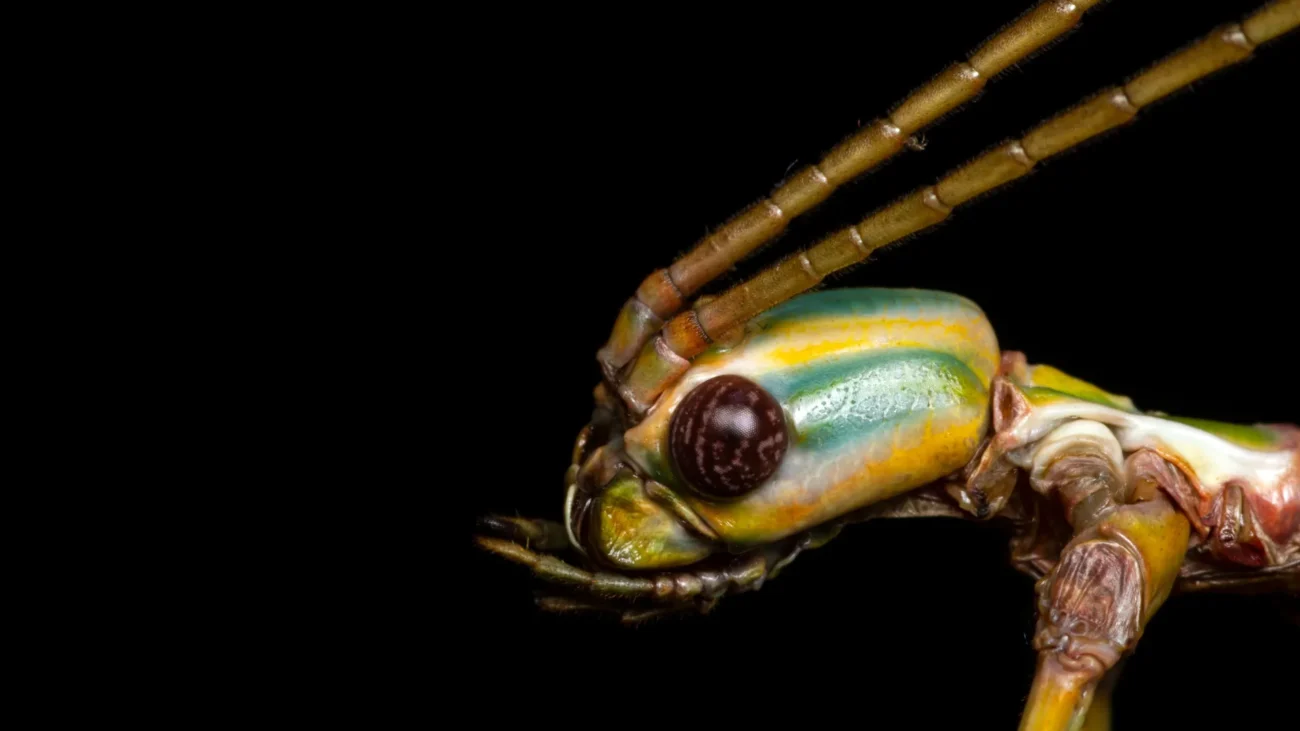
Deep within the sun-dappled rainforests and coastal woodlands of eastern Australia, a profound biological revision has quietly taken place. Scientists at the University of Sydney have officially identified two previously unrecognized species of large stick insects, fundamentally altering our understanding of a genus that has been studied, photographed, and collected by naturalists for generations. This significant taxonomic breakthrough demonstrates that even within some of the country’s most heavily observed and thoroughly documented natural environments, remarkable biodiversity remains hidden in plain sight.
The findings, which were recently published in the peer-reviewed scientific journal Austral Entomology, center on a comprehensive reexamination of Australian stick insects belonging to the genus Anchiale. By deploying an integrative research methodology that combined modern genomic sequencing, historical museum specimen analysis, targeted field surveys, captive-breeding observations, and crowdsourced citizen science data, the research team successfully untangled a complex web of misidentifications.
When the dust settled on the genomic and morphological data, the researchers concluded that insects previously lumped together under just two broadly defined species actually represent five distinct, separate species. These remarkable phasmids range geographically from northern New South Wales, sweep upward along the verdant expanse of coastal Queensland, and stretch into the tropical top end of northern Australia.
A Detective Story in Taxonomy: The Main Facts of the Discovery
At the heart of this taxonomic reshuffling is a combination of cutting-edge molecular tools and classical museum-based detective work. Led by Dr. Braxton Jones, a Postdoctoral Research Associate in the Molecular Ecology, Evolution and Phylogenomics Laboratory at the University of Sydney’s Aola Richards Sydney Insect Hub, the research team set out to resolve long-standing confusions regarding the geographic distribution and physical traits of the Anchiale genus.
Dr. Jones likened the arduous process of modern taxonomy to criminal investigation. Even among some of Australia’s most frequently photographed, widely observed, and heavily collected insects, scientists are still finding biological entities that have successfully evaded formal scientific recognition for decades.
Among the primary findings of the study was the formal description of Anchiale mabiensis, a brand-new species discovered within the critically endangered Mabi rainforest ecosystem located on the Atherton Tablelands in tropical Queensland. What makes Anchiale mabiensis particularly fascinating to entomologists is its reproductive biology; the species produces remarkably unusual eggs featuring a distinctive, specialized lidlike structure. According to the research team, this specialized structural lid has never before been documented in any other known stick insect species or among its closest evolutionary relatives, pointing toward unique evolutionary pressures or environmental adaptations within the Mabi forest canopy.
In addition to describing this new forest dweller, the researchers also solved a long-standing identity crisis involving a large stick insect that had been familiar to entomologists, backyard gardeners, and insect enthusiasts for generations. Through rigorous DNA analysis matched against historical museum collections and live specimens raised in captivity, the team proved that this familiar insect had been misidentified for decades. It has now been officially reclassified and recognized as a distinct, separate species designated as Anchiale robusta.
Furthermore, the team successfully resurrected a third species that had fallen into taxonomic obscurity, going unrecognized by the scientific community for decades after its initial collection and misclassification.
The Chronology of Modern Taxonomic Research
To understand how such large, conspicuous insects could hide in plain sight for so long, one must examine the timeline of how modern biological research is conducted. For well over a century, the taxonomy of Australian phasmids relied almost exclusively on external morphological characteristics—observing the shape of an insect’s antennae, the length of its limbs, and the coloration of its exoskeleton. Often, specimens collected by early naturalists degraded over time in museum drawers, losing their vibrant colors and subtle physical markers.
In recent years, however, the field of entomology has experienced a renaissance driven by molecular phylogenetics and the democratization of data through digital platforms. The timeline of this specific discovery spanned several years of meticulous investigation:
- Phase One: Data Aggregation and Citizen Science Integration. Before stepping foot in the field, the University of Sydney research team cast a wide net across digital ecological databases. More than 1,000 citizen science observations submitted by amateur naturalists, photographers, and bushwalkers through platforms such as iNaturalist and the Atlas of Living Australia were compiled, mapped, and analyzed. These crowdsourced records provided crucial geographic coordinates and high-resolution photographic evidence of living populations across regions that are difficult for academic researchers to monitor continuously.
- Phase Two: Field Surveys and Captive Observation. Armed with precise geographic data from citizen scientists, researchers launched targeted field expeditions into coastal Queensland, northern New South Wales, and the Atherton Tablelands. Simultaneously, select specimens were successfully maintained and bred in captivity, allowing scientists to document life-cycle traits, behavioral nuances, and—crucially—the morphology of freshly laid eggs, which often hold the key to distinguishing closely related invertebrate species.
- Phase Three: Genomic Sequencing and Museum Audits. Tissue samples harvested from field collections and historical museum specimens were subjected to DNA barcoding and genomic sequencing in the laboratory. By comparing the genetic makeup of populations across different latitudes, the team detected deep genetic splits that did not align with traditional taxonomic boundaries.
- Phase Four: Formal Publication and Review. Following peer review, the formal descriptions of Anchiale mabiensis, the validation of Anchiale robusta, and the resurrection of the forgotten third species were published in Austral Entomology, officially updating the scientific literature.
Supporting Data and the Power of Citizen Science
The scale of data supporting this revision highlights the indispensable role that public participation now plays in professional scientific research. While laboratory-bound genetic sequencing provides the definitive proof required for modern taxonomy, the initial breadcrumbs are frequently laid down by everyday observers.
Australia boasts an exceptionally rich and dedicated community of nature enthusiasts. The integration of over 1,000 distinct observation records from the Atlas of Living Australia and iNaturalist allowed researchers to map the ecological breadth of the Anchiale genus with unprecedented accuracy. Without these crowd-sourced photographs and location tags, the subtle variations between regional populations might have remained unnoticed for many more years.
Despite this wealth of observational data, the research underscores a sobering reality: a vast proportion of Australia’s native insect biodiversity remains entirely undocumented, uncatalogued, and scientifically unknown. Insects constitute the vast majority of terrestrial animal biomass and play irreplaceable roles in nutrient cycling, pollination, and trophic webs. Yet, budget constraints, the sheer scale of the Australian continent, and a global shortage of trained taxonomists—often referred to in scientific circles as the "taxonomic impediment"—mean that many species face the threat of extinction before humanity even knows they exist.
Official Responses and Institutional Support
The successful completion of this complex study was made possible through targeted financial backing from national institutions dedicated to preserving and understanding Australia’s natural heritage. Funding for the research was principally provided by the Australian Biological Resources Study (ABRS), operating through the National Taxonomy Research Grant of the Commonwealth Department of Climate Change, Energy, the Environment and Water. Additional support was furnished through a CSIRO postgraduate scholarship, underscoring the collaborative institutional framework necessary to tackle large-scale biological revisions.
Reflecting on the broader implications of the work, Dr. Jones emphasized that taxonomy is not merely an academic exercise in cataloging curiosities; it is a foundational pillar of modern conservation biology.
"These findings demonstrate the critical importance of protecting threatened ecosystems and documenting Australia’s extraordinary biodiversity before we lose species without us even having even discovered them," Dr. Jones stated. When ecosystems are fragmented or destroyed by land clearing, climate change, and invasive species, entire complexes of co-evolved invertebrates vanish silently, taking with them ecological secrets that scientists have not yet had the opportunity to decode.
Broader Impact and Implications for Forestry and Agriculture
While the discovery of new and revived species is a major win for theoretical biology, the revised classification of the Anchiale genus carries immediate, practical implications for forestry management, agricultural oversight, and biosecurity.
Among the stick insects previously lumped into broad historical classifications was a species notorious for occasionally surging to plague-like population levels. During these population spikes, these large herbivores can cause severe defoliation, stripping entire stands of trees of their leaves and inflicting measurable economic damage on commercial forestry operations and natural woodlands alike.
By utilizing genomic data to split what was once thought to be a single, widespread pest species into multiple distinct species, land managers and agricultural researchers can now pin down the exact ecological behaviors, life cycles, and natural predators of each specific insect. Not all stick insects within the genus share the exact same host-plant preferences, reproductive rates, or geographical vulnerabilities.
Understanding which specific species is responsible for localized population outbreaks allows forestry officials to deploy targeted, sustainable management strategies rather than relying on broad-spectrum interventions that could inadvertently harm beneficial or endangered native insects.
Furthermore, the study’s authors have noted that their work is far from complete. During the course of their investigations, the research team identified signs of yet another potential new, undescribed stick insect species lurking in the remote wilderness of Cape York Peninsula. However, adhering to rigorous scientific standards, the researchers have declined to formally name or describe this entity until additional field specimens and supplementary genetic data can be secured to confirm its distinct status.
As research continues across Australia’s diverse biomes, the rediscovery of the Anchiale stick insects serves as a powerful reminder of the hidden complexities of the natural world. It illustrates that nature still holds profound mysteries, and that investing in foundational taxonomy and grassroots scientific engagement is essential if we are to safeguard the intricate web of life before it slips away into extinction.

