


On September 30, 2026, the United Nations Environment Programme (UNEP) unveiled a landmark publication titled the Limiting Overshoot report. This comprehensive document serves as a sobering assessment of the global community’s failure to adhere to the 1.5°C climate pathway established under the Paris Agreement. According to the report’s projections, current national policies and climate targets are set to result in 2030 emissions levels that significantly exceed the thresholds required to prevent dangerous planetary warming.
The report introduces a critical framework for survival: the "overshoot, peak, and decline" pathway. It posits that while a temporary breach of the 1.5°C threshold may now be unavoidable, the duration of this overshoot is the defining variable for planetary health. The longer the global climate remains in this state of overshoot, the higher the probability of triggering irreversible tipping points in both human and ecological systems.
Chronology of the Crisis and the Nairobi Flyways Summit
The release of the UNEP report coincided with a pivotal moment in global environmental diplomacy: the BirdLife International Partnership Meeting and the second Global Flyways Summit held in Nairobi, Kenya, in late September 2026. This gathering of NGOs from over 120 countries served as a stark, on-the-ground reality check for the abstract warnings contained in the UNEP report.
The chronology of this environmental decline is well-documented. Between 2016 and 2019, Australia experienced a surge in climate-related mortality, with heatwaves contributing to over 1,000 human deaths. The crisis intensified in 2023 and 2024, when a single, catastrophic marine heatwave resulted in the deaths of more than 600,000 seabirds. These incidents are not isolated anomalies; they represent a systemic failure of global ecosystems to buffer against the escalating impacts of anthropogenic climate change.
During the Nairobi Summit, delegates emphasized that the climate and nature crises are inextricably linked. While international treaties—such as the Kunming-Montreal Global Biodiversity Framework—have set ambitious goals to halt nature loss by 2030, the current reality remains dire. Recent data indicates that one in every nine migratory bird species is currently threatened with extinction. The summit culminated in the signing of the Nairobi Flyways Declaration, a document that demands the urgent translation of international rhetoric into concrete national policy and, crucially, the mobilization of financial resources to protect the transboundary migratory routes essential for avian survival.
The Science of Cascading Ecological Collapse
The UNEP report highlights that climate change acts as a threat multiplier, causing range shifts, local extirpations, and critical phenological mismatches—where the timing of a bird’s breeding cycle no longer aligns with the peak availability of food.

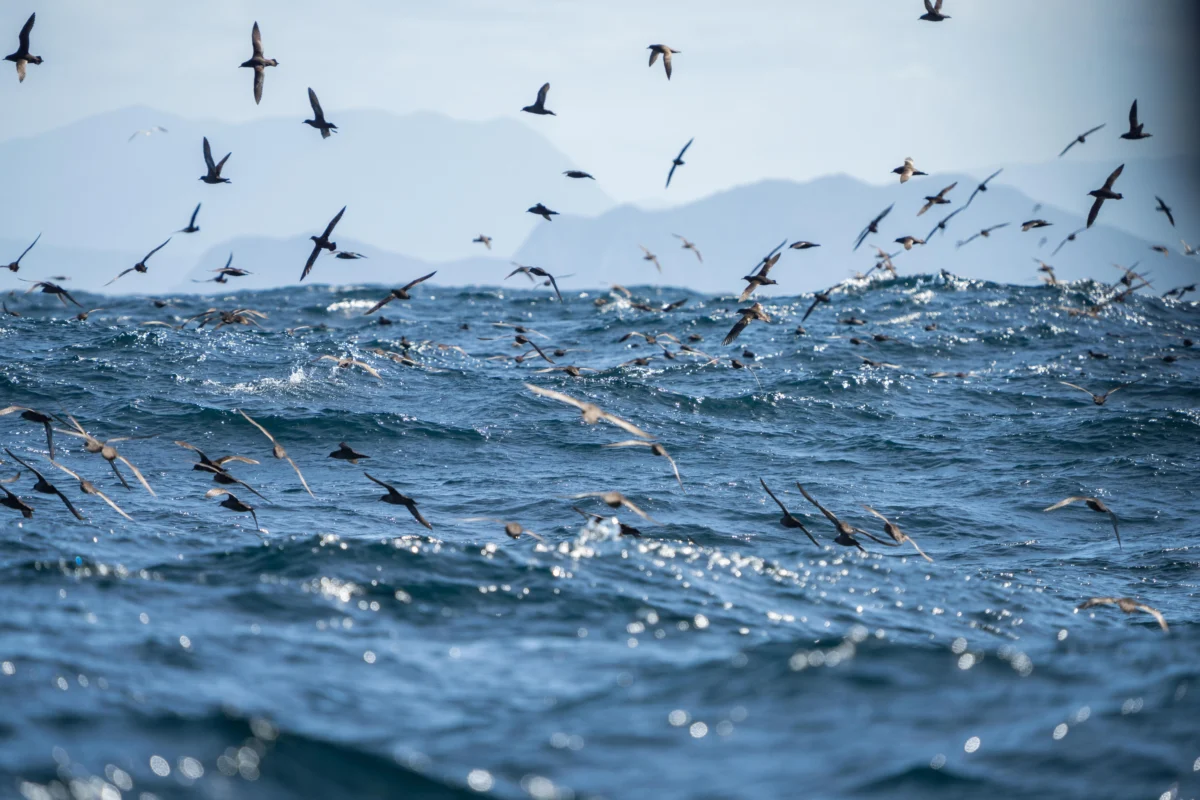
Marine heatwaves represent one of the most immediate threats to global biodiversity. As ocean temperatures rise, the resulting impact on food webs is cascading from the lowest levels of the trophic pyramid all the way up to apex predators and migratory species, including seabirds and gray whales. These marine heatwaves, exacerbated by the recurring cycles of El Niño, are transforming once-productive habitats into barren zones, leaving migratory species with no viable places to land or feed.
The State of the World’s Birds report, launched at the Nairobi Summit, provides further empirical evidence for this decline. It illustrates that migratory birds are effectively "running out of places to land." With 45% of migratory bird species currently in decline, the loss of these species serves as a biological indicator of the collapse of broader ecological health.
Official Responses and the Role of International Cooperation
The urgency of the situation was underscored by HIH Princess Takamado, Honorary President of BirdLife International, who stated: "Climate change is our common foe, and it is a challenge that no country can solve alone. International cooperation is of paramount importance because the challenges we face are shared, and protecting biodiversity requires people and institutions to work together rather than separately."
This sentiment is echoed by institutional leaders preparing for the upcoming "triple-COP" cycle—the Conferences of the Parties for the three Rio Conventions: climate, biodiversity, and desertification. H.E. Murat Kurum, COP31 President-Designate, emphasized that strengthening cooperation across these conventions is the only practical pathway to ensure policy coherence. "A stronger Rio Synergies approach can help advance progress across all three global environmental conventions while supporting sustainable development," Kurum remarked.
Strategic Implications: Finance and Spatial Planning
A core component of the Limiting Overshoot report’s recommendations is the necessity of "smart spatial planning." As nations race to transition toward renewable energy, the siting of solar and wind infrastructure has become a point of contention. If improperly managed, this infrastructure can inadvertently destroy critical habitats.
To mitigate this, BirdLife International is deploying a specialized spatial planning tool known as AVISTEP (Avian Sensitivity Tool for Energy Planning). This tool allows governments and financial institutions to integrate biodiversity data into the early stages of energy development, ensuring that the transition to clean energy does not come at the expense of the very nature it aims to protect.
Furthermore, international financial institutions are beginning to recognize the necessity of large-scale investment. Partnerships have been established between BirdLife, the World Bank, the Asian Development Bank, the Development Bank of Latin America and the Caribbean (CAF), and the National Audubon Society. These collaborations aim to mobilize billions of dollars to support the conservation of critical ecosystems and to facilitate a "nature-positive" transition to renewable energy.

Case Studies in Resilience
Regional initiatives offer a blueprint for how to bridge the gap between global policy and local action. In the Pacific, the KIWA INSPIRE project is utilizing invasive species management to bolster the climate resilience of coastal Key Biodiversity Areas. By removing invasive predators, these projects protect natural carbon sinks, such as mangroves and coastal forests, which are vital for mitigating the impacts of climate change.
Similarly, nations such as Fiji and Palau are leading the way by incorporating these ecological considerations directly into their national biodiversity strategies and action plans. By formalizing these strategies, these nations are moving beyond symbolic gestures toward implementing measurable, science-based adaptation measures.
Looking Ahead: The Triple-COP Imperative
As the international community looks toward the upcoming biodiversity COP17 and climate COP31, the focus is squarely on the "Belém Adaptation Indicators." These indicators, which assess the threat status of species and ecosystems based on the Red List Index, will provide a standardized metric for success.
The message from the scientific community is unequivocal: the window to avoid the most catastrophic outcomes of the overshoot is closing rapidly. Success will not be determined by the number of pledges made at international summits, but by the ability of nations to align their national development plans with the preservation of natural systems.
The path forward requires a shift from reactive policy-making to proactive, integrated management. By linking local leadership with international financing and robust spatial planning, there remains a narrow path to mitigate the risks of overshoot. However, as the Limiting Overshoot report warns, the cost of inaction is not merely a financial or political one—it is the permanent loss of species and the irrevocable degradation of the ecosystems upon which all life, including human society, depends. The coming months will be a definitive test of the global community’s ability to turn ambition into survival.

