


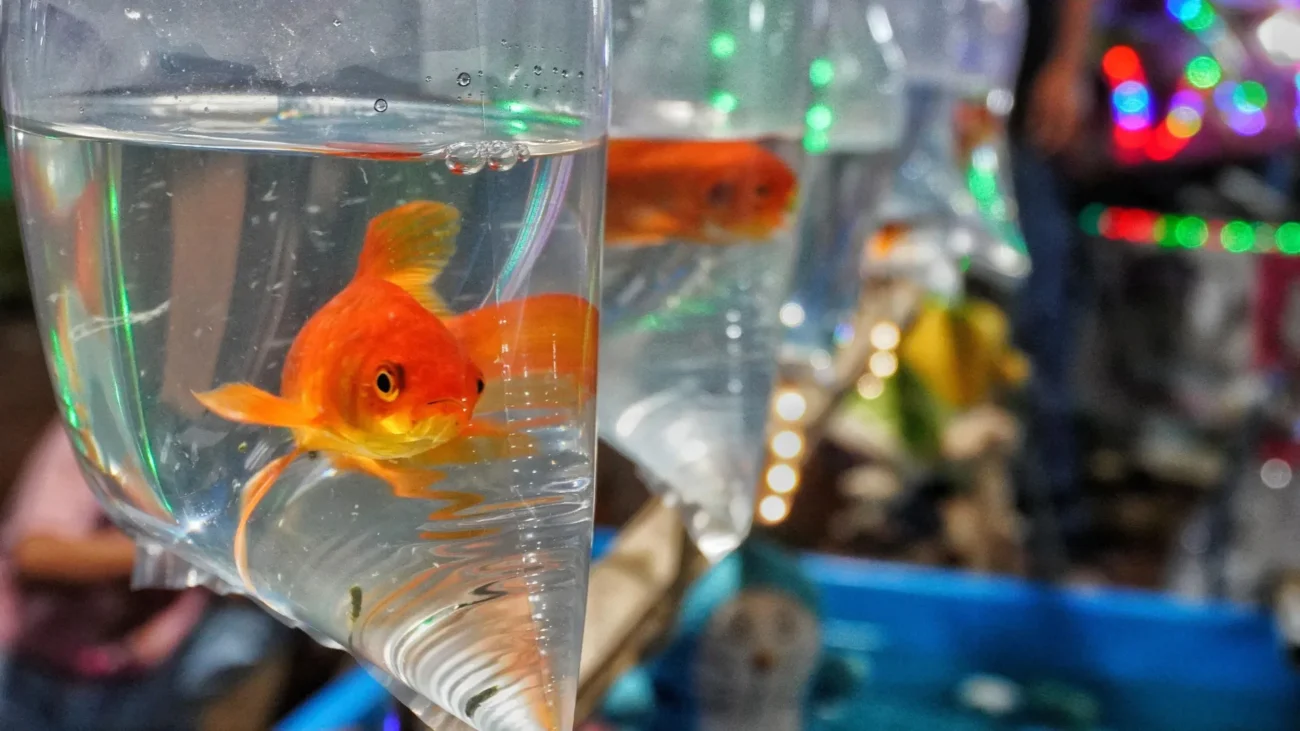
What often begins as a well-intentioned act of compassion or a simple desire to empty an unwanted aquarium can unleash a cascading ecological disaster within local waterways. According to a comprehensive peer-reviewed study recently published in the Journal of Animal Ecology, domestic goldfish (Carassius auratus) are far from the harmless, diminutive swimmers commonly perceived by the public. When released or escaping into the wild, these resilient fish have the capacity to fundamentally transform freshwater habitats, triggering severe environmental degradation across diverse aquatic ecosystems.
Spearheaded by an interdisciplinary team of researchers from The University of Toledo (UToledo) and the University of Missouri (Mizzou), the research provides some of the most rigorous and definitive experimental evidence to date regarding the ecological perils of discarded pets. The findings serve as a stark, urgent warning to pet owners, natural resource managers, conservationists, and policymakers alike. While the global pet trade continues to distribute millions of ornamental fish across continents with little friction, the local consequences of these transactions are proving to be profound, expensive, and, in some cases, nearly irreversible.
The Scale of the Threat: Understanding the Research Methodology
To arrive at these definitive conclusions, the research team—led by Dr. William Hintz, an associate professor in UToledo’s Department of Environmental Sciences and Lake Erie Center, alongside co-authors Hannah Barrett and Dr. Rick Relyea of the University of Missouri—needed to move beyond observational field studies. Field observations can often be confounded by countless variables in natural lakes, making it difficult to isolate the specific impacts of a single species.
To overcome this hurdle, the investigators utilized large outdoor freshwater mesocosms. These specialized experimental enclosures were meticulously engineered to mimic the complex, dynamic conditions of real-world lakes on a controllable scale. By housing these mesocosms outdoors, the researchers exposed the aquatic environments to natural weather patterns, sunlight cycles, and biological colonization, creating an exceptionally realistic testing ground.
The experiment was strategically designed to evaluate how goldfish affect different types of freshwater lakes over extended periods. Specifically, the team examined two contrasting freshwater conditions: oligotrophic waters, which are nutrient-poor and typically clear with low biological productivity, and eutrophic waters, which are nutrient-rich and prone to dense algal blooms.
Furthermore, the researchers employed both additive and substitutive experimental designs. This methodological rigor allowed them to isolate the specific ecological footprint of goldfish from the broader biological effects associated with simply having a higher overall abundance of fish in a given system. Their sophisticated analysis revealed that while certain shifts in aquatic vegetation could be correlated to total fish density, the most severe, destructive ecological damage was directly attributable to the presence of goldfish.
Anatomy of a Catastrophe: How Goldfish Alter Lakes
The ecological disruption caused by Carassius auratus is multifaceted and deeply rooted in the species’ biological behaviors. When introduced to open water, a goldfish’s life trajectory changes dramatically. Far from remaining the tiny two-inch fish bought at a local pet store, survivors in the wild can grow into massive specimens, sometimes reaching several pounds and spanning more than a foot in length.
As these populations grow and mature, they begin to exert immense pressure on their new environments. One of the primary mechanisms of destruction is benthic foraging. Goldfish are bottom-feeders that root through lake and pond sediments in search of food. This constant churning action stirs up settled nutrients and sediment, drastically reducing water clarity. Turbid water prevents sunlight from penetrating to lower depths, which in turn chokes out native aquatic plants that form the structural foundation of a healthy freshwater ecosystem.
Compounding this physical disruption is the biological toll. Goldfish are voracious omnivores with a high tolerance for poor water quality, low oxygen levels, and extreme temperature fluctuations. They consume vast quantities of zooplankton, macroinvertebrates, and plant matter, directly competing with native fish species for essential resources. In nutrient-poor (oligotrophic) systems, this added predation can destabilize fragile food webs. In nutrient-rich (eutrophic) systems, the nutrient stirring and excretion caused by large goldfish can exacerbate toxic algal blooms, plunging the water body into a state of ecological distress.
The Study Chronology and Context
The publication of this study in the Journal of Animal Ecology represents the culmination of years of meticulous experimental design, data collection, and multi-institutional collaboration. While anecdotal accounts of "giant goldfish" invading municipal ponds and stormwater management basins have circulated in mainstream media for over a decade—often accompanied by viral photographs from cities in North America, Europe, and Australia—resource managers previously lacked the rigorous, controlled data necessary to mandate policy changes or secure funding for targeted eradication programs.
Historically, management agencies treated goldfish as a low-priority nuisance rather than a high-impact invasive species. Traditional conservation priorities often focused heavily on high-profile aquatic invaders such as zebra mussels, Asian carp, and sea lampreys. However, as urban sprawl encroaches further into natural watersheds, and the release of unwanted pets continues unabated via stormwater drains and backyard ponds overflowing during heavy precipitation events, the cumulative footprint of ornamental species has become impossible to ignore.
This new study shifts the paradigm, providing the empirical backbone required to reclassify goldfish as a serious environmental threat. By demonstrating that goldfish can trigger what scientists term a "regime shift"—a sudden, abrupt transition where an ecosystem crosses a tipping point and reorganizes into a degraded, persistent alternative state—the researchers have raised the stakes for environmental policy. Once a lake undergoes a regime shift into a turbid, plant-free, algae-dominated state, restoring it to a clear-water ecosystem requires immense financial investment, intensive bio-manipulation, and years of active management.
Expert Perspectives and Official Responses
The implications of the UToledo and University of Missouri findings have reverberated through the scientific community, eliciting strong statements from conservation leaders and academic researchers who stress the urgency of public education and preventative policy.
"It is critically important to inform the public that their pets can become pests that will harm freshwater ecosystems," stated Dr. William Hintz, the study’s lead investigator. "The evidence is now clear—releasing a goldfish into the wild might be seen as an act of kindness, but it can turn into a major ecological threat."
Echoing these concerns, Dr. Rick Relyea—co-author of the study, professor in the Mizzou College of Agriculture, Food and Natural Resources, and director of the Johnny Morris Institute of Fisheries, Wetlands and Aquatic Systems—highlighted the rapid physical transformation these animals undergo.
"If goldfish are released into the wild, they rapidly grow into very large fish that stir up lake sediments, consume large numbers of prey and compete with native fish," Relyea explained. His remarks underscore a profound disconnect in public perception: while the goldfish is culturally coded as a fragile, short-lived novelty, its biological heritage as a member of the carp family equips it with the hardiness and physiological tools of a successful, highly adaptable invader.
Broader Implications for the Global Pet Trade and Policy
The findings arrive at a critical juncture for global biodiversity conservation. The international trade in ornamental aquatic species moves billions of animals across international borders annually. While biosecurity protocols at major ports of entry typically focus on commercial aquaculture and high-risk vectors, the hobbyist sector remains largely decentralized, relying heavily on individual consumer ethics and voluntary compliance.
When pet owners tire of maintaining aquariums, or when outdoor decorative ponds breach their containment barriers during seasonal flooding, the barrier between captive maintenance and wild introduction is easily breached. Because goldfish possess high reproductive potential and exceptional environmental resilience, even a small number of released individuals can quickly establish self-sustaining populations in temperate freshwater habitats worldwide.
In light of these insights, the research team and allied environmental groups are calling for a multi-tiered response framework centered on prevention, early detection, and public outreach. Rather than relying solely on expensive, post-invasion remediation efforts—such as chemical treatments, physical netting, or complete lake drainages—agencies are urged to cut off the problem at its source.
Actionable Alternatives for Pet Owners
To combat the steady trickle of invasive introductions, natural resource agencies and conservation organizations are ramping up educational campaigns aimed at shifting consumer behavior. Policymakers are also weighing whether to mandate educational materials at the point of sale in pet retail stores, ensuring that every buyer is fully cognizant of the long-term commitment and ecological risks associated with ornamental fish.
For aquarium hobbyists and pond owners who find themselves unable or unwilling to care for their goldfish, researchers emphasize that releasing them into local waterways is never an acceptable option. Instead, practical, environmentally safe alternatives include:
- Returning the healthy fish to a local pet store or specialized aquarium shop for resale, adoption, or surrender.
- Reaching out to local hobbyist clubs, aquarium societies, or educational institutions that may be willing to adopt the fish.
- Contacting state wildlife departments or local environmental authorities for guidance on approved disposal or surrender programs.
- As a final, humane alternative when animals are suffering or diseased, consulting with veterinary professionals regarding euthanasia protocols rather than dumping them into natural ecosystems.
Looking Forward
As environmental pressures mount on freshwater resources globally—driven by climate change, habitat fragmentation, and chemical pollution—the introduction of biological stressors like invasive goldfish represents an entirely preventable compounding crisis. The empirical work conducted by researchers at The University of Toledo and the University of Missouri strips away the illusion of harmlessness that has protected the goldfish’s reputation for centuries.
By framing the issue through the lens of ecological regime shifts and controlled experimental validation, the scientific community has provided the definitive proof needed to drive policy changes, alter consumer habits, and elevate the management of ornamental invaders. Protecting local waterways from the unintended consequences of the pet trade will require a concerted effort from legislators, industry stakeholders, and everyday citizens alike, ensuring that acts of compassion do not inadvertently dismantle the natural balance of our most vital freshwater ecosystems.

