


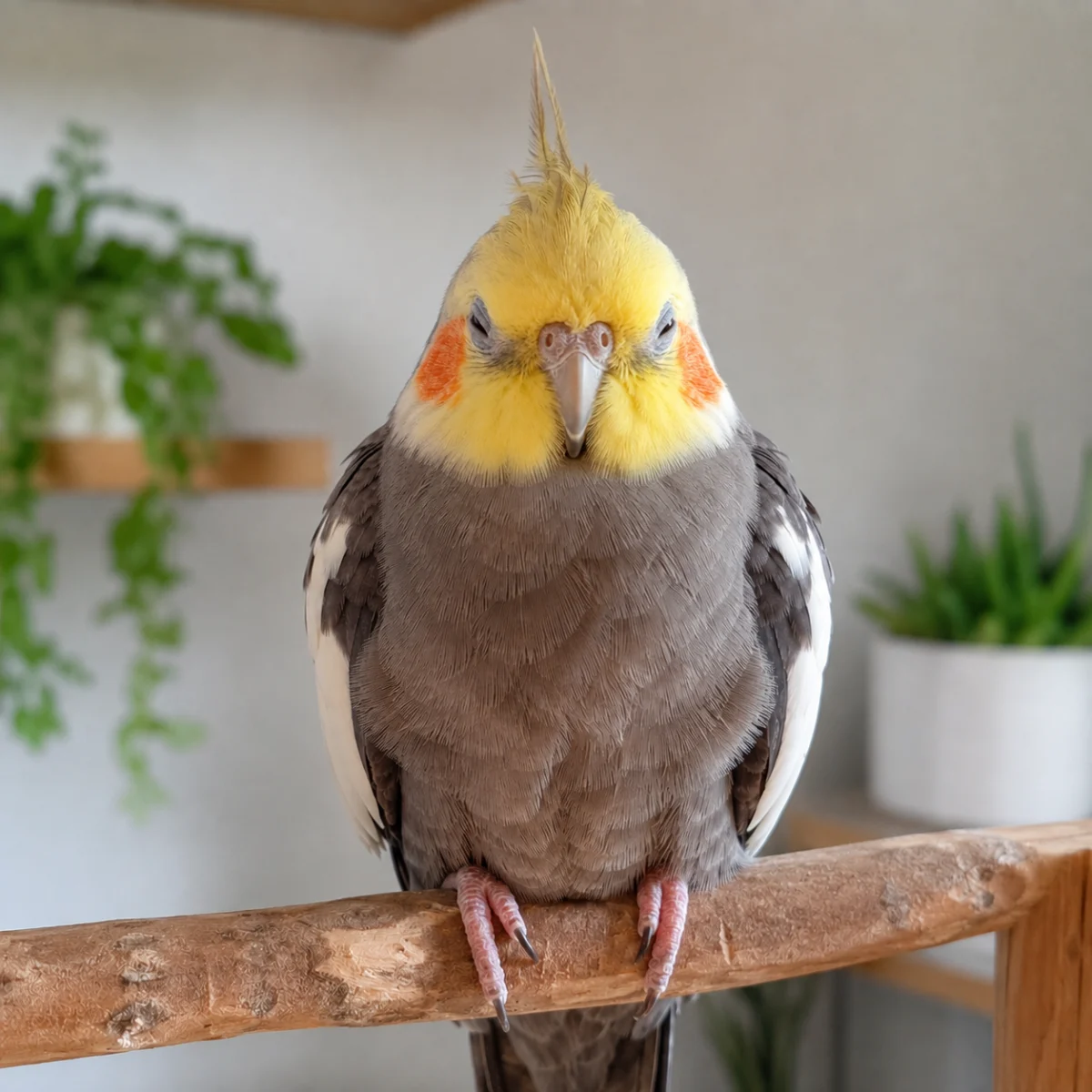
The subtle art of interpreting avian behavior is a critical skill for any bird owner, as these animals have evolved over millennia to master the act of concealment. In the wild, appearing weak is a death sentence, as predators prioritize individuals showing signs of illness or injury. Consequently, domestic birds often hide their ailments until they are no longer physically capable of masking them. Among the most common—and frequently misinterpreted—signs of potential health distress is the tendency to sit with eyes half-closed during periods of the day that are typically designated for activity and social engagement.
Understanding the distinction between a healthy, resting bird and one experiencing a physiological crisis is not merely a matter of observation; it is a vital component of preventative veterinary care. While a brief, relaxed nap is a hallmark of a contented bird, persistent lethargy, especially when accompanied by behavioral shifts, demands immediate professional scrutiny.
The Behavioral Baseline: Distinguishing Rest from Illness
To effectively monitor a bird’s health, owners must first establish a baseline of "normal." Healthy parrots and songbirds are naturally diurnal, meaning they are active during the day. A healthy bird will typically engage in preening, vocalizing, foraging, and social interaction. Napping is a normal physiological requirement, particularly after high-energy activities like bathing or rigorous play, or during the mid-afternoon heat.
However, there is a distinct difference between a "napping" bird and a "sick" bird. A resting bird, when disturbed by a sound or a change in its environment, will rapidly become alert, its eyes snapping open to assess the situation. Its posture remains upright and balanced. Conversely, a bird suffering from underlying pathology may exhibit a "sleepy" appearance that is unresponsive to external stimuli. This state is frequently accompanied by "fluffing," where the bird holds its feathers away from the body to trap heat—a common reaction to fever or metabolic distress.
Chronology of Symptom Progression
The progression of avian illness often follows a predictable, if subtle, timeline. In the initial stages, owners may notice only minor behavioral deviations. A bird might stop chewing on its favorite toy or decline a preferred treat. These "micro-changes" often occur days or even weeks before more dramatic clinical signs appear.
In the secondary phase, the bird begins to conserve energy. This is when the half-closed eyes become more apparent. The bird may spend less time on its favorite high perch, opting instead for a lower, more stable position. By the third phase, physical weakness becomes evident. The bird may struggle to maintain its grip on a perch, lose balance, or spend significant time on the floor of the cage. At this point, the condition has likely reached a state of critical illness, and the prognosis often depends on the swiftness of veterinary intervention.
Physiological Implications of Behavioral Changes
Veterinary experts emphasize that appetite is a poor metric for gauging overall health. It is a common misconception that if a bird is still eating, it cannot be severely ill. In reality, a bird will often continue to visit its food dish even when it is suffering from systemic organ failure, respiratory infections, or severe parasitic loads.
The physiological cost of illness is high. When a bird is fighting an infection, its metabolic rate increases to support the immune response. If the bird is simultaneously struggling with breathing—a common secondary symptom in respiratory infections—the energy required for basic survival leaves little room for normal movement or social interaction. This explains why an "eating" bird can still be in a state of terminal decline.
Clinical Evaluation and Diagnostic Challenges
When an owner presents a "sleepy" bird to an avian veterinarian, the practitioner initiates a multi-faceted diagnostic process. Because birds are experts at masking, the physical examination is often secondary to the history provided by the owner. The veterinarian will assess several key indicators:
- Body Condition Score: Assessing weight loss, which is often masked by the bird’s feathers.
- Respiratory Function: Evaluating for tail-bobbing, which indicates the bird is using its abdominal muscles to breathe, a sign of severe respiratory distress.
- Ocular and Nasal Integrity: Checking for discharge, redness, or crusting, which could indicate localized eye infections or, more commonly, systemic sinus issues.
- Dropping Analysis: Examining the consistency and color of waste, which provides a direct window into digestive and renal function.
Veterinary data suggests that early intervention—defined as seeking care at the first sign of behavioral change—increases the survival rate of avian patients by over 60 percent. Conversely, waiting for "obvious" signs like lethargy and lack of appetite often results in a significantly lower recovery probability.
Emergency Protocols: When to Act Immediately
Certain symptoms should never be subject to a "wait and see" approach. If an owner observes any of the following, they must contact an emergency avian specialist or an exotic animal hospital immediately:
- Respiratory Distress: Indicated by open-mouth breathing, audible wheezing, or clicking sounds during inhalation or exhalation.
- Loss of Equilibrium: If the bird is unable to stand on its perch, falling off, or exhibiting head tremors.
- Persistent Recumbency: A bird that is sitting on the floor of the cage is a hallmark sign of a critical, life-threatening situation.
- Complete Anorexia: A bird that has ceased eating entirely is in a state of acute emergency and may have only hours before its condition becomes irreversible.
Environmental Stressors and Management
Beyond pathology, environmental factors can contribute to a bird’s lethargic appearance. Poor air quality, drafty conditions, or an improper photoperiod (not enough darkness for sleep) can lead to chronic stress. Stress suppresses the immune system, making the bird susceptible to secondary infections that manifest as sleepiness.
Maintaining a clean, stress-free environment is the first line of defense. However, when behavior shifts significantly, owners should document the changes. Taking a short video of the bird while it is acting "sleepy" can be an invaluable diagnostic tool for a veterinarian, as the bird’s behavior may change significantly once it is in the stressful environment of a clinic.
The Role of the Owner in Early Detection
The ultimate responsibility for avian health lies with the observer. Because birds cannot verbalize their discomfort, the owner must act as their advocate. This involves a daily "health check," which takes only a few minutes.
- Morning Observation: Check the cage floor. Are there normal droppings? Is the food dish empty, or is the seed hull content normal?
- Evening Observation: How does the bird interact? Does it greet you, or is it tucked away, fluffed and quiet?
By fostering an intimate knowledge of a bird’s normal routine, owners become the first line of defense. The "sleepy" sign, while seemingly benign, is a red flag that the bird’s energy reserves are depleted. Whether caused by a minor eye infection, a nutritional deficiency, or a serious systemic disease, the interpretation of this symptom should always err on the side of caution.
Conclusion: Professional Guidance is Paramount
The avian body is a highly complex biological system that functions on a narrow margin of health. When a bird begins to sit with half-closed eyes, it is communicating that its internal equilibrium has been disrupted. While it is easy to rationalize this as simple fatigue, the prudent course of action is always to treat the change as a potential emergency.
Consultation with an avian veterinarian does not always lead to a dire diagnosis; in many cases, early intervention leads to quick, successful treatment plans. However, ignoring the symptom in the hopes that it is "just a phase" often leads to tragic outcomes. By remaining vigilant, maintaining a consistent daily observation routine, and prioritizing professional veterinary care, bird owners can ensure their companions receive the best possible chance at a long, healthy life. The most effective diagnostic tool in the avian world is not a high-tech scanner, but an observant owner who understands that even the smallest change in behavior can be a message from a bird that something is fundamentally wrong.

