


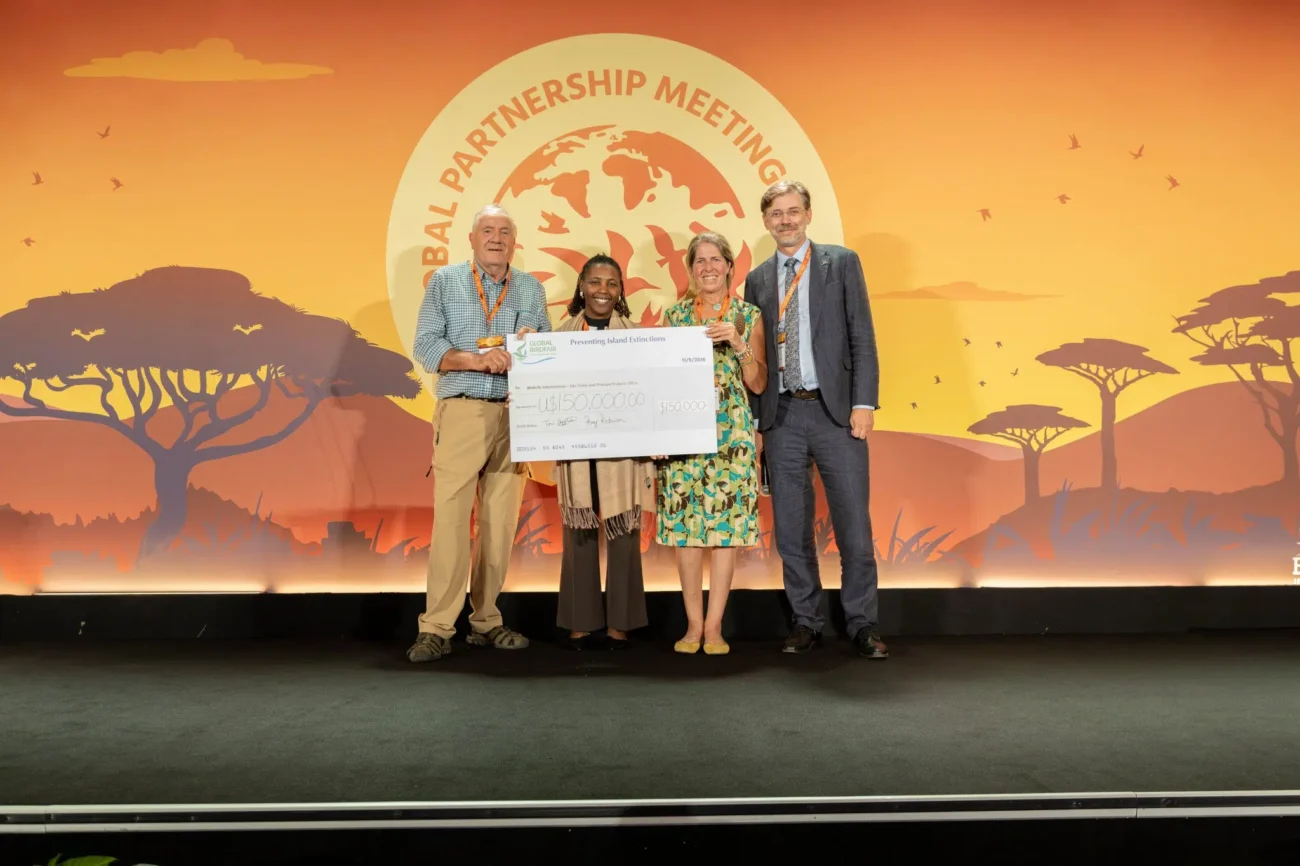
In the dense, mist-shrouded forests of São Tomé and Príncipe, a volcanic archipelago in the Gulf of Guinea, the silence of the canopy is occasionally broken by the calls of some of the world’s most elusive creatures. Among these are the Dwarf Ibis, the São Tomé Grosbeak, and Newton’s Fiscal—three avian species found nowhere else on the planet. Their survival is now the focus of a major international conservation effort, buoyed by a US$150,000 grant from Global Birdfair. This infusion of capital, directed through BirdLife International’s local programme, represents a critical lifeline for species that have teetered on the precipice of extinction for decades.
A Legacy of Isolation and Risk
The ecological significance of São Tomé and Príncipe cannot be overstated. Often referred to as the "Galápagos of Africa," the islands were formed by volcanic activity and have remained isolated from the mainland for millennia. This geographic seclusion has allowed for a remarkable rate of endemism, where unique species have evolved in complete isolation. However, this same factor makes them extraordinarily fragile. When a species is restricted to a single, small island, any localized threat—whether it be habitat destruction, the introduction of invasive species, or climate-driven environmental shifts—can result in total global extinction.
The three species at the center of the current project—the Dwarf Ibis (Bostrychia bocagei), the São Tomé Grosbeak (Crithagra concolor), and Newton’s Fiscal (Lanius newtoni)—are categorized as Critically Endangered by the IUCN Red List. The statistics regarding their populations are sobering. The São Tomé Grosbeak, in particular, was considered extinct for over a century, having vanished from scientific records until a startling rediscovery in 1991. Current estimates suggest that fewer than 250 mature individuals remain, placing it among the rarest birds on Earth. Similarly, the Newton’s Fiscal is restricted to the forest ridges of the island, with a population thought to be fewer than 250 birds. The Dwarf Ibis, while slightly more numerous with an estimated population of fewer than 2,000, remains a highly secretive forest dweller whose habitat is under constant pressure from agricultural encroachment and timber extraction.

Chronology of Conservation Efforts
The path to this current grant began long before the 2026 announcement. Since 2018, BirdLife International has been systematically working to bolster the protection of these species through a combination of scientific monitoring and community engagement.
The strategy underwent a significant evolution between 2022 and 2024. Recognizing that traditional top-down conservation models often fail to account for the economic realities of local populations, the conservation team pivoted toward a more collaborative approach. The "Agents of Change" initiative was launched, targeting the very individuals who had previously been part of the hunting culture that threatened these species. By recruiting 75 local hunters to act as monitors, the program effectively transformed potential threats into guardians. These individuals, possessing an intimate knowledge of the island’s terrain and the behavior of its wildlife, were trained in sustainable practices and biodiversity monitoring.
This model proved successful, with hunters providing invaluable data on the location of nesting sites and the movement patterns of rare birds. The program also addressed the underlying economic drivers of poaching by providing technical and financial support for 25 hunters to establish alternative, sustainable livelihoods. This holistic approach has set a precedent for how conservation can be integrated into the social fabric of rural communities.
The Role of Global Birdfair
Global Birdfair has, over the years, become one of the most vital financial conduits for international avian conservation. Based in the United Kingdom, the event functions as an annual nexus for birders, scientists, and conservationists. By pooling the contributions of sponsors, exhibitors, and thousands of attendees, the organizers are able to provide substantial, project-specific funding to organizations working on the front lines.

The US$150,000 donation is not merely a monetary gift; it is a strategic investment in the long-term monitoring and protection of the Gulf of Guinea’s biodiversity. According to Tim Appleton MBE, founder of Global Birdfair, the selection process for the beneficiary is rigorous. "There are always so many challenges for conservation around the world," Appleton noted. "We need to know the funds we donate to BirdLife International can have a significant impact to help endangered species and habitats as well as supporting local communities."
Scientific and Economic Implications
The injection of funding will allow for a multi-pronged approach. First, it will support intensified field research to update population counts and identify critical habitats that require immediate legal protection. Second, it will facilitate the continuation of the "Agents of Change" program, ensuring that the local community remains an active partner in the preservation of their natural heritage.
From a scientific perspective, the project serves as a test case for "island rescue" strategies. If these three species can be brought back from the brink through a combination of community-based monitoring and habitat management, the methodologies developed in São Tomé and Príncipe could be exported to other island ecosystems facing similar crises.
The economic implications are equally significant. By fostering a culture of ecotourism and sustainable forest management, the project aims to demonstrate that a standing, healthy forest is more valuable to the local economy in the long term than one harvested for timber or cleared for agriculture. The mentorship provided to local entrepreneurs ensures that the transition away from hunting is not just a regulatory mandate, but a viable economic path for families.

Official Responses and Future Outlook
Marquinha Martins, Head of the Projects Office for BirdLife International in São Tomé and Príncipe, expressed profound gratitude for the grant. "For these Critically Endangered birds, whose isolation makes them particularly vulnerable, this funding is especially important," Martins stated. "We cannot wait to continue building our knowledge of these incredible creatures, because every piece of knowledge we gain, every threat we understand better, and every conservation action we put in place can make a real difference."
The sentiment among the conservation community is one of cautious optimism. While the threats of habitat loss and invasive species remain, the combination of high-level scientific data and local grassroots participation creates a robust defense mechanism. The project is expected to run over the coming years, with regular reporting to stakeholders.
As the world faces an unprecedented rate of biodiversity loss, the efforts on São Tomé and Príncipe serve as a microcosm of the global struggle to maintain ecological integrity. The collaboration between international funding bodies like Global Birdfair and local practitioners on the ground demonstrates that extinction is not an inevitability—it is a choice. With the support of this donation, the hope is that these three rare birds will continue to hold their place in the canopy, preserved by a community that has recognized the intrinsic value of its natural heritage.
The success of this initiative will be measured not just in the population numbers of the Dwarf Ibis or the Grosbeak, but in the sustained engagement of the local populace and the preservation of the unique evolutionary history that these birds represent. As the project commences, the world of ornithology and conservation will be watching closely, hoping that the forests of the Gulf of Guinea continue to guard their secrets—and their survivors—for generations to come.

