


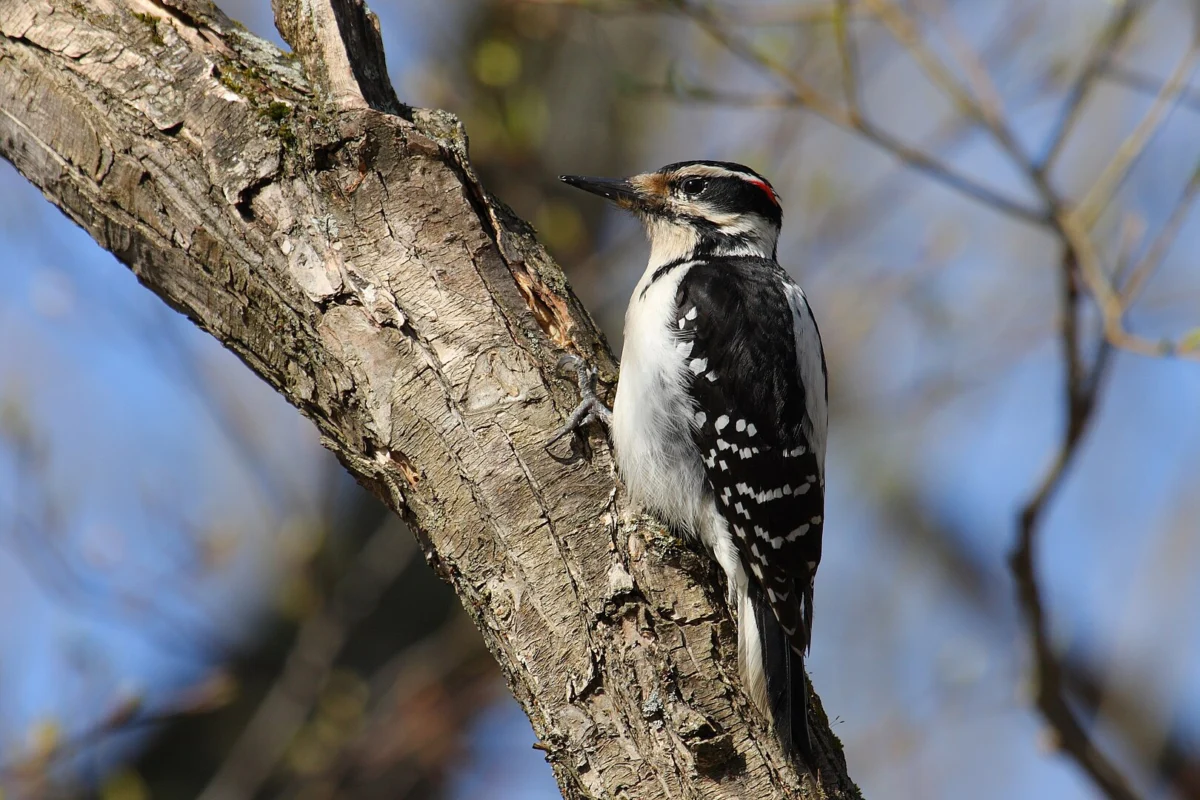
Maryland, recognized as the fifth greenest state, offers a rich tapestry of habitats that support a remarkable diversity of woodpecker species. With eight distinct types of these energetic birds calling the Old Line State home, from the dense conifer forests to suburban backyards, Maryland provides a vital sanctuary for these avian architects. This article delves into the fascinating world of Maryland’s woodpeckers, exploring their unique characteristics, ecological roles, and the habitats they depend on.
The vibrant and often boisterous world of woodpeckers is a testament to nature’s ingenuity. These birds, characterized by their striking plumage and their characteristic drumming on trees, are integral to forest ecosystems. In Maryland, this avian community thrives, with eight species gracing its woodlands and wetlands. Understanding these species—their diets, nesting habits, and preferred environments—offers a window into the health and biodiversity of the state’s natural landscapes.
A Closer Look at Maryland’s Woodpecker Residents
Maryland’s forests and wetlands are alive with the rhythmic drumming and distinctive calls of its eight woodpecker species. Each species has carved out a niche, contributing to the intricate web of life within the state’s diverse ecosystems. From the diminutive Downy Woodpecker to the imposing Pileated Woodpecker, these birds showcase a remarkable range of adaptations and behaviors.
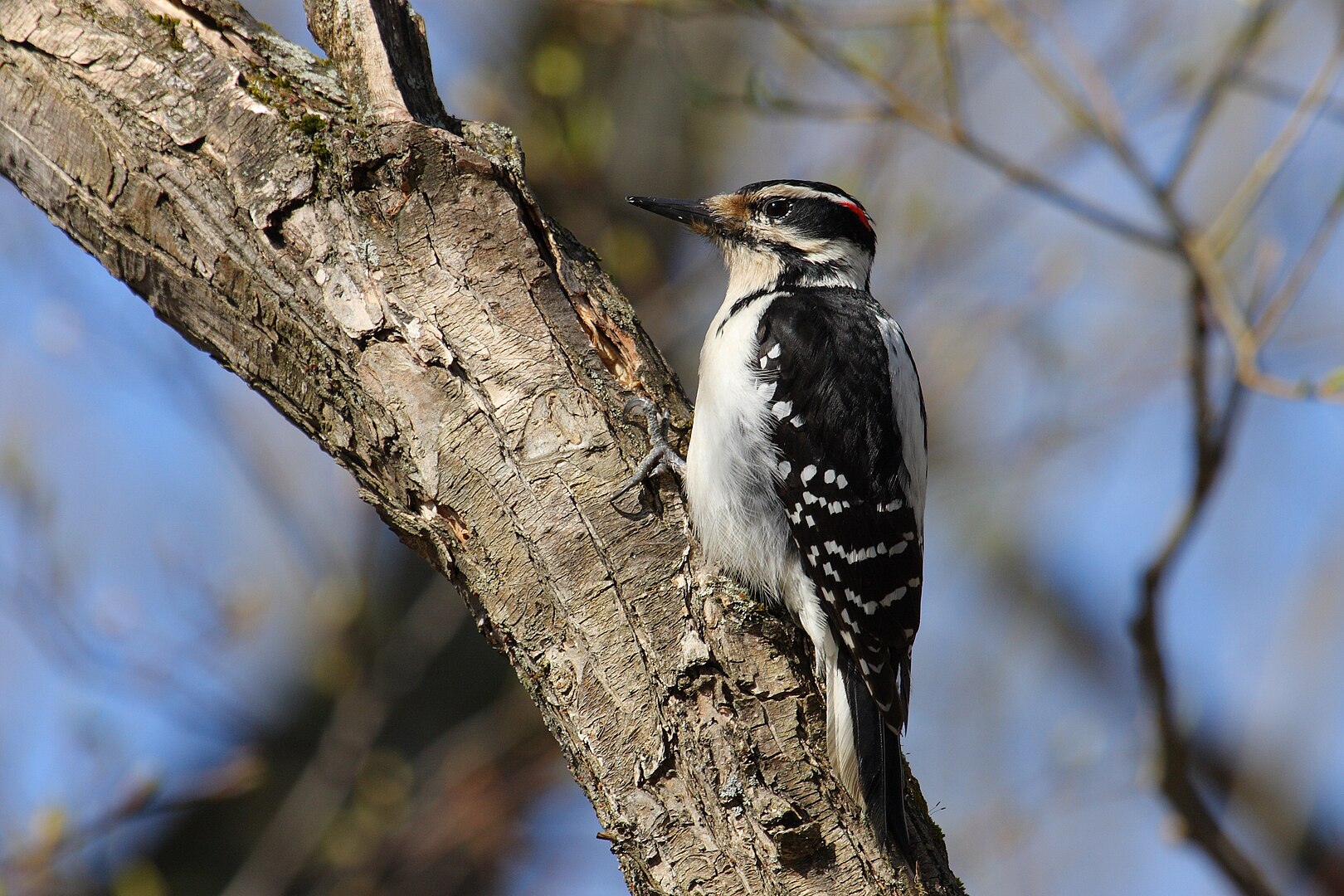
1. The Red-Cockaded Woodpecker: A Pine Forest Specialist
The Red-Cockaded Woodpecker (Picoides borealis) is a species of significant conservation concern, and its presence in Maryland is particularly noteworthy. This small to medium-sized woodpecker is distinguished by a subtle red cockade, a streak rarely visible on its cap, and a striking black and white plumage pattern. It boasts a black head and nape, accented by white cheek patches.
Crucially, the Red-Cockaded Woodpecker exhibits a strong dependence on mature pine forests, specifically favoring longleaf pines for its nesting and roosting cavities. Unlike most other woodpecker species, it excavates its cavities in living trees. This process is often facilitated by a naturally occurring fungus, Red Heart Fungus, which softens the inner wood, making excavation less arduous. Their diet primarily consists of pine seeds, supplemented by insects such as caterpillars, cockroaches, and spiders.
The historical range of the Red-Cockaded Woodpecker once extended across the southeastern United States, but habitat loss and fragmentation have led to drastic population declines. Conservation efforts in Maryland and other states focus on preserving and restoring suitable longleaf pine ecosystems, including prescribed burning to maintain the open forest structure that this species requires.
2. The Yellow-Bellied Sapsucker: A Sweet Sap Drinker
The Yellow-Bellied Sapsucker (Sphyrapicus varius) is a migratory species that visits Maryland during the cooler months. Despite its name, its plumage is predominantly black and white, with subtle pale yellow markings on its underside and distinctive white stripes running down its neck. Males are further identified by a flashy red forehead and, in some subspecies, a red throat.
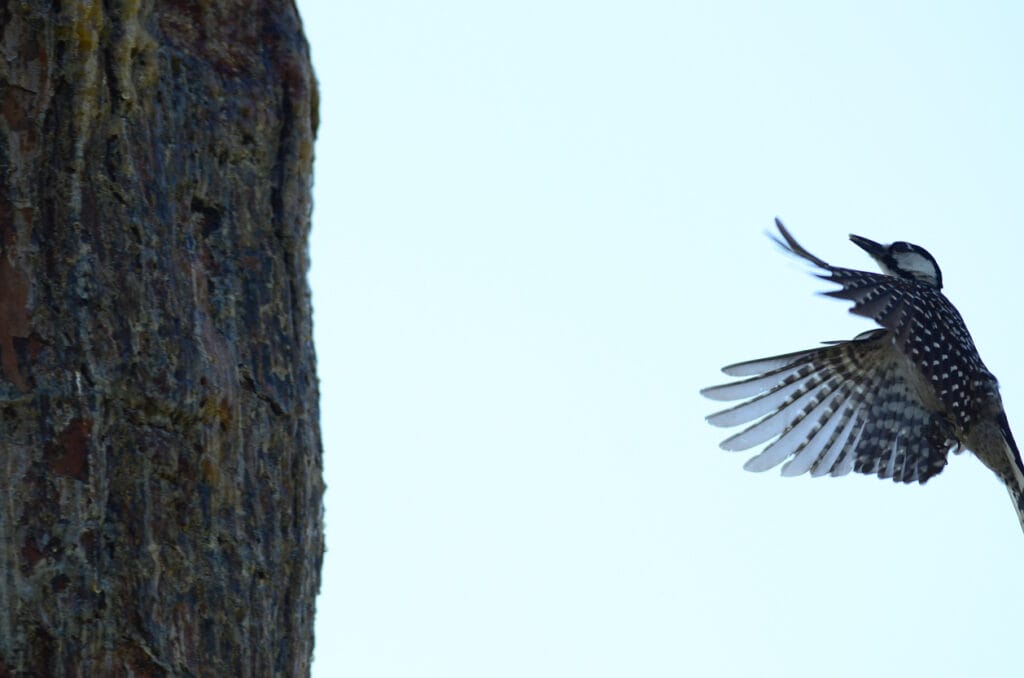
These relatively small birds, comparable in size to a robin, are known for their longer wings and short bills. Their unique feeding strategy involves drilling rows of small, evenly spaced holes, or "wells," in the bark of various deciduous and coniferous trees. They then return to these wells to lap up the oozing sap with their brush-like tongues. This sap is a vital food source, attracting insects like ants, beetles, and flies, which the sapsucker also consumes.
Yellow-Bellied Sapsuckers show a preference for trees such as yellow birch, hickory, sugar maple, red maple, and young paper birch. They typically nest in cavities excavated in dead trees or dead limbs of living trees. Their calls are often described as cat-like mewing, accompanied by a staccato drumming, which can become quite pronounced during the spring mating season.
3. The Hairy Woodpecker: A Forest Dweller with a Powerful Bill
The Hairy Woodpecker (Picoides villosus) is a medium-sized woodpecker found year-round in Maryland’s mature forests. Its plumage is a classic black and white pattern, featuring a prominent white patch on its back and a large, chisel-like bill. Adult males are identifiable by a distinctive red streak at the nape of their neck.
These adaptable birds inhabit a variety of environments, including dense forests, swamps, urban parks, orchards, suburban backyards, and even cemeteries. Their diet consists mainly of wood-boring insects, such as bark beetle larvae and ants, but they will also consume spiders, millipedes, pupae, bees, and caterpillars. They are often observed searching for insects in the crevices of tall trees or utilizing abandoned cavities.
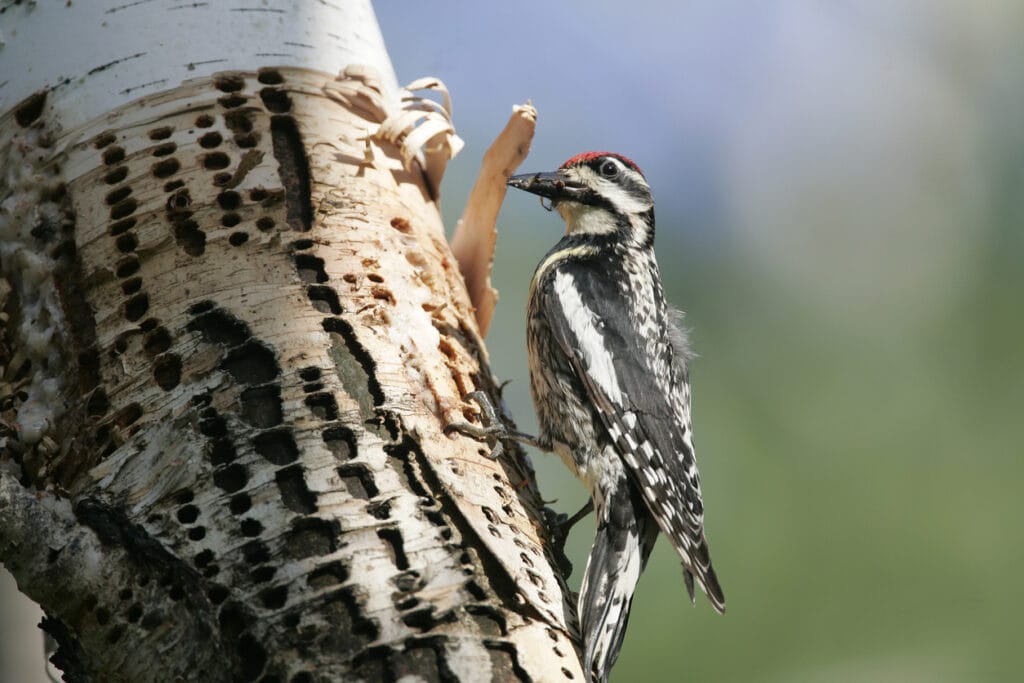
The Hairy Woodpecker is frequently confused with its smaller cousin, the Downy Woodpecker. Key differentiating features include the Hairy Woodpecker’s larger size and significantly longer, sharper bill. Their vocalizations are also distinct, characterized by explosive, whinnying calls. They typically nest in cavities excavated in dead trees, laying between three and six eggs.
4. The Pileated Woodpecker: The Forest Giant
The Pileated Woodpecker (Dryocopus pileatus) is the largest woodpecker species found in Maryland and North America, rivaling the size of a crow. Its most striking feature is its prominent, bright red triangular crest atop its head, a feature that immediately evokes the classic image of a woodpecker. Bold white stripes run down the sides of its neck, and adult males possess an additional red streak on their cheek.
These magnificent birds are most commonly found in the conifer forests of Maryland, but they can also be observed at the edges of large urban areas. Contrary to popular belief, they often prefer excavating into dead trees or softer wood logs rather than live, solid ones. Their diet consists primarily of carpenter ants, but they also supplement their meals with berries, wild fruits, and nuts.
The Pileated Woodpecker is known for its loud, shrill, whiny call and its powerful drumming as it pecks into trees with its long, sharp bill. They create distinctive rectangular holes in their search for food. Each year, they excavate new nesting cavities in dead trees, typically laying between three and five white eggs.
5. The Northern Flicker: A Ground-Foraging Specialist
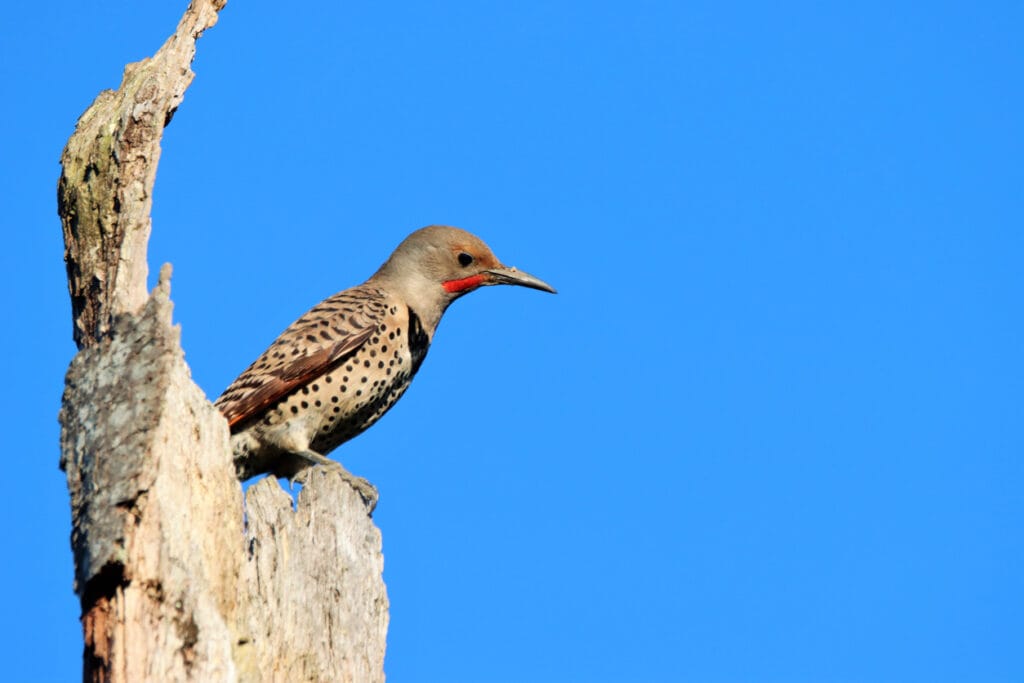
The Northern Flicker (Colaptes auratus) is a unique woodpecker species found year-round in Maryland, distinguished by its unusual plumage. Unlike the predominantly black and white coloration of most woodpeckers, the Northern Flicker sports a striking gray and brown pattern. They are relatively large birds with large, curved bills and round heads. Their undersides feature darker streaks, while their wings and tails display bright yellow or red (depending on the subspecies) flashes, leading some observers to describe seeing a "yellow flash" as they fly. A red nape patch and a white rump patch are also characteristic.
A particularly interesting behavioral trait of the Northern Flicker is its tendency to forage on the ground, unlike most other woodpecker species. They are adept at locating beetles and ants in the soil, though they also consume fruits. Their zygodactyl feet, with two toes forward and two toes backward, provide excellent grip for walking vertically on tree trunks and even on the ground.
Northern Flickers communicate through repetitive, piercing calls and deep tree drumming. They typically nest in tree cavities, laying between five and eight white eggs. Their adaptability allows them to inhabit woodlands with open fields and spaces, making them a common sight across Maryland.
6. The Red-Bellied Woodpecker: A Familiar Backyard Visitor
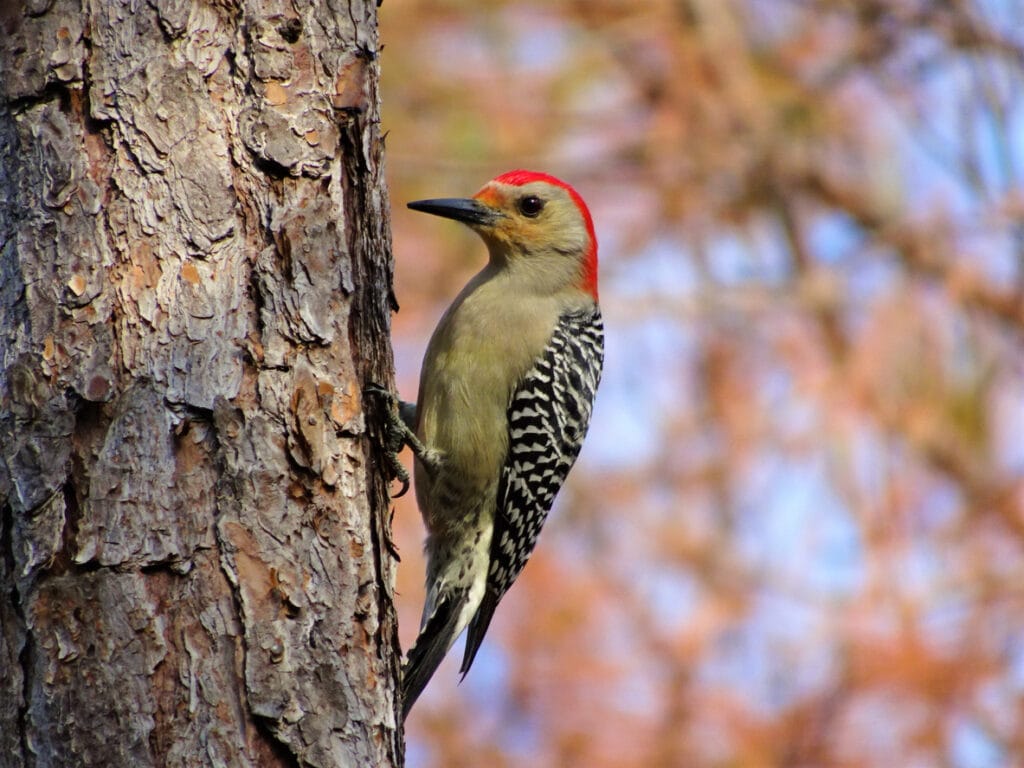
The Red-Bellied Woodpecker (Melanerpes carolinus) is a year-round resident of Maryland and is one of the most common woodpeckers in the state. While its name suggests a prominent red belly, this coloration is often faint or absent, appearing more as a rosy wash. The most noticeable red markings are on their heads. Adult females typically have red on their nape but not on their crown, while males have more extensive red coloring.

These adaptable birds are found in both urban and forest settings, making them a frequent visitor to backyard feeders. Their diet is varied, including insects, spiders, nuts, fruits, and grass seeds. A fascinating aspect of their breeding behavior is that they tend to reuse the same nest cavities for years. They lay four or five white eggs, usually on a bed of wood chips.
Red-Bellied Woodpeckers are recognizable by their diverse vocalizations, which include trills and chuckles, as well as their loud, deep drumming on trees, used for communication. The slight difference in tongue length between males and females is thought to aid in foraging for a wider variety of food resources during the breeding season.
7. The Downy Woodpecker: The Smallest of the Bunch
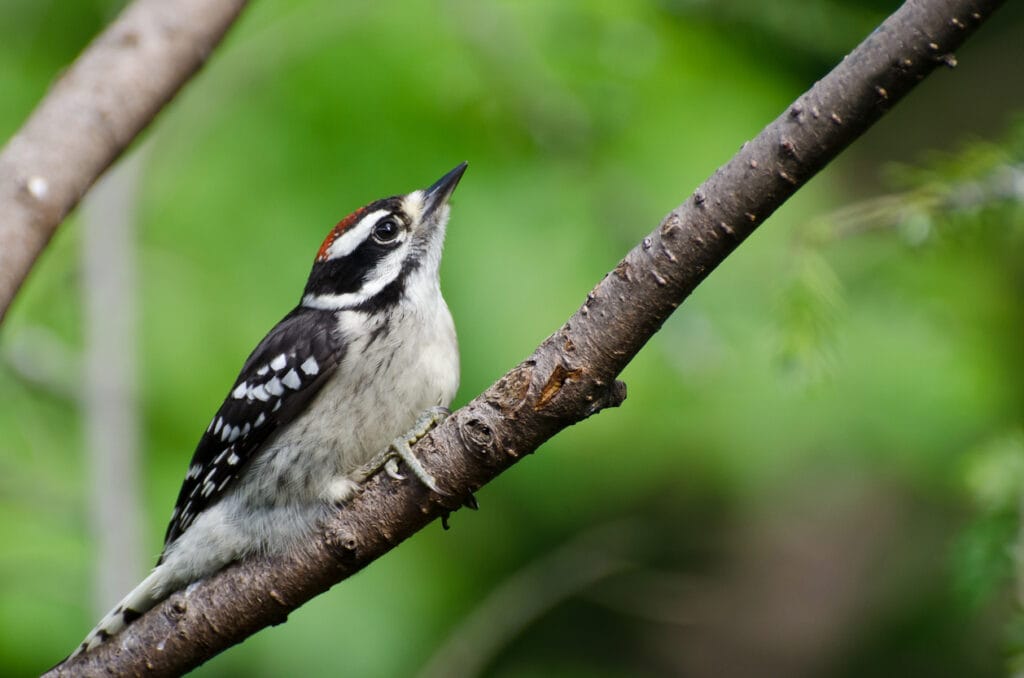
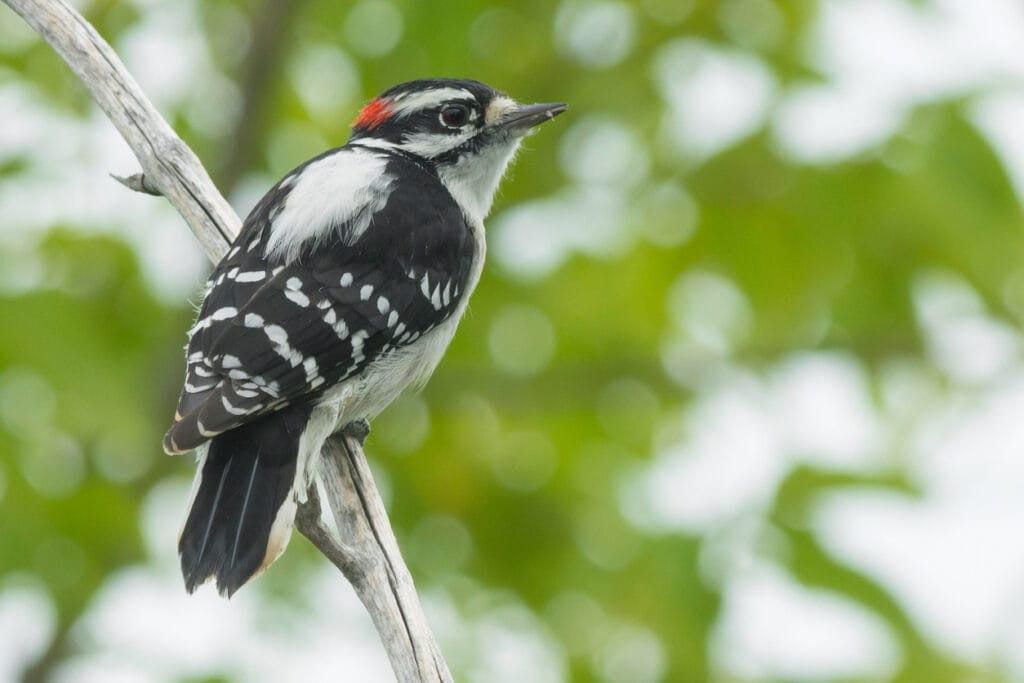
The Downy Woodpecker (Dryobates pubescens) is the smallest woodpecker species found in both Maryland and North America. It earns its name from the soft texture of the feathers on its back. Its plumage features the familiar black and white pattern, with distinct horizontal bars on its wings and a white patch on its back. Adult males are distinguished by a red patch on the back of their head.
Downy Woodpeckers are highly adaptable and can be found in a wide range of habitats, including wooded areas, urban yards, and forest edges. They are notable for their ability to forage not only on tree trunks but also in long grass and weeds, where they seek out nuts and larvae. They are also known to visit backyard feeders.
A key characteristic that distinguishes Downy Woodpeckers from the similar-looking Hairy Woodpecker is their smaller size and significantly shorter bill. Additionally, Downy Woodpeckers have white spots on their tail feathers, which are absent in Hairy Woodpeckers. Their vocalizations include high-pitched sounds, loud rattles, and peeps, and they are known for their active and engaging behavior. They nest in cavities excavated in dead trees, laying between three and eight small white eggs.
8. The Red-Headed Woodpecker: A Striking and Bold Species
The Red-Headed Woodpecker (Melanerpes erythrocephalus) is a medium-sized woodpecker renowned for its striking coloration. Adults possess a vibrant, entirely red head, contrasting with their black upperparts and white bellies. Their wings are a distinctive half-black, half-white pattern. Unlike juveniles, which have brown heads, adults display the signature crimson hue.
This species is unique among woodpeckers for its ability to catch insects in mid-flight, a behavior known as "flycatching." While insects like honeybees, midges, grasshoppers, and beetles form a significant portion of their diet, they also consume nuts, seeds, wild fruits, and even small rodents. Red-Headed Woodpeckers are known for their territorial nature and have been observed defending their nesting sites, sometimes even destroying the eggs or nests of other birds.
Their vocalizations include a shrill "wee-ah" call and loud drumming. They typically nest in tree cavities, and they may reuse nesting sites created by other birds. They lay four or five eggs. Unfortunately, the Red-Headed Woodpecker has experienced a significant population decline, estimated at nearly 70% between 1966 and 2014, largely attributed to habitat loss.
Habitat and Conservation in Maryland
Maryland’s commitment to environmental preservation, as evidenced by its ranking as the fifth greenest state, plays a crucial role in supporting its diverse woodpecker populations. The state’s extensive forests, including both deciduous and coniferous types, provide essential nesting sites, foraging grounds, and cover for these species. Wetlands also offer unique habitats for certain woodpeckers.
The presence of mature forests is particularly vital for species like the Pileated Woodpecker and the Red-Cockaded Woodpecker, which rely on older trees for cavity excavation and food sources. The management of these forests, including practices like controlled burning for the Red-Cockaded Woodpecker, is critical for their long-term survival.
Urban and suburban areas also host several woodpecker species, such as the Red-Bellied and Downy Woodpeckers, which have adapted to human-modified landscapes and readily utilize backyard feeders. This adaptability highlights their resilience, but it also underscores the importance of maintaining green spaces and providing food sources within these developed areas.
Monitoring and Future Outlook
Organizations like eBird play a vital role in citizen science by allowing birdwatchers to report sightings, contributing valuable data for monitoring woodpecker populations and their distribution across Maryland. This data helps researchers understand population trends, identify critical habitats, and inform conservation strategies.
The Pickering Creek Audubon Center is specifically highlighted as a location where the Pileated Woodpecker can be observed, underscoring the importance of dedicated nature centers and sanctuaries in providing opportunities for public engagement with wildlife.
While many of Maryland’s woodpecker species appear to be faring well, the significant decline of the Red-Headed Woodpecker serves as a stark reminder of the ongoing challenges facing avian populations due to habitat loss and other environmental pressures. Continued conservation efforts, habitat restoration, and public awareness are essential to ensure that these fascinating birds continue to thrive in Maryland’s diverse and beautiful landscapes for generations to come. The intricate drumming and vibrant plumage of Maryland’s woodpeckers are not just natural wonders but also indicators of the ecological health of the state’s precious natural resources.

