


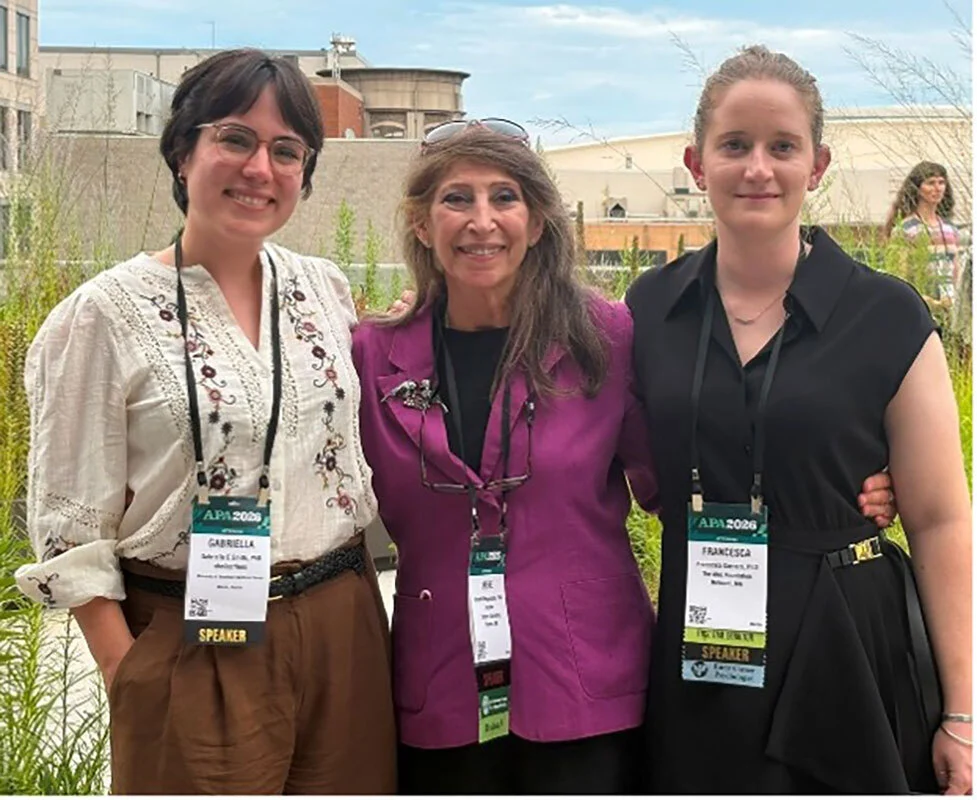
The year 2026 has been marked by significant global instability, yet for Dr. Irene Pepperberg, a pioneer in the field of animal cognition, it has also served as a milestone for academic recognition. Recently, Dr. Pepperberg was honored with two prestigious lifetime achievement awards: one from the Coller-Dolittle Foundation and another from Division 3 (Experimental Psychology) of the American Psychological Association (APA). In addition to these accolades, she was elected to serve a three-year term as a Member-at-Large for the APA’s Division 3. While these honors are bestowed upon her individually, Dr. Pepperberg emphasizes that the body of work behind these awards—spanning nearly 50 years—is the product of a collaborative network involving hundreds of researchers, volunteers, veterinarians, and the avian subjects themselves.
A Half-Century of Scientific Inquiry
The foundation of this research began in June 1977. At that time, the scientific community was largely skeptical regarding the cognitive capacities of non-human animals. Working out of borrowed laboratory space at Purdue University, Dr. Pepperberg initiated a study that would eventually challenge the boundaries of linguistics and animal behavior. With minimal funding and reliance on a small team of undergraduate volunteers, the lab faced significant initial resistance. Early grant reviewers were famously dismissive, questioning the validity of researching avian language acquisition.
Despite these hurdles, the implementation of the "model/rival" technique—a pedagogical method rooted in the work of Dietmar Todt—proved effective. This method allowed the subject, an African Grey parrot named Alex, to successfully label materials, objects, colors, and shapes. These early successes, while modest in scope, provided the empirical evidence required to secure foundational support from the National Science Foundation, effectively legitimizing a new sub-discipline in cognitive psychology.
Chronology of a Wandering Laboratory
The history of Dr. Pepperberg’s laboratory is characterized by institutional transitions, reflective of the challenges inherent in pursuing long-term, unconventional research. Following the initial years at Purdue, the lab relocated to Northwestern University, where the focus expanded toward anthropological perspectives on cognition. During this period, the survival of the research subjects became a primary concern; a medical crisis involving Alex and aspergillosis required advanced veterinary interventions, including micro-surgery performed by specialists such as Dr. Greg Harrison.
In the subsequent years, the lab underwent a series of migrations to various academic environments, each offering different resources and challenges. The transition to the University of Arizona allowed for the inclusion of new subjects, such as Griffin, Kyaaro, and Alo, expanding the scope of the study to include more complex problem-solving behaviors. Later, a move to the MIT Media Lab and subsequently Brandeis University facilitated further technological and methodological advancements.
The lab eventually found a long-term home within Harvard University’s Department of Psychology. This period marked a transition in the avian cohort, as the passing of Alex in 2007 and Arthur necessitated the introduction of new subjects, including Athena. The research remained resilient even during the global disruptions caused by the COVID-19 pandemic, during which the laboratory was temporarily housed within a private residence, ensuring the continuity of the longitudinal data sets. Currently, the research is conducted in partnership with Boston University, operating from a specialized facility in Somerville, Massachusetts.
The Role of Human and Non-Human Contributors
Dr. Pepperberg’s recent awards serve as a focal point for acknowledging the "army of individuals" who have sustained the lab. The methodology of her work relies heavily on consistent, long-term training, which has historically been facilitated by a rotating roster of graduate students and research assistants. Notable contributors such as Robert Mitchell, Kimberly Goodrich Fisher, Denise Neapolitan, and, more recently, Alana Carroll and Diana Greene, have played critical roles in the daily operations of the lab.

The administrative burden of maintaining such a project—often spanning multiple universities and commuting between institutions—has been managed by dedicated lab managers, including Arlene Levin Rowe and Suzanne Gray. These individuals have ensured that the rigorous standards of scientific data collection remained intact despite the logistical instability often associated with academic research funding and institutional politics.
Broader Scientific Implications
The implications of the work conducted by Dr. Pepperberg’s lab extend far beyond the study of parrots. By demonstrating that African Grey parrots could acquire abstract concepts—such as the understanding of "same/different" or numerical quantification—the research forced a reassessment of the neurobiological requirements for intelligence.
The data collected over these 50 years have contributed significantly to the fields of comparative psychology and ethology. By proving that cognitive function is not exclusive to primates or marine mammals, Dr. Pepperberg’s work has influenced the ethical standards for how society views and interacts with avian species. The longevity of this research also provides a rare, longitudinal dataset that allows scientists to track how cognitive abilities develop and persist throughout the lifespan of a long-lived avian species.
Institutional Challenges in Academic Research
The trajectory of the lab—moving from Purdue to Northwestern, Arizona, MIT, Brandeis, Harvard, and finally Boston University—highlights the precarious nature of high-risk, high-reward research. Scientific projects that do not fit neatly into traditional academic silos often face difficulties in securing permanent housing or consistent departmental support.
Dr. Pepperberg’s ability to sustain this research for five decades, despite frequent institutional turnover, is viewed by her peers as a testament to both the importance of the research and her personal persistence. The financial support, often supplemented by private donors, has been a critical lifeline, particularly when institutional grants were unavailable. This reality underscores the vital role that private philanthropy plays in allowing academic research to endure beyond the standard cycles of government grant funding.
Conclusion and Looking Forward
As Dr. Pepperberg accepts these lifetime achievement awards, the focus remains on the continuity of the research program. The current association with Boston University and the ongoing efforts of her research team suggest that the work initiated in 1977 will continue to evolve.
The recognition from the APA and the Coller-Dolittle Foundation serves as a formal acknowledgment of the paradigm shift that occurred in the study of avian cognition. However, for those involved in the project, the true success is measured in the accumulated data and the legacy of the parrots who served as the subjects of this scientific inquiry. As the laboratory moves into its fifth decade, the emphasis remains on the collaborative spirit that has defined its existence: a commitment to unraveling the complexities of animal intelligence through patience, dedication, and a community of scientists who prioritize the pursuit of knowledge above institutional constraints. The acknowledgment of these awards is not an end, but a marker of a sustained, decades-long commitment to understanding the minds of the non-human creatures with whom we share the planet.

