


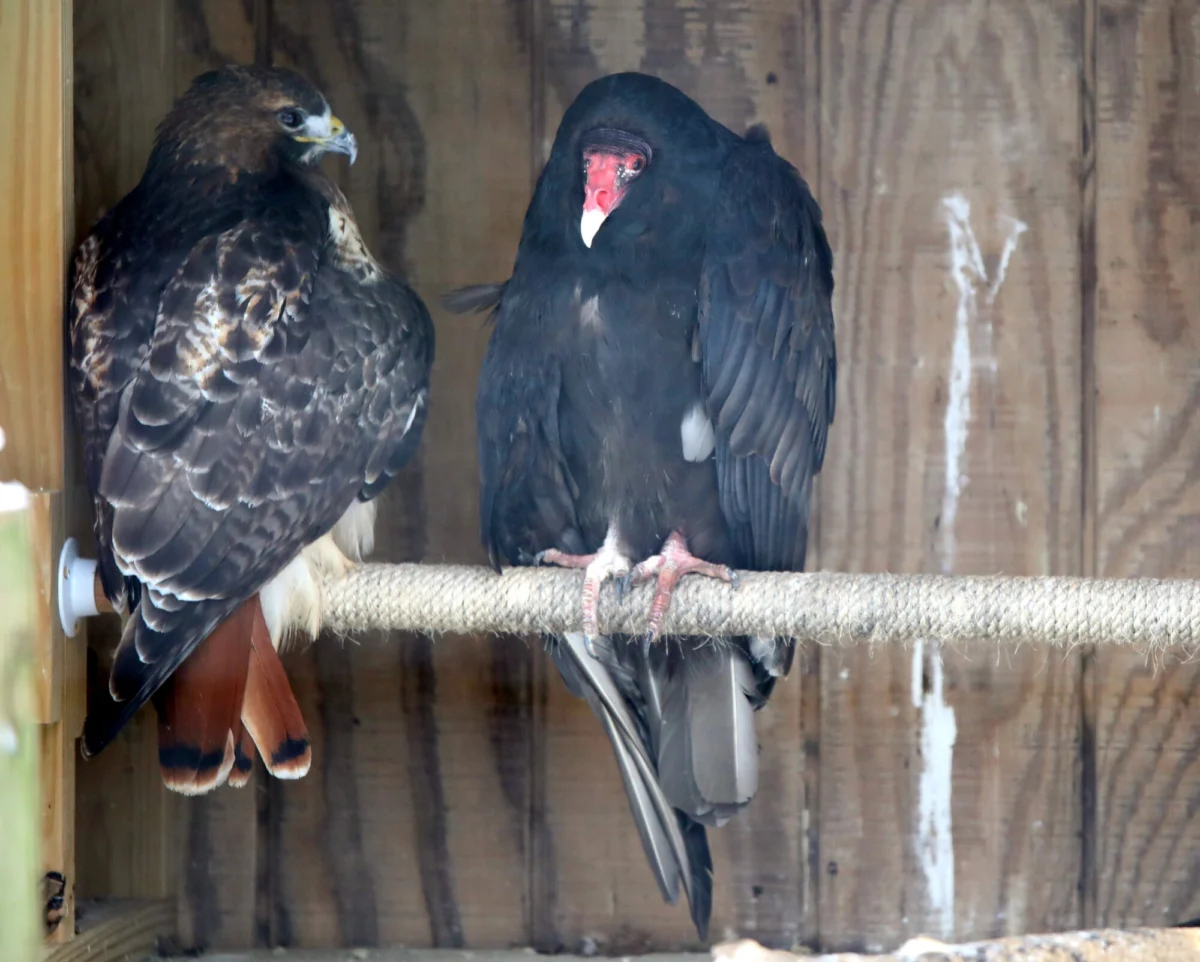
The Elmwood Park Zoo in Norristown, Pennsylvania, is home to a remarkable testament to resilience and the surprising nature of companionship: the enduring bond between Stan, a 20-year-old female Turkey Vulture, and Hunter, a 22-year-old female Red-tailed Hawk. For over a decade, these two avian residents have defied the conventional predatory-scavenger dynamics typically observed in their species, forging an inseparable friendship rooted in shared adversity and a life-altering disability. Their story offers a compelling narrative on interspecies relationships, the impact of human activity on wildlife, and the dedicated care provided by zoological institutions.
The Unlikely Duo: A Deep Dive into Avian Species
To fully appreciate the uniqueness of Stan and Hunter’s bond, it is essential to understand the distinct ecological roles and natural behaviors of their respective species. Turkey Vultures ( Cathartes aura ), like Stan, are primarily scavengers, playing a crucial role in ecosystems by consuming carrion and preventing the spread of disease. Characterized by their featherless red heads, broad wings, and a distinctive teetering flight, they possess an exceptional sense of smell, allowing them to locate decaying carcasses from great distances. While often seen roosting in groups, their social interactions typically revolve around feeding hierarchies and communal roosting, rather than deep emotional bonds with other predatory birds. In the wild, Turkey Vultures generally avoid direct confrontation and would certainly not seek companionship with a raptor known for its hunting prowess.
Conversely, Red-tailed Hawks ( Buteo jamaicensis ), such as Hunter, are formidable apex predators. These majestic birds of prey are instantly recognizable by their broad, rounded wings and, in adults, a rufous tail. Equipped with keen eyesight and powerful talons, they hunt a wide variety of prey, including small mammals, birds, and reptiles. Red-tailed Hawks are generally solitary hunters, forming pair bonds primarily during the breeding season. In natural settings, a Red-tailed Hawk would view a Turkey Vulture as either a competitor for carrion (though their dietary preferences often differ) or simply another large bird in its territory, certainly not a companion. The idea of a hawk and a vulture sharing food, preening each other, or even co-parenting eggs is entirely antithetical to their evolutionary programming and wild behaviors. This fundamental biological divergence makes Stan and Hunter’s friendship all the more extraordinary, highlighting the profound influence of environment and individual circumstance.
A Shared Ordeal: The Path to Elmwood Park Zoo
The genesis of this unusual companionship lies in a common, tragic experience: severe, human-induced injuries that rendered both birds permanently unable to fly and thus non-releasable into the wild. Their journey to the Elmwood Park Zoo in 2005 marked not only the end of their wild lives but also the beginning of an unforeseen chapter of interspecies solidarity.
Hunter, the Red-tailed Hawk, was the first to arrive at the zoo as a juvenile in July 2005. She was transferred from a rehabilitation center, which has since ceased operations, carrying a grievous injury. A veterinarian’s examination revealed an air-rifle pellet lodged in her right wing, causing a severe fracture to her humerus – the long bone in the upper wing. Despite extensive medical intervention, the damage was too profound, and the bone never healed properly. The permanent impairment to her flight capabilities meant that Hunter could no longer hunt effectively or evade predators, making survival in the wild impossible. Her only viable option for continued life was a managed care environment.
Just a month later, in August 2005, Stan, the Turkey Vulture, joined Hunter at the Elmwood Park Zoo. Her story echoed Hunter’s, originating from a similar act of human cruelty. Stan was brought to Tri-State Bird Rescue & Research, a highly respected avian rehabilitation center in Newark, Delaware, after being discovered by the Newark Police Department. She, too, had an air-rifle pellet embedded in her right wing, which inflicted a severe fracture to her radius and ulna – the two main bones of the forearm in birds. Like Hunter, the extensive damage precluded proper healing, leaving Stan with significantly limited flight and, consequently, no hope of returning to her natural habitat. Tri-State Bird Rescue & Research, known for its expertise in treating injured birds, determined that Stan required a permanent home where her specialized needs could be met, leading to her placement at Elmwood Park Zoo.
The parallel nature of their injuries – both sustained from air-rifle pellets, both affecting their right wings, and both resulting in permanent flight impairment – served as a silent, powerful precursor to their future bond. Stripped of their ability to soar and hunt or scavenge freely, they were united by a shared vulnerability and a dependence on human care, creating an unconventional common ground in the otherwise disparate lives of a raptor and a scavenger.
The Genesis of a Bond: Finding Solace in Captivity
Upon their introduction into the same aviary enclosure at the Elmwood Park Zoo, a bond began to form that would astound observers and endure for more than a decade. The zoo staff, who are intimately familiar with the nuanced behaviors of their animal residents, quickly recognized and formally designated Stan and Hunter as "bonded." This term, typically reserved for pairs of the same species that exhibit strong affiliative behaviors, underscored the depth and significance of their interspecies connection.
The shared disability undoubtedly played a pivotal role in the genesis of their friendship. In the wild, the instinct to survive would drive a hawk to hunt and a vulture to scavenge, with little to no positive interaction. However, within the confines of their aviary, deprived of the capacity for natural flight and the need to compete for resources in the same manner as their wild counterparts, their usual species-specific imperatives were largely mitigated. Instead, their shared limitation appears to have fostered a profound sense of mutual understanding and dependence. Neither could fully engage in the natural behaviors of their kind, creating an unusual equality between them.
Furthermore, the environment of the aviary itself likely contributed to the formation and strengthening of their bond. Housed together without other birds in the enclosure, Stan and Hunter became each other’s primary, if not sole, source of social interaction. This absence of species-specific companions, while not ideal for all animals, in this unique case, appears to have redirected their social instincts towards each other. This captive setting, therefore, inadvertently created a sanctuary where their individual personalities and shared circumstances could override instinctual species barriers, allowing a unique friendship to blossom.
Behaviors That Bind: Evidence of Deep Connection
The depth of Stan and Hunter’s bond is not merely inferred but is consistently demonstrated through a series of remarkable behaviors observed by the dedicated staff at Elmwood Park Zoo. These interactions go far beyond simple coexistence, revealing a complex and mutually supportive relationship that defies typical avian social structures.
One of the most striking observations revolves around their feeding dynamics. Despite the Red-tailed Hawk’s natural role as a predator and the Turkey Vulture’s as a scavenger, it is Hunter, the hawk, who often takes the lead when food is introduced into their enclosure. Keepers frequently witness Hunter gathering food items and, rather than consuming them all herself, actively sharing them with Stan. This behavior is particularly significant because Red-tailed Hawks are generally solitary hunters and do not typically share prey, especially not with other large birds. For Hunter to consistently offer food to Stan indicates a level of care and consideration that transcends typical species boundaries, suggesting a deep-seated concern for her companion’s well-being.
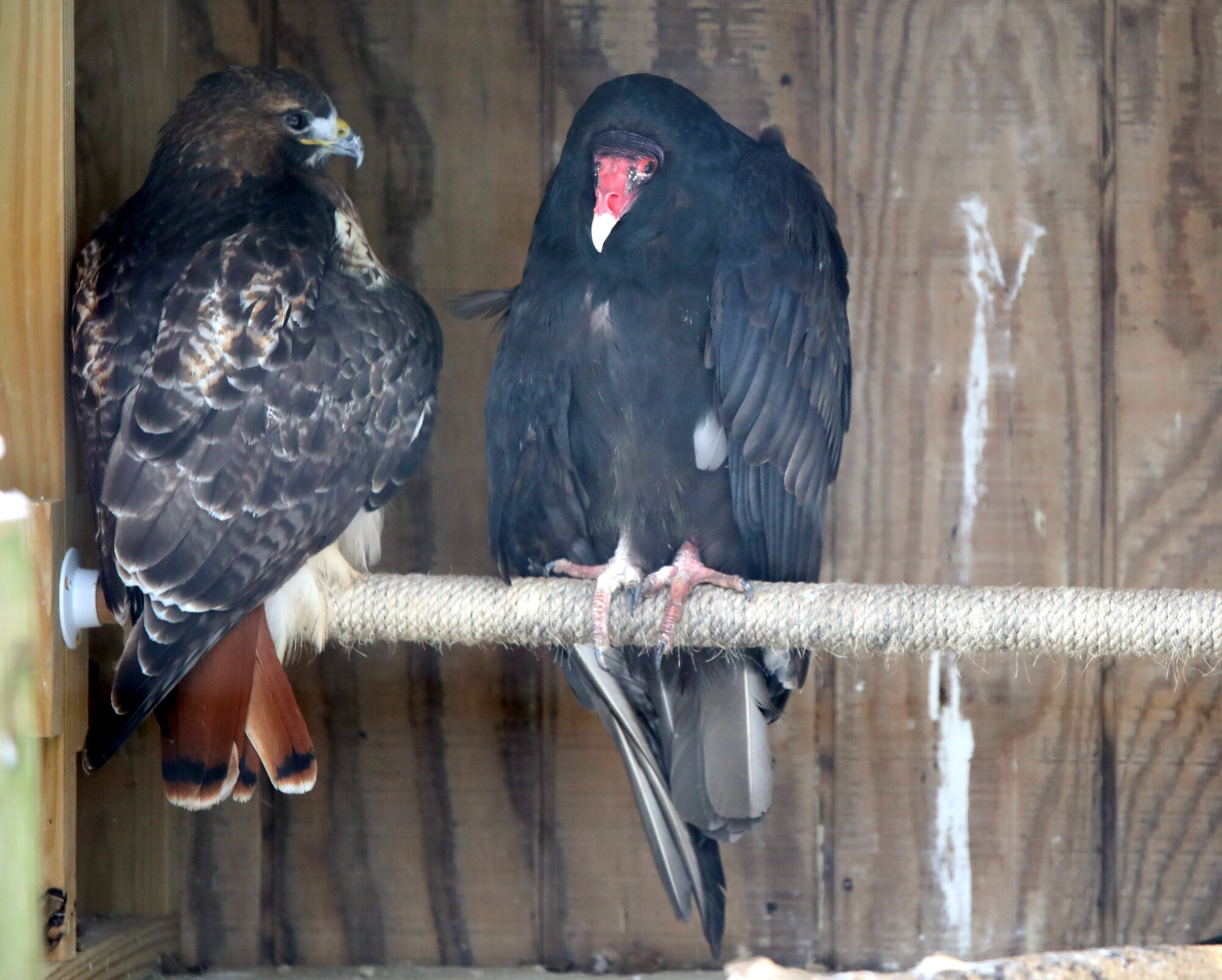
Another compelling display of their affection is allopreening, the act of mutual grooming. This behavior is a cornerstone of social bonding in many avian species, serving not only hygienic purposes but also reinforcing social hierarchies and strengthening pair bonds. Stan and Hunter have been observed meticulously preening each other’s feathers, an intimate act that requires a high degree of trust and comfort. For a vulture and a hawk to engage in such close physical contact, particularly given the hawk’s sharp beak and talons, speaks volumes about the complete absence of aggression and the profound level of trust that has developed between them. It is a clear indicator of their emotional investment in each other’s welfare and a tangible expression of their shared harmony.
Perhaps the most astonishing and biologically perplexing behavior observed is Stan’s tendency to sit on Hunter’s eggs. Red-tailed Hawks are known to lay eggs, even in captivity and without a male partner, a phenomenon that can occur due to hormonal cycles. While Hunter herself might not incubate the eggs to term, the fact that Stan, a Turkey Vulture, instinctively comes to sit on them is extraordinary. This behavior, known as brooding, is typically a powerful maternal instinct reserved for one’s own offspring or, in very rare cases, the eggs of closely related species in a caregiving role. For Stan to exhibit this protective, nurturing behavior towards Hunter’s eggs suggests an almost parental or deeply empathic connection, further blurring the lines of species-specific instincts and highlighting the strength of their unique bond. Zoo animal care specialists interpret this as a profound expression of their interconnectedness, where one bird instinctively supports the other in a way that mirrors the deepest social bonds seen in the animal kingdom.
The Plight of Injured Wildlife: A Broader Context
The individual stories of Stan and Hunter, marked by severe injuries from air-rifle pellets, shed light on a much broader and concerning issue: the significant impact of human activities on wildlife. Air rifles, often perceived as less lethal than firearms, can nevertheless inflict devastating and often fatal injuries on animals. Pellets can shatter bones, damage vital organs, and cause severe infections, frequently leading to permanent disability or death. Wildlife rehabilitation centers across the globe regularly admit animals, particularly birds of prey and other large birds, suffering from such injuries.
The decision to deem an animal "non-releasable" is made with great care and is based on a thorough assessment of its ability to survive independently in the wild. For birds like Stan and Hunter, whose primary mode of survival—flight—was permanently compromised, returning to their natural habitat would be a death sentence. They would be unable to hunt, scavenge efficiently, evade predators, or migrate, making them vulnerable to starvation, predation, or environmental hazards. This reality underscores the critical role of wildlife rehabilitation centers, which not only provide emergency medical care but also make difficult ethical decisions regarding the long-term welfare of their patients. When release is not an option, reputable centers seek suitable permanent homes in accredited zoological parks or educational facilities, where the animals can live out their lives with proper care and, importantly, serve as ambassadors for their species and for wildlife conservation.
Elmwood Park Zoo’s Role: Care, Education, and Conservation
The Elmwood Park Zoo plays a multifaceted role in the lives of Stan and Hunter, extending far beyond simply providing a home. As an accredited zoological institution, the zoo is committed to animal welfare, conservation, and education. For animals like Stan and Hunter, who cannot survive in the wild, the zoo offers a sanctuary where their unique needs are met, including specialized diets, veterinary care, and an enriching environment designed to promote their physical and psychological well-being. The animal care team closely monitors their health, behavior, and social dynamics, ensuring that their bond remains a positive aspect of their lives.
Beyond direct care, Stan and Hunter serve as invaluable educational ambassadors. Their compelling story provides a powerful platform for the zoo to engage visitors on several critical topics. Firstly, it highlights the remarkable capacity for interspecies empathy and cooperation, challenging preconceived notions about animal behavior. Visitors witness firsthand that bonds can form in the most unexpected places, fostering a deeper appreciation for the complexity of animal relationships. Secondly, their injuries serve as a poignant reminder of the direct impact of human actions on wildlife. By sharing the cause of their disabilities, the zoo educates the public about responsible coexistence with local fauna, the dangers of air rifles, and the importance of protecting natural habitats. This direct connection between human activity and animal suffering can inspire greater empathy and a commitment to conservation.
Furthermore, Stan and Hunter’s presence helps to illustrate the vital work of wildlife rehabilitation and the ethical considerations involved in caring for non-releasable animals. They embody the zoo’s broader mission to protect and preserve wildlife, demonstrating how zoos contribute to conservation not only through breeding programs for endangered species but also by providing lifetime care for individuals who cannot return to the wild, while simultaneously educating the public on critical environmental issues.
Scientific Perspectives on Interspecies Friendships
While seemingly rare, documented cases of interspecies friendships in both captive and wild settings have intrigued ethologists and animal behaviorists for decades. These unusual bonds often arise from unique circumstances, such as shared early experiences, a lack of species-specific social outlets, or individual personality traits that override typical instinctual barriers. In the case of Stan and Hunter, their shared trauma and subsequent cohabitation in a controlled environment are prime factors.
Scientists hypothesize that in such situations, animals may form social bonds out of a need for companionship, comfort, or security, especially when their natural social structures are unavailable or altered. The absence of a natural predatory-prey dynamic, or even a competitive one, due to the provided food and secure enclosure, removes the primary drivers for antagonism. Instead, the animals are left to navigate their individual temperaments and the shared reality of their disabilities. The observed behaviors, such as allopreening and food sharing, are not just anecdotal but represent concrete manifestations of affiliative bonds, mirroring those seen in conspecific relationships. While not a typical subject for experimental studies, the longevity and consistent nature of Stan and Hunter’s bond offer valuable insights into the plasticity of animal behavior and the profound influence of individual experiences on social dynamics. Their story contributes to a growing body of evidence suggesting that emotional and social needs in animals can transcend species boundaries under the right conditions.
A Lasting Legacy: Impact and Inspiration
Stan and Hunter’s unique friendship is more than just a heartwarming story; it is a powerful narrative with lasting implications. Their over-a-decade-long companionship stands as a testament to the resilience of the animal spirit, the capacity for adaptation, and the profound impact of shared experiences. They inspire visitors and staff alike, challenging conventional wisdom about animal behavior and fostering a deeper appreciation for the intricate web of life.
Their story serves as a beacon for the Elmwood Park Zoo’s ongoing mission to connect people with wildlife and to inspire a passion for conservation. By witnessing the enduring bond between a Turkey Vulture and a Red-tailed Hawk, visitors are encouraged to look beyond superficial differences and to recognize the inherent value and complexity of every living creature. It underscores the critical message that human actions have far-reaching consequences for wildlife, emphasizing the importance of responsible stewardship of our natural world.
The dedicated care provided by the Elmwood Park Zoo ensures that Stan and Hunter continue to live fulfilling lives, surrounded by the comfort of their extraordinary companionship. Their existence is a living lesson in empathy, a call to action for wildlife protection, and a beautiful reminder that friendship, in its purest form, knows no boundaries, whether species, age, or circumstance. As these two remarkable birds continue to share their aviary, they offer a quiet, profound message of hope and understanding, resonating far beyond the confines of their shared home.

