


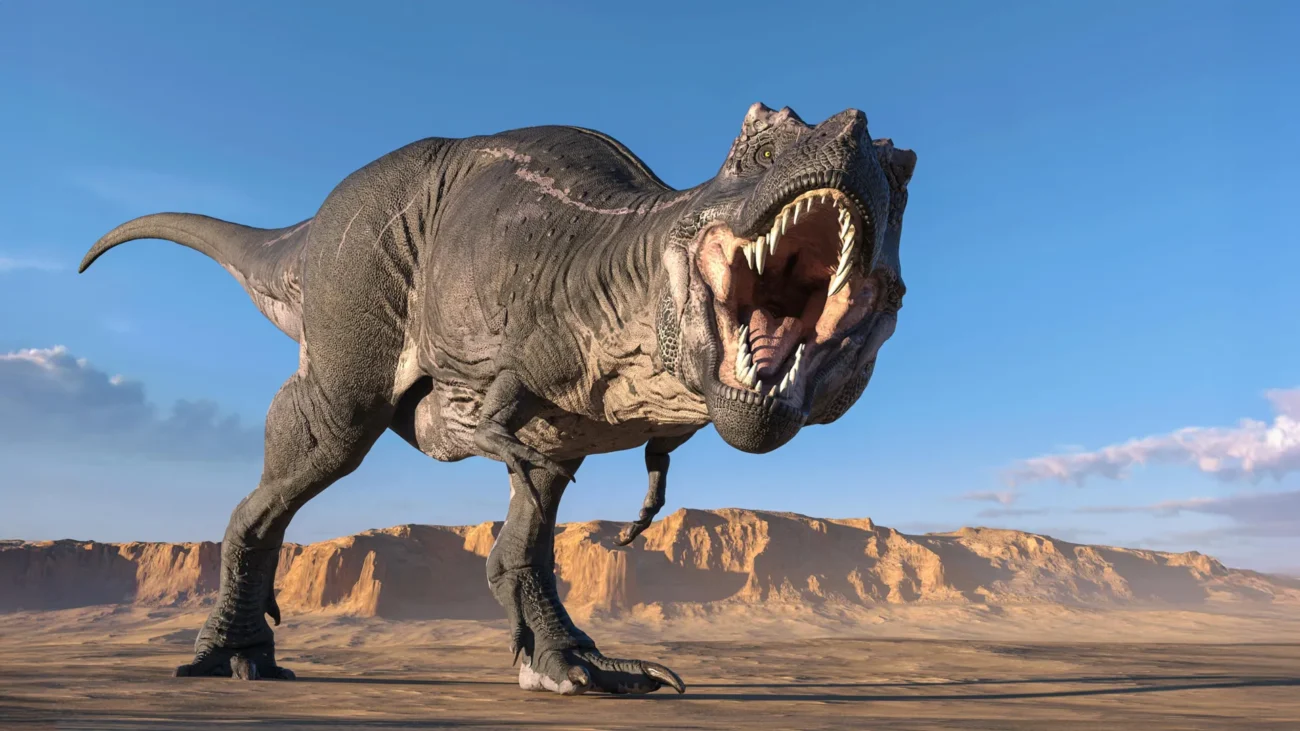
For more than a century, the reconstruction of Tyrannosaurus rex has relied on the silent testimony of bones, teeth, and footprints. Unearthed from ancient sedimentary layers dating back over 60 million years, these physical remnants have long fueled one of paleontology’s most enduring debates: Was the undisputed king of the Cretaceous an active, warm-blooded apex predator, or was it a sluggish, cold-blooded giant dependent entirely on external environmental heat? While fossil discoveries as far north as Alaska hinted that the giant dinosaur could tolerate cold conditions—implying a departure from the physiology of modern reptiles—definitive physiological proof remained frustratingly out of reach.
Now, a team of researchers at the University of California, Los Angeles (UCLA) has achieved what was once deemed impossible. By developing and refining an innovative geochemical technique, scientists have successfully taken the internal temperature of a T. rex. The findings reveal that the iconic dinosaur maintained a steady body temperature of approximately 97 degrees Fahrenheit (36 degrees Celsius)—remarkably close to the average internal temperature of a modern human. Published in the journal Science Advances, the study bridges a critical gap in evolutionary history, positioning T. rex firmly in the middle ground between ancient cold-blooded reptiles and their modern avian descendants.
A Decade of Technological Refinement
The breakthrough stems from a specialized fossil thermometer method initially developed by UCLA geobiologists roughly ten years ago. The technique was designed to investigate the thermal biology of extinct species by examining the microscopic chemical composition of their skeletal remains. However, applying this methodology to a specimen as historically and scientifically significant as a T. rex presented a major hurdle. Early iterations of the procedure required a substantial quantity of fossil material—a destructive sampling requirement that curators of world-class museum collections could not responsibly accommodate.
For years, the technique remained too demanding for prized tyrannosaur specimens. Determined to overcome this limitation, the UCLA research team embarked on a rigorous decade-long effort to optimize the analytical process. By systematically refining their methods, the researchers successfully reduced the required sample size by approximately 90 percent.
This drastic reduction changed the calculus for museum administrators. Armed with a technique that required only microscopic quantities of material, the UCLA team approached the Natural History Museum of Los Angeles County (NHM). Following careful deliberation, NHM curators agreed to permit the extraction of tiny portions from two teeth belonging to "Thomas"—one of the most complete T. rex skeletons housed in the museum’s dinosaur hall. This pivotal collaboration paved the way for the historic thermal analysis, yielding the first direct temperature measurement ever recorded for a tyrannosaur.
Decoding the Ancient Thermometer
The scientific principle behind the measurement lies deep within the crystalline structures of fossilized tooth enamel. During the life of the animal, rare isotopes of carbon and oxygen become locked into the mineral matrix of the teeth. The frequency with which these specific isotopes bond together is governed by thermodynamic laws directly tied to body temperature: more of these rare bonds form under cooler internal conditions, while significantly fewer are forged at higher temperatures.
This chemical relationship functions as a natural, permanent thermometer. According to study co-author Robert Eagle, the methodology exploits the unique durability of tooth enamel. While bones undergo continuous cellular remodeling, resorption, and replacement throughout an animal’s life—leaving them vulnerable to environmental chemical alterations over millions of years—tooth enamel features dense, robust crystalline structures. These structures resist post-mortem contamination, faithfully preserving the isotopic signature of the living animal’s internal climate.
To perform the analysis, lead author Randy Flores and senior researchers utilized a specialized dental drill to harvest microscopic amounts of powdered enamel from the teeth of Thomas the T. rex. The samples were subsequently dissolved in phosphoric acid to release carbon dioxide gas containing the targeted isotope bonds. Using an advanced mass spectrometer paired with a gas-pressurization system to create a denser stream of carbon dioxide, the team obtained precise, reliable measurements from fractions of a gram of fossil material.
Comparative Analysis and Geological Controls
To validate their findings against potential environmental contamination—such as heat or mineral shifts caused by geological pressures over millions of years—the researchers incorporated a vital control group. Alongside the T. rex teeth, the team analyzed ancient crocodilian fossils excavated from the same Hell Creek formation in Montana.
The results provided a stark and reassuring contrast. While the T. rex registered a warm 36 degrees Celsius (97 degrees Fahrenheit), the contemporaneous crocodilian fossils yielded a body temperature of 30 degrees Celsius (86 degrees Celsius)—substantially lower and consistent with the physiology of semi-aquatic, cold-blooded reptiles.
This significant thermal discrepancy effectively ruled out the possibility that surrounding geological processes had artificially altered the isotopic signatures of both animals in tandem. Had groundwater or burial heat dictated the chemical readings, both species would have displayed nearly identical values. Instead, the distinct temperature separation confirms that the isotopic signals reflect genuine biological differences between the organisms.
Metabolic Implications for an Apex Predator
The confirmation of a 97-degree Fahrenheit body temperature carries profound implications for our understanding of T. rex behavior and ecology. Maintaining an internally regulated, elevated body temperature demands a high metabolic rate, supporting the paradigm of T. rex as an energetic, active predator or a highly mobile scavenger capable of sustained physical exertion.
Furthermore, this physiological adaptation illuminates how tyrannosaurs successfully colonized diverse, often harsh environments. During the Cretaceous period, Earth experienced a greenhouse climate with global temperatures significantly warmer than today. Yet, high-latitude regions such as ancient Alaska still experienced severe, dark winters. While cold-blooded ectotherms—such as lizards, turtles, and crocodiles—are notably absent from Cretaceous fossil beds in Alaska, T. rex remains have been recovered there.
Co-author Alessandro Chiarenza, a paleontologist at University College London, notes that internal thermal regulation provided tyrannosaurs with a distinct evolutionary edge. By combining the new empirical temperature data with paleoclimate models, researchers reconstructed a geographic range spanning thousands of miles—from modern-day Mexico to the Arctic circle—where a 97-degree body temperature would have allowed T. rex to thrive while competing reptiles languished.
Balancing Conservation and Discovery
The success of the UCLA study also highlights the delicate balance modern museums must strike between preserving rare artifacts and advancing scientific knowledge. Luis Chiappe, curator of the Dinosaur Institute and head of research and collections at the Natural History Museum of Los Angeles County, emphasized the gravity of approving destructive sampling on iconic specimens.
"We are asked for fossils for destructive analysis constantly," Chiappe stated. "Our institution houses tens of millions of specimens that are entirely irreplaceable. We must weigh the physical alteration of a specimen against the potential acquisition of fundamental knowledge about the natural world. In this case, sacrificing minute portions of two teeth to unlock the metabolic secrets of T. rex was a trade-off that significantly advanced our field."
Broader Impact and Future Directions
The integration of geochemistry and paleontology marks a transformative shift in how researchers study extinct megafauna. By establishing that T. rex occupied a thermal sweet spot—hotter than modern reptiles and sluggish mammals like sloths, yet cooler than modern birds, which typically register between 40 and 43 degrees Celsius (104–109 degrees Fahrenheit)—scientists have clarified the intermediate evolutionary steps linking non-avian dinosaurs to their modern avian descendants.
As analytical techniques continue to improve, researchers anticipate applying this refined isotopic thermometer to a broader array of prehistoric species. By lifting the veil on internal body temperatures, science is stepping closer to painting a fully realized, dynamic portrait of life on Earth tens of millions of years ago, transforming cold stone bones into living, breathing biological entities.

