


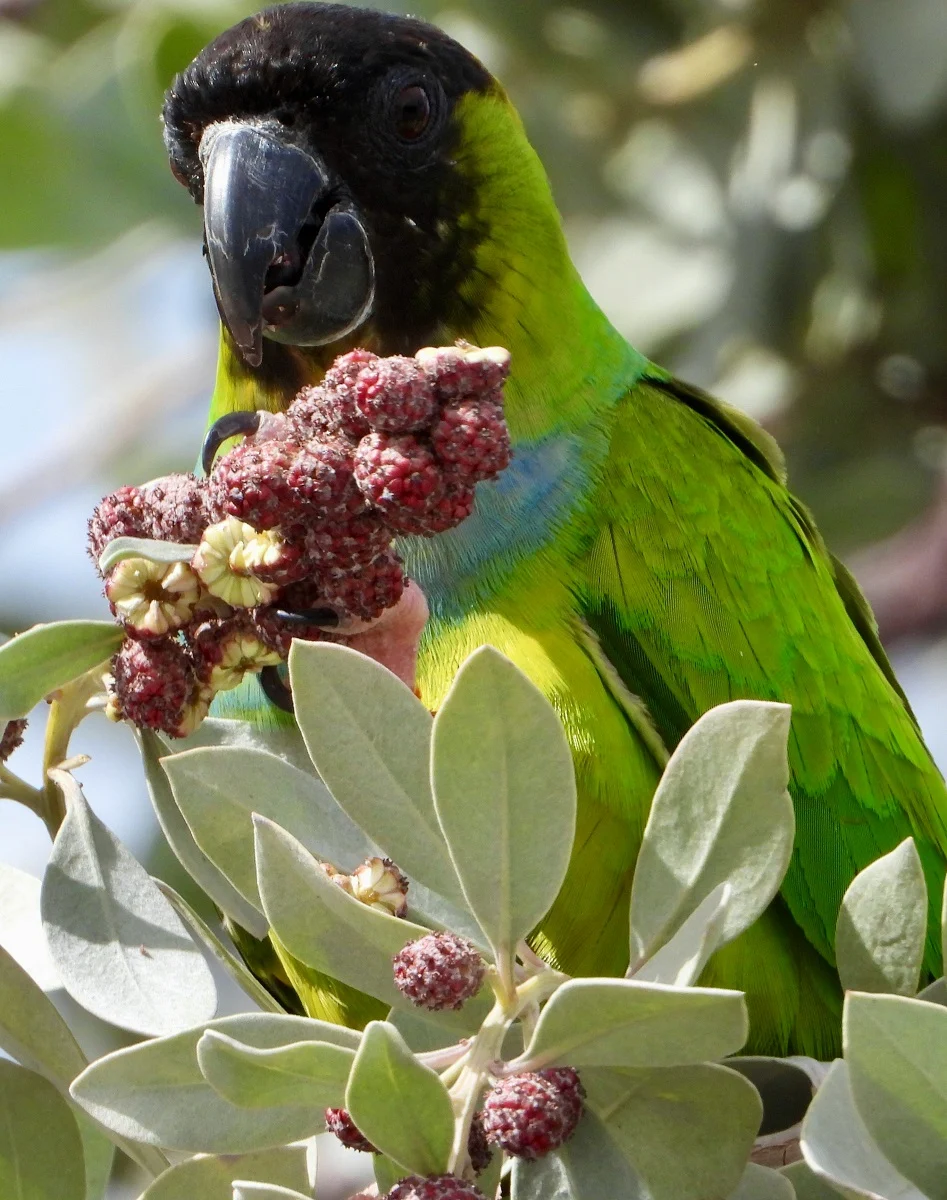
The nanday conure—scientifically classified as Aratinga nenday and historically recognized under the monotypic genus Nandayus nenday—stands as one of the most vibrant, intelligent, and acoustically powerful companion parrots available in the avian pet trade. Indigenous to the open lowlands and palm savannas of central South America, this small-to-medium-sized parrot has captured the attention of aviculturists worldwide due to its striking appearance, playful demeanor, and high social intelligence. However, prospective owners are increasingly advised to look past the bird’s aesthetic appeal and evaluate whether their living situations can accommodate an animal renowned for producing some of the highest decibel vocalizations recorded in the avian kingdom. As urban and suburban households grapple with noise ordinances and close-quarter living, understanding the comprehensive needs of Aratinga nenday has become essential for ensuring the welfare of both the bird and its human caregivers.
Taxonomic Evolution and Natural Distribution
The taxonomic classification of the nanday conure has undergone significant revision over the decades. Historically segregated into its own monotypic genus as Nandayus nenday, the species was reevaluated in a landmark 2004 molecular systematics study published in Molecular Phylogenetics and Evolution. Researchers analyzing mitochondrial and nuclear DNA concluded that the nanday conure did not warrant a separate genus and instead nested firmly within the Aratinga clade, grouping it alongside closely related South American parakeets such as the sun conure (Aratinga solstitialis) and the jenday conure (Aratinga jenday).
In the wild, the nanday conure occupies a distinct geographic range forming a narrow band stretching through the center of Paraguay, extending into southern Brazil, eastern Bolivia, and northern Argentina. Its natural habitat primarily consists of open lowlands, swampy savannas, and agricultural pastures situated below 2,600 feet (800 meters) in elevation. These regions are frequently characterized by scattered palm trees, which provide vital nesting cavities and foraging resources.
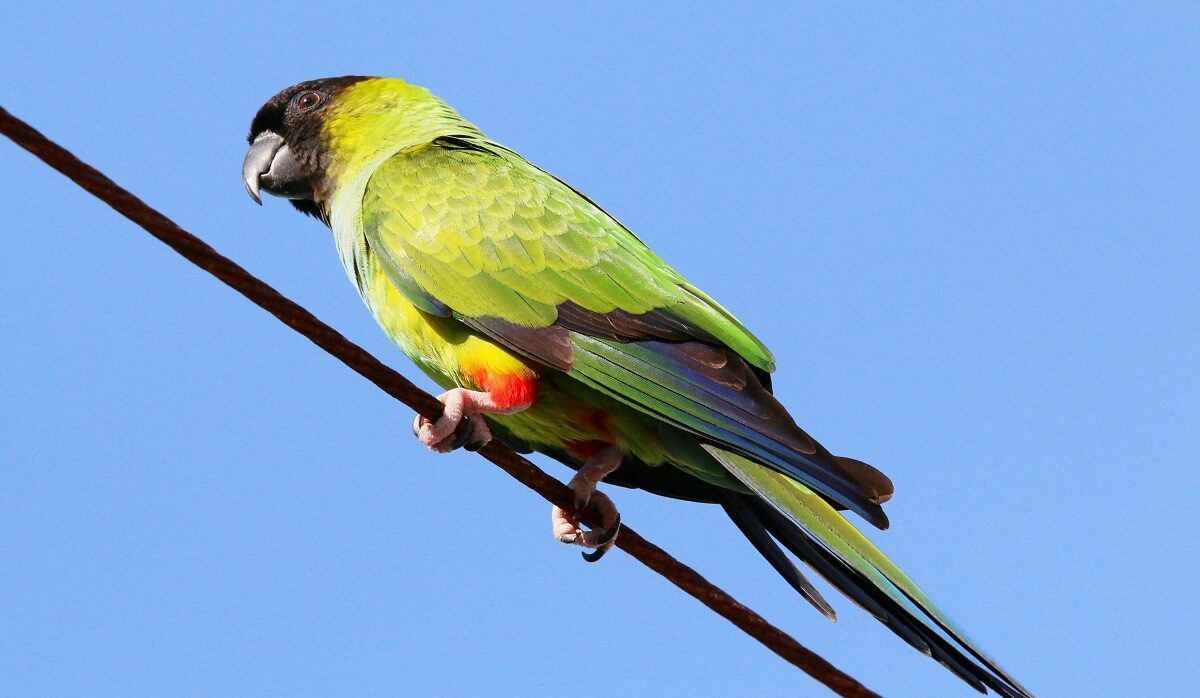
Unlike many avian species experiencing population declines due to deforestation, the International Union for Conservation of Nature (IUCN) Red List currently classifies Aratinga nenday as a species of Least Concern. Field observations indicate that wild populations are paradoxically expanding. Anthropogenic land-use changes—specifically the conversion of dense forests into cattle pastures—have created expansive open feeding grounds that favor the foraging habits of these gregarious parakeets. Furthermore, the species has demonstrated remarkable adaptability, establishing thriving feral populations far outside its native South American range. Escaped or intentionally released pets have successfully colonized urban and suburban environments in countries such as Spain, as well as American states including California and Florida, where studies rank them among the top three most successful naturalized parrot species. While these feral flocks are a testament to the bird’s hardiness, wildlife management agencies note that introduced populations can exert pressure on local ecosystems and agricultural crops.
Physical Characteristics and Lifespan
Weighing up to 140 grams and reaching a maximum length of approximately 12 inches (30 centimeters), the nanday conure is visually distinguished by its stark, coal-black head and face, a feature that earned it the common moniker of the black-hooded conure. This dark hood contrasts sharply with a primarily bright green body, creating an arresting visual profile. Additional anatomical features include a stout black beak, prominent white periophthalmic eye rings, rich blue-green chest feathers, and brilliant red plumage on the thighs.
When provided with optimal captive husbandry—including specialized veterinary care, mental stimulation, and a nutritionally balanced diet—nanday conures can achieve a lifespan of up to 30 years. This longevity represents a significant long-term commitment for potential owners, comparable to acquiring a domestic cat or dog, and necessitates comprehensive estate and lifestyle planning to ensure the bird is cared for throughout its life cycle.
Dietary Requirements in the Wild and Captivity
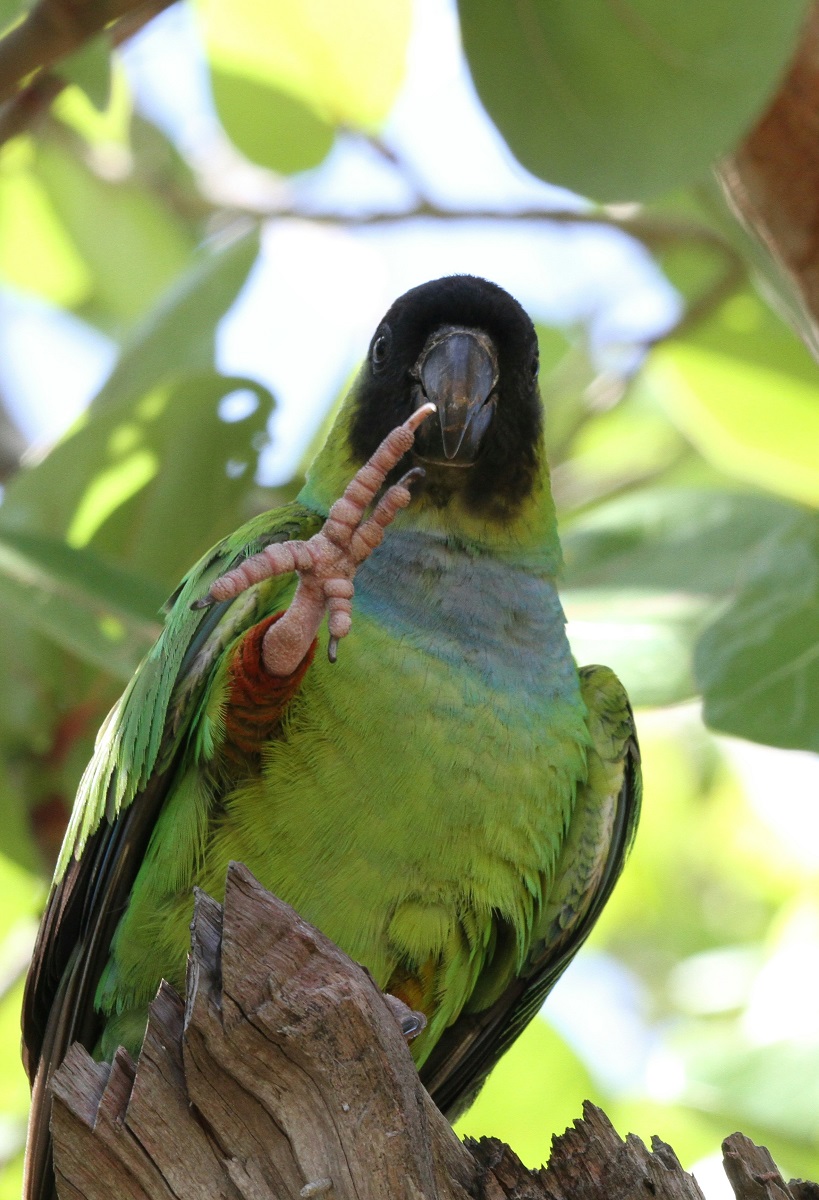
In their native South American habitat, nanday conures exhibit a diverse and ecologically significant diet. Field studies demonstrate that they primarily consume wild fruits, such as those of the Copernicia palm, alongside seeds, berries, flowers, and tender buds. Notably, a 2002 study published in the Brazilian Journal of Biology identified the nenday conure as an active pollinator for the Erythrina dominguezii tree, as the birds routinely extract nectar from the blossoms and inadvertently distribute pollen across the landscape. Additionally, like many Neotropical parrot species, wild nanday conures frequently visit mineral-rich clay licks to ingest soil, a behavioral adaptation believed to supply essential micronutrients and neutralize toxic compounds found in raw vegetation.
Transitioning these foraging animals to a captive environment requires a paradigm shift in avian nutrition. Historically, commercial seed mixes were viewed as the standard staple for pet parrots. However, modern avian veterinary medicine has firmly established that seed-exclusive diets are deficient in essential vitamins and minerals while being excessively high in fats, frequently leading to avian hepatic lipidosis (fatty liver disease), obesity, and shortened lifespans.
Modern avian veterinarians recommend a daily diet anchored by high-quality commercial pellet formulations designed specifically for small-to-medium parrots. These pellets should be supplemented daily with a wide variety of fresh, parrot-safe fruits and vegetables, including leafy greens, broccoli, bell peppers, apples, and grapes. Complex carbohydrates such as cooked brown rice, whole-grain pasta, and sprouted seeds can be incorporated safely in moderation, alongside occasional high-protein sources like boiled egg. Furthermore, strict environmental precautions are mandatory in the home: because birds possess highly sensitive respiratory systems, owners must avoid the use of nonstick (PTFE-coated) cookware, aerosol sprays, scented candles, and tobacco products, all of which emit volatile organic compounds and fumes that can prove rapidly fatal to avian pets.
Housing, Environmental Enrichment, and Social Needs
Replicating an appropriate habitat in captivity demands careful attention to both spatial dimensions and psychological enrichment. In professional aviculture, nanday conures thrive best in full-sized outdoor or indoor aviaries measuring at least 10 feet (3 meters) in length to accommodate active flight. For indoor housing, avian specialists recommend a spacious wire cage with dimensions no smaller than 30 by 24 by 24 inches (75 by 60 by 60 cm), prioritizing horizontal length over vertical height to allow the bird to stretch and flutter its wings adequately. The interior must be outfitted with natural wood perches of varying diameters to prevent foot ailments such as bumblefoot, alongside a rotation of durable conure-safe chew toys to satisfy their strong instinct to forage and dismantle objects.
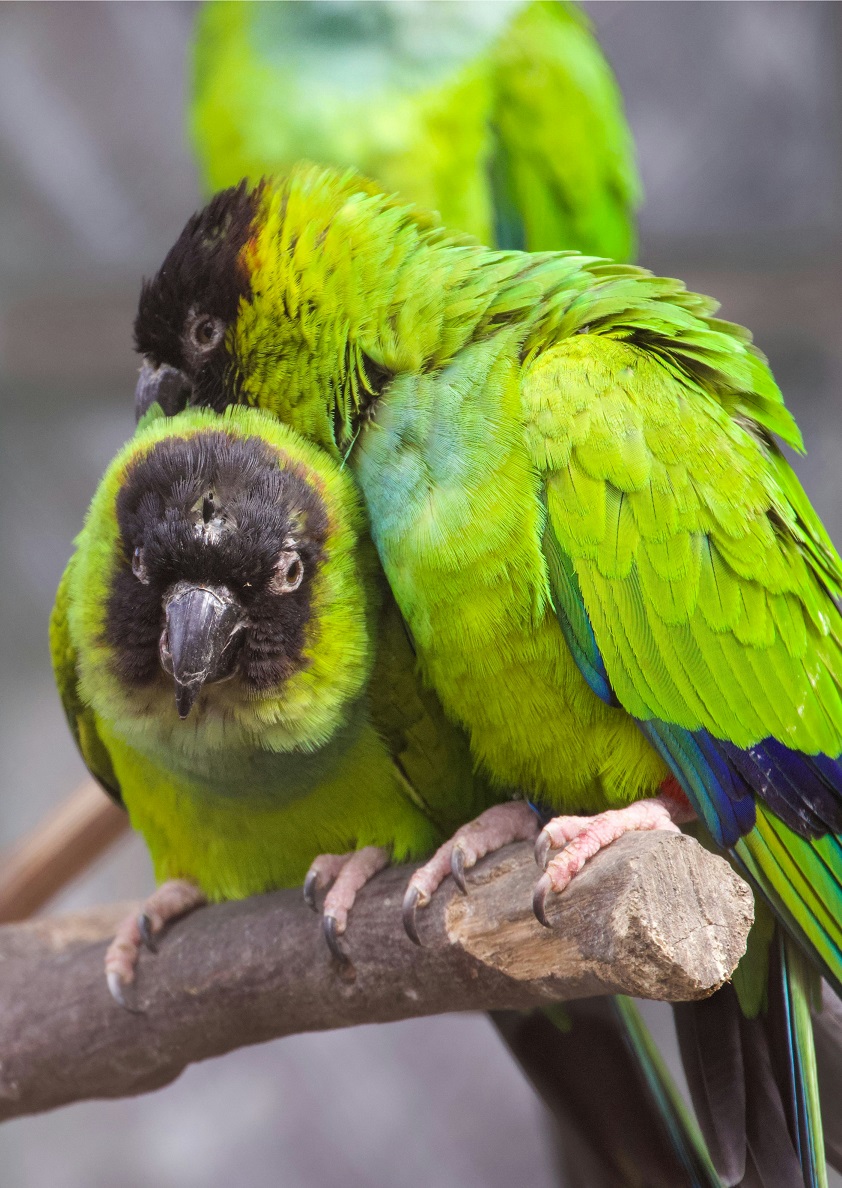
Beyond physical space, cognitive and social enrichment represent the most critical components of nanday conure husbandry. As highly social flock animals, they require substantial daily interaction to prevent psychological distress. Prolonged isolation in captivity frequently manifests as destructive behavioral pathologies, including excessive screaming, cage aggression, and severe feather-picking or self-mutilation. To mitigate loneliness—particularly for owners maintaining standard 9-to-5 work schedules—pairing two nanday conures or integrating the bird closely into daily family routines is strongly recommended.
Temperament and Social Integration
Within the diverse family of Neotropical parakeets, Aratinga conures are widely recognized for their affectionate, extroverted, and exuberant personalities. Unlike some smaller parrot species known for defensive nipping, a well-socialized nanday conure typically exhibits an even temperament, readily accepting handling from multiple members of a household. They are exceptionally outgoing creatures that form deep bonds with their human caregivers, often seeking out physical contact such as resting on an owner’s shoulder or receiving gentle head scratches.
However, this high degree of sociability has a distinct counterpart: extreme dependency. Nanday conures can quickly develop possessive behaviors, exhibiting jealousy toward perceived competitors for their owner’s attention and voicing loud protests whenever a caretaker leaves the room. Meeting their psychological needs requires a structured daily routine consisting of interactive play, verbal training exercises, and constant environmental novelty.
The Acoustic Reality: Managing Extreme Noise Levels
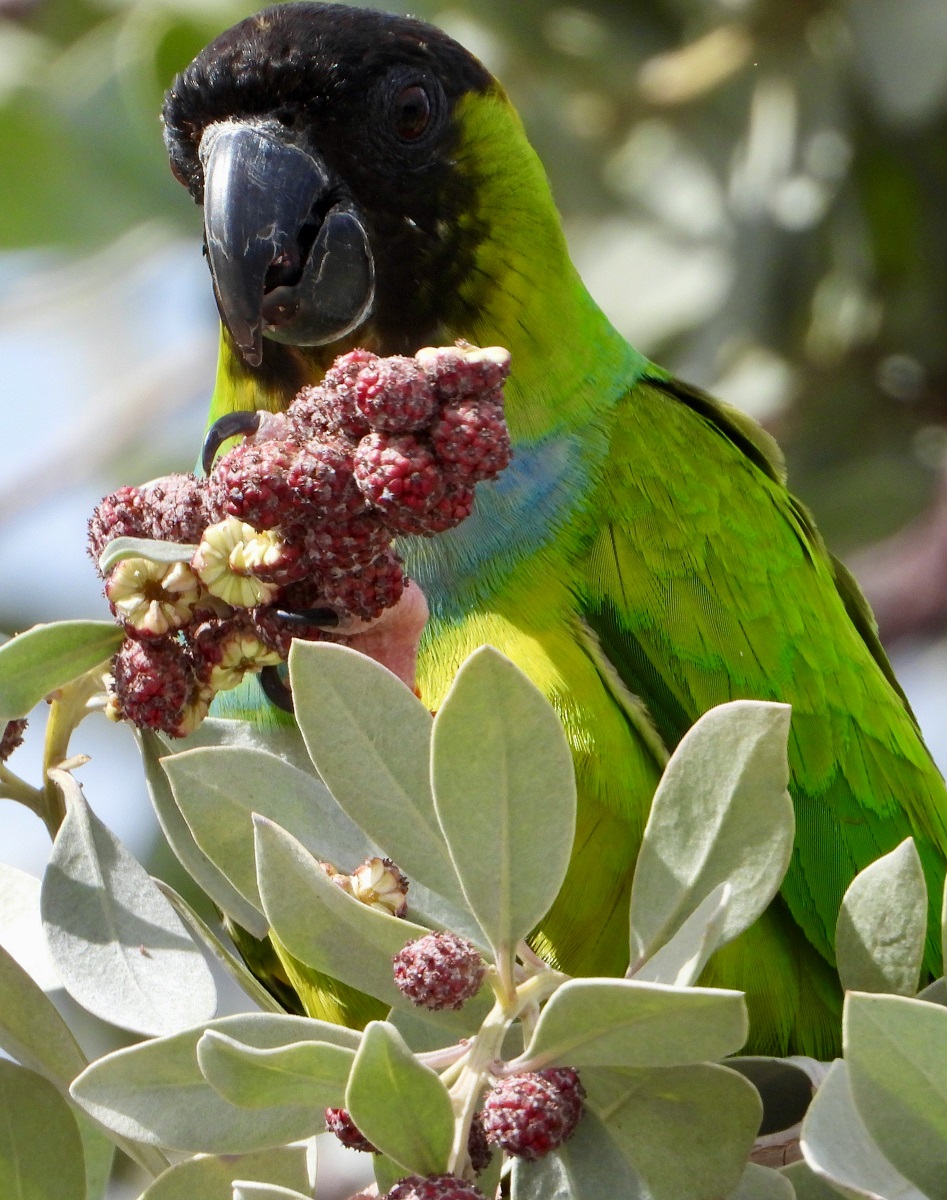
The single most defining characteristic of the nanday conure—and the primary reason for relinquishment to rescue facilities—is its vocal volume. While all parrots generate vocalizations, conures belonging to the genus Aratinga are consistently ranked among the loudest of all companion psittacines.
Avian literature and acoustic studies underscore the sheer intensity of these vocalizations. While large macaws can vocalize at approximately 105 decibels and Moluccan cockatoos can reach 135 decibels, field and laboratory recordings have documented the piercing flock calls of the nanday conure peaking at an astounding 155 decibels under moments of extreme excitement or alarm. Vocalizations of this magnitude meet or exceed the threshold of human pain and possess the physiological capability to cause permanent damage to human eardrums with prolonged exposure.
Consequently, animal welfare organizations and avian behaviorists strongly urge prospective owners to audit their living situations before acquiring a nanday conure. The species is fundamentally unsuited for apartment living, condominiums, or suburban neighborhoods with stringent noise restrictions or shared walls. Experts recommend that individuals interested in the species listen to audio samples via specialized databases such as xeno-canto or visit experienced breeders to experience the volume firsthand before committing to a three-decade ownership timeline.
While they possess limited linguistic capacity compared to larger hookbills like African grey parrots, nanday conures are capable of learning simple words, mimicking household sounds, and engaging in vocal "baby babble" while manipulating toys. Teaching them to speak typically involves repetitive reinforcement of short phrases or whistles during calm periods of the day. Nonetheless, owners must accept that the natural inclination of the nanday conure is to vocalize loudly—particularly during dawn and dusk—reflecting the evolutionary adaptation of a gregarious South American parakeet calling across vast, open lowland habitats.

