


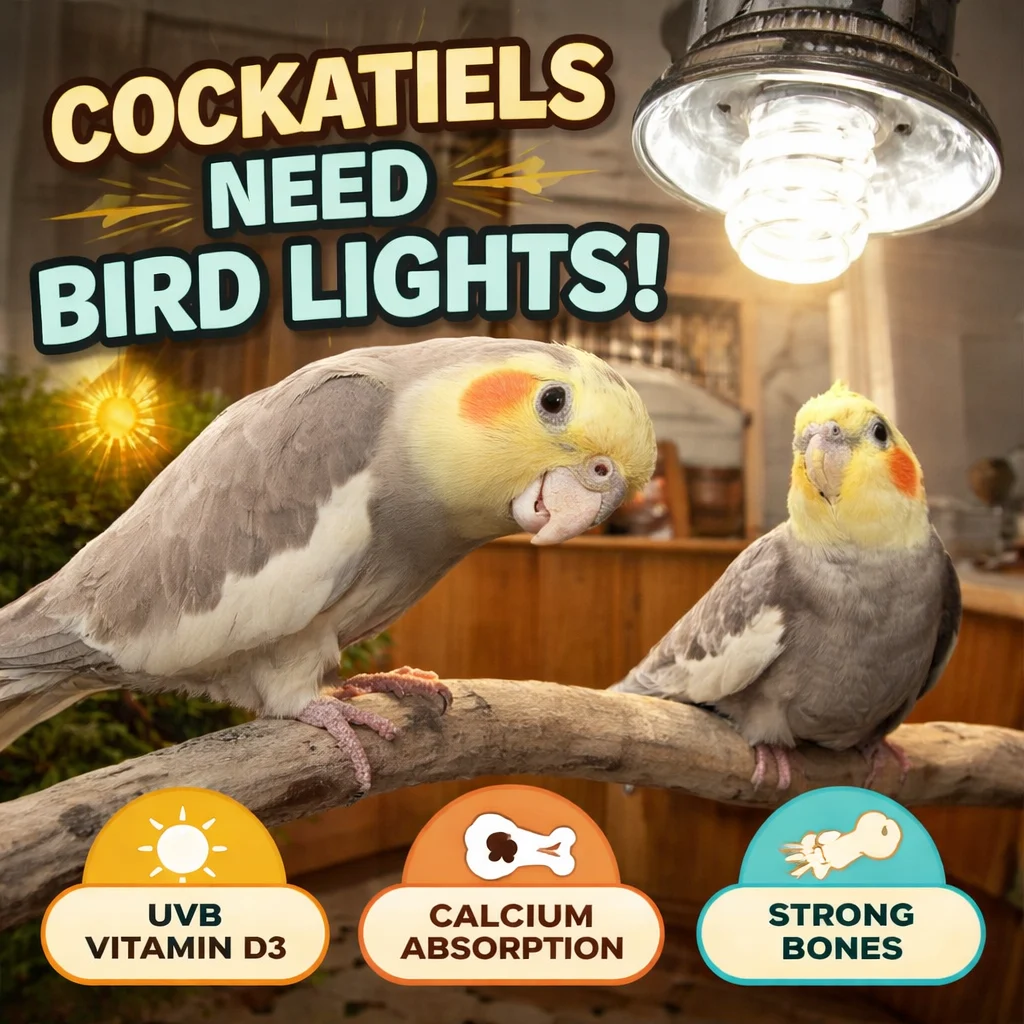
For millions of bird owners worldwide, the comfort of an indoor environment is considered paramount for their feathered companions. However, a significant yet often overlooked aspect of avian care for birds living indoors is their exposure to specific wavelengths of ultraviolet B (UVB) light. While many assume that a bright room or a window perch provides sufficient light, scientific consensus and extensive veterinary experience underscore a critical distinction: ambient indoor brightness does not equate to biologically effective UVB exposure. This fundamental misunderstanding can lead to a silent, chronic deficiency that subtly erodes a bird’s health, impacting everything from bone density and immune function to mood and reproductive success. This article delves into the critical necessity of proper UVB lighting, addresses common misconceptions, and provides a comprehensive framework for ensuring the well-being of indoor avian pets.
The Silent Threat: Understanding Avian Vitamin D3 Deficiency
The core reason for the indispensable need for UVB lighting stems from avian physiology. Unlike humans, who can absorb some vitamin D from dietary sources or supplements, birds are uniquely adapted to synthesize vitamin D3 directly in their skin and preen gland oil when exposed to specific UVB wavelengths, primarily between 290 and 315 nanometers. This process is not merely beneficial; it is absolutely vital. Once synthesized, this pre-vitamin D3 is converted into active vitamin D3 (calcitriol), a hormone-like compound that regulates calcium and phosphorus metabolism. Without adequate active vitamin D3, birds cannot properly absorb calcium from their diet, irrespective of how calcium-rich their food may be.
The implications of this deficiency are profound and far-reaching. Calcium is not only the primary building block for bones and eggshells but also plays critical roles in nerve transmission, muscle contraction (including heart function), blood clotting, and enzymatic processes. A chronic lack of active vitamin D3 thus precipitates a cascade of health issues, often manifesting subtly before escalating into severe, life-threatening conditions.
The Indoor Conundrum: Why Bright Rooms Aren’t Enough
A prevalent misconception among bird owners is that a brightly lit room or a cage positioned near a window provides adequate light. This is fundamentally incorrect due to the filtering properties of glass. Standard window glass, even clear panes, effectively blocks almost all UVB radiation. While visible light passes through, the crucial UVB spectrum needed for vitamin D3 synthesis is largely excluded. Consequently, a bird perched by a window, bathed in what appears to be ample sunlight, is effectively shielded from the very wavelengths it needs for its physiological processes.
Furthermore, most artificial indoor lighting, including incandescent, fluorescent, and LED bulbs designed for human environments, does not emit the necessary UVB spectrum or intensity required by birds. Even "full-spectrum" bulbs marketed for general use typically focus on mimicking the visible light spectrum, often neglecting the crucial UVB component or providing it in an insufficient range or intensity. This creates an environment where birds are visually stimulated but physiologically starved of essential UVB. The result is a pervasive, yet often undiagnosed, vitamin D3 deficiency among indoor avian populations.
Diagnostic Indicators: Recognizing the Subtle Signs of Deficiency
Because birds are prey animals, they instinctively hide signs of weakness or illness, a survival mechanism that makes early detection of health issues particularly challenging for owners. Vitamin D3 deficiency, therefore, often develops insidiously, with symptoms becoming apparent only when the condition is moderately to severely advanced.
Initial, subtle indicators might include:
- Reduced Activity Levels: A bird that seems less playful, energetic, or engaged than usual.
- Dull Plumage: Feathers may lack their usual vibrancy, appear brittle, or show stress bars.
- Behavioral Changes: Increased irritability, lethargy, or even signs of depression.
- Subtle Grip Weakness: A slight reduction in the strength of their perch grip, which might go unnoticed without close observation.
As the deficiency progresses and calcium metabolism becomes severely impaired, more overt and concerning symptoms emerge:
- Skeletal Abnormalities:
- Osteoporosis: Weakening of bones, leading to pathological fractures with minimal trauma. This is particularly common in adult birds.
- Rickets: In young, growing birds, inadequate calcium absorption leads to soft, pliable bones, often resulting in splayed legs, bent keels, and other deformities.
- Weakened Beak and Nails: These keratinous structures can become brittle or improperly formed.
- Reproductive Issues:
- Egg-binding: A life-threatening condition where a female bird cannot pass an egg due to poor muscle contraction or soft-shelled eggs.
- Soft-shelled or Thin-shelled Eggs: Eggs laid with inadequate calcium for shell formation.
- Reduced Fertility: Overall reproductive failure or poor chick viability.
- Neurological Manifestations: Severe hypocalcemia (low blood calcium) can lead to tremors, muscle spasms, and even seizures, as calcium is vital for proper nerve and muscle function.
- Immune Compromise: Vitamin D3 also plays a role in immune system modulation, and its deficiency can lead to increased susceptibility to infections.
The "Expert Note" in the original content succinctly captures the gravity: "Birds hide weakness. By the time falling, tremors, or egg-binding occur, deficiency may have been developing for months. Light is preventive – not reactive." This highlights the critical importance of proactive measures rather than waiting for visible symptoms.
The Science Behind Avian Photobiology and Light Cycles
Beyond vitamin D3 synthesis, light plays several other crucial roles in avian health. Birds possess a unique visual system, often described as tetrachromatic, meaning they can perceive a broader spectrum of light than humans, extending into the ultraviolet range. While this UV vision is distinct from UVB’s role in D3 synthesis, it affects how birds perceive their environment, forage for food (many fruits and seeds have UV reflective patterns), recognize mates, and communicate. Proper full-spectrum lighting, which includes UV-A (315-400 nm), can therefore enhance a bird’s psychological well-being and environmental enrichment.
Furthermore, photoperiodism – the regulation of physiological responses by the duration of light and dark periods – is essential for birds. Consistent light cycles (circadian rhythms) influence hormonal regulation, breeding cycles, seasonal molting, and overall behavior. Disruptions to these natural cycles due to inconsistent or inadequate indoor lighting can lead to stress, behavioral problems, and health issues. While UVB lighting primarily addresses vitamin D3, a comprehensive lighting strategy often considers both UVB and appropriate visible light spectrums to mimic natural conditions as closely as possible.
Addressing Safety Concerns: Dispelling Myths and Ensuring Proper Use
The notion of using specialized UV lights often triggers concerns about safety, particularly the risk of skin damage or cancer. It is crucial to understand that, like any powerful tool, UVB lights are safe and beneficial when used correctly, but potentially harmful if misused.
- "Are bird lights dangerous?" Used incorrectly, any UV source can indeed be harmful. However, avian-specific UVB lights are engineered to mimic the short, controlled exposure a bird would naturally receive in the wild, not continuous, intense radiation. The key to safety lies in adhering to specific guidelines regarding distance, duration, and proper fixture type. More is not better; consistent, measured exposure is the goal.
- "Can too much UV cause cancer?" Excessive, prolonged UV exposure, whether from natural sunlight or artificial sources, can indeed damage tissue and potentially increase cancer risk. This is why human tanning beds, for instance, are associated with skin cancer. For birds, however, the recommended exposure is carefully calibrated. Avian veterinarians and manufacturers typically advise limiting UVB exposure to short daily sessions, typically 1 to 3 hours. This duration is sufficient for vitamin D3 synthesis without risking overexposure. The use of an automatic timer is highly recommended to ensure consistent and safe exposure limits, protecting both the bird and preventing owner forgetfulness.
- Distance is Critical: UVB intensity diminishes rapidly with distance. Manufacturers provide specific guidelines for bulb placement, typically recommending a distance of 6 to 18 inches from the bird’s favorite perch. Placing the light too far away renders it ineffective, while placing it too close can cause harm.
- Proper Fixture: The fixture holding the UVB bulb should not have a UV-filtering cover (like plastic shields often found on standard fluorescent fixtures). A simple clamp lamp with a reflective interior is often suitable, directing the light efficiently.
- Bulb Replacement: UVB output from these bulbs degrades over time, even if the visible light remains. Most avian UVB bulbs need to be replaced every 6 to 12 months, depending on the brand and usage, to maintain effective UVB output. Marking the purchase date on the bulb is a good practice.
Implementing a Bird Lighting Protocol: A Step-by-Step Guide
For bird owners ready to integrate proper UVB lighting, a systematic approach ensures maximum benefit and safety:
- Selection of the Right Bulb: Choose an avian-specific UVB bulb from a reputable brand. These are typically linear fluorescent tubes or compact fluorescent lamps (CFLs) specifically designed to emit the correct UVB spectrum for birds. Avoid "full-spectrum" bulbs not explicitly marketed for reptiles or birds, as they often lack sufficient UVB.
- Strategic Placement:
- Position the UVB light directly above the cage, ensuring no wire mesh, plastic, or glass obstructs the light’s path to the bird.
- Mount it at the manufacturer’s recommended distance (e.g., 6-18 inches) from the bird’s primary perching area.
- Ensure there’s a shaded area within the cage where the bird can retreat if it desires, mimicking natural conditions where birds can seek shade.
- Consistent Schedule:
- Utilize an automatic timer to provide UVB exposure for 1 to 3 hours daily. This consistency is crucial for maintaining circadian rhythms and optimal vitamin D3 synthesis.
- Consider providing the UVB exposure during the brightest part of the day, mirroring natural sunlight.
- Regular Monitoring: Observe your bird’s behavior, activity levels, and physical condition closely. While improvements are gradual, positive changes should become apparent over weeks or months.
- Routine Replacement: Mark the date of installation and replace the bulb at the recommended interval (typically 6-12 months) to ensure continued effective UVB emission.
Expected Outcomes and Monitoring Progress
The benefits of proper UVB lighting are not instantaneous but accrue over time as the bird’s physiology rebalances. Owners should expect gradual improvements, rather than a sudden "flipping of a switch."
Observable signs of improved health and well-being include:
- Increased Activity and Alertness: A bird that is more engaged, active, and playful.
- Enhanced Feather Quality: Brighter, more vibrant plumage with improved texture and fewer stress bars.
- Stronger Grip and Coordination: Noticeable improvement in their ability to perch and move gracefully.
- Stable Mood: A reduction in irritability, lethargy, or behavioral issues.
- Improved Appetite and Digestion: Better overall nutrient absorption.
- For Breeding Birds: Improved eggshell quality, higher fertility rates, and healthier offspring.
It is highly recommended that bird owners consult with an avian veterinarian for guidance on implementing UVB lighting, especially if their bird is already showing signs of deficiency. Veterinary check-ups, including potential blood tests for calcium and vitamin D levels, can provide objective data on the efficacy of the lighting protocol and inform any necessary adjustments to diet or supplementation.
Broader Implications and Industry Response
The growing awareness of UVB lighting’s importance reflects a broader trend towards more scientifically informed and holistic avian pet care. The avian veterinary community has been at the forefront of advocating for proper lighting. Leading organizations like the Association of Avian Veterinarians (AAV) consistently publish guidelines and educational materials emphasizing the critical role of UVB. Many avian vets now consider UVB lighting a non-negotiable component of a healthy indoor avian environment, akin to a balanced diet and regular vet check-ups.
In response to this growing demand and scientific understanding, the pet product industry has seen an expansion in specialized avian lighting solutions. Manufacturers are continually innovating, producing bulbs with optimized spectra and longer lifespans, along with user-friendly fixtures and timers. Educational initiatives by these companies, often in collaboration with avian experts, aim to inform bird owners about the specific needs of their pets.
Bird advocacy groups and online communities play a crucial role in disseminating this information, fostering a culture of informed pet ownership. Discussions about UVB lighting, proper cage setup, and diet are commonplace, helping to empower owners to provide the best possible care. This collective effort underscores an evolving understanding that responsible bird ownership extends beyond basic food and shelter to encompass the complex physiological and psychological needs of these intelligent and sensitive creatures.
Conclusion: A Mandate for Avian Well-being
The necessity of appropriate UVB lighting for indoor birds is not merely a recommendation; it is a fundamental requirement for their long-term health and welfare. The distinction between general indoor brightness and biologically effective UVB radiation is critical and, if overlooked, can lead to a silent but debilitating vitamin D3 deficiency. By understanding the physiological role of UVB, recognizing the subtle signs of deficiency, and implementing a safe and consistent lighting protocol, bird owners can proactively safeguard their pets’ health. This preventive measure, supported by scientific evidence and veterinary consensus, is a cornerstone of comprehensive avian care, ensuring that our feathered companions not only survive but truly thrive in their indoor environments. Providing the right light is an investment in a vibrant, active, and long life for every indoor bird.

