


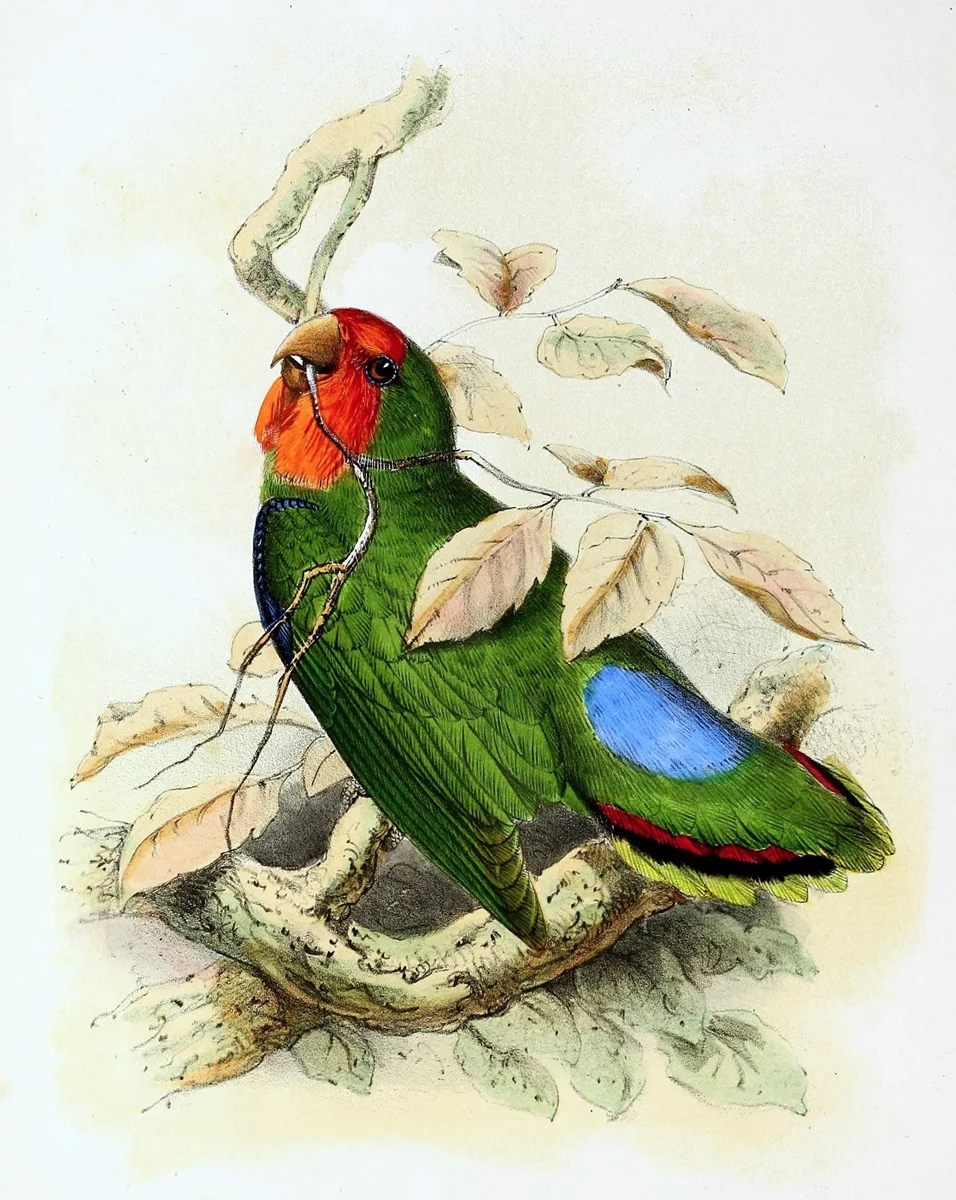
The red-headed lovebird, scientifically cataloged as Agapornis pullarius, remains one of the most enigmatic yet elusive members of the Psittacidae family encountered in contemporary ornithology. While numerous related lovebird species have established themselves as fixtures within the global pet trade, Agapornis pullarius has largely evaded domestic popularity due to its highly sensitive disposition and specialized environmental requirements. Indigenous to the tropical savannahs of West and Central Africa, this vibrant yet delicate avian species presents a complex profile encompassing ecological adaptation, declining wild populations, and significant breeding challenges within captivity.
Geographic Range and Natural Habitat Dynamics
Distributed across a broad but fragmented geographic corridor, the natural habitat of the red-headed lovebird extends from western sub-Saharan Africa—with historical sightings reaching as far west as Guinea—straight across the continent to East Africa, terminating near Ethiopia. Operating primarily as a sedentary rather than a nomadic species, Agapornis pullarius demonstrates a distinct ecological preference for tropical lowland savannahs. These birds routinely inhabit environments interspersed with mature trees while actively avoiding dense primary rainforests.
Field observations indicate that these lovebirds typically navigate their environments in pairs or diminutive flocks consisting of up to several dozen individuals. Altitudinally, populations generally thrive below 2,000 meters (approximately 6,550 feet) above sea level, aligning with regional weather patterns that govern their seasonal movements and reproductive cycles.
Morphological Characteristics and Sexual Dimorphism
Exhibiting striking visual traits, the adult red-headed lovebird reaches a modest length of up to 15 centimeters (6 inches) and maintains an average weight of approximately 45 grams, boasting a maximum potential lifespan of up to 20 years under optimal conditions. The primary plumage features a brilliant, vivid green body contrasted sharply by a striking red face and beak, complemented by subtle iridescent blue markings along the lower back and a defined red band on the tail structure.

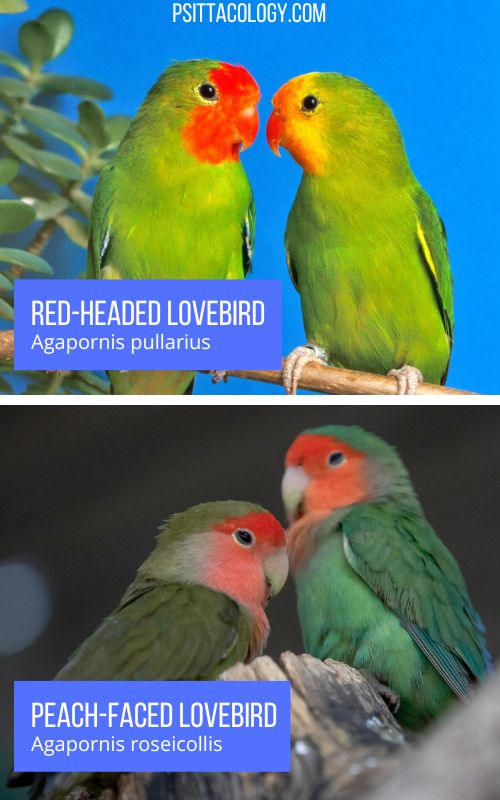
Morphological comparisons frequently highlight the close visual similarities between Agapornis pullarius and the peach-faced lovebird (Agapornis roseicollis), a vastly more common counterpart in modern aviculture. A definitive anatomical distinction lies within the coloration of the bill, which appears bright red in the red-headed lovebird and a muted beige in the peach-faced variety. Furthermore, the species displays reliable sexual dimorphism: male specimens exhibit intense scarlet facial pigmentation and vivid bill coloration, whereas females display a comparatively subdued orange-tinted face and lighter bill hue.
Dietary Habits and Agricultural Intersections
The nutritional ecology of the red-headed lovebird centers predominantly on granivorous feeding behaviors. In the wild, their diet consists largely of diverse grass seeds, with a pronounced preference for naturally occurring grains alongside cultivated agricultural crops such as millet. This reliance on cultivated food sources has historically positioned the species as a localized agricultural pest within its native range, leading to friction with local farming communities.
Beyond seeds, Agapornis pullarius supplements its nutritional intake with wild-foraged tropical fruits, notably figs and guava, depending on seasonal availability. This dietary adaptability allows them to sustain populations across variable savannah landscapes, though their dependence on specific feeding grounds exposes them to pressures driven by agricultural expansion and land conversion.
Conservation Status and Population Pressures
According to the International Union for Conservation of Nature (IUCN) Red List, Agapornis pullarius is officially categorized as a species of Least Concern. However, ornithologists and ecological researchers emphasize that this broad classification masks significant localized declines across much of its native geographic distribution.
Population metrics indicate a downward trend driven by multiple anthropogenic and environmental stressors. Primary threats include widespread habitat destruction resulting from deforestation and agricultural development, direct culling by farmers seeking to protect crop yields, and sustained capture for the international live bird trade. Historical trade data underscores the scale of commercial extraction; a comprehensive 2018 study documented the official export of nearly 40,000 red-headed lovebirds originating from native ranges since 1975.

Avian researchers Parr and Juniper, in their definitive 2010 publication Parrots: A Guide to Parrots of the World, noted that while local abundance fluctuates partly due to natural habits, a genuine overall population decline has materialized across multiple regions over the past century, exacerbated by persistent trapping for commercial distribution outside their endemic zones.
Avicultural Status and Captive Management
In stark contrast to other popular lovebird species—such as Fischer’s lovebird (Agapornis fischeri)—Agapornis pullarius is exceedingly rare in private aviculture. When kept, it is almost exclusively maintained by specialized avian institutions and highly experienced breeders rather than casual pet owners.
The primary barrier to successful captive propagation lies in the species’ acute psychological vulnerability. Red-headed lovebirds are exceptionally nervous, easily stressed, and notoriously selective regarding their environmental conditions. Wild-caught specimens, in particular, exhibit a severe susceptibility to sudden mortality triggered by minimal environmental disturbances, such as abrupt acoustic stimuli, or fatal stress responses when housed alongside more aggressive or vocal aviary companions. Consequently, industry experts advise that captive specimens are best observed rather than handled, functioning strictly as display aviary residents.
For the rare aviculturist possessing the necessary expertise and access to legally acquired, captive-bred specimens, housing requirements demand careful preparation. While they can be maintained indoors within spacious enclosures—minimally 80 centimeters (30 inches) wide featuring narrow bar spacings of approximately 1.25 centimeters (0.5 inches)—they thrive best when housed as isolated pairs in temperature-controlled, heated outdoor aviaries.
Nutritional management in captivity mirrors scientific shifts in avian veterinary medicine. While traditional keepers historically relied exclusively on dry or sprouted seed mixes, modern protocols emphasize a balanced diet integrating high-quality commercial pellets, supplemented by fresh leafy green vegetables, seasonal fruits, cooked grains, and select foraged botanicals. To support successful breeding initiatives, specialized keepers frequently introduce controlled protein sources, including boiled eggs or mealworms.
Environmental enrichment remains critical given the high intelligence of the species, yet keepers must introduce novel items incrementally to prevent stress-induced panic. Because their natural vocalizations are relatively low in volume compared to larger parrots—though punctuated by sharp, shrill calls when disturbed—they do not present the noise challenges associated with larger psittacines, provided their environment remains calm and predictable.
Reproductive Biology and Breeding Challenges
In their natural habitat, the reproductive cycle of the red-headed lovebird aligns strictly with the regional rainy season, a period defined by an abundance of vegetative resources and seed crops. Nesting habits of Agapornis pullarius are notably unique within the genus; rather than utilizing standard tree cavities exclusively, these birds frequently excavate nesting chambers within arboreal termite or ant mounds, though they will occasionally utilize ground-level cavities or abandoned woodpecker hollows.
The construction phase involves the female burrowing directly into the termitarium, subsequently reinforcing the internal structure with gathered plant matter, including grass leaves. Following successful nest preparation, the clutch typically consists of up to six eggs.
Replicating these specialized subterranean and termitarium nesting conditions in captivity has historically proven exceptionally difficult, contributing to low captive breeding success rates. Nevertheless, dedicated aviculturalists and specialized breeders have achieved breakthroughs by introducing custom-engineered nesting materials, such as specialized cork nest boxes, which simulate the tactile and thermal properties required by breeding pairs to alleviate captive stress and stimulate natural reproductive behaviors.

