


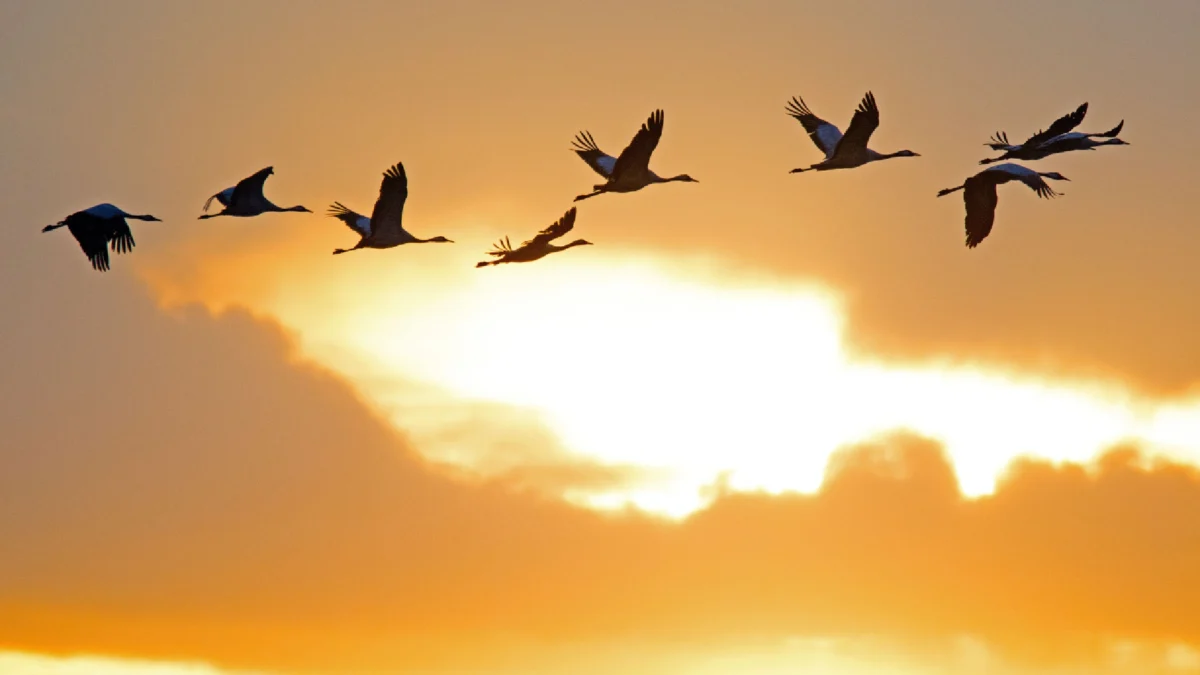
Every autumn, as the sun dips below the horizon and the bustle of human activity begins to wane, a monumental biological phenomenon takes flight across the United States. Millions of songbirds, driven by innate migratory impulses, ascend into the darkness to embark on journeys that can span thousands of miles. While these travelers remain largely invisible to the human eye, drifting through the troposphere hundreds or even thousands of meters above the ground, they are far from undetected. Through a remarkable intersection of military technology, meteorological science, and ornithological research, scientists have gained the ability to track these nocturnal migrations with unprecedented precision.
The methodology behind this observation is not a recent innovation but rather the evolution of a discovery that dates back to the early 1940s. During the height of the Second World War, British radar operators manning early warning systems began reporting mysterious, recurring blips on their screens. These echoes did not behave like enemy aircraft, nor did they correspond with known weather patterns. Lacking a better explanation, the operators dubbed these anomalous signatures "angels." It would take years of post-war analysis to determine that these "angels" were, in fact, vast flocks of birds moving across the landscape. Today, this serendipitous discovery has been refined into a sophisticated diagnostic tool that allows researchers to map, analyze, and even forecast the movements of avian populations across the North American continent.
The Evolution of Radar Ornithology
The transition from military curiosity to scientific instrument has been defined by the development of the Next-Generation Radar (NEXRAD) network, officially designated as the WSR-88D. This system serves as the backbone for modern weather surveillance in the United States, providing real-time data on precipitation, wind velocity, and storm fronts. However, its sensitivity is such that it can also detect biological matter, including insects, bats, and, most significantly, migratory birds.

The current standard for monitoring this data is the BirdCast project—a collaborative initiative between the Cornell Lab of Ornithology, Colorado State University, and the University of Delaware. By integrating WSR-88D data with sophisticated atmospheric modeling, BirdCast transforms raw radar returns into a readable, high-resolution heatmap of avian activity. These maps provide a window into a hidden world, illustrating the sheer scale of migration that occurs under the cloak of night. When birds take flight shortly after sunset, they create distinct, expanding signatures on radar imagery. Ornithologists can filter out weather-related noise—such as rain or clouds—to isolate the "biological returns," allowing for an accurate estimation of bird volume, flight direction, and velocity.
Why Nocturnal Migration Persists
The prevalence of nocturnal migration is not a matter of chance; it is a highly evolved strategy for survival. For many species, particularly small songbirds, the cover of darkness offers a multifaceted advantage. Atmospheric conditions are generally more stable and cooler at night, which helps mitigate the risk of dehydration and overheating during sustained, high-energy flight. Furthermore, by traversing the skies at night, birds avoid many of the diurnal predators, such as hawks and falcons, that rely on visual acuity to hunt.
During the daylight hours, these migrants descend to the surface to forage for food and rest, replenishing the lipid reserves essential for their endurance. While some larger avian species, including raptors and certain waterfowl, do migrate during the day, the vast majority of terrestrial migratory birds—such as warblers, thrushes, and sparrows—are strictly nocturnal travelers. This creates a fascinating dynamic: a massive, continent-wide movement of life that remains almost entirely unperceived by the billions of people living directly beneath it.
Data-Driven Insights and Biological Significance
The analytical capabilities provided by radar data have revolutionized our understanding of migration patterns. On a peak autumn night, it is estimated that more than one billion birds may be in the air simultaneously across the United States. This staggering figure highlights the ecological importance of the "aerial highway." When radar imagery reveals thousands of birds passing over a single metropolitan area in a few hours, the scale of this migration underscores the vulnerability of these populations to human-made obstacles.

The data suggests that migration is not a uniform or random process; it is highly dependent on meteorological cues. Birds are opportunistic travelers that utilize favorable winds, such as tailwinds, to significantly reduce the metabolic cost of flight. By analyzing these wind patterns in conjunction with radar, scientists have reached a point where they can predict major migration pulses days in advance. This capability has moved the field of ornithology from retrospective analysis—observing what has already happened—to proactive conservation planning.
Official Responses and Conservation Implications
The ability to predict these movements has profound implications for conservation and urban management. Ornithological organizations and conservationists frequently cite "Lights Out" programs as a critical response to migration forecasts. Migratory birds are often disoriented by the intense artificial light emitted by urban centers, leading to fatal collisions with buildings and exhaustion as they circle illuminated structures.
"When we can identify a peak migration night through radar forecasting, we have a window of opportunity to mitigate human-caused threats," notes a lead researcher associated with the BirdCast project. "By coordinating with city officials and building managers to reduce non-essential lighting during these high-intensity nights, we can significantly reduce the mortality rates of these species as they pass through dense urban corridors."
The data provided by the NEXRAD network serves as an essential communication tool between the scientific community and the public. By making these forecasts publicly available, organizations can empower homeowners and corporations to take localized action. Turning off decorative exterior lighting, pulling window shades, and dimming non-essential skyscraper illumination during peak migration dates are small, low-cost interventions that have measurable benefits for avian survival.

A Broader Perspective on Ecological Connectivity
The use of radar to track bird migration is more than a technical achievement; it is a vital indicator of ecological health. Because migratory birds are sensitive to changes in climate and habitat quality, shifts in their timing and routes provide critical data regarding the broader environmental state of North America. Changes in the timing of spring arrival or autumn departure can indicate shifts in resource availability and temperature, providing scientists with a "canary in the coal mine" for the effects of climate change.
Moreover, the interdisciplinary nature of this work—combining atmospheric physics, computer science, and biology—demonstrates the power of modern technology in addressing complex conservation challenges. The collaborative structure of the Cornell Lab of Ornithology and its partners represents a modern standard for data sharing and public engagement. By translating raw, chaotic radar data into accessible visual formats, these institutions are fostering a greater public appreciation for the silent, majestic movements that define our seasons.
As we look toward the future, the integration of artificial intelligence with radar data processing promises even greater resolution in our tracking capabilities. Researchers hope to eventually distinguish between different types of avian groups or even track individual species more accurately, further refining our understanding of how these birds navigate the complexities of a rapidly changing landscape.
In conclusion, the practice of tracking birds via weather radar serves as a bridge between the unseen and the observed. It reminds us that our cities and landscapes are not merely human domains, but are integral parts of a global migratory network. As the autumn nights grow longer, millions of birds will continue to rise into the sky, their paths illuminated not by our eyes, but by the watchful sensors of our weather stations. Understanding these movements is the first step in ensuring that these ancient, seasonal journeys continue to unfold for generations to come. The "angels" that British radar operators identified in the 1940s have ultimately become the key to unlocking the mysteries of one of nature’s most magnificent displays.

