


Human communication is defined by a staggering diversity of languages, dialects, and socio-linguistic nuances that often serve as barriers to understanding. Yet, when confronted with existential threats, humans rely on a core, primal vocabulary of gestures—a scream, a frantic wave, or a wide-eyed gaze—that transcends geography and culture. A landmark study published in 2025 by a coalition of international researchers, including teams from Cornell University and the Doñana Biological Station in Seville, suggests that the avian world operates on a similar, innate framework. The study posits that birds, like humans, have evolved a universal "alarm language" that allows different species to communicate danger across vast evolutionary and geographical distances.
The Evolutionary Framework of Avian Communication
The study focuses on the intersection of evolutionary biology and vocal ecology, testing a hypothesis originally championed by Charles Darwin. Darwin suggested that communication between species is not merely a product of learned social behaviors but is rooted in ancient, hard-wired biological imperatives. While many birds possess complex, learned songs—often passed down through generations within a single species—these new findings indicate that these learned vocalizations are layered atop a foundation of innate, genetically encoded signals.
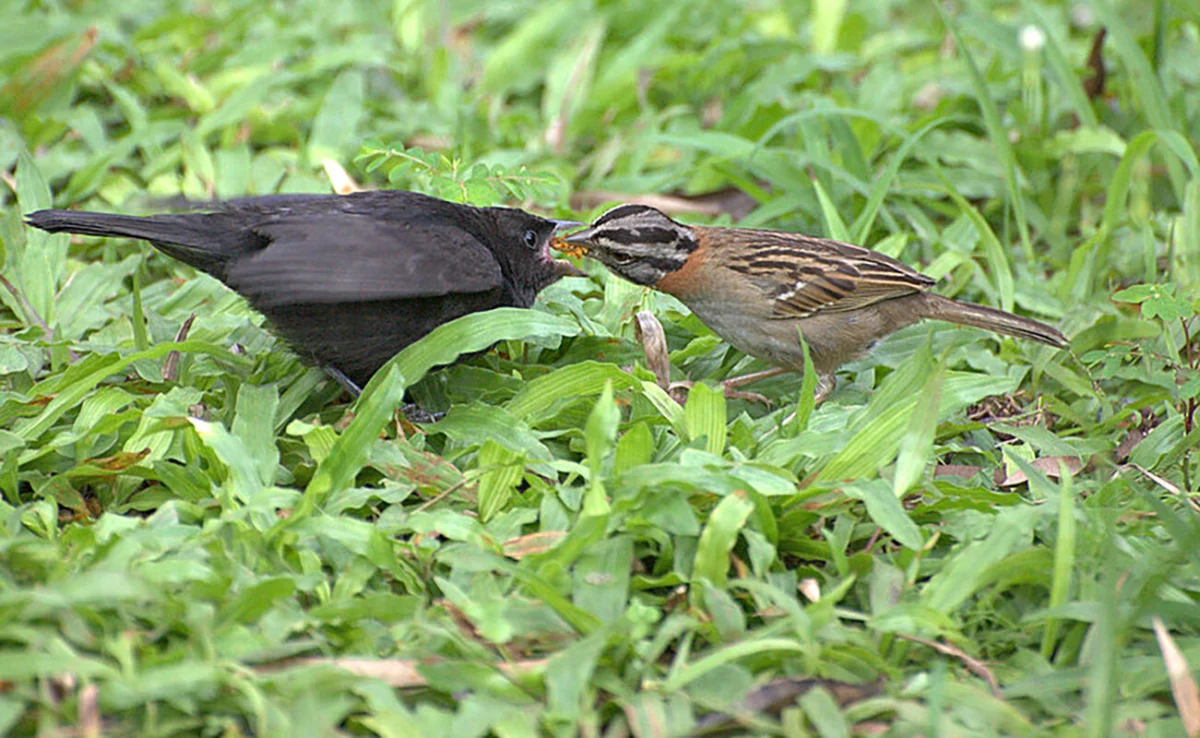
The researchers centered their investigation on the phenomenon of brood parasitism, a strategy where a bird species—such as the cowbird or cuckoo—deposits its eggs into the nests of other species. This "nest hijacking" forces the host bird to inadvertently dedicate its energy, food, and protection to an unrelated chick, often at the expense of its own offspring. This high-stakes interaction creates a powerful evolutionary pressure: the host species must detect and expel the intruder, or at the very least, recognize the threat posed by the parasite’s presence near the nest.
Chronology of the 2025 Study and Methodology
The project, which spanned several years of field observation and controlled acoustic testing, began with a meta-analysis of host-parasite interactions across four continents. By selecting 21 distinct bird species that act as hosts to brood parasites, the team aimed to determine if there were common acoustic markers used to identify and respond to the specific threat of an intruding parasite.
- Phase I (2022–2023): Researchers gathered recordings of alarm calls from various songbird species across North America, Europe, Asia, and Australia.
- Phase II (2023–2024): The team performed "playback experiments" in the field. By broadcasting the recorded alarm calls of one species to a completely different, geographically isolated species, they observed the reactions of the birds in their natural habitats.
- Phase III (2025): The synthesis of the data revealed that the host birds responded to "alien" alarm calls with the same defensive urgency they displayed toward the alarm calls of their own kind.
The consistency of these results across species that have never shared an evolutionary timeline or a common habitat suggests that these "whining" alarm calls function as a cross-species lingua franca.
Supporting Data and Acoustic Analysis
The data points to a striking uniformity in the frequency and modulation of these alarm signals. The researchers identified a specific acoustic profile—a whining, high-pitched alarm—that consistently triggered defensive behaviors, such as mobbing the parasite or abandoning a nest site.
Statistically, the birds in the study exhibited a 78% consistency rate in their defensive responses when exposed to the standardized "whining" alarm, regardless of whether the call originated from a related or unrelated species. In control groups, where birds were played neutral, non-alarm vocalizations, the response rate for defensive behavior dropped to under 12%. This significant disparity provides strong evidence that the warning signal is not just a general alert, but a specific, recognized marker of a "parasite incursion."
The Biological Toll of Brood Parasitism
To understand the weight of these findings, one must consider the severity of the threat posed by brood parasites. Brood parasites, such as the Brown-headed Cowbird (Molothrus ater) or the Common Cuckoo (Cuculus canorus), have evolved to be highly efficient. In some cases, the parasitic chick hatches earlier than the host’s eggs and uses its back to physically push the host’s own eggs out of the nest.

The evolutionary pressure on the host is absolute. Failure to recognize the threat results in total reproductive failure for the season. This "selection pressure" is what likely drove the refinement of the universal alarm call. Over millions of years, those birds that possessed an innate ability to recognize the "parasite-alert" frequency were more likely to survive and reproduce, effectively baking the signal into the avian genome.
Perspectives from the Ornithological Community
While the primary study was conducted by researchers from Cornell and the Doñana Biological Station, the broader ornithological community has noted the implications for conservation. Experts emphasize that this study challenges the traditional view of bird communication as a strictly species-specific endeavor.
"What we are seeing here is the architecture of survival," says one independent expert familiar with the study. "If birds possess a shared vocabulary for danger, it suggests that their cognitive processes for threat detection are more sophisticated than previously realized. It isn’t just a reflex; it is a complex, cross-referential system of data exchange."
The findings also provide a fresh lens through which to view human-avian interactions. If birds are hard-wired to respond to specific sound frequencies to manage threats, human-made noise pollution—which occupies many of these same frequency bands—could potentially be "jamming" the avian alarm system. This adds a new layer of concern for urban planning and environmental protection in areas where host-parasite dynamics are critical to local biodiversity.
Implications for Behavioral Ecology
The comparison between bird brains and the cognitive development of human toddlers is a particularly compelling aspect of the study. Researchers noted that the way young birds begin to distinguish between "safe" and "threat" sounds mirrors the early language acquisition of human children, who learn to identify the emotional tone of a warning before they understand the grammatical structure of a sentence.
This suggests that at a neurological level, there are conserved pathways for processing danger. Whether it is a human toddler reacting to a sharp, sudden shout or a songbird reacting to a specific, whining frequency, the mechanism of processing threat appears to be a deeply embedded feature of vertebrate evolution.
The Future of Avian Acoustic Research
The research team plans to expand this study to examine whether these universal signals extend to other types of threats, such as aerial predators or mammalian threats. If the "whining" alarm is specifically tuned to the presence of parasites, do other threats possess their own unique, cross-species "emergency broadcasts"?
Furthermore, the study raises questions about the "evolutionary arms race" between hosts and parasites. If hosts are constantly refining their ability to communicate about the threat, are parasites also evolving to mimic these signals? Some preliminary evidence suggests that certain parasitic species may be attempting to "deceive" the host by altering their own vocalizations, a phenomenon that could be the next frontier in this field of study.
In conclusion, the 2025 findings underscore a profound reality of the natural world: language is not the only medium of complex communication. For birds, the ability to signal and recognize danger is a vital, universal tool that has allowed them to mitigate the devastating effects of brood parasitism for eons. As we continue to decode the acoustic landscape of the animal kingdom, we find that the boundaries we once drew between species—and between ourselves and the natural world—are far more porous and interconnected than we ever dared to imagine. The "whining" alarm of a songbird is, in essence, a reminder that in the face of survival, the message is often the same, no matter who is doing the speaking.

