


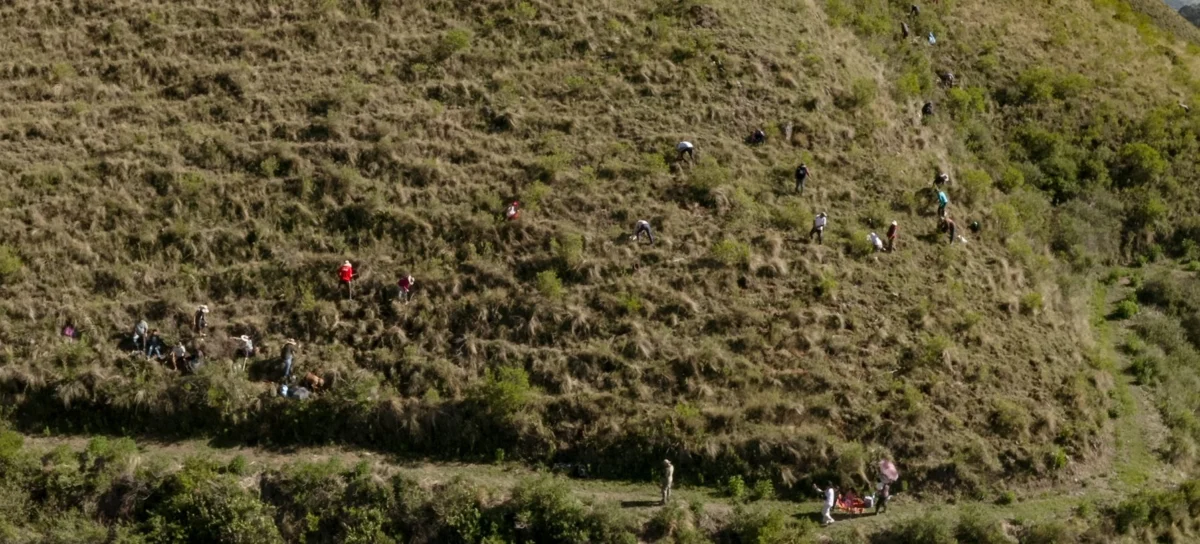
Asociación Armonía, a dedicated partner organization in Bolivia, is spearheading a groundbreaking initiative to establish long-term sustainable financing for the vital Tunari National Park. This ambitious project aims to create a robust Payment for Ecosystem Services (PES) mechanism, designed to ensure the ongoing protection and restoration of this critical Andean ecosystem, which plays an indispensable role in water security and biodiversity conservation for over a million people in the Cochabamba metropolitan region.
The Fragile Majesty of Tunari’s Kewiña Forests
Perched on the steep southern slopes of the Andes, Tunari National Park is home to more than 80% of Bolivia’s remaining ancient Kewiña forests. These high-altitude native woodlands, characterized by the resilient Polylepis besseri species, are more than just picturesque landscapes; they are ecological powerhouses. They act as natural engineers, stabilizing precarious slopes, meticulously regulating water flows that feed downstream communities, and harboring a unique array of endemic wildlife found nowhere else on Earth. Among these treasures is the Near Threatened Cochabamba Mountain-finch (Poospiza garleppi), a species intrinsically linked to the health of this specific habitat. The watershed protected by these forests is the lifeline for more than a million inhabitants of the Cochabamba metropolitan area, highlighting the profound human reliance on this natural infrastructure.

For decades, however, the park has faced relentless pressures. A history of devastating fires, unchecked deforestation driven by agricultural expansion and urban sprawl, and often strained relationships between local communities and park management authorities have created a complex and challenging conservation landscape. These persistent threats have jeopardized the long-term viability of the Kewiña forests and the invaluable services they provide.
A Paradigm Shift: From Short-Term Projects to Sustainable Stewardship
Recognizing the inherent limitations of short-term project-based funding, which often fails to address the multi-decadal needs of ecological restoration, a new strategic approach is emerging. This initiative represents a significant paradigm shift, moving towards a model that secures stable, long-term financial support for conservation and restoration efforts. The core of this new strategy is the development of a Payment for Ecosystem Services (PES) mechanism. This innovative financial tool aims to create a sustainable revenue stream, directly channeled into the critical work of restoring degraded areas and ensuring the continued protection of the watershed.
This pioneering effort is being meticulously developed by Asociación Armonía, a leading conservation organization in Bolivia, with crucial support from the Forest Impact Accelerator (FIA). The FIA, a program dedicated to investing in forest conservation, has been instrumental in fostering innovative approaches to financing conservation initiatives globally.

A Decade of Dedicated Restoration Efforts: Laying the Groundwork
The foundation for the current PES initiative has been meticulously laid over several years through the tireless work of Armonía and local communities. Since 2020, significant strides have been made in restoring portions of the Tunari protected area. To date, an impressive 1.25 million trees have been planted, with a substantial portion, over half, established within the Tiquipaya municipality. This hands-on restoration work has been complemented by crucial community-led initiatives.
Key achievements include the strengthening of community wildfire brigades, equipping them with the necessary training and resources to combat devastating fires. The construction of reservoirs has been vital in securing water resources for both communities and the ecosystem. Furthermore, new systems have been implemented to foster robust community participation in watershed management, empowering local residents to become active stewards of their environment.
A particularly pivotal development has been the strengthening of the Organismo de Gestión de Cuencas (OGC), a watershed governance body. This entity plays a crucial coordinating role in restoration activities and is instrumental in designing sustainable development strategies for the communities residing within the park’s boundaries. The OGC’s effective functioning has been instrumental in rebuilding trust and fostering collaboration between communities, park authorities, and conservation organizations. Notably, women leaders have emerged as pivotal figures in shaping and driving these conservation efforts, bringing valuable perspectives and leadership to the forefront.

Despite these significant successes, the fundamental challenge of securing sustained funding for long-term restoration has remained a persistent hurdle. Conservation efforts, by their very nature, require decades of consistent investment to yield their full benefits. The prevailing model of short-term project grants, while valuable, often lacks the longevity necessary to guarantee the enduring success of these vital ecological endeavors.
The Mechanics of the Proposed Payment for Ecosystem Services (PES) Model
The proposed PES mechanism is designed to address this critical funding gap by creating a transparent and equitable system for channeling long-term financial support. The core principle of the PES model is straightforward: downstream users who benefit from the essential ecosystem services provided by the upstream watershed contribute financially to their preservation and restoration.
Under this innovative scheme, small contributions would be collected from various stakeholders, consolidated into a transparent trust fund. This fund would be managed by an independent governing body, ensuring accountability and efficient allocation of resources. The accumulated funds would then be strategically invested in three primary areas:

- Restoration of degraded forest areas: This involves planting native tree species, controlling erosion, and re-establishing natural forest cover to enhance the ecological integrity of the park.
- Watershed protection and management: This encompasses activities aimed at safeguarding water sources, improving water quality, and ensuring the sustainable management of water resources for both ecological and human needs.
- Community development and sustainable livelihoods: Recognizing the integral role of local communities in conservation, a portion of the funds will be directed towards supporting sustainable economic activities that are compatible with conservation goals, thereby incentivizing continued stewardship and reducing pressure on natural resources.
For the communities living within and around the park, this system offers formal recognition of their crucial role as custodians of the watershed, providing them with a tangible incentive for their conservation efforts. For urban residents who rely on the watershed for their daily water supply, the PES mechanism offers a practical and direct way to contribute to the protection of the ecosystems that sustain them. For public and private sector partners, it establishes a transparent and accountable structure for making meaningful, long-term investments in landscape restoration and watershed health.
Upon full implementation, this forward-thinking mechanism is projected to generate an estimated £3 million annually for watershed protection and restoration, providing a stable financial bedrock for the future of Tunari National Park.
Designing the Framework: Collaborative Consultation and Scientific Assessment
The development of this comprehensive PES mechanism has been a collaborative and data-driven process. Over the past two years, Asociación Armonía has engaged in extensive consultations with municipalities, local communities, and regional institutions across the Cochabamba metropolitan area’s seven municipalities. This inclusive approach has been crucial in ensuring that the PES model is tailored to the specific needs and context of the region.

These consultations have revealed a strong consensus among residents regarding the direct link between forest protection and their water security. Numerous studies and assessments have been conducted to quantify the ecosystem services provided by the Tunari watershed, including water regulation, erosion control, and biodiversity conservation. This scientific underpinning is vital for establishing fair and effective contribution levels and ensuring the efficacy of the conservation interventions.
Based on these encouraging results and the robust scientific data gathered, Armonía and its partners are now in the advanced stages of establishing a regional trust fund. This fund will serve as the central financial vehicle for the PES mechanism, ensuring that contributions are managed efficiently and transparently for the benefit of the park and its surrounding communities.
Building Resilient Institutions for Sustainable Governance
While the financial mechanism is a critical component, the success of the PES initiative hinges on the strength of the underlying institutions and the active participation of communities. With support from the Forest Impact Accelerator, Armonía is actively assisting communities in developing ten-year sustainable development strategies. These strategies are designed to identify specific restoration priorities, outline viable income-generating opportunities that align with conservation goals, and foster a sense of ownership and responsibility among local populations.

A multi-stakeholder platform is being established to oversee the initiative, providing a forum for guiding decisions, resolving potential conflicts, and ensuring that all parties are working collaboratively towards shared objectives. Simultaneously, the park administration is receiving targeted support to enhance its capacity in critical areas such as monitoring ecological health, preventing and responding to wildfires, and improving overall coordination with local communities and other relevant stakeholders. This holistic approach, addressing both financial and governance aspects, is crucial for building a truly resilient and effective conservation system.
Broader Implications: A New Model for Watershed Protection in the Andes
The transformative work underway in Tunari National Park extends far beyond the simple act of planting trees. It represents a fundamental shift in how vital watersheds are managed, forging a durable link between ecological restoration, empowered community leadership, and sustainable, long-term financing. Once fully operational, this PES mechanism has the potential to revolutionize watershed management in the region.
Instead of relying on the unpredictable nature of intermittent project funding, the region will benefit from a locally supported and robust financing system. This system will not only reward environmental stewardship but will also ensure the long-term protection of the invaluable Kewiña forests that have sustained life in the Andes for centuries. This innovative approach holds significant promise as a replicable model for other Andean nations facing similar conservation challenges and seeking sustainable solutions for watershed protection.

A Collaborative Effort: Key Donors and Programmatic Successes
The success of this ambitious initiative has been made possible through the generous support of numerous donors and the impactful work of the Forest Impact Accelerator. Since the project’s inception in 2020, essential contributions have been provided by Accion Andina, the Darwin Initiative (both direct funding and through the Accelerator), Trillion Trees – BirdLife International, and FFBT (Flanders State of the Art – Agency Nature & Forest).
The Forest Impact Accelerator, which has successfully operated for five years, has benefited from the generous support of the Hempel Foundation, the Waterloo Foundation, and the King Charles III Charitable Fund. Furthermore, it has been instrumental in sourcing an additional £6 million in funding in collaboration with its partner organizations. Collectively, the FIA program has positively impacted 38,000 local people, enhanced the protection of 400 threatened species, and influenced the conservation of over 1 million hectares of vital habitat.
A significant recent development is the award of a substantial Darwin Initiative Extra grant through the UK government’s Biodiversity Challenge Awards. This program, dedicated to global biodiversity conservation, poverty reduction, and climate change mitigation, has provided £4,978,335. This crucial funding will enable the expansion and scaling of these achievements, aiming to secure 1 million hectares of Key Biodiversity Areas while simultaneously generating significant economic benefits for 200,000 local people. This reinforces the interconnectedness of conservation, community well-being, and sustainable development.

