


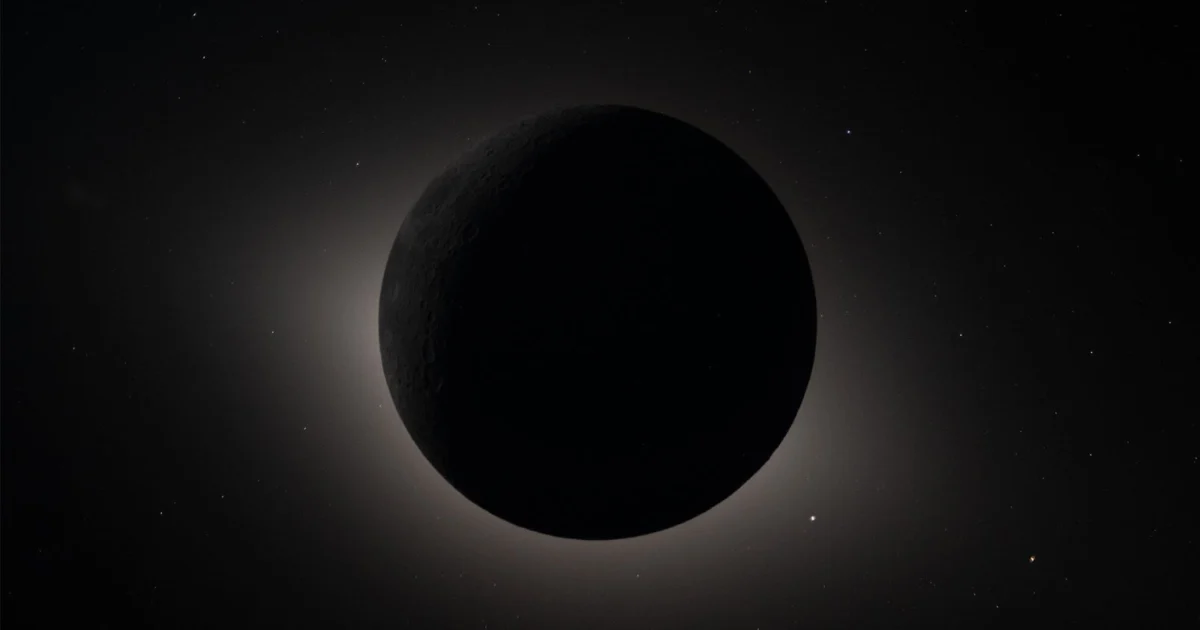
The intersection of human space exploration and high-end consumer imaging technology has produced a significant breakthrough in solar physics. Researchers at Tokyo City University have published a landmark study in The Astrophysical Journal Letters based on photographs captured by the Artemis II crew during their historic lunar flyby in April 2026. The study, titled "Large-scale Morphology of the Optical F-corona from a Total Solar Eclipse Observation during the Artemis II Lunar Flyby," utilizes images taken with a Nikon Z9 camera to provide unprecedented data on the Sun’s F-corona, offering a rare glimpse into the distribution of interplanetary dust within our solar system.
The research, led by Kohji Tsumura and Ko Arimatsu, marks a pivotal moment in "opportunistic science," where equipment primarily intended for documentation and public outreach is leveraged for rigorous astrophysical analysis. By analyzing the light scattered by dust particles near the Sun, the team has successfully mapped the structure of the inner zodiacal light with a level of detail that is often difficult to achieve from Earth-based observatories or even dedicated solar satellites.
The Science of the F-Corona and Zodiacal Light
To understand the significance of the Artemis II observations, one must first distinguish between the various layers of the solar corona. The corona is the Sun’s outer atmosphere, visible to the naked eye only during a total solar eclipse. It consists of several components: the K-corona (Kollisions-Korona), which is caused by sunlight scattering off high-speed electrons, and the F-corona (Fraunhofer-Korona).
The F-corona is named after the Fraunhofer absorption lines present in its spectrum. Unlike the K-corona, which is driven by plasma dynamics, the F-corona is composed of interplanetary dust particles that scatter sunlight. This phenomenon is essentially the innermost part of the "zodiacal light," a faint, diffuse glow seen in the night sky along the ecliptic plane. While zodiacal light is often called "false dawn" when viewed from Earth, observing its inner structure—the F-corona—is exceptionally challenging because it is usually drowned out by the sheer brilliance of the solar disk.
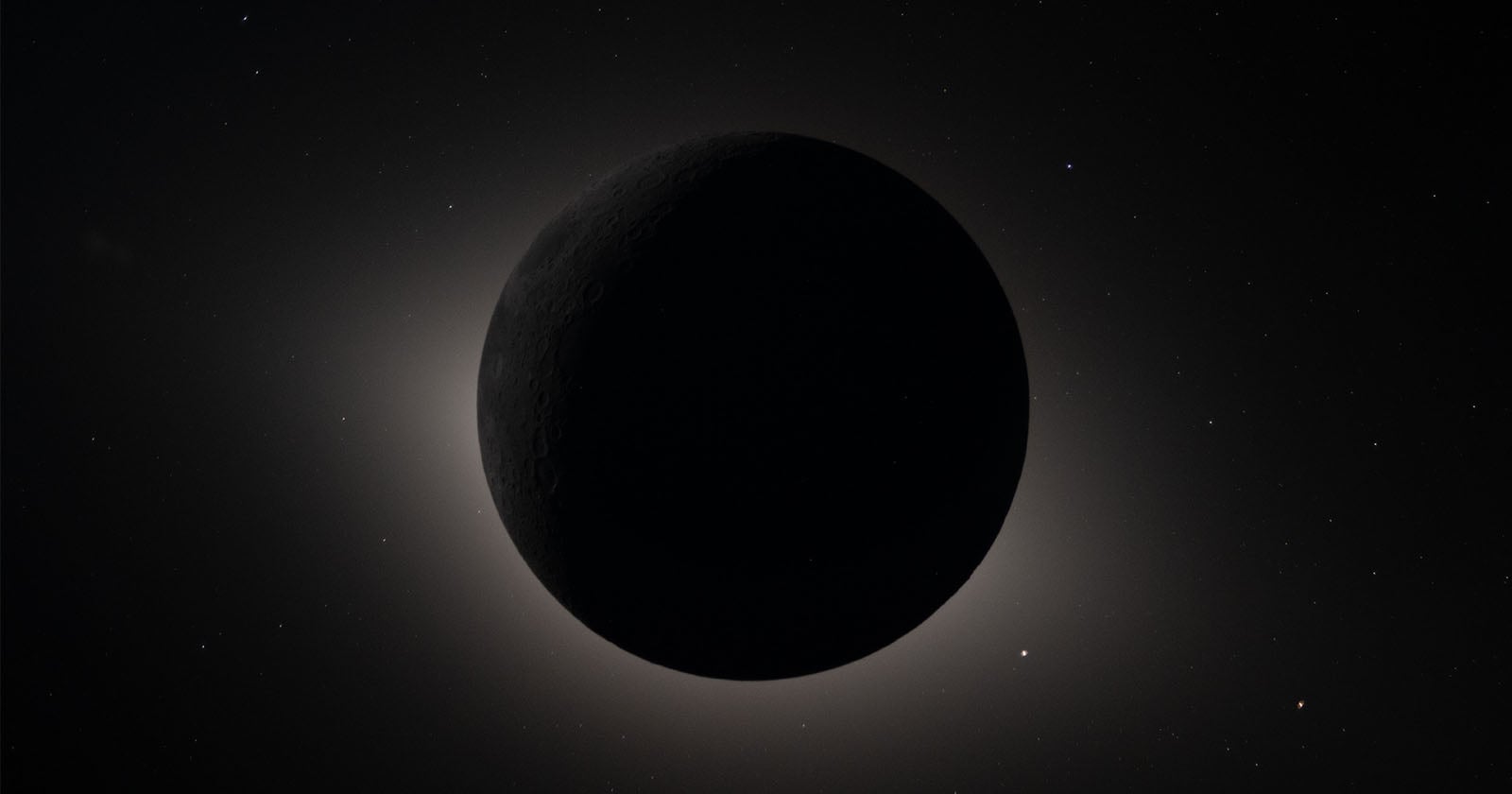
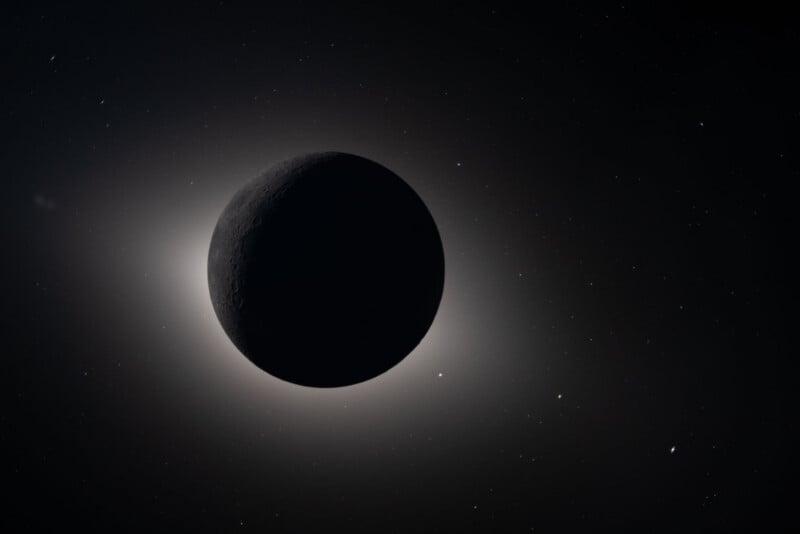
During the Artemis II mission, the Moon acted as a natural occulting disk. Because the spacecraft was positioned at a close lunar altitude of approximately 4,067 miles (6,545 km) during the observation, the Moon appeared significantly larger than the Sun. This allowed for a total solar eclipse that lasted nearly an hour, compared to the mere minutes of totality experienced on Earth. This extended duration and the absence of atmospheric distortion provided the perfect conditions to capture the faint, diffuse emissions of the F-corona.
Technical Methodology: Calibration via the Stars
One of the primary hurdles for the Tokyo City University researchers was that the Nikon Z9 used by the Artemis II crew—Commander Reid Wiseman, Pilot Victor Glover, and Mission Specialists Christina Koch and Jeremy Hansen—was not a photometrically calibrated scientific instrument. In standard laboratory science, a camera’s sensor is tested against known light sources to ensure every pixel’s value corresponds accurately to a specific level of physical luminance.
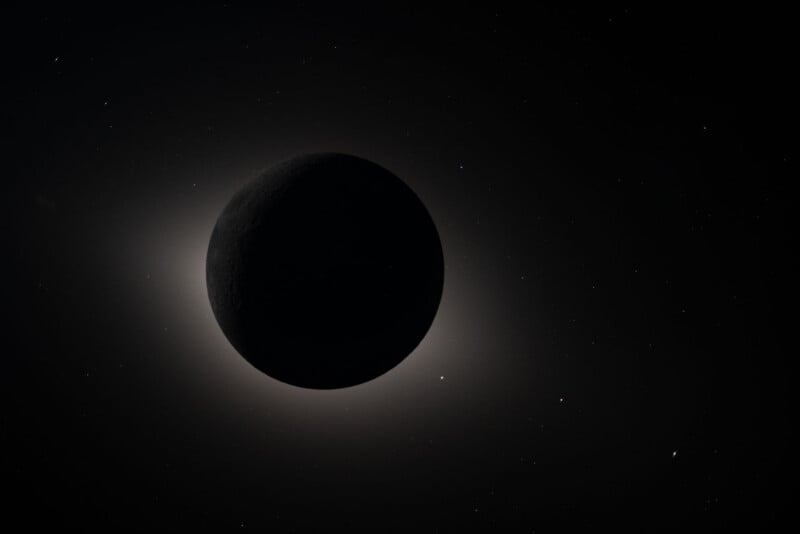
To overcome this, Tsumura and Arimatsu employed a sophisticated technique known as "stellar calibration." By identifying known stars in the background of the wide-field images, the researchers were able to calibrate the camera’s gamma correction and sensitivity post-facto. They used the luminance values of these distant stars as a baseline to measure the brightness of the circumsolar emission.
The specific image used for the bulk of the analysis, identified as "art002e009301," was captured using a Nikon Z9 equipped with an adapted Nikon AF-D 35mm f/2 lens. The settings—f/2, a two-second exposure, and ISO 1600—were sufficient to reveal both the glowing halo of the F-corona and a field of background stars, which served as the essential data points for the researchers’ calibration model.

Chronology of the Observation and Mission Context
The data acquisition occurred during a critical phase of the Artemis II mission, the first crewed flight of NASA’s Orion spacecraft and the Space Launch System (SLS) rocket.
- Launch and Transit: Following a successful launch from Kennedy Space Center, the Orion spacecraft entered a high Earth orbit before performing a Trans-Lunar Injection (TLI) burn.
- The Flyby (April 6, 2026): As Orion reached the Moon, it performed a free-return trajectory flyby. This path took the crew around the far side of the Moon.
- The Eclipse Event: As the spacecraft moved into the Moon’s shadow, the Sun was eclipsed by the lunar disk. Because of the specific geometry of the flyby, the Sun remained hidden for approximately one hour.
- Photography Session: During this window, the crew utilized the Nikon Z9 to document the phenomenon. The images captured not only the solar corona but also the planets Saturn and Mars, visible as bright points of light near the lunar limb.
- Post-Mission Analysis (Late 2026 – Early 2027): Following the crew’s return to Earth, the images were released into the public domain. Researchers at Tokyo City University began the process of cleaning the images, removing digital noise, and applying their stellar calibration algorithms.
Analysis of Findings and Deviations from Existing Models
The results of the study provided both confirmation of existing theories and new questions for solar scientists. The researchers measured the F-corona’s shape, size, and intensity across a wide angular extent.
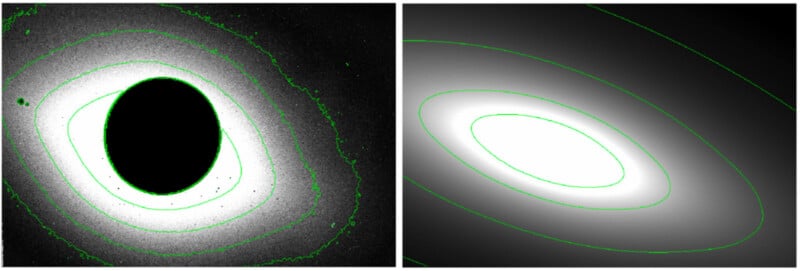
The primary finding was that the F-corona’s morphology is mostly consistent with prior space-based observations from missions like SOHO (Solar and Heliospheric Observatory) and the Parker Solar Probe. However, the Artemis II data revealed a stronger concentration of emission toward the ecliptic plane than previously anticipated.
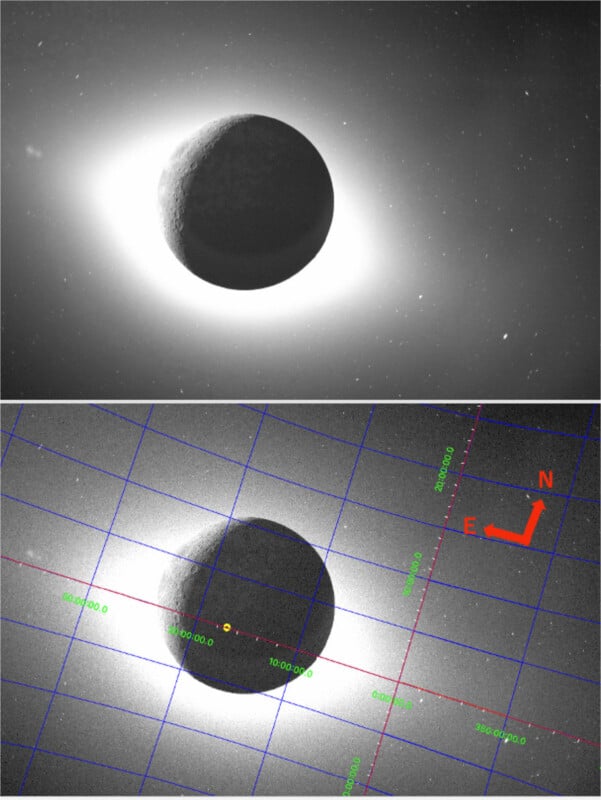
Furthermore, when comparing the captured images to the "ZodiSURF" model—a standard mathematical framework used to predict the brightness and distribution of zodiacal light—the researchers found that the F-corona was more extended than the model suggested. This indicates that the density of interplanetary dust in the inner solar system may be higher or distributed differently than current simulations assume. This data is vital for understanding the "space weather" environment and the history of comet and asteroid fragmentation in the inner solar system.
Official Responses and Industry Impact
The success of this study has been met with praise from both the scientific community and the imaging industry. Nikon, which has a partnership with NASA dating back to the Apollo 15 mission in 1971, viewed the research as a validation of their hardware’s reliability in extreme environments.
Hiroyuki Ikegami, Senior Executive Vice President and General Manager of Nikon’s Imaging Business Group, noted the significance of the achievement. "The Nikon Z9’s high resolution, expansive dynamic range, and outstanding low-light performance are helping crews capture incredible details," Ikegami stated. He emphasized that while the camera was designed for professional photographers on Earth, its performance in deep space helps "advance research and deepen our understanding of space."
NASA officials have also highlighted the mission’s dual nature. While Artemis II was primarily a flight test to ensure life-support systems function for future lunar landings, the "opportunistic science" performed by the crew demonstrates the added value of human presence in space. Unlike robotic sensors, astronauts can adjust framing, exposure, and focus in real-time to capture phenomena that automated systems might miss.
Broader Implications for Future Lunar Missions
The Tokyo City University paper serves as a "proof of concept" for future lunar-orbit coronal missions. The researchers argue that the Moon is an ideal platform for solar observation. By using the lunar limb as a natural occulter, future missions could deploy dedicated telescopes to the lunar surface or orbit to study the Sun’s atmosphere without the need for complex, artificial internal coronagraphs, which often suffer from light diffraction issues.
This study also paves the way for the Artemis III mission and beyond, where astronauts will carry even more advanced imaging systems to the lunar South Pole. NASA and Nikon are currently collaborating on the Handheld Universal Lunar Camera (HULC), a modified Z9 designed to withstand the thermal extremes and radiation of the lunar surface.
As humanity prepares for a permanent presence on the Moon, the lessons learned from the Artemis II photography session will inform how we monitor the Sun. Understanding the F-corona is not just a matter of academic curiosity; it is a practical necessity for deep-space navigation and the protection of astronauts from solar radiation. The dust mapped in these images represents the environment that future Mars-bound spacecraft will have to navigate.
In conclusion, the Artemis II mission has proven that a consumer-grade camera, when placed in the hands of trained astronauts and analyzed by innovative scientists, can function as a powerful tool for discovery. The images of the "shining planets" and the "dusty halo" of the Sun are more than just beautiful photographs; they are a data-rich map of our solar neighborhood, revealing the subtle structures of the cosmos that lie just beyond the glare of our home star.

