


When examining the diverse and colorful world of psittacines, most bird enthusiasts immediately picture the vibrant, gregarious lovebirds commonly found in households around the globe. Yet, tucked away in the tropical savannahs of West and Central Africa resides a much more elusive relative: Agapornis pullarius, widely recognized as the red-headed or red-faced lovebird. Unlike its domestic counterparts that thrive on human interaction and domesticity, this striking parrot remains largely absent from mainstream aviculture. Characterized by its timid disposition, specialized environmental needs, and a natural history deeply intertwined with the African landscape, the red-headed lovebird presents a fascinating study in wildlife conservation and avian biology.
Main Facts and Biological Profile
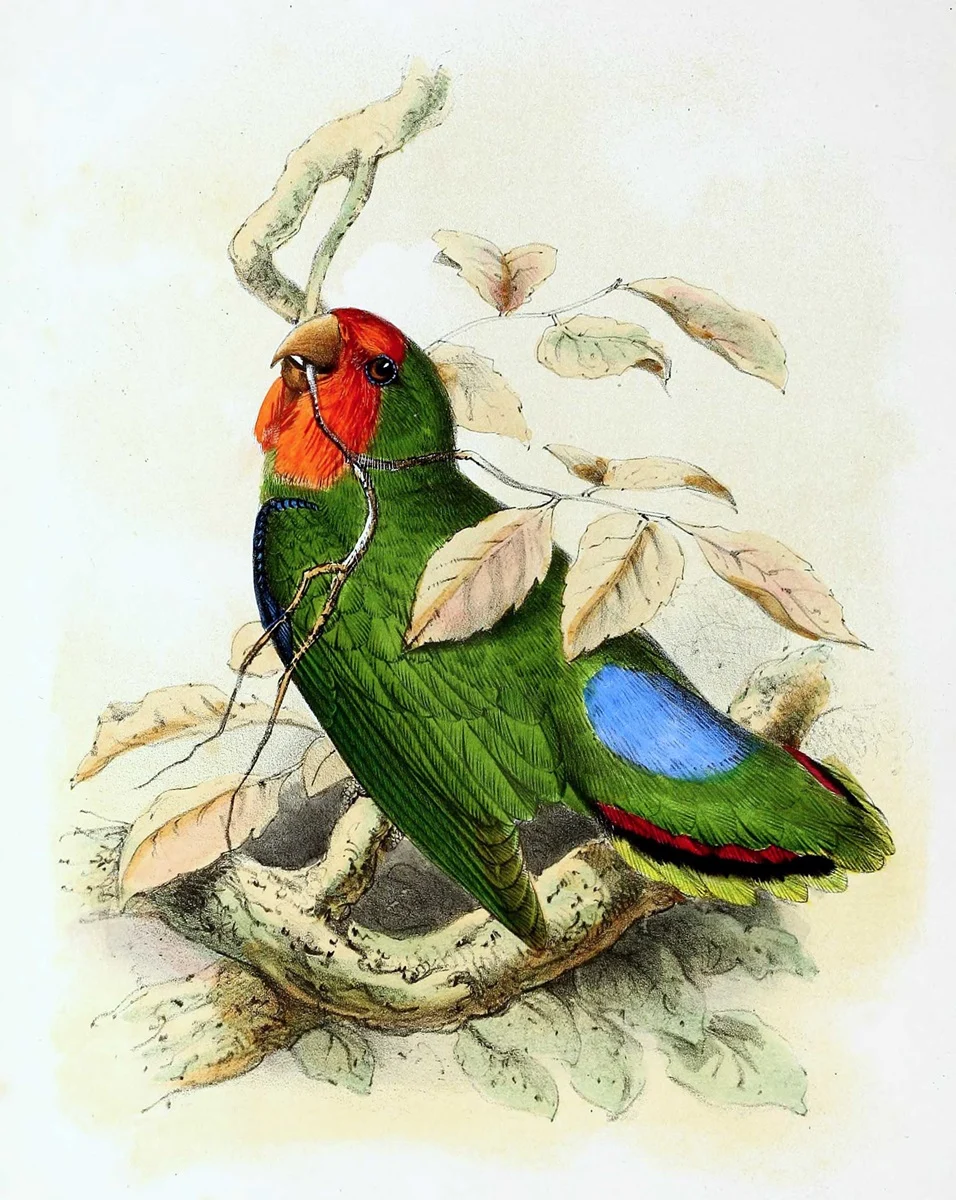
Weighing roughly 45 grams and reaching a modest length of up to 15 centimeters (6 inches), the red-headed lovebird is a visually striking animal. The adult male sports a vibrant emerald-green body contrasted sharply by a brilliant scarlet face and beak, complemented by subtle flashes of blue across the lower back and a red-banded tail. Sexual dimorphism is clearly present within the species; females display a more subdued, orange-tinted facial coloration and a similarly muted beak. With an average lifespan extending up to 20 years, these birds possess a relatively quiet vocalization profile compared to larger parrots, though their calls can register as sharp and shrill when alarmed.
In the wild, Agapornis pullarius is predominantly a granivore, subsisting on a diet of wild grass seeds and agricultural crops such as millet. This dietary preference frequently places them at odds with local farmers, who view the flocks as agricultural pests. Beyond seeds, these birds supplement their nutritional intake with wild fruits, including figs and guava. Unlike nomadic species that travel vast distances in search of resources, red-headed lovebirds are largely sedentary, moving in pairs or small, tight-knit flocks of a few dozen individuals across lowland savannahs up to an altitude of 2,000 meters. They distinctly avoid dense primary forests, preferring open wooded landscapes that offer ample foraging grounds and nesting sites.
Natural Habitat and Historical Range

The geographical distribution of the red-headed lovebird spans a distinct, albeit patchy, horizontal band stretching from western sub-Saharan Africa—as far west as Guinea—straight through to Central Africa and as far east as Ethiopia. Within this vast territory, population densities fluctuate significantly. While the International Union for Conservation of Nature (IUCN) classifies Agapornis pullarius as a species of Least Concern due to its wide distribution, field researchers note that it is locally uncommon across much of its historical range.
The chronology of scientific documentation surrounding the species dates back centuries, punctuated by notable naturalists and illustrators. Among the most enduring visual records is an 1869 avian illustration by the renowned artist John Gerrard Keulemans, which accurately captured the distinct red masking of the male specimen. However, as the 20th and 21st centuries progressed, the ecological pressures bearing down on the species intensified, shifting the focus from mere cataloging to pressing conservation oversight.
Chronology of Conservation Pressures and Trade
The ecological challenges facing the red-headed lovebird have evolved through distinct phases over the last century, driven primarily by anthropogenic factors.
- Mid-to-Late 20th Century: As agricultural expansion accelerated across West and Central Africa, natural savannah habitats were systematically cleared or fragmented. During this period, farmers increasingly targeted the birds as crop pests, leading to localized culling. Simultaneously, international demand for exotic fauna catalyzed commercial trapping for the live bird trade.
- The 1975 Baseline: International monitoring of the species gained formal traction following the implementation of stricter global wildlife trade agreements. Data compiled from export records highlight the sheer scale of commercial extraction; a comprehensive 20th-to-21st-century review, including a notable 2018 study, revealed that nearly 40,000 red-headed lovebirds were legally and illegally exported from their native regions starting in 1975.
- Modern Assessment (2010–Present): Renowned ornithological authorities such as Parr and Juniper noted in their 2010 compendium, "Parrots: A guide to parrots of the world," that while the species’ abundance naturally fluctuates due to its habits, a genuine, overarching population decline has occurred across many African regions over the last hundred years, heavily accelerated by the global pet trade.
Supporting Data and Ecological Implications
The implications of these combined pressures—habitat destruction, agricultural conflict, and live capture—point toward a slow, silent attrition of wild populations. Unlike prolific breeders that adapt quickly to human-altered environments, Agapornis pullarius relies heavily on specialized environmental features for survival and reproduction.

During the rainy season, which marks their natural breeding period, wild pairs engage in a remarkably specialized nesting behavior. Rather than constructing standard tree-cavity nests, red-headed lovebirds frequently burrow directly into arboreal termite or ant nests (termitaria), or occasionally utilize woodpecker hollows and ground cavities. The female bears the physiological and physical burden of excavating these dense structures, reinforcing the interior with plant matter before laying a clutch of up to six eggs.
This specialized reproductive dependence on living insect colonies underscores the delicate ecological niche occupied by the species. When agricultural pesticides destroy local insect populations or deforestation removes mature trees hosting termitaria, the reproductive capacity of local flocks is severely compromised.
Avicultural Challenges and Captive Management
The complexities observed in the wild directly explain why Agapornis pullarius remains an extreme rarity in aviculture, kept almost exclusively by specialized, highly experienced breeders rather than casual pet owners.
Ornithologists and avian veterinarians emphasize that the species possesses an exceptionally nervous and stress-prone temperament. Wild-caught specimens, in particular, are notoriously fragile; historical records and breeder accounts indicate that individuals can suffer fatal cardiac events triggered by sudden, loud noises, or succumb to rapid weight loss induced by the stress of being housed near more boisterous avian species. Consequently, experts universally advise that the species is suited for observation rather than tactile pet ownership.
For the rare aviculturist who successfully acquires captive-bred specimens, housing requirements are stringent. The birds demand either a dedicated, heated outdoor aviary—housed strictly without mixed, noisy species—or spacious indoor enclosures measuring at least 80 cm (30 inches) in width with tightly spaced bars (approximately 1.25 cm).
Dietary management in captivity has similarly evolved. While traditional breeders relied entirely on dry or sprouted seed mixes, modern veterinary consensus dictates a balanced nutritional approach incorporating high-quality pelleted diets, fresh leafy green vegetables, seasonal fruits, and supplemental protein sources such as boiled eggs or mealworms—particularly during breeding preparation. Enrichment must be introduced cautiously and gradually to prevent startling the easily panicked birds.
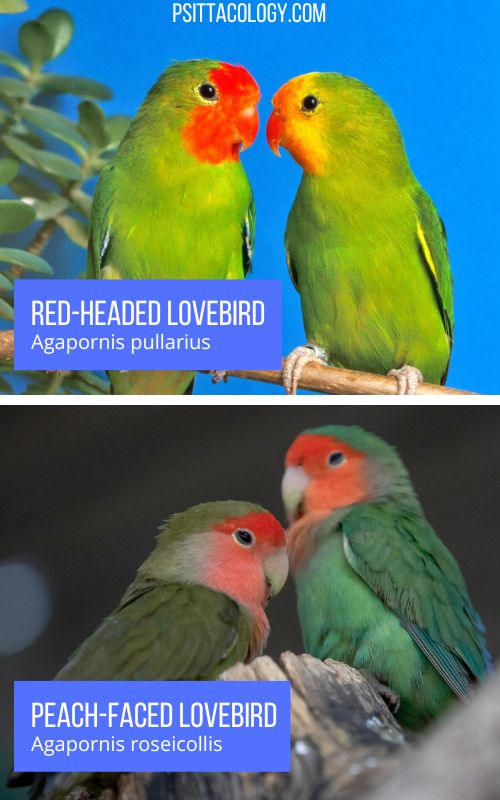
Furthermore, replicating their unique breeding habits in captivity has confounded breeders for decades. The combination of their inherent nervousness and their biological imperative to burrow into termitaria makes successful captive reproduction exceptionally difficult. Groundbreaking work by dedicated enthusiasts—such as specialized trials utilizing custom-crafted cork nest boxes—has yielded sporadic success, yet the species remains far from established in domestic collections compared to its resilient relative, the peach-faced lovebird (Agapornis roseicollis).
Broader Impact and Future Outlook
The trajectory of Agapornis pullarius serves as a vital case study in modern wildlife management. While its official IUCN status as Least Concern offers a superficial reassurance, localized declines and the immense pressures of the international pet trade highlight the vulnerability of specialized endemic species.
Conservation biologists and wildlife trade monitors continue to advocate for stricter oversight of regional exports and enhanced habitat preservation across the West and Central African savannahs. Protecting the red-headed lovebird requires not only safeguarding the open woodlands it calls home, but also preserving the intricate ecological webs—such as active termite colonies—that dictate its survival.
As human encroachment continues to reshape the African landscape, the future of Agapornis pullarius depends on balancing agricultural coexistence with proactive habitat conservation, ensuring that this striking, crimson-masked parrot remains a vibrant fixture of the tropical wilderness rather than an artifact of history books and museum illustrations.

