


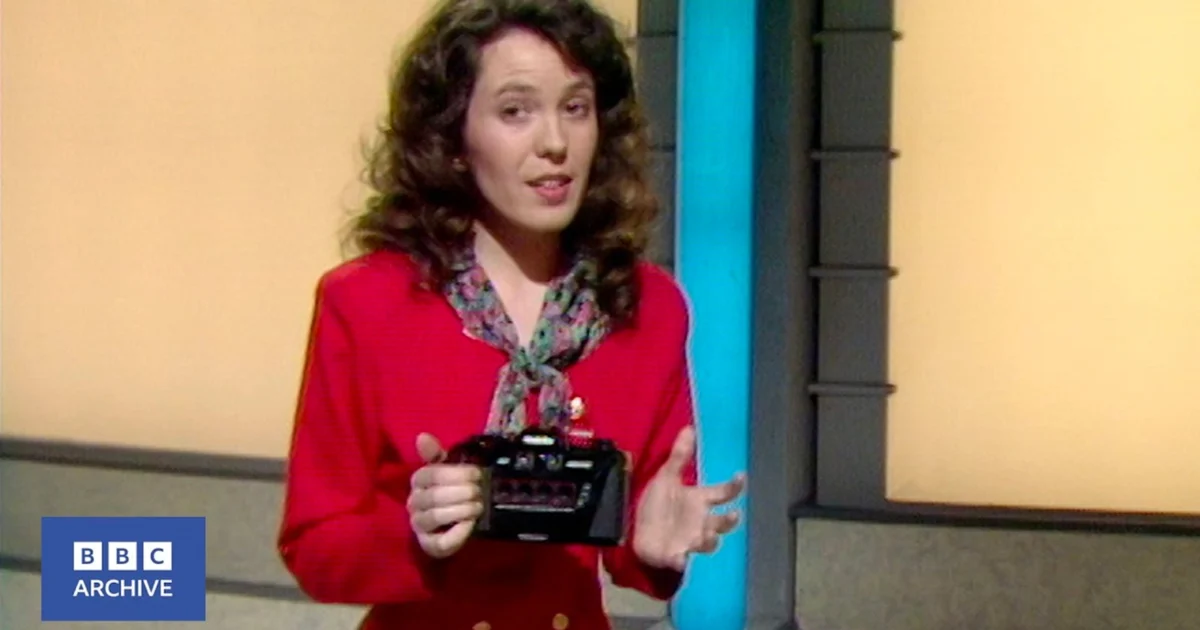
The 1990s represented a pivotal decade in the history of imaging, standing as the final golden age of silver halide film while simultaneously serving as the gestation period for the digital revolution. A recently resurfaced archive segment from the BBC’s long-running technology program, Tomorrow’s World, titled “Whatever Happened to the Cameras of the Future?”, provides an invaluable window into this era of transition. Broadcast in 1990, the segment revisited several high-profile photographic "innovations" from the preceding years, assessing which technologies had fulfilled their promise and which had retreated into obscurity. Today, viewing this archive from a distance of over three decades, the report serves as more than a nostalgic curiosity; it acts as a case study in the mechanics of technological adoption, the importance of infrastructure, and the unpredictable nature of consumer behavior.
The segment, hosted by Maggie Philbin, highlights four primary categories of photographic development: early digital imaging (then known as still video), stereoscopic 3D photography, autofocus lens systems, and the rise of the disposable camera. By examining the trajectory of these technologies from 1990 to the present day, it becomes clear that technical superiority was rarely the deciding factor in a product’s survival. Instead, success was dictated by the balance of convenience, cost-efficiency, and the maturity of the surrounding technological ecosystem.
The Chronology of Photographic Innovation (1980–1990)
To understand the context of the 1990 BBC report, one must look at the timeline of the decade that preceded it. The 1980s was a period of frantic experimentation as manufacturers sought to break the limitations of traditional 35mm film.
In 1981, the Nimslo 3D camera was launched, promising a revolutionary way to capture depth through a four-lens system. That same year, Sony demonstrated the Mavica (Magnetic Video Camera), a prototype that many cite as the progenitor of the digital age, though it recorded analog signals onto a "Video Floppy" disk. By 1985, Minolta had released the Maxxum 7000, the first widely successful integrated autofocus SLR, which fundamentally altered the professional photography landscape. In 1986, Fujifilm introduced the "Utsurun-desu" (QuickSnap), the first modern disposable camera, which initially faced skepticism from industry purists who viewed it as a regression in quality.
By the time Tomorrow’s World aired its retrospective in 1990, the industry was at a crossroads. The report captured a moment where the "future" was being actively audited by the market.
The Premature Arrival of Digital Imaging
One of the most significant portions of the BBC segment focused on the "still video camera." In 1990, the concept of a camera that did not require film was viewed with a mixture of awe and practicality-based skepticism. These early electronic cameras, such as the Canon RC-701 or the consumer-grade Sony Mavica models, captured images electronically and stored them on 2-inch floppy disks.
The BBC report correctly identified that these cameras offered the allure of instant gratification. For the first time, a photographer could connect their camera directly to a television set to view images, bypassing the days-long wait for chemical processing. However, the report also highlighted the severe limitations of the era. The resolution of these images was roughly equivalent to a standard television frame—far inferior to the grain and detail of 35mm film. Furthermore, the cost of the hardware was prohibitive for the average consumer, and the infrastructure to produce physical prints from these electronic files was virtually non-existent in the home.
In hindsight, the failure of still video to take over the market in 1990 was not a failure of the concept, but a failure of the supporting environment. The "digital" transition required the simultaneous maturation of several other industries: high-capacity storage, micro-processing power, affordable inkjet printing, and the rise of the personal computer. The 1990 report even showcased a "hybrid" prototype that allowed users to swap between a film back and a digital back, illustrating the industry’s uncertainty about how to bridge the gap between two disparate worlds.
The Niche Persistence of 3D Photography
The BBC’s analysis of 3D photography, specifically the Nimslo system, offers a different lesson in technological evolution. The Nimslo used four lenses to take four simultaneous pictures from slightly different angles. These were then merged during the printing process onto a lenticular surface, creating a 3D effect that did not require special glasses.
By 1990, the Nimslo company had already faced financial collapse, and the technology had been sold to a Japanese firm, Nishika. The BBC segment noted that while the effect was impressive, the "friction" involved in the process was too high. The cameras were bulky, and more importantly, the specialized printing required was expensive and could only be performed by a handful of labs worldwide.
The history of 3D photography is characterized by a cycle of "hype and hibernation." From the stereoscopes of the 19th century to the 3D television craze of the 2010s and the modern interest in VR and spatial computing (such as the Apple Vision Pro), the industry has repeatedly attempted to add a third dimension to a two-dimensional medium. The 1990 report correctly identified that without a standardized, affordable, and easy way to view the results, 3D photography would remain a novelty rather than a standard.
Autofocus: The Invisible Revolution
In contrast to the high-profile nature of 3D and digital imaging, the BBC report’s treatment of autofocus was remarkably understated. By 1990, autofocus had transitioned from a luxury feature to a standard expectation in new camera bodies.
Unlike digital imaging, which required a total overhaul of the consumer’s workflow, autofocus improved the existing workflow. It solved a fundamental human problem—missed focus—without requiring the user to change their film, their prints, or their viewing habits. The BBC segment noted that early autofocus systems were often slow or prone to "hunting" in low light, but by the turn of the decade, the technology had become reliable enough for professional use.
This development remains one of the most successful predictions in the history of camera tech. Today’s AI-driven subject tracking and eye-detection systems are the direct descendants of the primitive sensors shown in the 1990 clip. The success of autofocus serves as a reminder that the most transformative technologies are often those that integrate seamlessly into existing behaviors rather than those that demand radical change.
The Paradox of the Disposable Camera
Perhaps the most surprising success story highlighted in the 1990 archive is the disposable camera. When Maggie Philbin first demonstrated the concept in the mid-1980s, it was met with derision by many who saw it as a wasteful and low-quality "toy."
However, by 1990, the disposable camera had become a multi-million-dollar industry. The BBC report analyzed why this "low-tech" solution succeeded where "high-tech" solutions failed. The answer was accessibility. Disposable cameras removed the fear of damaging expensive equipment, they eliminated the complexity of loading film, and they were available at every corner store and tourist kiosk.
The report highlighted how manufacturers expanded the niche with waterproof models and panoramic versions, proving that there was a massive market for "good enough" photography if it was accompanied by extreme convenience. This insight prefigured the eventual rise of smartphone photography; the best camera is the one that is with you, and the most successful technology is the one that is easiest to use.
Economic and Technical Data: The 1990 Landscape
To provide further context to the BBC’s findings, it is useful to examine the economic data of the time. In 1990, a high-end SLR camera like the Nikon F4 cost approximately $2,500 (inflation-adjusted to roughly $5,800 today). In contrast, a disposable camera could be purchased for under $10.
The "still video" cameras discussed in the segment, such as the Canon Xap Shot (RC-250), carried a launch price of around $800. For this price, the user received an image with a resolution of roughly 0.3 megapixels. To put this in perspective, a modern entry-level smartphone captures images at 12 to 48 megapixels. The 1990 consumer was being asked to pay a premium for a product that was objectively inferior to a $10 disposable camera in terms of final print quality.
Industry Implications and Modern Analysis
The 1990 BBC report serves as a stark reminder that the "future" is rarely a straight line. It is a messy process of trial and error. The segment’s conclusions about why certain technologies failed—cost, complexity, and lack of infrastructure—remain relevant to today’s discussions regarding Artificial Intelligence (AI) in photography and computational imaging.
Modern industry analysts often point to this era when discussing the "S-curve" of technological adoption. The 1990 report captured the "flat" part of the digital S-curve, where the technology was moving slowly and struggling to compete with the established analog standard. Within ten years of that broadcast, the curve would turn sharply upward, leading to the near-total collapse of the film industry by the mid-2000s.
Furthermore, the segment’s focus on 3D photography finds a modern parallel in the current push for "Spatial Video" and 180-degree immersive capture. Just as the Nimslo was hampered by the difficulty of viewing prints, modern immersive formats are currently hampered by the need for expensive headsets. The lessons of 1990 suggest that until these images can be viewed as easily as a standard photo on a phone, they will remain a niche interest.
Conclusion
The BBC archive of Tomorrow’s World from 1990 provides a masterful example of journalistic inquiry into the nature of progress. It demonstrates that the most successful "cameras of the future" were not necessarily the ones with the most advanced specifications, but the ones that understood the human element of photography. Autofocus succeeded because it empowered the user; disposable cameras succeeded because they liberated the user; and digital photography eventually succeeded because it redefined the very concept of a "photograph" from a physical object to a shareable piece of data.
Thirty-five years after the segment aired, the photography industry continues to grapple with the same tensions identified by Maggie Philbin and the BBC team. As we move into an era dominated by AI-generated imagery and augmented reality, the 1990 report serves as a cautionary and enlightening guide: technology only truly changes the world when it becomes affordable, reliable, and, above all, useful in the everyday lives of the people it serves.

