


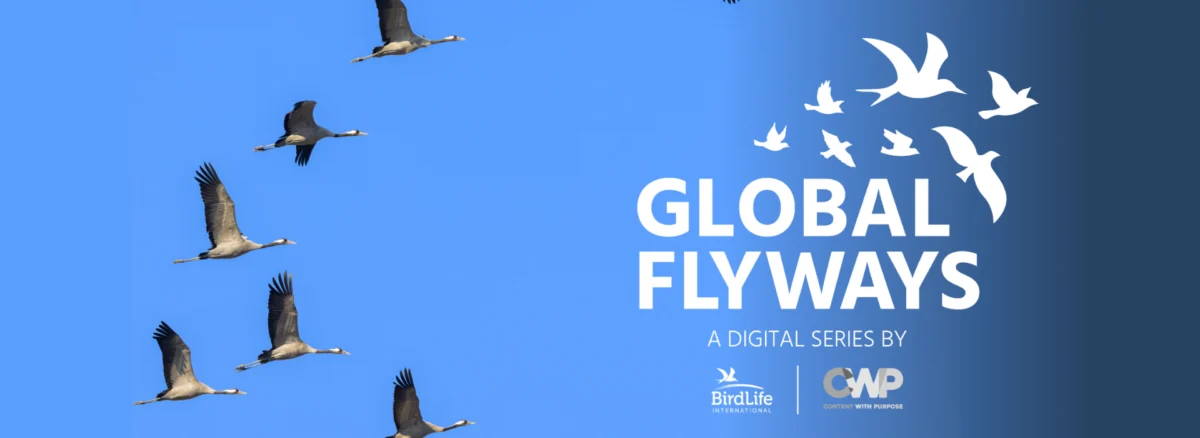
The survival of migratory birds, the avian travelers that knit the continents together, has reached a critical tipping point, prompting the launch of Global Flyways, a comprehensive digital film series produced in collaboration with Content With Purpose (CWP). This expansive project, which documents conservation efforts across five continents and 19 countries, arrives against a backdrop of alarming environmental data. By weaving together the narratives of scientists, Indigenous communities, policymakers, and industry leaders, the initiative seeks to translate the abstract scale of global migration into a tangible, actionable mission to preserve the integrity of the world’s ancient ecological super-highways.
The Precarious State of Global Migration
The launch of this series follows the sobering findings of the 2026 State of the World’s Birds report, which provides a stark assessment of the threats facing migratory species. According to the report, 45% of all migratory bird species are currently in decline. Perhaps more distressing is the estimate that 200 species—roughly one in nine—are now teetering on the edge of extinction. These birds, which traverse thousands of miles across oceans and geopolitical borders, are experiencing the cumulative effects of habitat loss, climate change, and the degradation of the crucial stopover sites they rely on for refueling.

Migration is not merely a biological phenomenon; it is a vital ecological service. These birds act as pollinators, seed dispersers, and controllers of insect populations. Their decline signals a systemic collapse in the ecosystems they inhabit, suggesting that the pressures impacting these species are indicative of a broader, more dangerous environmental trajectory that threatens the natural world upon which human societies depend.
A Two-Year Chronology of Discovery
The development of Global Flyways was a massive undertaking that spanned 24 months of field production. The objective was to capture the "invisible" geography of migration—the routes, or "flyways," that dictate where birds move and where they stop.
- Phase I (2024): Preliminary research and identification of critical "hotspots" where migratory routes intersect with human-dominated landscapes. Producers worked alongside ornithologists to select sites where conservation is most effective.
- Phase II (2025): Deployment of camera crews across 19 countries. This phase focused on capturing the intersection of local traditional knowledge and modern scientific tracking, including the use of satellite telemetry and remote sensing.
- Phase III (2026): Editing and narrative synthesis. The production team distilled hundreds of hours of footage into 68 distinct films and video assets, designed to represent the four primary global flyway networks.
- October 2026: Official launch of the digital platform, coinciding with a concerted push to bring international policy attention to the need for coordinated, cross-border conservation strategies.
The Mechanics of Modern Conservation
One of the central themes of the Global Flyways series is the transition from localized, isolated conservation efforts to a integrated, transnational approach. Because a single bird may cross a dozen countries during its seasonal journey, the protection of its habitat in one nation is effectively negated if the habitat is destroyed in another.

The film series highlights several innovative strategies now being employed to bridge these gaps:
- Wetland Restoration: Through community-led initiatives, degraded wetlands are being rehabilitated to serve as critical "gas stations" for long-distance migrants.
- Bird-Friendly Infrastructure: The series explores how urban planning and industrial projects—such as wind farms and communication towers—are being redesigned to minimize collisions and disruptions to migratory paths.
- Indigenous Land Management: In many regions, the preservation of migratory routes is inextricably linked to the protection of Indigenous lands. The series showcases how ancestral knowledge of local ecosystems is informing modern conservation targets.
Official Perspectives and Strategic Objectives
The project is the result of a deliberate effort to synthesize technical scientific data with human-interest storytelling. Martin Harper, CEO of BirdLife International, emphasized that the series is intended to catalyze a global movement. "For two years, our camera crews followed the birds through 19 countries, and at every stop, they found people working tirelessly to save migratory birds," Harper stated. "Together, we can inspire a global movement to safeguard these natural super-highways—for birds, for people, and for the planet—and save the wonder of migration."
Max Smith, Founder and Managing Director of Content With Purpose, echoed this sentiment, highlighting the shift in how conservation is being communicated to the public. "Across the world, people are doing extraordinary work to protect migratory birds and the landscapes and habitats they depend on," Smith noted. "Global Flyways brings those efforts together, showing what conservation looks like in practice and what can be achieved when communities, scientists, organizations, and decision-makers work towards a shared goal."

Analysis: The Implications of Global Connectivity
The launch of Global Flyways arrives at a moment when global environmental policy is struggling to address the "transboundary" nature of ecological decline. Traditional conservation models often prioritize the protection of static parks or reserves; however, these models are increasingly insufficient for migratory species.
The implication of the Global Flyways project is that success will depend on the creation of "corridors of protection" rather than isolated islands of habitat. The series serves as an educational tool for policymakers, demonstrating that the health of a bird population in the Arctic is fundamentally linked to land-use decisions in the tropics. By making these connections visible, the project aims to exert pressure on governments to adopt "Flyway-scale" management, where nations cooperate on land-use planning, hunting regulations, and pollution control across the entire migratory route.
Furthermore, the integration of 68 individual films serves as a data-rich repository that can be utilized by educators and researchers. By democratizing access to this information, the project seeks to move conservation out of the halls of academia and into the public consciousness.

Future Outlook and Call to Action
The digital platform is not intended to be a static archive. Rather, it is designed to be an evolving resource that invites participation from journalists, birdwatchers, and citizens. By providing a centralized, high-quality visual representation of these challenges, the initiative aims to influence the 2027 and 2028 international environmental agendas.
As the world continues to grapple with the dual crises of biodiversity loss and climate change, the Global Flyways project provides a roadmap for what collective, multi-stakeholder action looks like in the field. The overarching lesson from the series is clear: the survival of the world’s migratory birds is not just a test of environmental stewardship, but a litmus test for international cooperation. Whether these ancient journeys continue for future generations will depend on the ability of disparate global actors to recognize their interconnectedness and to treat the flyways as the shared, global heritage they are.
For those interested in exploring the documentation, the project’s official digital platform now serves as a repository for the full series, providing a comprehensive look at the front lines of avian conservation. The series invites observers to recognize that in protecting these creatures, humanity is ultimately safeguarding the resilience of the global ecosystems that sustain all life on Earth.

