

Deep within the vast, verdant landscapes of Guyana, a small South American nation bordered by Venezuela, Brazil, and Suriname, a quiet revolution in wildlife preservation is taking root. A recent expedition led by Phoenix Landing, a conservation-focused organization, has provided a rare, up-close look at the intersection of indigenous tradition, scientific monitoring, and the urgent need for habitat protection. Guyana stands as a unique ecological stronghold, being the only English-speaking country on the continent and home to some of the most pristine rainforests remaining in the Amazon basin. However, as the country balances the allure of economic growth through oil and gold extraction, the future of its avian biodiversity remains at a critical crossroads.
The Ecological Context of Guyana
Guyana’s forests are among the most biologically diverse in the world. The country’s commitment to maintaining its forest cover—approximately 85% of its landmass—has long been a cornerstone of its national environmental strategy. Yet, the pressure to exploit natural resources is mounting. Recent discoveries of significant offshore oil reserves and the continued expansion of gold mining have created a volatile environment for wildlife. While the legal framework in Guyana still permits the trapping of certain parrot species, the intensity of this practice is currently less severe than in neighboring regions. Nevertheless, the looming specter of habitat fragmentation caused by industrial development poses a far more existential threat than traditional hunting.
A Chronology of Localized Conservation: The Rewa Model
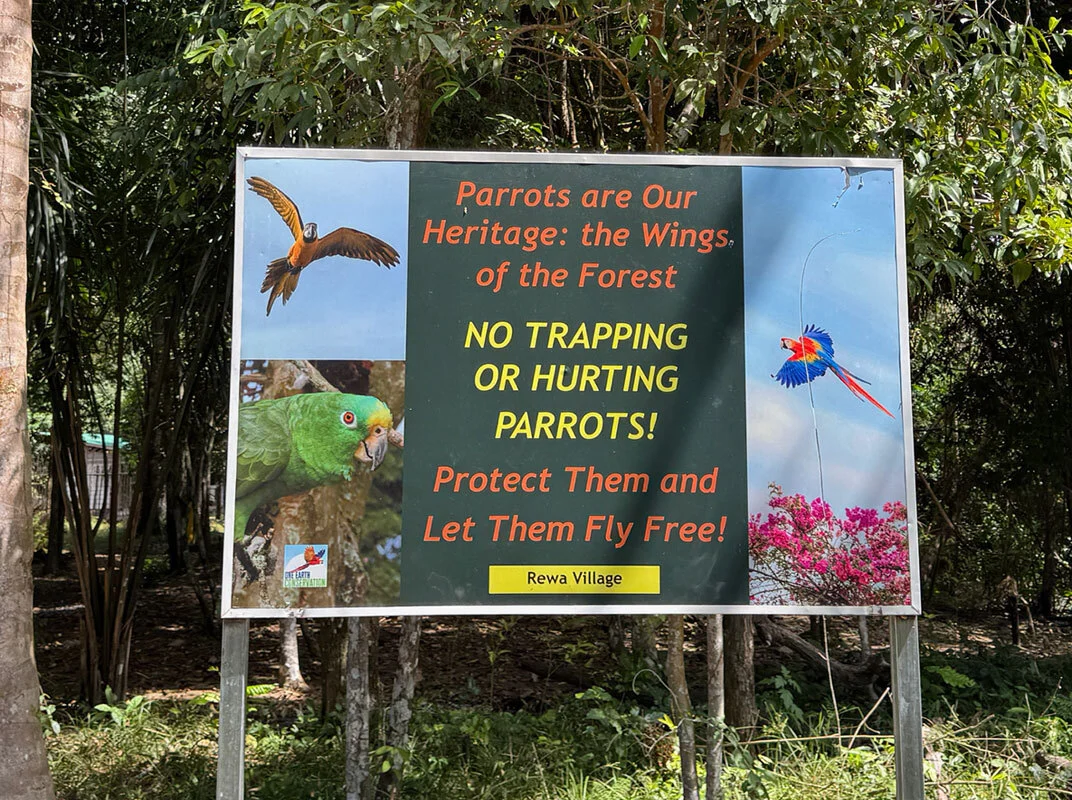
The story of conservation in Guyana is best exemplified by the community-led initiatives in Rewa Village, situated along the banks of the Rupununi River. The history of this project spans several decades, serving as a template for how grassroots movements can scale into national models.
- The 1990s: Following the establishment of early conservation projects by indigenous leaders—including the grandfather of contemporary guide Ron Allicock—Rewa Village made the voluntary, community-wide decision to halt all parrot trapping. This move predated many formal government regulations and established a cultural precedent of protection.
- 2018: Recognizing the need for empirical data, the village formalized its monitoring efforts. In collaboration with the Rewa Ecolodge and the non-profit organization One Earth Conservation, the community launched a structured, long-term monitoring program.
- 2018–2024: Over six years of continuous monthly population counts, the project successfully adapted to the difficult terrain. Because the dense, primary forest offers few traditional trails, researchers developed a specialized river-based transect methodology. This innovation is now being exported as a best-practice model for other South American nations.
- 2024–2025: The program documented a rise from 20 to 22 protected parrot species within the Rewa territory, signaling a measurable success in habitat management.
Species Diversity and Field Observations
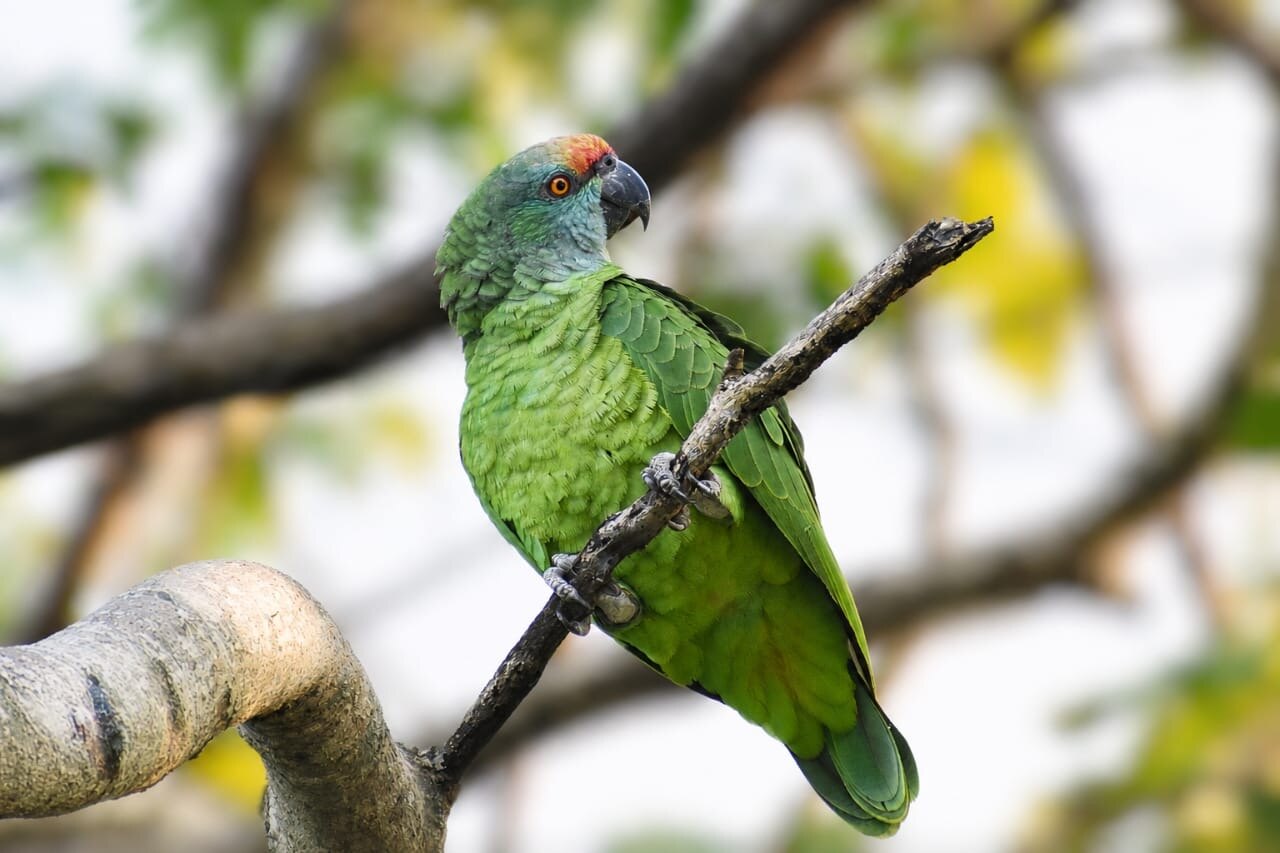
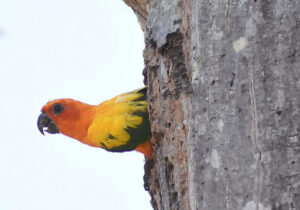
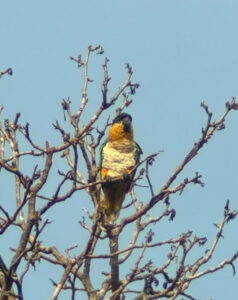
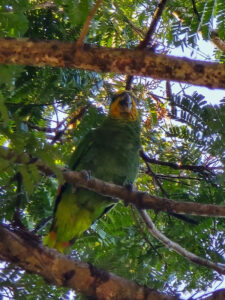
The recent Phoenix Landing expedition documented a wide array of psittacines, underscoring the ecological health of the areas where community protection is prioritized. Despite the challenges of high humidity and the physiological stress placed on birds by intense equatorial heat, researchers and tourists observed a diverse range of species. These included the Hawk-headed (Red-fan) Parrot, Festive, Yellow-crowned, and Orange-winged Amazons, as well as Black-headed Caiques, Green-winged and Scarlet Macaws, Noble Macaws, and various Pionus species.
The scarcity of ecotourism infrastructure in the region meant that most observations were conducted from a distance, yet the expedition members emphasized that witnessing these birds in their natural, undisturbed behavior—foraging, interacting, and nesting—offered invaluable data on the species’ ecological requirements. The success of these sightings was attributed to the deep traditional ecological knowledge (TEK) of the local guides, whose ability to identify avian vocalizations and movement patterns remains unparalleled by modern tracking technology.
The Role of Indigenous Leadership and Modern Science
The partnership between indigenous communities and international conservationists represents a shift in the philosophy of wildlife protection. By empowering local residents—such as Ron Allicock and his protégé Ravi Alfred—the project ensures that conservation is not viewed as an external imposition but as an intrinsic part of regional identity.
The recent integration of the International Parrot Conservation Corps (PCC) into Guyana marks the next phase of this development. By launching a local chapter in Georgetown, One Earth Conservation aims to bridge the gap between urban centers and remote wilderness areas. The initiative is recruiting 15 local participants to spearhead mini-conservation projects, aiming to create a sustainable pipeline of environmental stewards who are capable of navigating both the bureaucratic realities of the city and the practical needs of the forest.
Economic and Environmental Implications
The economic viability of these conservation efforts is inextricably linked to the growth of sustainable ecotourism. Rewa Village is currently expanding its artisan goods sector to provide a secondary income stream for community members, reducing the reliance on extractive industries. This strategy addresses a fundamental economic reality: for conservation to persist, it must provide a tangible alternative to the short-term profits offered by logging or mining.
However, analysts suggest that the success of these programs remains fragile. The "No Trapping" policies are currently voluntary at the community level. To ensure long-term stability, there is an increasing push for these models to be codified into regional or national policy. The planned outreach by Rewa leaders to neighboring villages, supported by the local Wildlife Club, is a strategic move to create a "buffer zone" of protection that extends beyond the village boundaries.

Broader Impacts and Future Outlook
The global community’s response to Guyana’s conservation trajectory is largely positive, yet tempered by the reality of global energy demands. The influx of oil-related revenue into the national economy creates a "resource curse" potential, where environmental protections might be sacrificed for infrastructure development. Organizations like Lafeber and One Earth Conservation are currently focusing their resources on supporting the infrastructure of the Rewa project, ensuring that the necessary funding is available to maintain the longitudinal studies that substantiate the success of these parrot populations.
The intersection of these efforts—scientific data collection, indigenous stewardship, and sustainable economic development—offers a blueprint for other regions struggling with the transition from traditional resource use to modern conservation management. As the International Parrot Conservation Corps begins its operations in the capital, the focus will shift toward advocacy and public education. The ultimate goal is to maintain the integrity of Guyana’s forest corridors while fostering a national culture that recognizes the biological and economic value of living, wild populations.
In conclusion, the situation in Guyana serves as a poignant reminder of the importance of community-led environmental governance. While the environmental challenges are significant, the combination of traditional wisdom and rigorous, modern monitoring provides a viable path forward. The continued success of the Rewa Village model, now bolstered by international partnerships and localized conservation corps, highlights the necessity of supporting the very communities that act as the first line of defense for the world’s most precious biodiversity hotspots. Through such collaborative efforts, the hope remains that Guyana can secure its natural heritage against the encroaching pressures of a rapidly changing global economy.

