


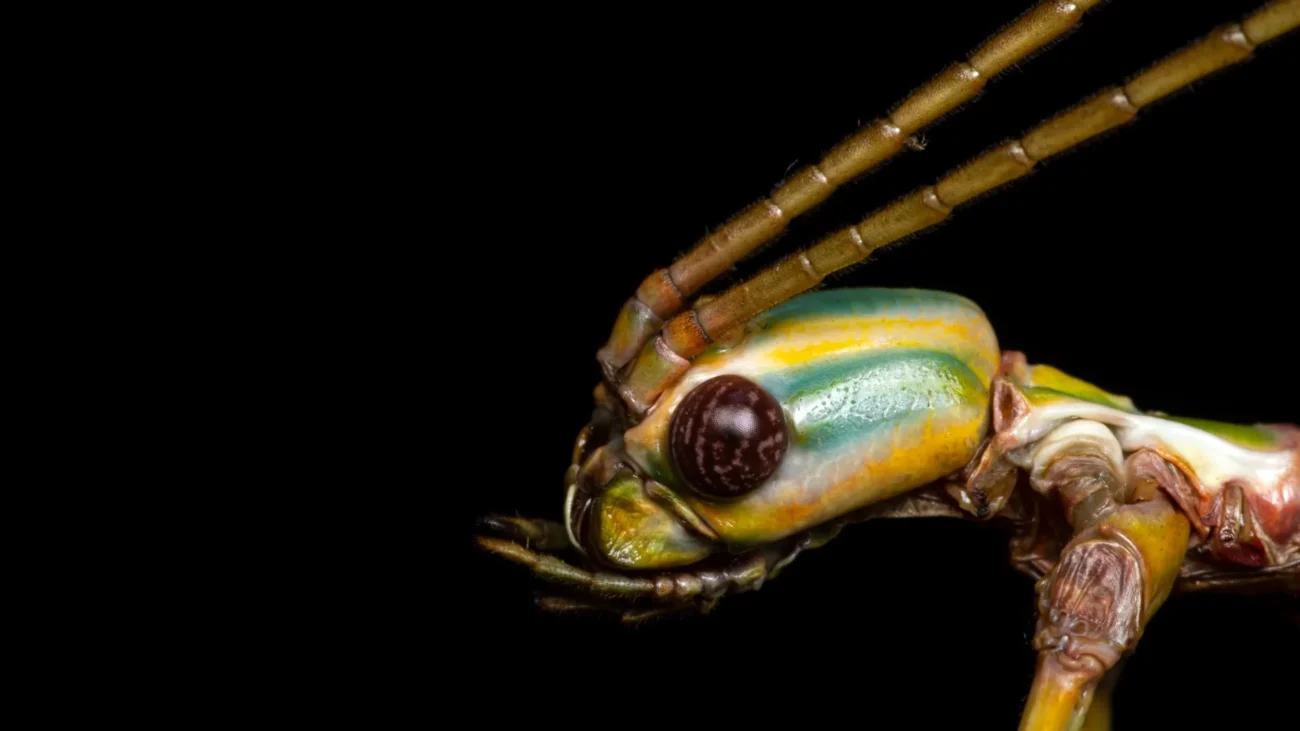
In an extraordinary testament to the vast, uncharted expanses of Australia’s entomological landscape, a team of researchers at the University of Sydney has identified two previously unrecognized species of large stick insects and successfully restored a third that had languished in taxonomic obscurity for decades. Published in the peer-reviewed journal Austral Entomology, the groundbreaking study shatters long-held assumptions within the scientific community regarding the taxonomy of the genus Anchiale. By integrating modern genetic sequencing with traditional museum taxonomy, field surveys, and a wealth of crowdsourced biodiversity data, the research team has dramatically redrawn the map of Australian phasmid diversity, proving that even some of the country’s most frequently photographed and heavily scrutinized insects still harbor well-kept evolutionary secrets.
The comprehensive investigation centers on the genus Anchiale, a group of robust, large-bodied stick insects whose geographic distribution spans from northern New South Wales, sweeps upward along the verdant coastal expanses of Queensland, and terminates in the tropical environments of northern Australia. Prior to this study, scientists broadly understood these insects to comprise just two distinct species. However, the meticulous reexamination conducted by the University of Sydney research team revealed that this tidy classification was profoundly flawed. What was once cataloged as two species actually encompasses five separate, genetically distinct species, throwing open new avenues of inquiry into Australian biodiversity, forest ecology, and conservation management.
Taxonomy as Modern Detective Work
At the helm of the research initiative is Dr. Braxton Jones, lead author and Postdoctoral Research Associate in the Molecular Ecology, Evolution and Phylogenomics Laboratory at the University of Sydney’s Aola Richards Sydney Insect Hub. Reflecting on the complex nature of the study, Dr. Jones characterized modern taxonomy as a form of high-stakes detective work. The discovery is particularly remarkable given the sheer volume of observational data that has accumulated around these insects. Over the years, amateur naturalists and professional biologists alike have submitted more than 1,000 citizen science observations through prominent digital biodiversity portals such as iNaturalist and the Atlas of Living Australia. Despite this high visibility and decades of academic study by professional entomologists, these hidden species successfully evaded formal scientific recognition until now.
The research methodology required a multidisciplinary approach to untangle decades of misidentification. Scientists extracted and analyzed DNA from historical museum specimens housed across various institutions, cross-referencing genetic markers with physical morphology. They also conducted targeted field surveys across eastern Australia, studied live colonies raised in captivity, and combed through the troves of photographic data contributed by the public. This triangulation of hard science and citizen engagement proved to be the key that unlocked the true diversity of the genus.
A Misidentified Icon and a Novel Discovery
Among the most significant breakthroughs of the study is the resolution surrounding a large stick insect that has long been familiar to both professional entomologists and backyard insect enthusiasts. For decades, this prominent insect was lumped into a broad classification, its true identity obscured by morphological similarities to its close relatives. Through rigorous genetic analysis and comparative morphology, the research team demonstrated that this familiar insect had been fundamentally misclassified for generations. It is now formally recognized as a distinct and separate species, designated as Anchiale robusta.
In addition to unmasking Anchiale robusta, the research team formally described an entirely new species to science: Anchiale mabiensis. This newly minted species was discovered within the critically endangered Mabi rainforest situated on the Atherton Tablelands of Far North Queensland. Anchiale mabiensis possesses a uniquely fascinating biological trait that immediately separated it from its taxonomic peers during the investigation. The females produce specialized eggs featuring an unusual structural lid-like mechanism—a morphological adaptation that has never before been documented in any other known stick insect species or within its closest phylogenetic relatives. Researchers are currently studying the ecological purpose of this unique egg structure, which may offer insights into how the species survives the specific microclimates and predation pressures of the fragile Mabi rainforest ecosystem.
The scope of the discoveries did not stop there. The research team also successfully resurrected a third species of Anchiale that had gone completely unrecognized and unstudied for decades, effectively bringing it back from taxonomic oblivion. Furthermore, the study’s authors have signaled that their work in the field is far from finished. Preliminary genetic and morphological data point toward yet another potential new species of stick insect residing in the remote wilderness of Cape York. However, because scientific rigor demands absolute verification, researchers noted that additional specimens and further fieldwork will be required before this prospective Cape York species can be formally described and named.
Implications for Forestry, Agriculture, and Conservation
While the revision of the genus Anchiale is fundamentally a taxonomic triumph, the implications of the study extend far beyond academic journals and museum collections. The refined classification holds substantial practical value for forestry management, agricultural oversight, and broader environmental conservation efforts across Australia.
One of the stick insect species within the broader Anchiale group has historically been noted for its occasional propensity to reach plague-like population densities. During these population explosions, the insects can strip vast quantities of leaves from trees, causing localized stress to forests and commercial plantations. With the new study revealing that what was once thought to be a single pestiferous species actually represents multiple distinct species, land managers and forestry officials must now reevaluate their approach. Different species within a genus often exhibit divergent ecological behaviors, host-plant preferences, and reproductive rates. By distinguishing between these closely related insects, researchers and agricultural authorities will be better equipped to predict, monitor, and manage future population surges, minimizing environmental damage while avoiding broad, ineffective mitigation strategies.
Beyond agricultural management, the discovery of Anchiale mabiensis in the Mabi rainforest underscores the urgent imperative of habitat preservation. The Mabi forest is a fragile, heavily fragmented ecosystem that has been reduced to a fraction of its historical range due to historical land clearing for agriculture. The revelation that unique, undiscovered invertebrates are still being unearthed in such well-studied pockets of bushland serves as a stark reminder of what hangs in the balance as ecosystems face escalating pressures from climate change and human encroachment.
"These findings demonstrate the importance of protecting threatened ecosystems and documenting Australia’s extraordinary biodiversity before we lose species without us even having even discovered them," Dr. Jones emphasized. The sentiment echoes a growing consensus among conservation biologists who warn that the global biodiversity crisis is erasing species faster than taxonomists can formally describe them. Australia, as a megadiverse continent with a high percentage of endemic flora and fauna, sits on the front lines of this race against time.
Funding and Institutional Support
The successful completion of this complex taxonomic study was made possible through targeted financial backing and collaborative institutional support. Primary funding for the research was provided by the Australian Biological Resources Study, operating through the National Taxonomy Research Grant initiative of the Commonwealth Department of Climate Change, Energy, the Environment and Water. Additional financial and logistical support was delivered via a CSIRO postgraduate scholarship, highlighting the vital role that government-backed scientific grants play in supporting foundational taxonomic research in Australia.
As the scientific community digests the implications of the University of Sydney’s findings, the research serves as a compelling reminder that the natural world still holds profound mysteries. By bridging the gap between historical museum archives, cutting-edge genomic technology, and the watchful eyes of citizen scientists, researchers have unlocked a hidden chapter of Australia’s evolutionary history. As fieldwork continues in remote regions like Cape York, and as conservationists fight to preserve dwindling habitats like the Atherton Tablelands, the taxonomy of Australia’s iconic insect life continues to evolve—proving that even the most familiar creatures can still surprise us.

