


Maryland, recognized as the fifth greenest state in the nation, provides a rich tapestry of habitats that support a vibrant population of woodpeckers. These often-overlooked avian architects, known for their striking plumage and energetic demeanor, are a testament to the state’s commitment to environmental preservation. Across its diverse landscapes, from dense forests and sprawling wetlands to suburban backyards and even quiet cemeteries, eight distinct species of woodpeckers have found a home, contributing to the ecological richness of the region. This article delves into the fascinating world of Maryland’s woodpecker species, exploring their unique characteristics, preferred habitats, dietary habits, and the ecological roles they play.
The Tapestry of Maryland’s Woodpecker Diversity
The presence of eight woodpecker species in Maryland is a significant indicator of the state’s ecological health. These birds, integral to forest ecosystems, rely on mature trees for nesting and foraging. Their drumming and excavating activities play a crucial role in natural pest control and the creation of microhabitats for other species. Understanding these woodpeckers is not just an exercise in ornithology; it’s an insight into the well-being of Maryland’s natural environments.
The species that grace Maryland’s skies and forests include the Red-Cockaded Woodpecker, the Yellow-Bellied Sapsucker, the Hairy Woodpecker, the Pileated Woodpecker, the Northern Flicker, the Red-Bellied Woodpecker, the Downy Woodpecker, and the Red-headed Woodpecker. Each possesses unique adaptations and ecological niches, contributing to the intricate web of life within the state.
1. The Red-Cockaded Woodpecker: A Specialist of the Pines
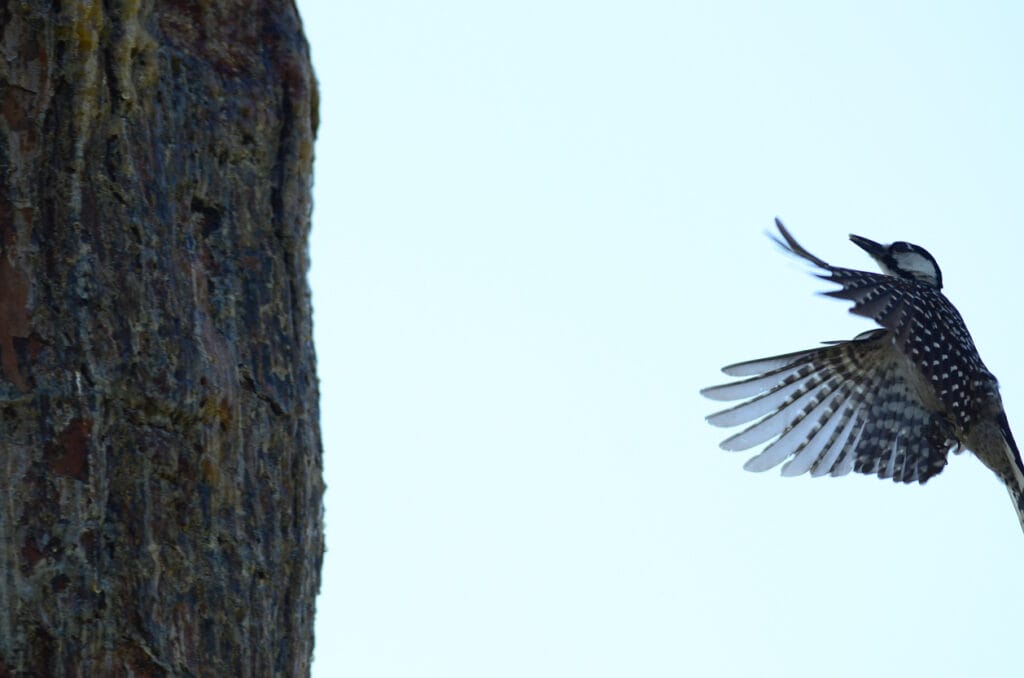
The Red-Cockaded Woodpecker (Picoides borealis) is a highly specialized species, primarily associated with mature pine forests. Its name derives from a subtle red cockade, a small red streak often visible on the cap of the male, though it can be elusive. These woodpeckers are characterized by a striking black and white pattern, a black head and nape, and distinct white cheek patches.
Habitat and Nesting: This species exhibits a strong preference for large, living pine trees, particularly those infected with the Red Heart Fungus. This fungus plays a crucial role in their life cycle by softening the heartwood, making it easier for the woodpeckers to excavate their nesting cavities. These cavities are essential for shelter and reproduction. The Red-Cockaded Woodpecker is the only North American woodpecker that excavates its roosting and breeding cavities exclusively in living trees.
Diet: Their diet consists mainly of pine seeds, supplemented by a variety of insects such as caterpillars, cockroaches, and spiders. The availability of suitable pine forests is therefore directly linked to the survival of this species.
Conservation Status: The Red-Cockaded Woodpecker is a federally listed endangered species. Habitat loss and fragmentation, primarily due to changes in forestry practices that favor younger, less diverse stands of trees, have led to significant population declines. Conservation efforts are focused on restoring and managing mature pine ecosystems, including prescribed burning to promote the growth of longleaf pines, their preferred habitat.
2. The Yellow-Bellied Sapsucker: The Sap Drinker
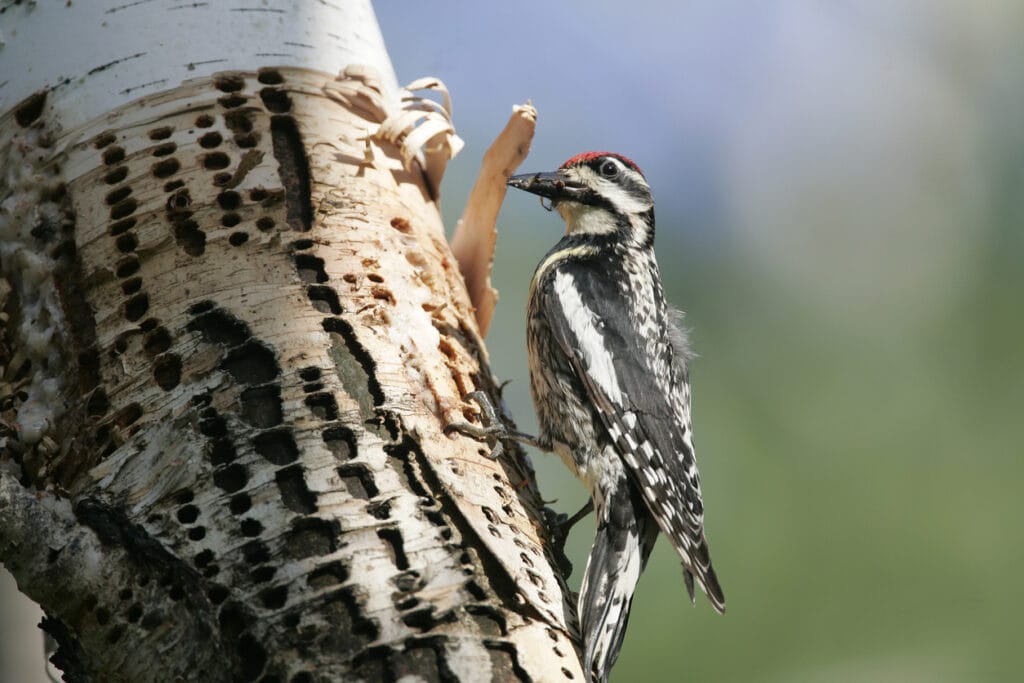
The Yellow-Bellied Sapsucker (Sphyrapicus varius) is a migratory species that visits Maryland during the fall and winter months. Despite its name, its plumage is predominantly black and white, with pale yellow markings on its underside. Distinctive white stripes run down their necks, and they often sport red foreheads. Adult males are further distinguished by a red throat.
Behavior and Diet: These birds are unique among woodpeckers for their method of feeding. They drill precise rows of small, shallow holes, known as "sap wells," into the bark of various tree species. They then return to these wells to feed on the sap, using their brush-like tongues. They also consume insects attracted to the oozing sap, effectively acting as a mobile insect trap for themselves.
Preferred Trees: Yellow-bellied Sapsuckers show a preference for trees such as yellow birch, hickory, sugar maple, red maple, and young paper birch. Their sap wells can sometimes weaken trees, but they are generally not considered a significant threat to healthy, mature trees.
Nesting: While they breed further north, they are a common sight in Maryland’s woodlands during their migratory periods. They typically nest in tree cavities, laying between five and six eggs.
Vocalization: Their calls are often described as cat-like mewing sounds, and their drumming is a characteristic staccato. Their vocalizations can become more pronounced during the spring breeding season.
3. The Hairy Woodpecker: A Familiar Forest Dweller
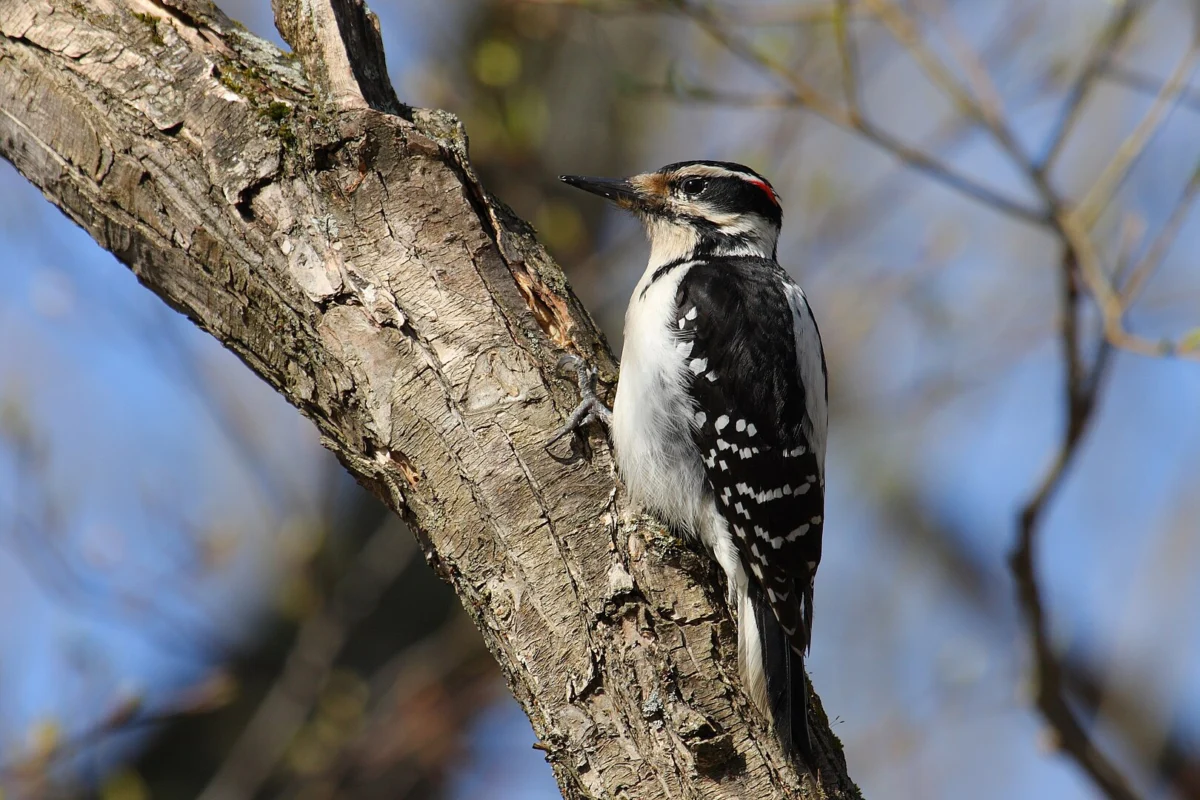
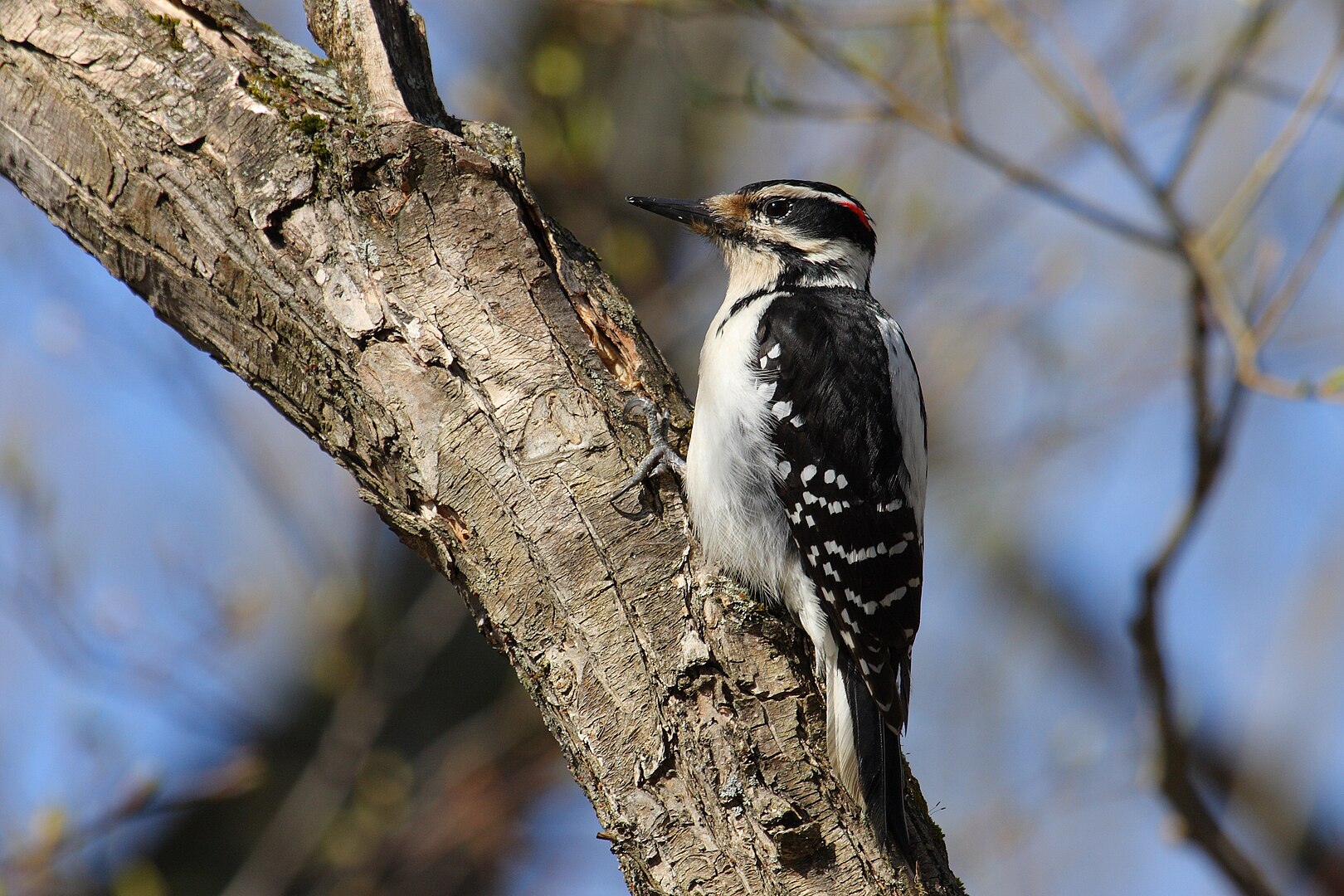
The Hairy Woodpecker (Dryobates villosus) is a medium-sized woodpecker, easily recognizable by its black and white plumage, a prominent white patch on its back, and a large, chisel-like bill. Adult males possess a distinctive red streak at the back of their heads.
Habitat: Hairy Woodpeckers are typically found in mature forests, but they are also adaptable and can be observed in swamps, urban parks, orchards, suburban backyards, and even cemeteries, indicating a broad habitat tolerance.
Distinguishing Features: They are often confused with the smaller Downy Woodpecker. Key differentiators include the Hairy Woodpecker’s larger size and significantly longer, sharper bill. Their calls are also distinct, often described as explosive or a powerful whinnying sound, contrasting with the Downy’s higher-pitched vocalizations.
Diet: Their primary food source consists of wood-boring insects, such as bark beetle larvae and ants. They also supplement their diet with spiders, millipedes, pupae, bees, and caterpillars.
Nesting: They excavate cavities in dead trees or dead limbs of live trees, laying between three and six eggs. They are often seen foraging around tall trees, probing for insects or utilizing sap left by other species.
4. The Pileated Woodpecker: The Giant of the Forest
The Pileated Woodpecker (Dryocopus pileatus) is the largest woodpecker species found in Maryland and North America, rivaling the size of a crow. Their striking appearance, featuring prominent bright red triangular crests on their heads and bold white stripes down the sides of their necks, makes them unmistakable. Adult males also sport an additional red streak on their cheeks.
Habitat: These magnificent birds are most commonly found in mature conifer forests but can also be observed near the edges of large urban areas, indicating a capacity to adapt to human-influenced landscapes. They are particularly drawn to areas with abundant dead trees or large, older trees.
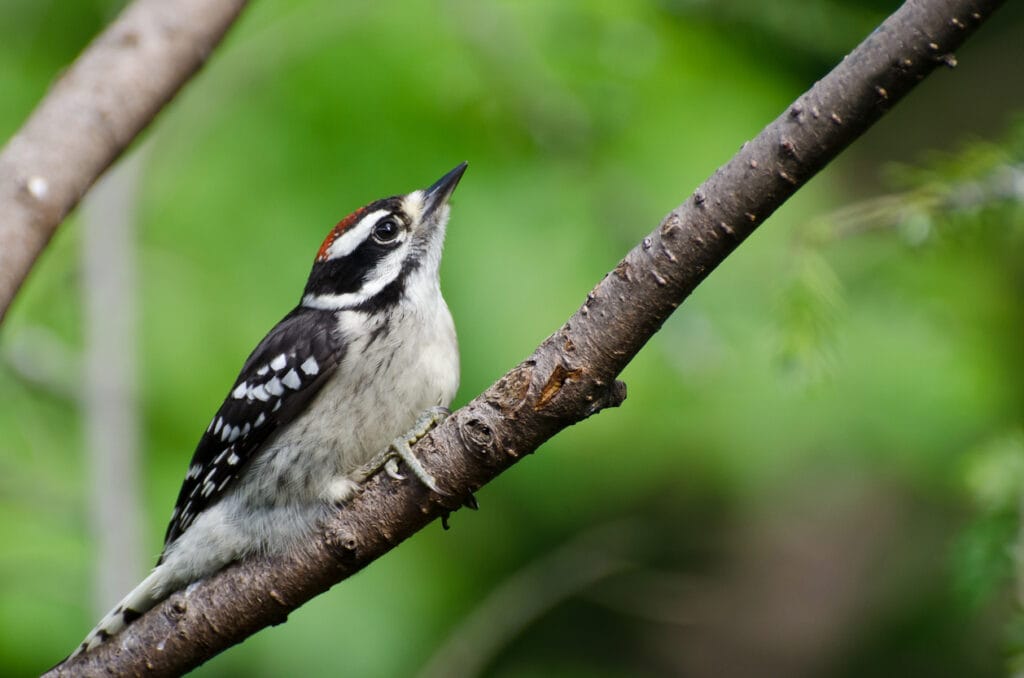
Foraging Habits: Contrary to popular belief, Pileated Woodpeckers often prefer to drill into dead trees or softer wood logs rather than live ones. They are known for excavating distinctive rectangular holes in their search for food, with a particular fondness for carpenter ants. Their diet also includes berries, wild fruits, and nuts.
Vocalization and Drumming: Their calls are loud and shrill, often described as a rapid, high-pitched whistle. Their drumming is powerful and resonant, a sound that echoes through the forest.
Nesting: They annually excavate new nesting cavities in dead trees, typically laying between three and five white eggs.
5. The Northern Flicker: A Ground-Foraging Specialist
The Northern Flicker (Colaptes auratus) is a unique woodpecker species found year-round in Maryland. Unlike most woodpeckers, their plumage is not strictly black and white. They exhibit distinctive gray and brown coloration, making them stand out. They are relatively large birds with large, curved bills and round heads. Their undersides are marked with darker streaks, and their wings and tails feature bright yellow or red shafts (depending on the subspecies), often visible as a flash of color during flight. A red nape patch and a white rump patch are also characteristic.
Behavior: A notable behavior of the Northern Flicker is its tendency to forage on the ground, a trait shared by few other woodpecker species. This ground-feeding habit is facilitated by their zygodactyl feet, which allow them to walk effectively on the ground and climb vertically on tree trunks.

Diet: Their diet is heavily reliant on beetles and ants, which they find on the ground. They also consume fruits and are known to create cavities in trees for nesting, where they lay between five and eight white eggs.
Vocalization: Northern Flickers communicate through repetitive piercing calls and deep tree drumming.
6. The Red-Bellied Woodpecker: An Adaptable Backyard Visitor
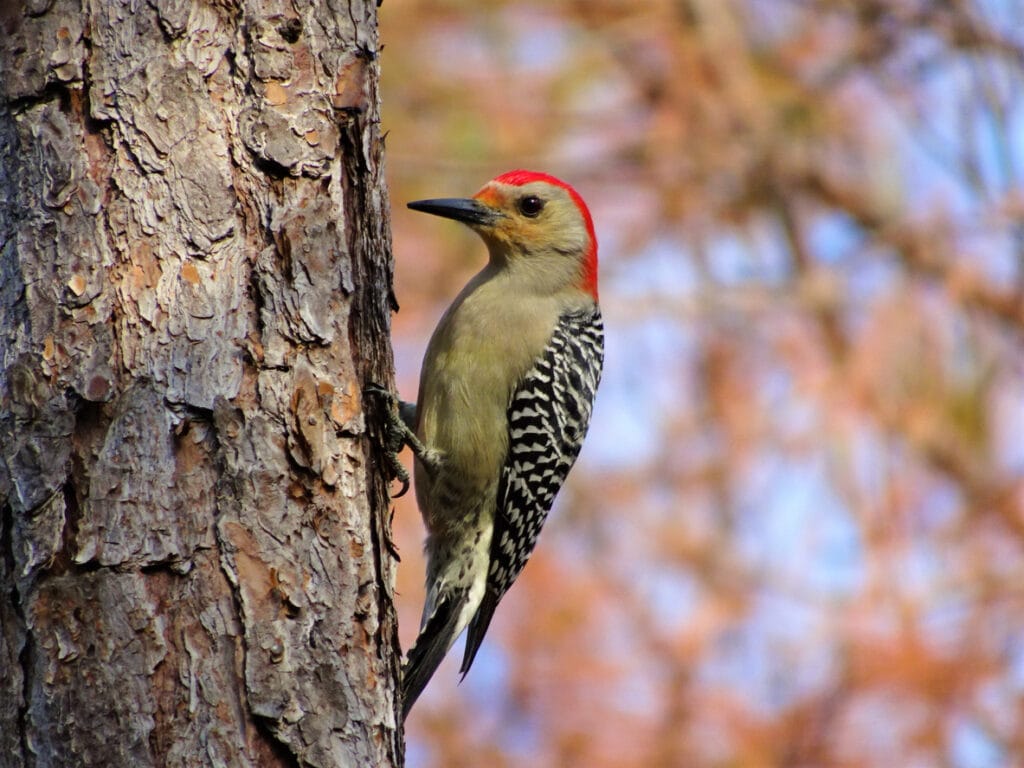
The Red-Bellied Woodpecker (Melanerpes carolinus) is a common sight in Maryland throughout the year. While their name suggests prominent red bellies, the red coloration is often subtle and mainly confined to their heads and napes. Adult females have red on the nape but not the crown. Their plumage is otherwise a classic black and white pattern with characteristic markings on their backs.
Adaptability: These birds are highly adaptable, thriving in both urban and forested environments. This adaptability makes them a frequent visitor to backyard feeders, where they can be observed alongside other bird species.
Diet and Nesting: Their diet is diverse, including insects, spiders, nuts, fruits, and grass seeds. A unique characteristic is their tendency to reuse the same nest sites for years. They typically lay four or five white eggs within tree cavities.
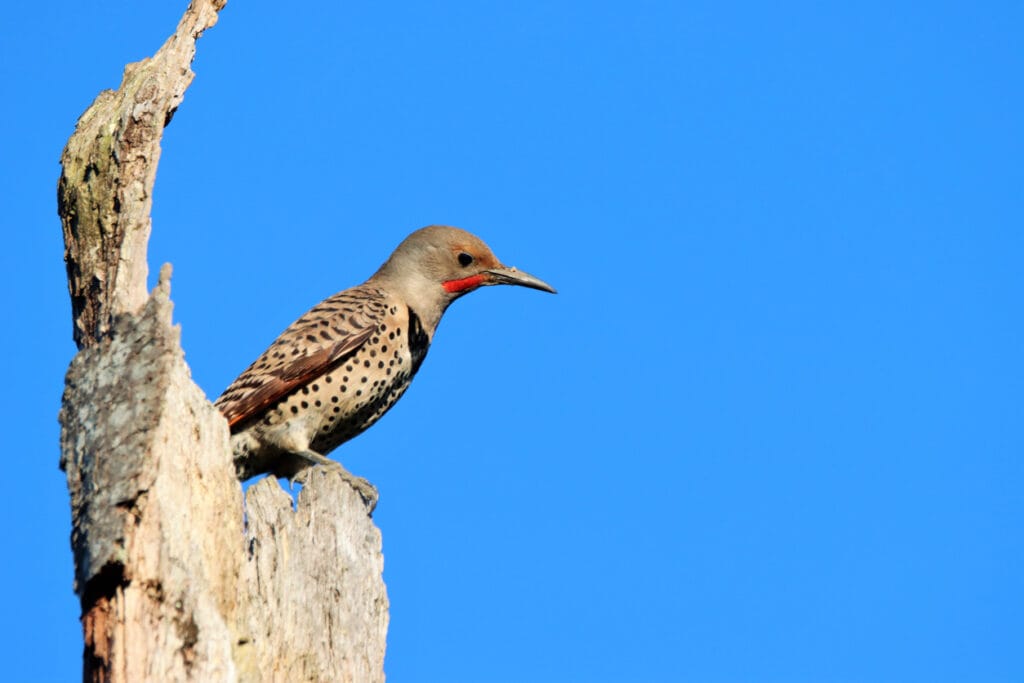
Vocalization: Red-Bellied Woodpeckers are known for their varied vocalizations, including loud trills and chuckles, as well as distinct drumming sounds used for communication. A notable difference between males and females is the male’s longer and wider tongue, which aids in foraging for a wider variety of food for their young.
7. The Downy Woodpecker: The Smallest of the Bunch
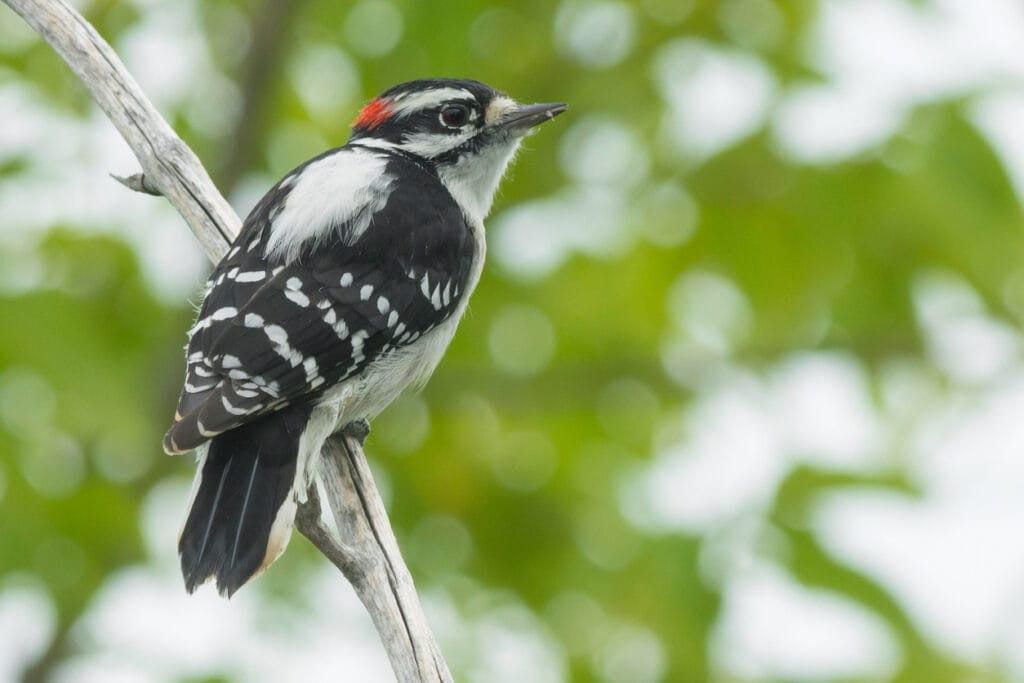
The Downy Woodpecker (Dryobates pubescens) is the smallest woodpecker species in Maryland and North America. Its name refers to the soft texture of its back feathers. Like other woodpeckers, it sports a black and white patterned plumage, with distinct horizontal bars on its wings and a white patch on its back. Adult males are identifiable by a red patch on the back of their heads.
Distinguishing Features: The Downy Woodpecker shares similarities with the Hairy Woodpecker, but it is considerably smaller and possesses a shorter, less robust bill. Additionally, Downy Woodpeckers have white spots on their tail feathers, a feature absent in Hairy Woodpeckers.
Habitat and Behavior: These highly adaptable birds are found in a wide range of habitats, including woodlands, urban yards, and forest edges. They are often seen around backyard feeders. Uniquely, Downy Woodpeckers also forage in long grass and weeds, in addition to pecking trees.
Vocalization: Their high-pitched sounds, loud rattles, and peeps make them easily identifiable, even when not in plain sight.
Nesting: They excavate cavities in dead trees and lay between three and eight small white eggs. Their diet includes nuts, larvae, acorns, berries, and grains.
8. The Red-headed Woodpecker: A Striking and Bold Species
The Red-headed Woodpecker (Melanerpes erythrocephalus) is a medium-sized woodpecker renowned for its striking coloration. Adults are easily identified by their entirely red heads, contrasting with their black upperparts and white bellies. Their wings are a distinctive half-black, half-white. Juvenile Red-headed Woodpeckers have brown heads that turn red as they mature.
Foraging and Diet: This species exhibits unique foraging behaviors, capable of catching insects in mid-flight, a behavior known as aerial insectivory. Their diet is varied, consisting of insects such as honeybees, midges, grasshoppers, and beetles, which make up about one-third of their intake. They also consume nuts, seeds, wild fruits, and even small rodents.
Territorial Defense: Red-headed Woodpeckers are known to be fiercely territorial and have been observed defending their territories by destroying or removing the eggs and nests of other bird species.
Nesting: They typically nest in tree cavities, sometimes reusing existing nesting sites. They lay four or five eggs.
Conservation Concern: Unfortunately, the Red-headed Woodpecker has faced significant population declines, with an estimated 70% decrease between 1966 and 2014, primarily attributed to severe habitat loss.
Conclusion: Maryland’s Woodpeckers as Ecological Indicators
Maryland’s diverse habitats provide a vital refuge for a remarkable array of woodpecker species. From the endangered Red-Cockaded Woodpecker, dependent on specific pine forest conditions, to the adaptable Red-Bellied Woodpecker frequenting backyards, each species plays a crucial role in the state’s ecosystems. Their presence is a barometer of environmental health, highlighting the importance of preserving mature forests, wetlands, and diverse landscapes. The smallest, the Downy Woodpecker, and the largest, the Pileated Woodpecker, represent the remarkable spectrum of size and adaptation within this family.
Continued conservation efforts, focusing on habitat restoration and protection, are essential to ensure that these vibrant and dynamic birds continue to thrive in Maryland for generations to come. The ongoing monitoring of woodpecker populations, facilitated by resources like eBird for tracking sightings, provides valuable data for conservationists and researchers, helping to inform strategies for the protection of these ecologically significant avian inhabitants. As Maryland continues to be recognized for its environmental stewardship, the presence of these eight woodpecker species stands as a living testament to the success of these endeavors.

