


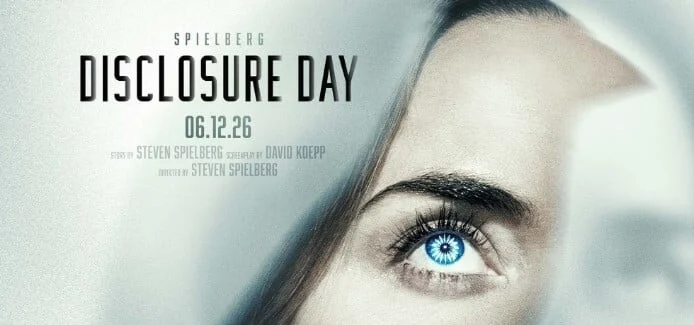
The release of Steven Spielberg’s latest science-fiction thriller, Disclosure Day, has sparked a profound cultural and ethical debate that extends far beyond the traditional boundaries of cinema. Premiering in June 2026, the film stars Emily Blunt and Josh O’Connor in a narrative that pivots from a standard extraterrestrial contact story into a harrowing critique of institutional secrecy and the ethics of biological experimentation. While audiences initially flocked to theaters for the promise of a high-stakes conspiracy thriller, the conversation has rapidly shifted toward the film’s central moral provocation: the treatment of sentient beings who fall outside the protection of human legal frameworks.
Narrative Overview and Cinematic Context
Disclosure Day follows the intersecting paths of Daniel Kellner (Josh O’Connor), a high-level cybersecurity expert, and Margaret Fairchild (Emily Blunt), a meteorologist who discovers atmospheric anomalies that the government is desperate to suppress. The two are eventually joined by Jane (Eve Hewson), who serves as a witness to the film’s most controversial revelations. Unlike Spielberg’s previous ventures into the genre—such as the wonder-filled Close Encounters of the Third Kind or the heartwarming E.T. the Extra-Terrestrial—Disclosure Day presents a much bleaker vision of first contact.
The plot centers on the discovery of an "operation" that has been ongoing for years, involving the clandestine capture and study of extraterrestrial visitors. The tension reaches its peak when Kellner uncovers classified footage documenting the internal workings of a government facility. In a scene that has become the focal point of public discourse, viewers are shown the visceral reality of these experiments: an alien being, visibly distressed and physically restrained, attempting to push away a human experimenter. The sequence is designed to evoke a sense of profound discomfort, forcing the audience to witness a being’s non-consensual struggle against pain and confinement.
Production Timeline and Development
The journey of Disclosure Day to the big screen began in late 2024, when Amblin Entertainment announced a secret project that would reunite Spielberg with the science-fiction genre. Casting for Emily Blunt and Josh O’Connor was finalized in mid-2025, with production taking place across various international locations, including the United Kingdom and the United States.
Throughout the filming process, rumors circulated regarding the "unprecedented" nature of the film’s visual effects. Spielberg reportedly opted for a blend of high-end animatronics and digital enhancement to ensure the extraterrestrial characters possessed a level of biological realism that would foster a deeper empathetic connection with the audience. This technical choice was pivotal in making the experimentation scenes feel grounded and urgent rather than fantastical.
The film’s marketing campaign initially leaned into the "conspiracy" elements, utilizing viral websites and cryptic teasers. However, following the world premiere, the narrative surrounding the film was quickly reclaimed by advocacy groups and ethicists who recognized the film’s parallels to real-world issues.
Ethical Implications and Advocacy Response
The emotional resonance of Disclosure Day has provided a significant platform for animal rights organizations, most notably PETA (People for the Ethical Treatment of Animals). In a statement released shortly after the film’s debut, the organization praised the movie for its "unflinching look at the horror of vivisection." To show their support for the film’s message, PETA delivered a vegan cake to the cast and crew, framing the movie as a vital tool for social change.
According to advocacy leaders, the film acts as a mirror to the current state of laboratory research. The distress shown by the extraterrestrial being in the film—characterized by panic, resistance, and the obvious communication of pain—is a direct parallel to the experiences of millions of animals currently used in scientific testing. PETA and other organizations argue that the film’s power lies in its ability to strip away "speciesist" biases. By presenting a victim that is not from Earth, the film forces viewers to acknowledge that the capacity to suffer is the only relevant metric for moral consideration, regardless of the victim’s origin or appearance.
Data and Statistics: The Reality of Modern Experimentation
The debate ignited by Disclosure Day is grounded in significant real-world data regarding the efficacy and ethics of animal testing. While the film depicts the experimentation on a fictional alien species, the statistical reality for Earth’s animals is well-documented:

- Volume of Testing: In the United States alone, it is estimated that over 100 million animals—including mice, rats, frogs, dogs, rabbits, monkeys, and fish—are killed in laboratories every year for biology lessons, medical training, curiosity-driven experimentation, and chemical, drug, food, and cosmetics testing.
- Failure Rates: Scientific data suggests that animal models are often poor predictors of human outcomes. Statistics frequently cited by the National Institutes of Health (NIH) indicate that approximately 95% of all new drugs that are shown to be safe and effective in animal tests fail in human clinical trials because they don’t work or are toxic.
- Economic Impact: The cost of maintaining animal laboratories and conducting years of animal-based trials amounts to billions of dollars in taxpayer-funded grants, which many researchers argue could be more effectively diverted toward modern, non-animal methodologies.
Legislative Frontiers: The Research Modernization Deal
In conjunction with the film’s release, there has been a renewed push for legislative action in the United States. Advocacy groups are urging members of Congress to introduce and support the "Research Modernization Deal." This proposed framework outlines a strategic plan to phase out the use of animals in areas where they have been proven to be ineffective predictors for humans.
The Research Modernization Deal focuses on several key pillars:
- Prioritizing Investment: Redirecting funding toward human-relevant, non-animal methods, such as organs-on-a-chip, 3D bioprinting of human tissues, and sophisticated computer modeling.
- Systematic Reviews: Conducting rigorous scientific reviews to identify which animal-based research areas are failing to produce human treatments and should be discontinued.
- International Cooperation: Aligning U.S. research standards with global movements toward animal-free testing, such as those gaining traction in the European Union.
The timing of Disclosure Day has provided a significant boost to these efforts. Public petitions related to the Research Modernization Deal have seen a surge in signatures, with many signatories citing the film as the catalyst for their involvement.
Expert Analysis and Cultural Impact
Film critics and social analysts have noted that Disclosure Day represents a significant evolution in Spielberg’s filmography. By focusing on the "cages, scalpels, and secrecy" that greet the visitors, Spielberg challenges the notion of human exceptionalism. The film suggests that humanity’s first instinct when faced with the unknown is not curiosity, but domination.
"The film’s brilliance lies in its discomfort," says cultural critic Marcus Thorne. "It takes the ‘alien’ and makes it the ultimate ‘other.’ By showing the audience that this ‘other’ can feel fear and pain just as we do, Spielberg is essentially asking us to audit our own humanity. If we find the treatment of an alien in a lab to be abhorrent, we must reconcile why we accept the same treatment for a beagle or a macaque."
Furthermore, the film’s technical execution has been praised for avoiding "creature feature" tropes. The aliens are not depicted as monsters or gods, but as biological individuals. This choice is central to the film’s plea for empathy. It posits that communication of distress—whether through a spoken language or a physical gesture of resistance—creates a moral obligation for the observer to respond with care.
Conclusion: A Call for Consideration
Disclosure Day has proven to be more than a summer blockbuster; it has become a catalyst for a global re-evaluation of how society treats those it does not fully understand. By weaving a narrative of suspense and government cover-ups around a core of biological ethics, Spielberg has ensured that the film’s impact will be felt long after its theatrical run.
As the credits roll, the audience is left with a challenging proposition: the measure of a civilization is not found in its technological achievements or its ability to reach the stars, but in how it treats the most vulnerable beings within its reach. Whether those beings come from another planet or from our own forests and oceans, the film argues that the right to exist on one’s own terms is a universal principle that transcends species.
With the push for the Research Modernization Deal gaining momentum and public awareness of laboratory conditions reaching new heights, Disclosure Day may eventually be remembered as the film that helped bridge the gap between cinematic fiction and a more compassionate scientific reality.

