


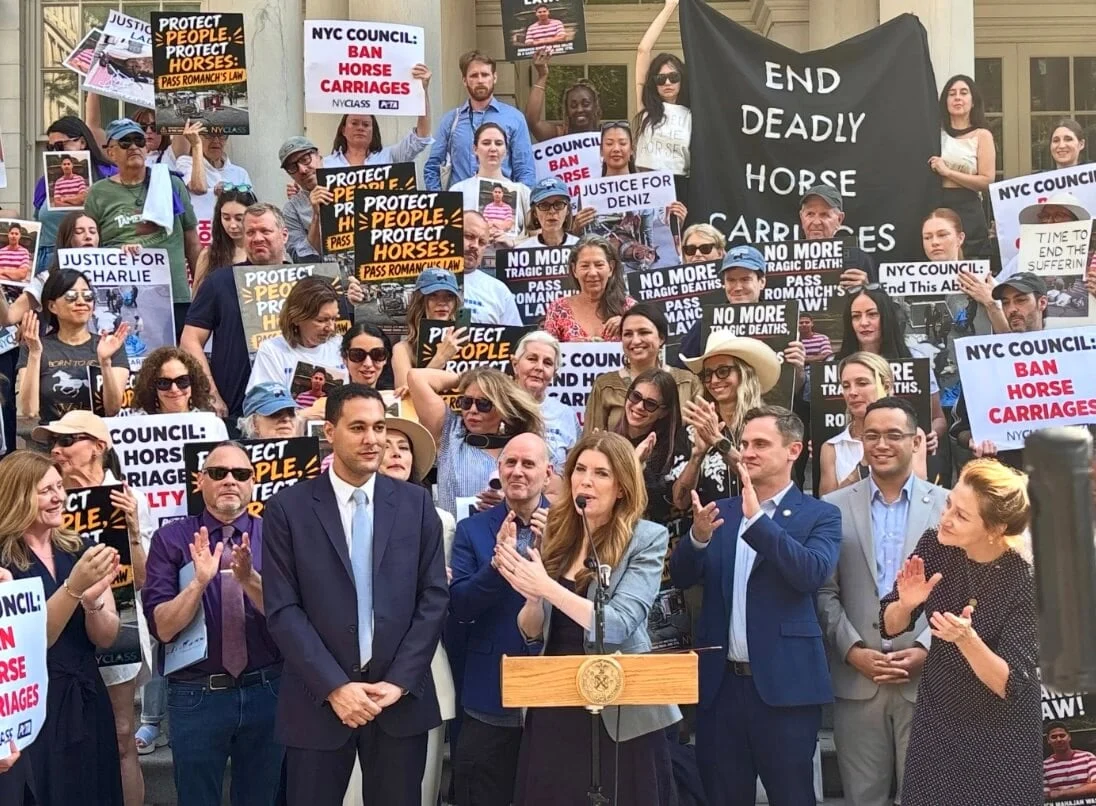
The New York City Council is currently standing at a legislative crossroads that could fundamentally alter the landscape of Manhattan’s iconic Central Park and its surrounding streets. Following a highly charged and emotional hearing held by the City Council Health Committee, a legislative milestone was reached as Romanch’s Law, formally known as Intro 943, secured a majority of cosponsors within the Council. This development signals a significant shift in the political appetite for the horse-drawn carriage industry, which has been a fixture of New York City tourism for over a century but has increasingly come under fire for safety concerns and animal welfare issues. The bill, named in honor of Romanch Mahajan, an 18-year-old tourist whose life was tragically cut short in a carriage-related accident in June 2026, seeks to implement a total ban on the practice, effectively retiring the horses and transitioning the industry toward modern alternatives.
The momentum behind Romanch’s Law has been building for several years, but the recent string of high-profile incidents has catalyzed a level of public and political support previously unseen in the city’s long-standing debate over the carriage trade. The Health Committee hearing served as a forum for a diverse array of voices, ranging from grieving family members and celebrity activists to veterinary experts and city officials. With the bill now backed by a majority of the Council, the legislation is poised for a full floor vote, a move that advocates suggest could finally end an era characterized by what they describe as inherent cruelty and avoidable public danger.
The Catalyst for Change: The Tragedy of Romanch Mahajan
The transition of the bill from its former moniker, Ryder’s Law, to Romanch’s Law marks a somber turning point in the advocacy movement. In June 2026, the city was rocked by the death of Romanch Mahajan, a young visitor whose presence in the city was meant to be a celebration of his recent academic achievements. Mahajan was killed in a chaotic collision involving a horse-drawn carriage, an event that reignited fears regarding the compatibility of horse-drawn vehicles with the dense, motorized traffic of modern Manhattan.
During the committee hearing, the Mahajan family provided heart-wrenching testimony, detailing the profound loss they have suffered and urging lawmakers to ensure that no other family has to endure a similar tragedy. Their testimony highlighted a critical argument in the current debate: the issue is no longer solely about animal welfare, but about the fundamental safety of everyone who navigates New York City’s streets. The death of a human bystander has shifted the narrative, forcing a broader segment of the public and the legislature to view the carriage industry through the lens of public liability and urban safety management.
A History of Incidents: From Ryder to Deniz
While the death of Romanch Mahajan provided the final legislative push, the foundation of Romanch’s Law was built on a series of distressing events involving the horses themselves. The original inspiration for the bill was Ryder, a carriage horse who collapsed on a sweltering Manhattan street in August 2022. The video of Ryder’s collapse went viral, showing the elderly and ailing horse struggling to stand while being subjected to physical force by his handler. The subsequent investigation revealed that Ryder was significantly older than his records claimed and was suffering from underlying health conditions that made him unfit for labor.
The 2026 season saw further tragedy when a 16-year-old horse named Deniz collapsed and died after being forced to work in the grueling conditions of Central Park. These incidents, occurring within weeks of each other, have provided animal protection organizations with a mounting body of evidence suggesting that the regulatory framework currently governing the industry is insufficient to protect the animals involved. Edie Falco, the PETA Honorary Director and acclaimed actress, testified at the hearing, emphasizing that as a lifelong New Yorker, she has seen the industry’s failures firsthand and believes the city has reached a moral tipping point.
The Physiological and Environmental Toll on Urban Horses
A significant portion of the testimony submitted to the City Council Health Committee came from veterinary professionals and equine behaviorists. These experts outlined the specific physiological stresses that carriage horses face in an urban environment like New York City. Unlike horses kept in rural or controlled environments, NYC carriage horses are subjected to a constant barrage of stressors that are detrimental to their long-term health.
One of the primary concerns cited by veterinarians is the impact of hard pavement on equine physiology. Horses are biologically designed to traverse soft ground; constant movement on asphalt and concrete leads to chronic hoof and joint issues, including laminitis and degenerative joint disease. Furthermore, the height at which horses breathe places their respiratory systems directly in line with vehicle exhaust pipes. The inhalation of concentrated carbon monoxide and particulate matter from city traffic has been linked to chronic respiratory ailments in urban working horses.
Environmental factors also play a critical role. Manhattan’s "urban heat island" effect can cause street-level temperatures to soar well above reported averages. While current regulations prohibit carriage rides when temperatures exceed certain thresholds, advocates argue these measures are often ignored or are insufficient to account for the humidity and radiant heat from the pavement. In the winter, the horses face the opposite extreme, navigating icy patches and freezing winds, often without adequate protection or rest.
Legislative Mechanics and the Role of City Leadership
The progression of Intro 943 is largely attributed to the persistent efforts of City Council Speaker Julie Menin. Menin has emerged as a key champion of the legislation, navigating the complex political waters of the City Council to secure the necessary cosponsors. The bill does not merely propose a ban but seeks to address the economic implications for the workers currently employed in the industry.
Proponents of the law have suggested a transition to electric-powered "e-carriages," which would preserve the nostalgic aesthetic of a carriage ride through Central Park without the use of live animals. This transition model is designed to protect the livelihoods of carriage drivers while eliminating the risks associated with animal labor. The proposed legislation includes provisions for job training and licensing transfers, aiming to ensure that the move toward a more ethical tourism model does not result in economic hardship for the city’s workforce.
The fact that the bill has now secured a majority of cosponsors is a "major milestone," according to legislative analysts. In the New York City Council, achieving a majority of cosponsors often serves as a bellwether for the success of a bill during a full floor vote. It indicates that the core concerns regarding the bill have been addressed through committee work and that there is a collective will to see the policy implemented.
Chronology of the Push for Romanch’s Law
The timeline leading to the current legislative status is marked by both tragedy and advocacy:
- August 2022: The collapse of Ryder the horse on a Manhattan street sparks international outrage and leads to the drafting of the initial "Ryder’s Law."
- 2023-2025: A series of minor accidents and health violations keep the issue in the public eye, though the bill remains stalled in committee.
- June 2026: The death of Deniz, a carriage horse, in Central Park followed days later by the fatal accident involving Romanch Mahajan.
- Late June 2026: The bill is officially renamed "Romanch’s Law" (Intro 943) to reflect the human cost of the industry.
- July 16, 2026: The City Council Health Committee holds a massive public hearing featuring over 100 testimonies.
- Post-Hearing July 2026: Romanch’s Law secures a majority of City Council cosponsors, moving it toward a full Council vote.
Broader Implications and National Precedents
New York City’s move toward a ban is part of a broader global trend. Cities such as Montreal, Chicago, Salt Lake City, and several major European capitals have already implemented bans or severe restrictions on horse-drawn carriages in urban centers. These cities have cited similar reasons: public safety, traffic congestion, and animal welfare.
If New York City—the most prominent market for horse-drawn carriages in the United States—successfully passes Romanch’s Law, it is expected to set a powerful precedent for other municipalities. The decision would signal that even the most deeply entrenched traditions are subject to change when they no longer align with modern standards of safety and ethics.
The economic impact on New York City tourism is also a point of analysis. While critics of the ban argue that the carriages are a "must-see" attraction, proponents point to the success of other cities that have transitioned to more humane and technologically advanced tourism options. The introduction of electric carriages could potentially open a new niche market, attracting tech-savvy and ethically conscious travelers who currently avoid the horse-drawn options.
Conclusion: The Path to a Final Vote
As Romanch’s Law heads toward a full Council vote, the pressure from both supporters and opponents is expected to intensify. More than 180,000 supporters have engaged with advocacy campaigns, such as those led by PETA, to urge city leaders to act. The Mahajan family’s plea for a "safer, kinder New York City" remains the emotional core of the movement, serving as a reminder of the high stakes involved in this legislative decision.
The upcoming vote will be a defining moment for the current City Council. It represents a choice between maintaining a historical tradition and embracing a future that prioritizes the safety of its citizens and the welfare of animals. With a majority of cosponsors already on board, the path forward for Romanch’s Law appears clearer than ever, potentially bringing an end to the era of horse-drawn carriages on the streets of New York.

