


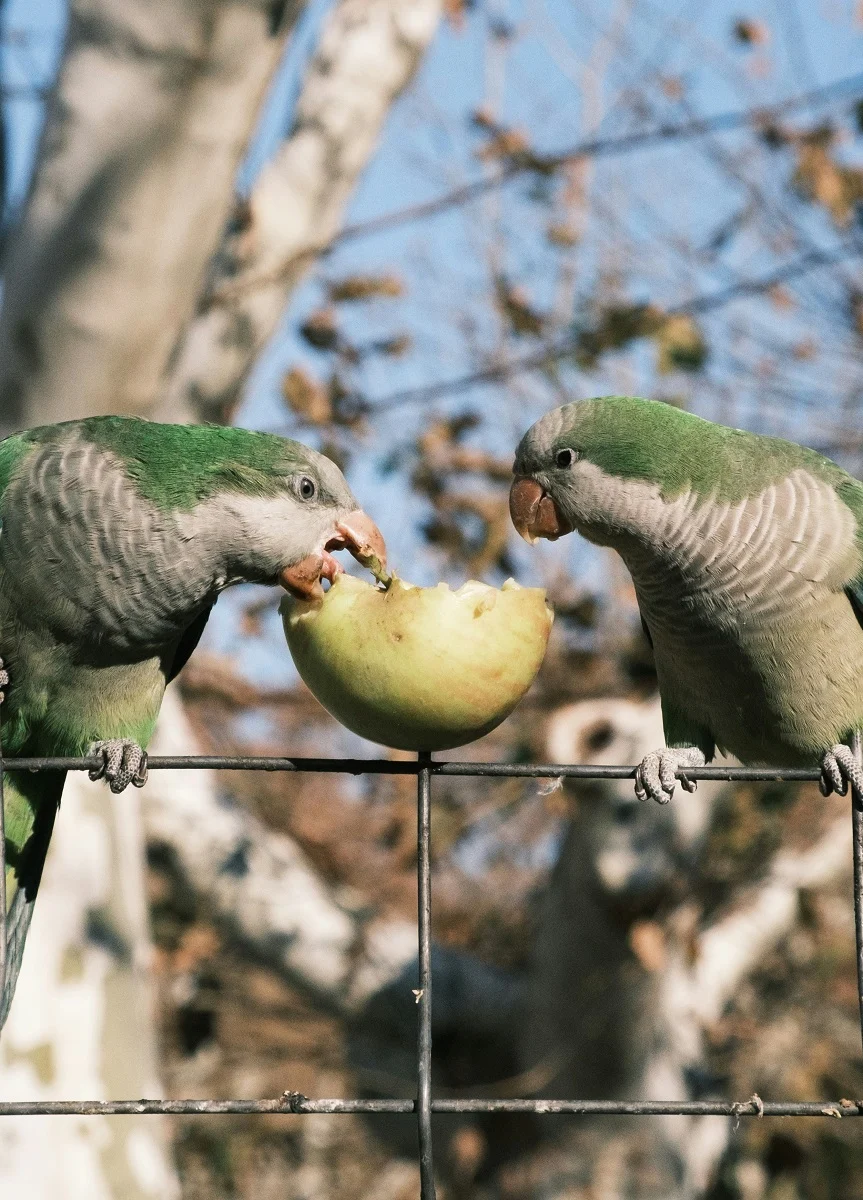
The Quaker parrot, scientifically classified as Myiopsitta monachus and more commonly known as the monk parakeet, has long occupied a unique niche in both aviculture and global ecology. Native to the lowland scrub forests, savannas, and agricultural peripheries of South America, this compact and charismatic psittacine has successfully expanded its footprint far beyond its indigenous borders. While prized by bird enthusiasts for its high intelligence, playful demeanor, and impressive vocal mimicry, the species simultaneously presents complex challenges as an invasive pest in multiple international territories, prompting varying regulatory frameworks and intensive wildlife management strategies.
Taxonomic Profile and Physical Characteristics
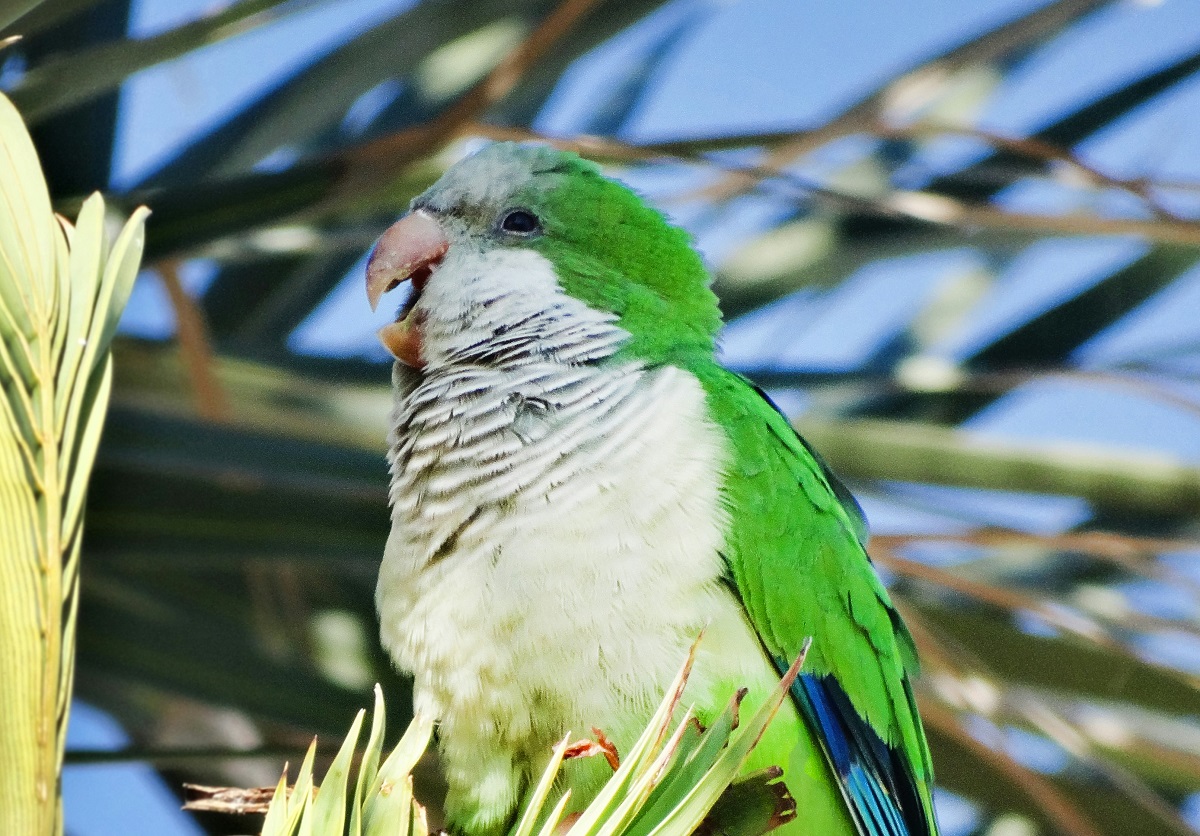
Averaging up to 13 inches in length and weighing roughly 140 grams, the Quaker parrot is readily identifiable by its distinct coloration and morphology. Wild specimens typically feature a mossy green dorsal region, a contrasting gray face and breast, and vibrant blue flight feathers. The species possesses a long, graduated tail and a distinct, flesh-toned curved beak optimized for cracking seeds and manipulating nesting materials.
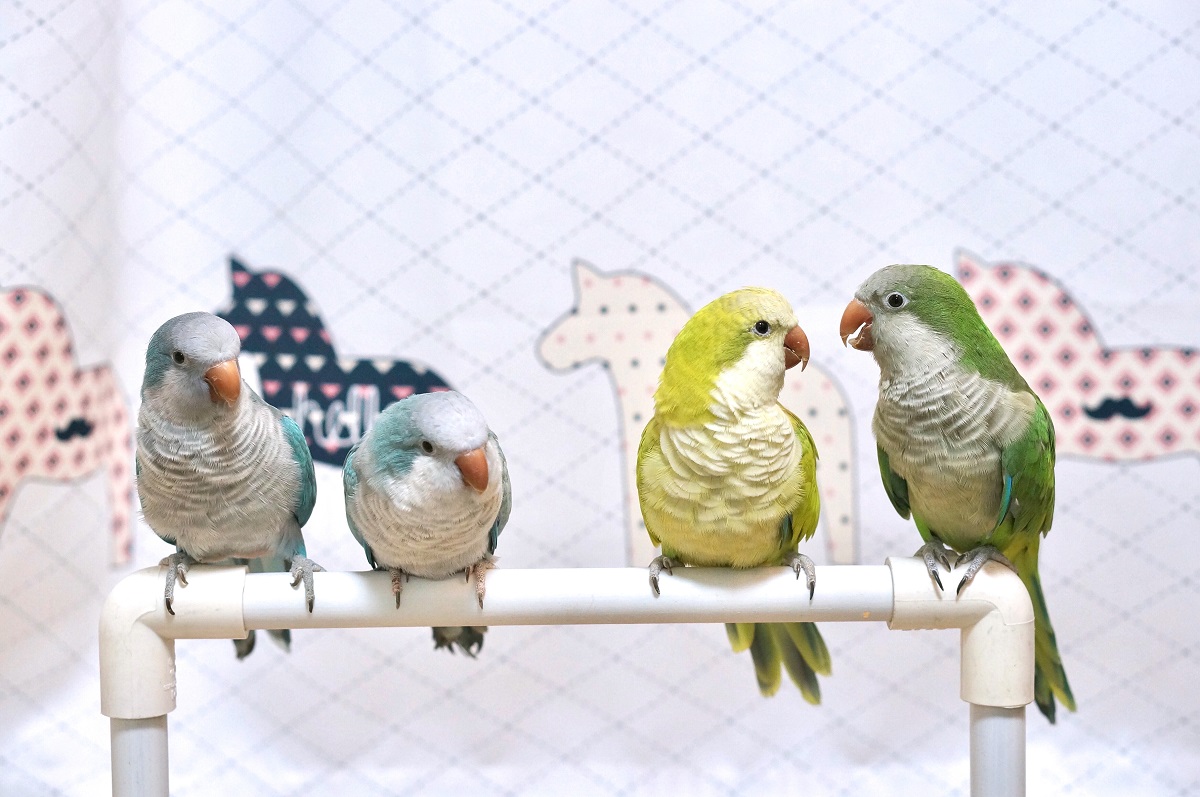
Through decades of selective breeding within the aviculture community, breeders have successfully established numerous color mutations. Today, enthusiasts can acquire individuals displaying blue, yellow, white, and gray plumage alongside the classic wild-type green. Sexual dimorphism in Myiopsitta monachus is virtually nonexistent; while females tend to be marginally smaller than males, visual identification is unreliable. Consequently, professional breeders and avian veterinarians strongly recommend molecular DNA testing to definitively determine sex.
Natural Habitat and Geographic Distribution
The indigenous range of the Quaker parrot encompasses a broad swath of temperate and subtropical regions in South America. Naturally distributed across southeastern Bolivia, Paraguay, southern Brazil, Uruguay, and significant portions of Argentina, the species predominantly occupies lowland environments situated below 3,300 feet in elevation. These birds demonstrate high ecological adaptability, thriving in open woodlands, gallery forests, palm groves, and urbanized parks where food sources are abundant.
From a conservation standpoint, the International Union for Conservation of Nature (IUCN) classifies Myiopsitta monachus as a species of Least Concern. Population data indicate that the species is locally common and may actually be thriving due to anthropogenic environmental modifications. The commercial expansion of eucalyptus plantations—grown for paper pulp—provides extensive new nesting substrate, while the intensification of agriculture, particularly maize and grain cultivation, ensures a steady, high-calorie food supply. Conversely, its close relative within the same genus, Myiopsitta luchsi (the Cliff Parakeet), occupies a more restricted range and is categorized as Near Threatened, underscoring the divergent ecological trajectories of these closely related taxa.
The Global Invasive Phenomenon and Regulatory Responses
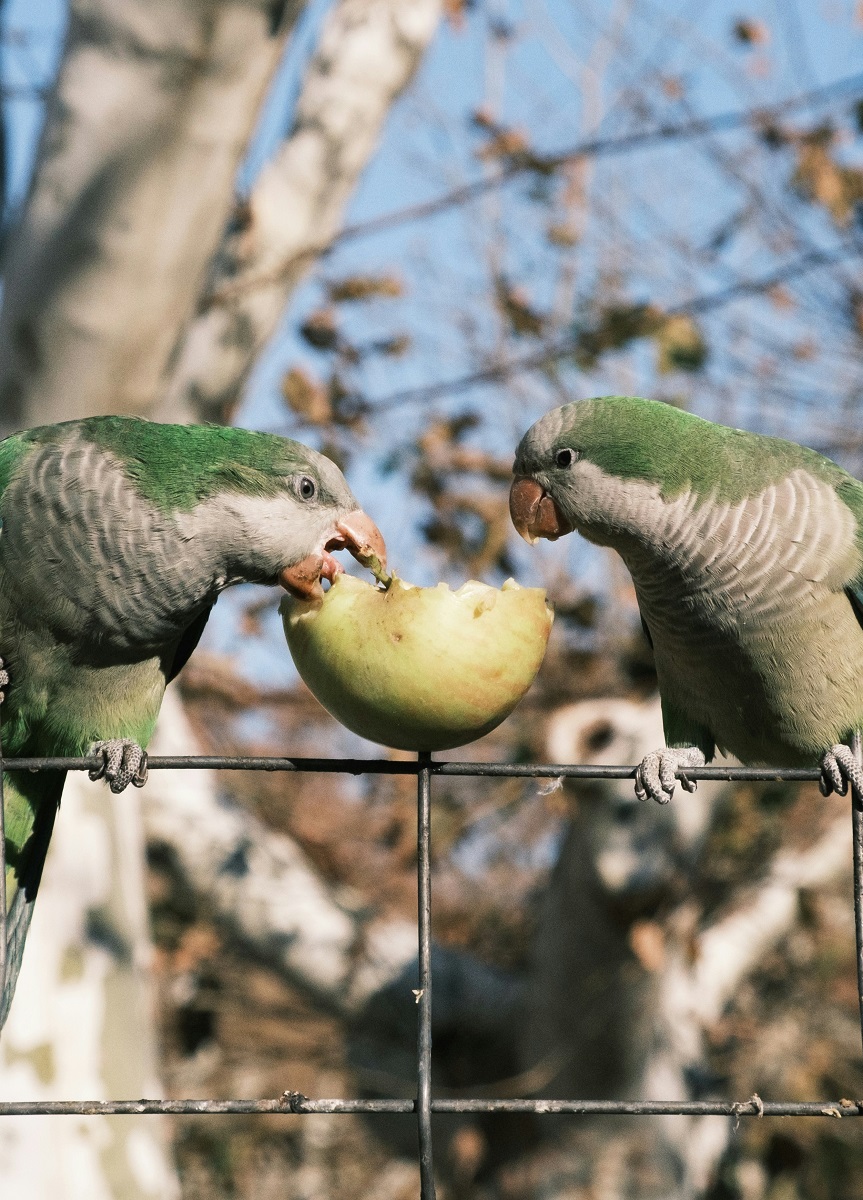
Despite its stable status in South America, the Quaker parrot has demonstrated formidable adaptability as an invasive species across North America, Europe, and parts of Asia. Escaped or intentionally released pet populations have established self-sustaining feral colonies in numerous urban and suburban environments. For instance, flourishing populations are now permanent fixtures in major European metropolitan areas, such as Madrid and Valencia in Spain, where they forage in municipal parks alongside native pigeons and corvids. Similar large-scale feral colonies persist across multiple U.S. states, including Florida, Texas, New York, and Illinois.
The establishment of these wild populations has triggered significant concern among agricultural authorities and environmental agencies. Unlike solitary nesters, monk parakeets are colonial breeders renowned for constructing massive, communal stick nests that can weigh hundreds of pounds. These sprawling avian structures have occasionally caused short circuits and fires by being built directly upon utility poles and electrical transformers. Furthermore, because of their affinity for agricultural grains, unchecked feral flocks routinely inflict economic damage on corn, sorghum, and sunflower crops.
Consequently, these ecological risks have prompted strict legislative measures. Several U.S. states and international municipalities have enacted total bans on the import, sale, and private ownership of Quaker parrots, classifying them as agricultural pests and prohibiting the release or transport of live specimens. Prospective owners must rigorously verify local municipal and state wildlife laws before acquiring the species to ensure compliance with regional containment and ownership regulations.
Nutritional Requirements and Dietary Management
Maintaining the health and longevity of a captive Quaker parrot requires strict adherence to a nutritionally balanced diet. In their native South American habitat, wild Myiopsitta monachus function primarily as generalist herbivores, consuming a diverse array of seeds, wild berries, blossoms, and occasionally insect larvae. Their heavy reliance on cereal crops in agricultural zones mirrors their high-energy metabolic demands.
Historically, captive pet parrots were fed predominantly seed-based diets. However, contemporary avian veterinary medicine overwhelmingly rejects this practice, noting that unsupplemented seed mixtures are notoriously deficient in essential vitamins, minerals, and amino acids, frequently leading to hepatic lipidosis (fatty liver disease), malnutrition, and shortened lifespans.
Modern veterinary standards dictate that a captive Quaker parrot’s diet should be anchored by a high-quality, commercially formulated pelleted ration designed specifically for small-to-medium psittacines. Pellets provide a complete, homogenous nutrient profile that prevents selective feeding. To supplement this baseline, owners should regularly introduce fresh, bird-safe vegetables, leafy greens, and limited quantities of fruit. Additionally, constant access to clean, fresh water and an appropriate mineral or calcium block is mandatory for skeletal and metabolic health.
Housing, Environmental Enrichment, and Nesting Behavior
Captive Quaker parrots require substantial spatial accommodation relative to their physical size. Due to their high activity levels and inquisitive nature, a housing enclosure should measure a minimum of 30 inches in width. Because parrots primarily utilize the upper horizontal plane of their habitat, cage width and length take precedence over vertical height. For owners unable to permit daily out-of-cage exercise, investments in a full-scale indoor aviary are strongly advised.
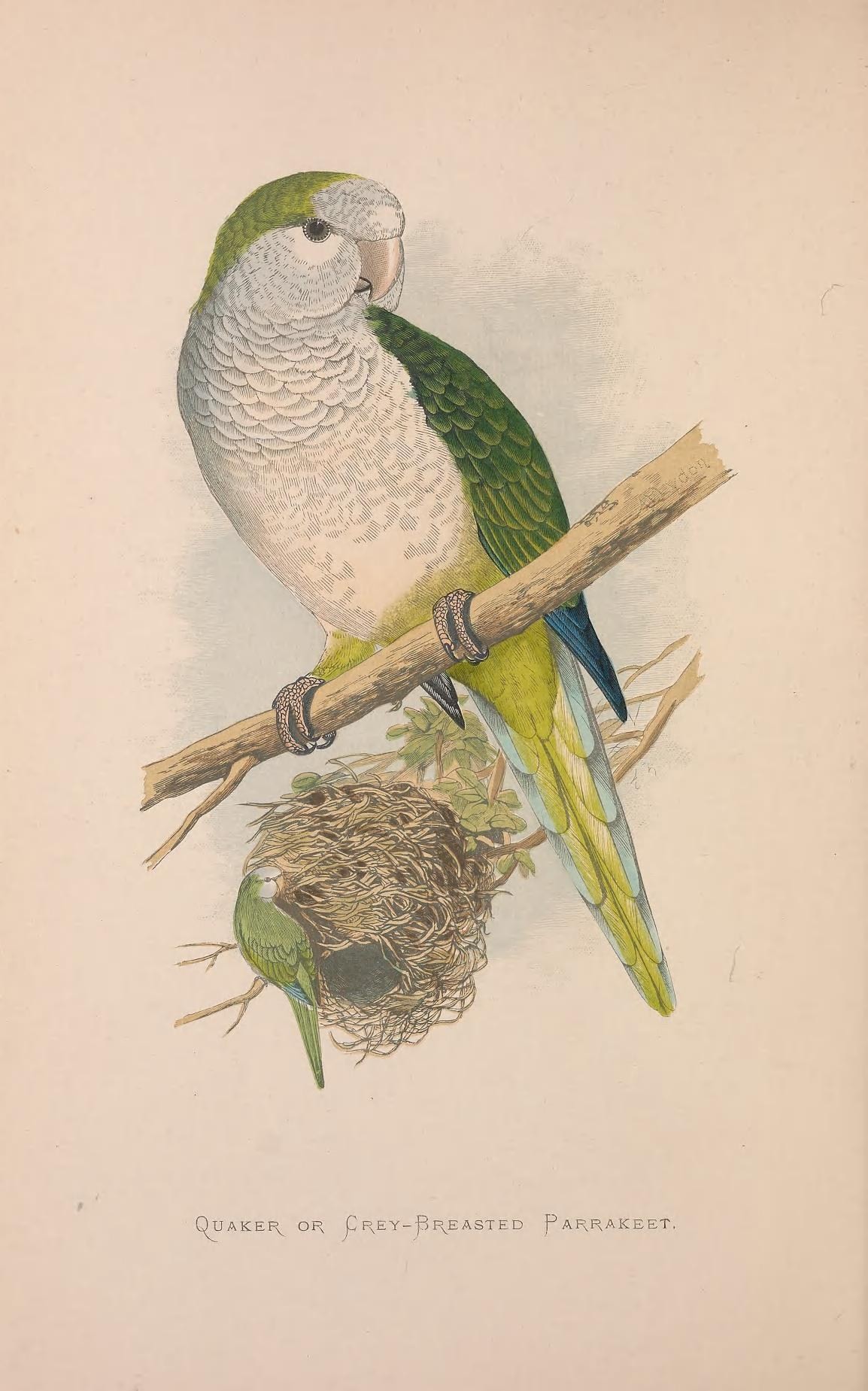
The internal architecture of the enclosure should feature natural wood perches of varying diameters to prevent foot fatigue and arthritis, alongside durable, non-toxic toys designed to withstand aggressive chewing. A defining behavioral characteristic of the species is its compulsive nest-building instinct. If provided with elongated materials such as twigs, paper, pens, or plastic items, a Quaker parrot will meticulously construct intricate, domed structures. While some keepers discourage this behavior to mitigate hormonal aggression and territoriality, accommodating safe nesting materials allows the birds to express natural behavioral repertoires.
Cognitive stimulation is vital for this intelligent species. Without adequate environmental enrichment—including foraging boxes, puzzle toys, and social interaction—captive Quakers quickly develop stress-induced stereotypies, excessive vocalizations, and feather-plucking behaviors. Daily out-of-cage exploration within a thoroughly "bird-proofed" room (free from ceiling fans, open bodies of water, and toxic house plants) is critical for preventing obesity and maintaining optimal physical conditioning.
Behavioral Temperament and Social Dynamics
Quaker parrots are widely celebrated in the aviculture community for their outgoing, confident, and delightfully clownish personalities. A well-socialized individual forms strong, affectionate bonds with human companions and can exhibit high levels of playfulness and physical affection. However, these same traits can manifest as behavioral challenges if not properly managed.
The species possesses a fiercely territorial disposition regarding its primary cage enclosure. Many owners report defensive nipping or aggressive posturing when hands enter the cage space for routine maintenance like food and water replenishment. Furthermore, Quaker parrots have a distinct propensity to bond preferentially with a single human family member, occasionally displaying aggressive intolerance toward other household occupants. Proper early socialization involving multiple handlers is essential to mitigate single-person bonding and territorial guarding.
Vocalizations, Communication, and Linguistic Capabilities
While not matching the deafening decibel levels of larger cockatoos or macaws, Quaker parrots are vocal animals that maintain a consistent output of chatter, whistles, and high-pitched contact calls. Their flock calls, in particular, can be piercing and persistent, requiring prospective owners to carefully evaluate their living situations and noise tolerances prior to acquisition.
Conversely, their strong vocalization instincts translate into exceptional linguistic capabilities. Ornithological and avicultural observations rank Myiopsitta monachus among the most articulate talkers of the smaller parrot species. While their spoken vocabulary is delivered in a characteristic, mechanical, and high-pitched squeak, individuals demonstrate remarkable motivation to mimic human speech, environmental noises, and musical tunes when subjected to consistent, positive auditory reinforcement and repetition.
In conclusion, the Quaker parrot represents a fascinating intersection of resilient wildlife biology, complex ecological management, and rewarding avicultural companionship. Whether observed as adaptable invaders in international urban landscapes or cherished as vocal, intelligent household companions, Myiopsitta monachus demands an informed, responsible approach from both environmental policymakers and pet owners alike.

