


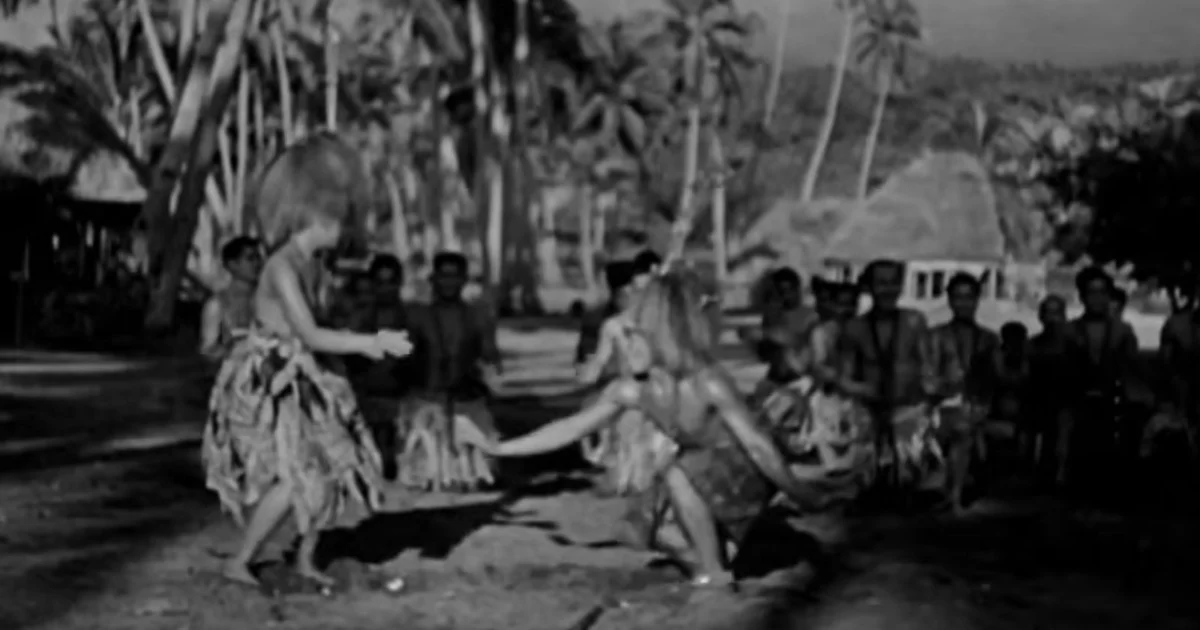
As Disney’s live-action remake of Moana prepares for its theatrical debut, the production finds itself at a crossroads of modern cinematic discourse. While industry analysts project tepid box office openings and critics question the necessity of a live-action retelling starring Dwayne Johnson, the "Moana" name carries a legacy that extends far beyond the reach of contemporary animation. Exactly a century before the current blockbuster era began to take shape, a different Moana made history. Released in 1926, Robert J. Flaherty’s Moana was not a remake, nor was it a fictional adventure in the modern sense; it was the film that birthed the very term "documentary."
The evolution of the documentary genre is now a cornerstone of the global media landscape. Streaming giants like Netflix and HBO Max rely on non-fiction storytelling to maintain their subscriber bases, treating true-crime series and nature exposés as primary drivers of engagement. However, in the mid-1920s, the concept of a "documentary" did not exist in the public or critical lexicon. The film industry was still dominated by silent features, and the "talkies" were a looming innovation yet to be realized. In this experimental era, Robert J. Flaherty emerged as a pioneer who sought to capture the "truth" of human existence, even if that truth required a degree of cinematic orchestration.
The Flaherty Method and the Success of Nanook
To understand the significance of the 1926 Moana, one must first look to Flaherty’s 1922 masterpiece, Nanook of the North. This "docudrama" followed an Inuk man named Nanook as he navigated the harsh landscapes of northern Canada to provide for his family. The film was a global sensation, captivating audiences with its visceral sequences of igloo building and walrus hunting.
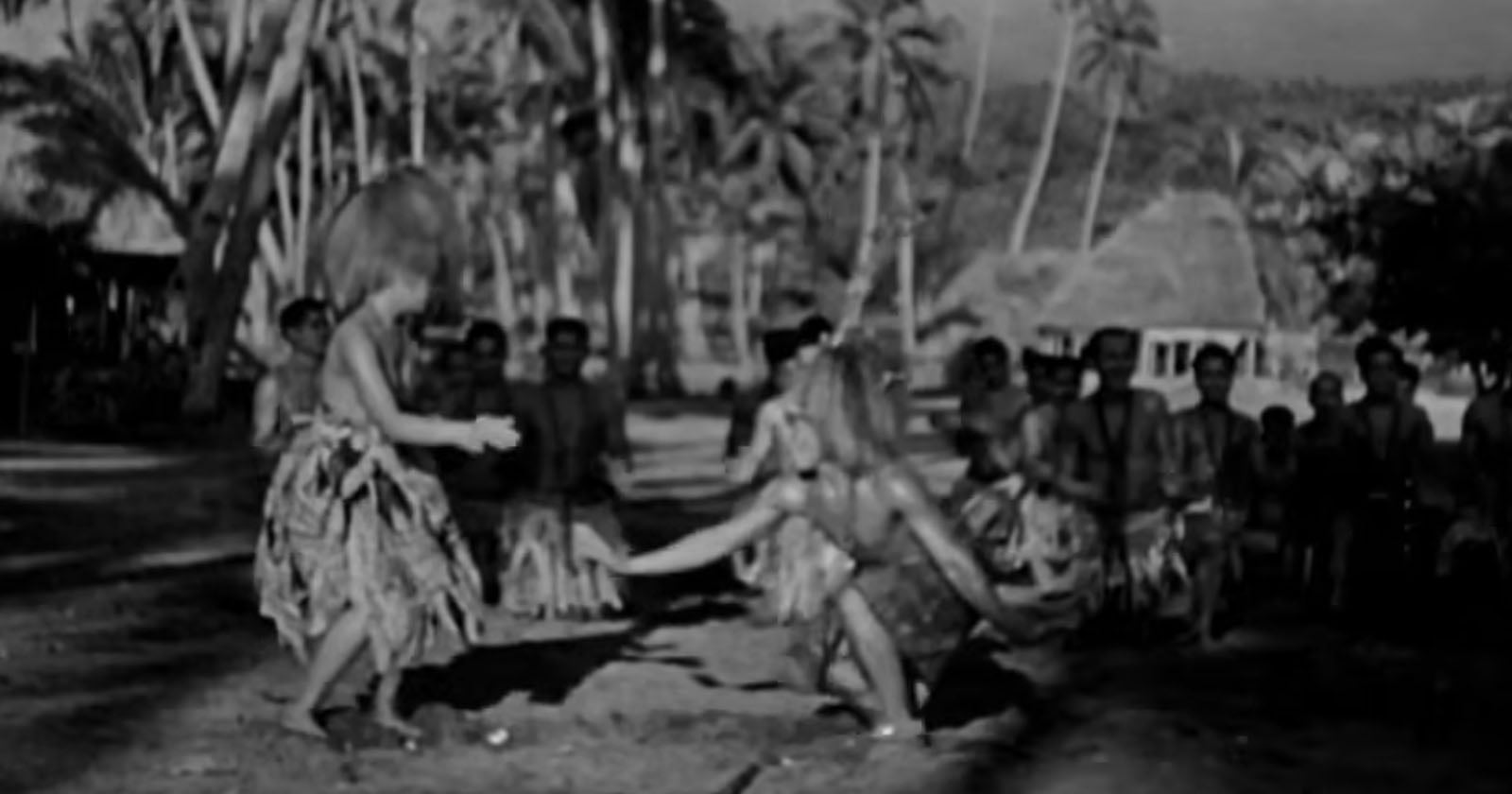
Nanook of the North established what would become the "Flaherty Method"—a style of filmmaking that blended ethnographic observation with staged narrative beats to create a compelling "lived" experience. The commercial and critical success of Nanook gave Flaherty the creative capital and financial backing to pursue a new project. Looking to trade the Arctic ice for the tropical warmth of the South Pacific, Flaherty set his sights on the islands of Samoa.
The Search for a Sea Monster: Production in Samoa
Flaherty arrived in Samoa with a specific narrative vision in mind. Influenced by the adventure tropes of the time, he intended to film a dramatic struggle between man and a great sea monster. However, upon his arrival in the village of Safune on the island of Savai’i, he encountered a reality that contradicted his preconceived notions of "primitive" conflict.
Film historian Bruce Posner, in discussions regarding the film’s restoration and legacy, notes that Flaherty’s initial plan collapsed because the Samoan islands were, in fact, a place of relative peace and abundance. There were no monsters of the deep to hunt, and the local population lived in a state of social harmony that lacked the life-or-death stakes Flaherty had captured in the Arctic.
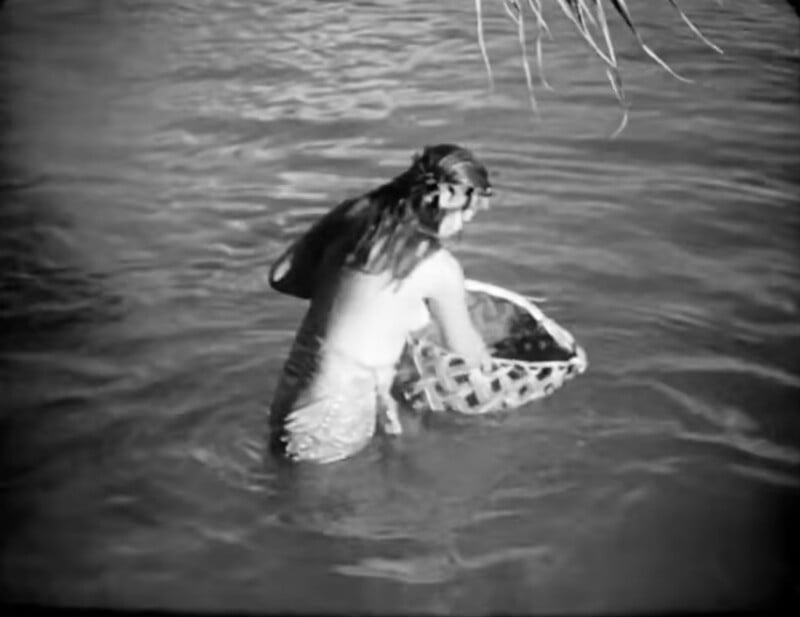
Undeterred by the lack of a traditional antagonist, Flaherty spent 18 months on the island, immersing himself and his family in the local culture. He went to extreme lengths to process his footage on-site, converting a local cave into a makeshift film laboratory. This dedication to the craft nearly cost him his life; Flaherty became severely ill after accidentally consuming water from the cave that had been contaminated with silver nitrate, a chemical used in the development of celluloid film.
The Coining of the Term Documentary
When Moana was finally released in 1926, it failed to replicate the box office thrills of Nanook of the North. Without the high-stakes drama of survival against the elements, some critics found the film’s slow, observational pace to be lacking. One contemporary reviewer famously remarked that the film "interests" rather than "entertains."
However, it was a review by John Grierson in the New York Sun that secured the film’s place in history. Grierson, who would later become a foundational figure in the British Documentary Film Movement, wrote that Moana, as a "visual account of events in the daily life of a Polynesian youth and his family," possessed "documentary value." This is widely cited by film historians as the first time the word "documentary" was used to describe a motion picture genre.
Grierson’s categorization changed the trajectory of cinema. It suggested that a film could be valued not just for its plot, but for its ability to archive reality and provide ethnographic insight. Despite this new label, the line between fact and fiction remained porous for Flaherty. He did not view "documentary" as a strictly objective medium. Instead, he saw himself as a storyteller who used real people to represent a poetic version of their culture.
Staging a Vanishing Past: Ethics and Ethnography
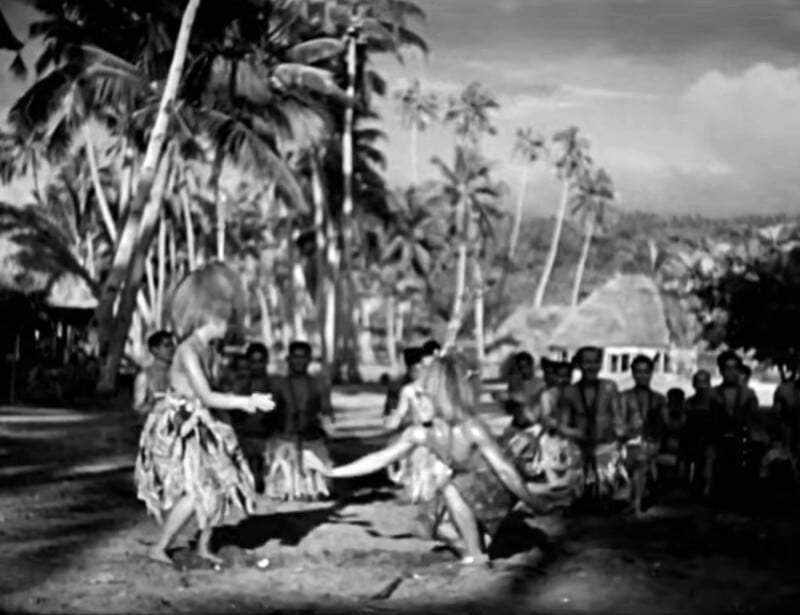
The 1926 Moana is often critiqued and celebrated for its "staged" authenticity. By the time Flaherty arrived in Samoa, the islands had already undergone significant Westernization. Samoans frequently wore Western-style clothing and had integrated modern conveniences into their daily lives. Flaherty, however, wanted to capture a "pure" version of Samoan culture that he believed was disappearing.
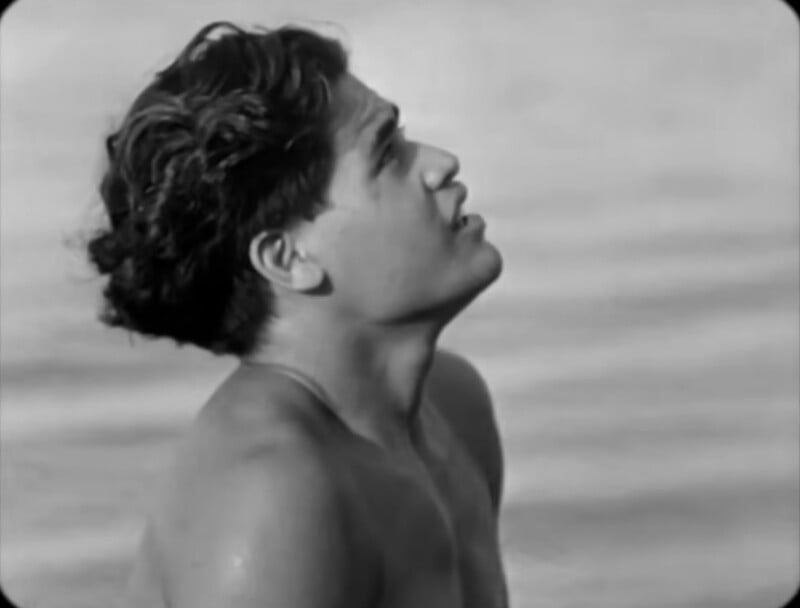
To achieve this, he persuaded the villagers to discard their modern attire in favor of traditional tapa cloth costumes. He cast the "characters" of his film based on their physical appearance rather than their actual familial roles, creating a fictional family unit that the audience was led to believe was real. He also revived traditional practices that were falling out of use, such as the painful and intricate tattooing ceremonies (pe’a) for young men, which serves as the film’s climax.
While modern documentary ethics would view such manipulation as a violation of journalistic integrity, Flaherty’s work is often viewed through a different lens in Samoa today. Many modern Samoans cherish the film as a high-quality visual record of ancestral traditions—even those that were reenacted—providing a window into a lifestyle that might otherwise have been lost to history.
Chronology of the Documentary Evolution
The development of the documentary as a recognized medium followed a distinct timeline, beginning with Flaherty and extending into the mid-20th century:
- 1922: Robert J. Flaherty releases Nanook of the North, establishing the commercial viability of non-fiction "expedition" films.
- 1926: Moana is released. John Grierson coins the term "documentary" in his review.
- 1929: Dziga Vertov releases Man with a Movie Camera in the Soviet Union, pushing the boundaries of non-fiction through avant-garde editing.
- 1930s: The Great Depression prompts a shift toward social-political documentaries. In the United States, the Farm Security Administration (FSA) begins hiring photographers to document the plight of rural Americans.
- 1935: Leni Riefenstahl’s Triumph of the Will demonstrates the terrifying power of the documentary format as a tool for state propaganda.
- 1940s: During World War II, filmmakers like Frank Capra use the "documentary" style for the Why We Fight series, further cementing the genre’s role in public discourse.
The Connection to Documentary Photography
It is a common misconception that documentary photography and documentary film emerged simultaneously. While photographers like Lewis Hine and Matthew Brady had been using cameras to record social injustices and the horrors of the Civil War decades earlier, the specific term "documentary photography" did not gain academic and critical traction until the 1930s.
The catalyst for this was the U.S. government’s Farm Security Administration (FSA) project. By hiring luminaries such as Dorothea Lange and Walker Evans to capture the human face of the Great Depression, the government helped formalize the idea that a photograph could be both an aesthetic work of art and a factual document of record. This movement mirrored Flaherty’s earlier work in film—seeking a "higher truth" through the careful composition of real-world subjects.
Broader Impact and the Disney Connection
The legacy of the 1926 Moana continues to ripple through popular culture, including the modern Disney franchise. While Disney’s 2016 animated film and the 2026 live-action remake are works of pure fantasy, film historians like Bruce Posner suggest that the studio "picked the bones" of Flaherty’s original work. The name of the protagonist, the Pacific setting, and the focus on cultural rites of passage all echo the themes Flaherty explored a century ago.
However, the contrast between the two versions of Moana highlights the evolution of Pacific representation. Where Flaherty was a lone Westerner directing Samoans to act out his vision of their past, modern productions often involve "Cultural Story Trusts" and local consultants to ensure a more collaborative and accurate portrayal of Polynesian heritage.
The 1926 Moana remains a foundational text in the history of cinema. It represents the moment when filmmakers realized that the real world, with all its nuances and cultural complexities, was a subject worthy of the silver screen. Whether viewed as a flawed ethnographic study or a poetic masterpiece, Flaherty’s Moana proved that "documentary value" could be just as enduring as the most elaborate Hollywood fiction. As audiences head to theaters for Disney’s latest iteration, they are—perhaps unknowingly—participating in a cinematic tradition that began with a silent camera in a Samoan cave 100 years ago.

