


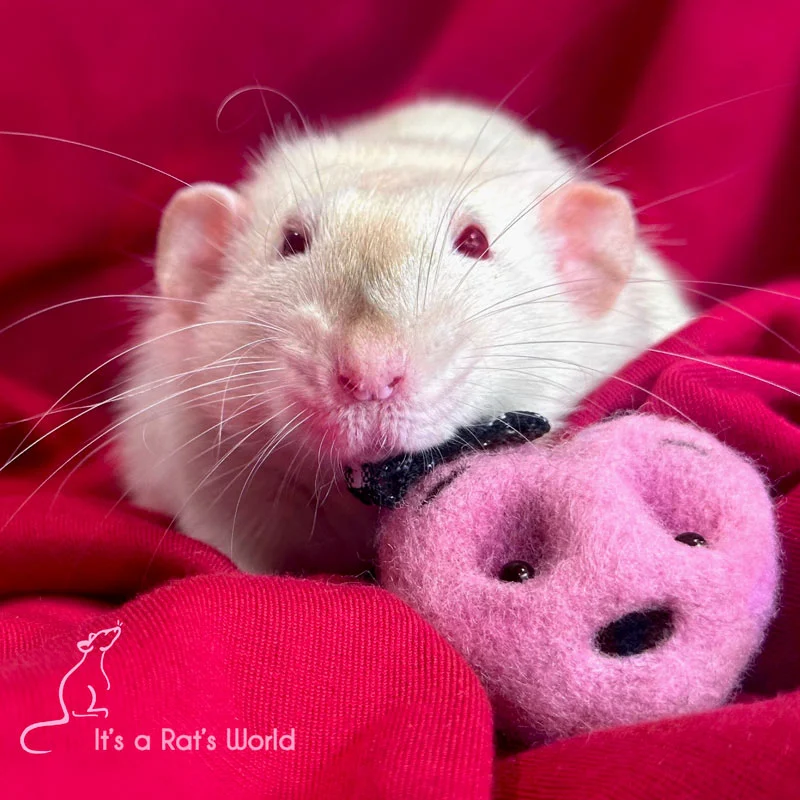
The human-animal bond is a well-documented psychological phenomenon, yet for owners of small companion mammals, particularly domestic rats (Rattus norvegicus), the depth of connection often defies conventional categorization. Within the rat-keeping community, enthusiasts frequently discuss the concept of a "heart rat"—a term reserved for a specific animal with whom an owner develops an uniquely profound, soulmate-level connection. While the average lifespan of a domestic rat is brief, typically ranging from two to three years, the emotional impact of these specific individuals often persists for decades, influencing the personal identity, career paths, and creative endeavors of their human companions.
Defining the Heart Rat Bond
The distinction between a favorite pet and a "heart rat" is largely identified by the intensity and spontaneity of the emotional attachment. According to anecdotal data from long-term keepers like Brandi Saxton, author and curator of It’s A Rat’s World, the heart rat relationship is rarely something an owner can intentionally cultivate. Instead, it is characterized by an organic emergence of kinship. Researchers in the field of anthrozoology suggest that such bonds may be rooted in the high level of social intelligence possessed by rats, which are known for their capacity for empathy, cooperative behavior, and complex communication, including ultrasonic vocalizations and tactile bonding rituals such as "bruxing" (grinding teeth) and "boggling" (the rapid protrusion and retraction of eyes).
Psychologically, these bonds often occur during pivotal life stages for the human, suggesting that the animal acts as a stabilizing force. Historical accounts from long-term keepers indicate that these animals often possess a "larger-than-life" personality, characterized by proactive social engagement—seeking out human contact, displaying high levels of trainability, and exhibiting an unusual degree of fearlessness.
A Chronology of Connection: 30 Years of Observation
The evolution of the "heart rat" concept can be tracked through the personal histories of dedicated rat enthusiasts over the past three decades. In the early 1990s, when resources for rat care were limited to obscure or outdated literature, the bond between humans and rats was largely intuitive.
- The Foundational Era (Early 1990s): The first wave of modern rat advocacy saw individuals like Saxton forming deep bonds with specific rats, such as the notable "Rory Borealis." During this period, the lack of digital community meant that these bonds were deeply private, often serving as critical emotional support for young adults navigating marriage, early career struggles, and undiagnosed mental health conditions like ADHD and clinical depression.
- The Rescue and Advocacy Era (2000–2015): As organized rat rescue groups, such as Any Rat Rescue (ARR), became more prevalent, the criteria for selecting companions shifted toward adoption rather than commercial pet store acquisition. This era saw a rise in the recognition of "heart rats" among rescued animals, who were frequently noted for their "sunshine" personalities and rapid acclimation to human caregivers.
- The Contemporary Era (2015–Present): Today, the community utilizes social media and digital publications to analyze and share these experiences. It is now common to recognize "heart rat" status in multiple animals, or even in groups that function as a single unit, such as the "Supernatural Brothers" (Winchester, Crowley, and Castiel), who demonstrated synchronized behavior that mirrored the intensity of a singular heart rat bond.
Supporting Data and Behavioral Observations
While quantitative data on "heart rat" frequency is difficult to aggregate due to the subjective nature of the bond, longitudinal observations from community leaders provide insight into the prevalence. In a sample size of 59 rats kept over a 30-year period, experienced keepers report a ratio of approximately one heart rat per every ten animals. This suggests that the phenomenon is statistically rare, occurring in roughly 10% to 15% of the total population kept by a highly experienced enthusiast.

Behavioral traits consistently associated with heart rats include:
- High-level social engagement: The animal consistently initiates interaction with the human.
- Proactive personality: The rat displays a lack of hesitation in exploring new environments or seeking out the owner.
- Adaptive communication: The animal appears to respond to the owner’s emotional state, offering physical comfort through grooming or stillness during periods of human distress.
- Distinctive quirks: Unique behavioral patterns—such as attempting to "carry" the owner or persistent, excessive vocalization—that mark the animal as distinct from others in the mischief.
The Impact on Human Identity and Professional Development
The death of a heart rat is frequently described as "next-level sorrow," often resulting in a prolonged period of grief that exceeds the loss of other pets. For many, this grief acts as a catalyst for professional or lifestyle changes. In the case of the "Rory" legacy, the impact was profound: the name became an eponym for the owner’s human child, the inspiration for a professional art gallery, and the driving force behind a career in animal advocacy.
Furthermore, the influence of these animals extends into the creative arts. Many keepers report that their heart rats serve as the primary subject for their creative works, including writing, photography, and illustrative arts. The "Finiums" case study highlights this transition; a pet rat’s name became the foundation for a personal brand, a fictional literary world, and a permanent physical tribute in the form of a tattoo. This suggests that the "heart rat" serves as an anchor for identity, bridging the gap between the animal’s brief life and the human’s enduring legacy.
Analysis of the Bond’s Significance
From a sociological perspective, the "heart rat" phenomenon highlights a shift in how society views "pocket pets." Once considered low-maintenance, disposable animals, rats are increasingly recognized as complex sentient beings capable of sophisticated emotional reciprocity. The "heart rat" label serves to validate the intense grief experienced by owners, providing a framework to understand why a 2-year-old animal can leave a footprint comparable to a long-lived companion like a dog or cat.

The implications for the pet industry and animal welfare are significant. As more people document these profound connections, the demand for higher standards of care, better veterinary access for exotic species, and ethical adoption practices increases. The "heart rat" narrative discourages the treatment of rodents as "starter pets" and encourages a deeper, more responsible commitment to their welfare.
Official Perspectives on Species-Specific Bonds
Veterinary professionals who specialize in exotic animals often observe that clients who exhibit strong bonds with their rats tend to provide superior long-term care. Dr. X, a veterinarian focusing on small mammals, notes: "The level of emotional investment shown by owners of rats with strong personalities often correlates with higher rates of compliance in medical treatments, better environmental enrichment, and earlier detection of health issues. When an owner views a rat as a ‘heart rat,’ they are significantly more attuned to subtle changes in behavior, which is critical for a prey species that masks illness."

The consensus among advocates is that the heart rat phenomenon is not merely an emotional projection but a reflection of the rat’s capacity for individual expression. By allowing these animals to demonstrate their personalities through free-ranging, play, and close-contact social interaction, owners create an environment where the most distinct and "human-compatible" traits of the species can flourish.
Conclusion
The journey of the heart rat—from the initial, often chance encounter to the eventual, inevitable loss—remains a defining element of the rat-keeping experience. While these animals are transient, their influence on the human experience is long-lasting. By elevating the status of these small mammals, enthusiasts are challenging broader societal misconceptions and fostering a culture of empathy that transcends species lines. Whether it is through the legacy of a name, the creation of art, or the simple, quiet memory of a bond formed in a moment of vulnerability, the heart rat continues to hold a position of significant importance in the lives of those fortunate enough to experience such a connection. For those who have yet to encounter their own, the consensus remains that the bond is worth the wait, serving as a life-changing testament to the potential for connection between species.

