


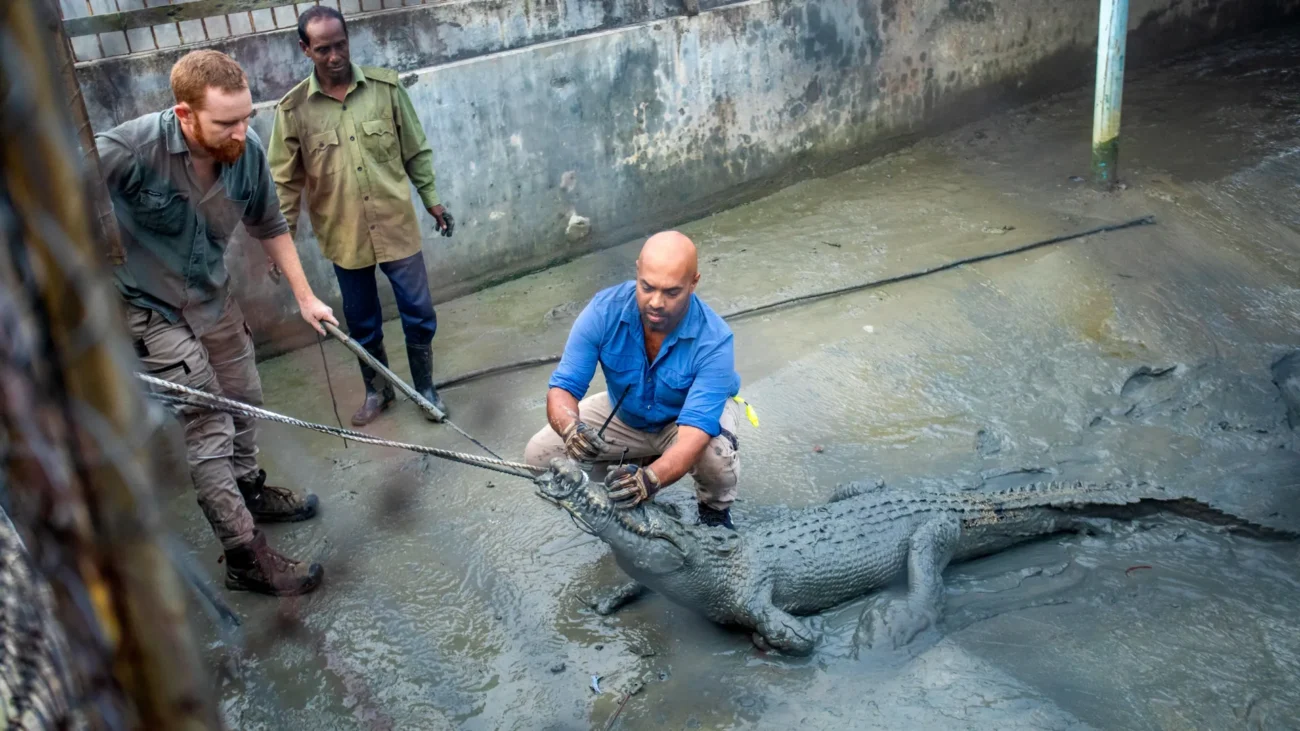
The global effort to restore declining populations of saltwater crocodiles has received a significant boost following the publication of a groundbreaking study examining post-release animal behavior. For decades, wildlife conservationists have struggled against a powerful biological imperative inherent to crocodilians: an innate, highly accurate homing instinct that frequently drives relocated apex predators to abandon newly designated conservation zones and attempt perilous journeys back to their original capture sites. However, recent scientific findings indicate that saltwater crocodiles born or raised in captivity may lack this persistent drive to return to their breeding facilities, opening up an entirely new pathway for restocking depleted natural habitats with older, more resilient animals.
The research, published in the peer-reviewed journal Wildlife Research under the title "What is home? Post-release movements of captive-reared and translocated mature saltwater crocodiles in Bangladesh," provides critical empirical data that could fundamentally reshape reintroduction methodologies. Led by IUCN Bangladesh and the Bangladesh Forest Department with funding from the Deutsche Gesellschaft für Internationale Zusammenarbeit (GIZ), the study focused on the fragile and heavily constrained ecosystem of the Sundarbans mangrove forest. By tracking the post-release trajectories of both captive-reared and wild-translocated specimens, scientists have uncovered behavioral distinctions that promise to overcome one of the most stubborn hurdles in modern herpetological conservation.
The Mechanics and Mystery of Animal Homing Instincts
Finding the way back home represents a cornerstone of survival and reproduction across a vast spectrum of the animal kingdom. From migratory birds traversing continents to marine turtles returning to their natal beaches, spatial orientation dictates evolutionary fitness. While many species engage in routine, localized movements—such as short daily trips back to stationary nests or burrows following nocturnal foraging expeditions—others navigate across hundreds of kilometers of unfamiliar terrain over extended periods of weeks or months, relying on celestial cues, geomagnetic fields, olfaction, and topography.
Within this diverse spectrum of navigational prowess, crocodilians occupy a singular, formidable niche. As the largest living apex predators inhabiting tropical, subtropical freshwater, and brackish environments, their psychological and physiological adaptations are finely tuned to territorial dominance. According to behavioral ecologist and Adjunct Associate Professor Ru Somaweera from Murdoch University, who contributed expertise to the research, crocodilians exhibit an unusually potent homing instinct.
"Crocodilians are remarkably good at finding their way home, often returning to their original capture sites and limiting the success of relocation programs," Professor Somaweera explained. This tenacity has historically plagued wildlife management operations. When problem crocodiles or nuisance animals are captured in human-dominated landscapes and moved elsewhere, their persistent attempts to return frequently lead them through hazardous populated areas, resulting in renewed human-wildlife conflict or mortality. Furthermore, when conservationists attempt to repopulate depleted historical ranges by moving wild adults, the animals frequently abandon the release sites, rendering standard translocation strategies largely ineffective.
However, a critical knowledge gap persisted regarding individuals that bypassed the wild entirely during their developmental stages. "What we still don’t fully understand, though, is how this behavior plays out in individuals that have been bred or kept in captivity for long periods before being released back into the wild," Somaweera noted. Addressing this unknown variable became the primary objective of the Bangladesh-based research initiative.
Historical Context and the Plight of the Sundarbans
To fully grasp the urgency of this research, one must examine the precarious status of the saltwater crocodile (Crocodylus porosus) in South Asia, specifically within the Sundarbans mangrove forest. Spanning the delta region of the Padma, Brahmaputra, and Meghna river basins across Bangladesh and India, the Sundarbans represents one of the largest continuous tracts of mangrove forest in the world and serves as the last major stronghold for saltwater crocodiles in Bangladesh.
Historically, these apex predators thrived throughout the coastal tidal creeks, estuaries, and mangrove swamps of the region. However, the advent of the 20th century brought catastrophic population declines. Intensive commercial hunting, driven by high global demand for premium crocodile skins to supply the international leather industry, decimated populations throughout the mid-1900s. By the time the government of Bangladesh instituted legal protections under the Bangladesh Wildlife (Preservation) Order of 1973, the damage was already largely done.
Despite nearly half a century of formal legal protection, the saltwater crocodile population in Bangladesh has failed to show any measurable, self-sustaining recovery. Environmental pressures, habitat fragmentation, pollution, and ongoing incidental entanglement in commercial fishing gear have continually suppressed local numbers. Recent comprehensive wildlife surveys paint a sobering picture of the species’ survival in the region. The entirety of the country’s remaining known wild saltwater crocodile population is now concentrated almost exclusively within the Sundarbans, with the most recent and authoritative surveys estimating a perilous total of just 140 mature individuals remaining in the wild.
Faced with such low densities, the risk of local extinction—extirpation—remains uncomfortably high. Traditional conservation management has attempted to bolster numbers through head-starting programs, wherein hatchlings are gathered from nests or produced in captivity and subsequently released into protected waters. Yet, this approach has faced severe biological limitations. Hatchlings suffer exceptionally high natural mortality rates due to predation by birds, large fish, and monitor lizards, and it takes many years—often over a decade—for these juveniles to reach reproductive maturity, delaying any measurable demographic impact on the breeding population.
The Search for Alternative Reintroduction Strategies
Given the dismal survival rates of released hatchlings and the ecological constraints of moving wild adults, conservationists recognized the theoretical advantages of utilizing larger, subadult, and mature captive-reared crocodiles for reintroduction. Older captive animals possess superior physical strength, are far less vulnerable to opportunistic predators, and are immediately or very nearly ready to enter the breeding pool, potentially accelerating population recovery timelines.
Yet, a major theoretical obstacle stood in the way. If crocodiles bred and raised in human-controlled breeding facilities retain the hardwired cognitive mapping or behavioral drive to return to their rearing enclosures, any large-scale release program would inevitably fail. Animals seeking to return to familiar captive environments might wander into human settlements, aquaculture facilities, or shipping lanes, leading to high mortality or immediate recapture.
To test this crucial hypothesis, a collaborative team of researchers designed a field study utilizing advanced satellite telemetry. The project focused on tracking the post-release movements of a carefully selected cohort of saltwater crocodiles in the complex aquatic labyrinth of the Sundarbans.
Methodology and Tracking the Test Subjects
The scientific investigation relied on the deployment of sophisticated satellite tracking devices securely attached to the dermal scutes of the study animals. This technology allowed researchers to monitor the precise spatial ecology, daily travel distances, and directional trajectories of the subjects over a sustained multi-month observation window following their return to the wild.
The experimental cohort comprised five mature saltwater crocodiles representing distinct life histories and prior environmental exposures, allowing for direct comparative analysis:
- Three captive-reared females that had spent between 8 and 22 years continuously housed within controlled captive breeding facilities.
- One local wild control crocodile that was captured within the Sundarbans and subsequently released back into the exact same location.
- One translocated wild crocodile—an adult male named Jongra by the research team—that was captured in its native habitat and intentionally moved a substantial distance to an unfamiliar release site.
By monitoring these distinct groups simultaneously, the researchers could evaluate whether decades of captivity effectively altered or erased the spatial mapping behaviors typically observed in wild counterparts, while also establishing a baseline for normal movement patterns within the Sundarbans ecosystem.
Captive-Reared Specimens Show No Homing Drive
The results of the satellite tracking initiative yielded data that exceeded the expectations of the research team, offering an unexpected glimmer of hope for captive-breeding and release protocols.
According to Associate Professor Somaweera, the most encouraging and revolutionary finding involved the three long-term captive-reared females. Across the months of post-release monitoring, none of the three individuals exhibited any behavioral indicators of attempting to navigate back to the breeding facility where they had spent the majority of their lives.
Instead of embarking on long-distance migratory marches or displaying erratic searching behaviors, the captive-raised crocodiles quickly integrated into the natural geography of the Sundarbans. They settled into small, well-defined home ranges and moved through the tidal channels in a manner virtually indistinguishable from the local wild control crocodile that had been recaptured and released on-site.
"This tells us they are possibly able to adapt to their new environment seamlessly," Somaweera stated. The data suggests that prolonged absence from natural environmental stimuli during the developmental and adult years may disrupt, degrade, or fail to imprint the specific navigational frameworks that wild crocodilians rely upon to map their home ranges. Rather than viewing the vast mangrove forest as an alien landscape to escape from, the captive-reared adults treated their release sites as immediate habitats, establishing territories and foraging within normal biological parameters.
The stark contrast between the captive-reared cohort and the translocated wild specimen underscored just how distinct these behavioral profiles truly are.
The Troubling Journey of Jongra the Wild Crocodile
While the captive-reared females provided an optimistic outlook for conservation breeding programs, the tracking data for the translocated wild crocodile highlighted the enduring power of natural homing instincts and the profound challenges associated with moving wild adult animals.
Jongra, a mature wild male, was captured and translocated approximately 132 kilometers away from his original home territory before being released into a new section of the Sundarbans. While Jongra did not successfully complete the entire 132-kilometer journey back to his exact original capture site during the observation period, his directional trajectory and movement metrics left zero doubt regarding his underlying motivations.
"Unfortunately, the results weren’t as good for the wild crocodile Jongra, who was translocated about 132km from his home before being released," Professor Somaweera noted. "Although Jongra didn’t make it back to his original capture site during the study, his movements were very clearly going in that direction."
The telemetry data revealed that Jongra’s behavioral metrics deviated wildly from those of the captive-reared crocodiles and the local control. He traveled significantly greater distances each day, covered an exceptionally large geographic expanse, and recorded explosive single-day movement spikes exceeding 30 kilometers. These energetic bursts, combined with unwavering linear trajectory mapping directly toward his point of origin, represent textbook manifestations of classic crocodilian homing behavior.
Such intense migratory efforts place tremendous physical stress on the animal, deplete vital energy reserves, and increase the statistical probability of lethal encounters with human infrastructure, fishing communities, and rival territorial crocodiles. The comparison definitively proved that while wild adults possess an almost inescapable drive to return home when displaced, captive-raised adults do not share this behavioral handicap.
Practical Implications for Global Crocodile Conservation
The empirical divergence documented between captive-reared and translocated wild crocodiles carries profound, practical implications for wildlife managers, conservation biologists, and government agencies tasked with protecting endangered crocodilian populations across the globe.
First and foremost, the study provides a scientifically validated rationale for altering captive-breeding program utilization. For decades, facilities housing surplus captive crocodiles—whether maintained for commercial skins, educational tourism, or conservation insurance populations—have struggled with what to do with aging adult animals. Euthanasia, permanent captive warehousing, or controversial relocations were often the only available options.
The findings from the Sundarbans study suggest that releasing subadult and adult captive-reared crocodiles can transition from a risky experiment to a viable, strategic conservation tool. By bypassing the fragile hatchling and juvenile life stages—during which natural mortality rates approach near-total elimination—conservationists can directly augment the breeding-age demographic of depleted wild populations with robust, healthy adults that are immediately pre-adapted to settle into local ecosystems without attempting dangerous return migrations.
"These findings suggest that releasing subadult and adult captive-reared crocodiles can be a viable strategy to strengthen wild populations," Somaweera emphasized.
At the same time, the study sounds a cautionary note regarding traditional translocation practices. When problem wildlife managers capture nuisance wild crocodiles in human-inhabited zones, simply moving them to remote protected areas often fails to solve the underlying problem. Driven by powerful homing instincts, these animals will often expend massive amounts of energy trying to return home, creating new hazards along the way. "For translocated crocodiles, it’s important there is careful release planning to manage their tendencies to return home," Somaweera advised. This may necessitate geographical distance thresholds, natural physical barriers, or alternative management frameworks that account for the cognitive mapping capabilities of wild-born predators.
Looking Forward: Next Steps in Research and Management
As the scientific community digests the implications of the Sundarbans study, conservation organizations in South Asia and beyond are evaluating how to integrate these insights into active management plans. The collaborative nature of the research—spanning academic institutions like Murdoch University, international conservation bodies like IUCN Bangladesh, governmental agencies including the Bangladesh Forest Department, and financial backers like GIZ—demonstrates the multi-sectoral cooperation required to tackle complex ecological recovery projects.
Future research phases are expected to expand sample sizes, track individuals over extended multi-year cycles to evaluate long-term survival, reproductive success, and genetic integration into existing wild populations, and test these methodologies across different river basins and environmental contexts.
For the critically depleted saltwater crocodiles of the Sundarbans, every individual matters. By unlocking the behavioral secrets of captive-raised adults, conservationists now possess a refined, evidence-based instrument to help pull one of the planet’s most formidable living dinosaurs back from the brink of regional extinction, ensuring that the tidal channels of Bangladesh’s mangrove forests continue to echo with the ancestral presence of the world’s largest reptiles for generations to come.

