


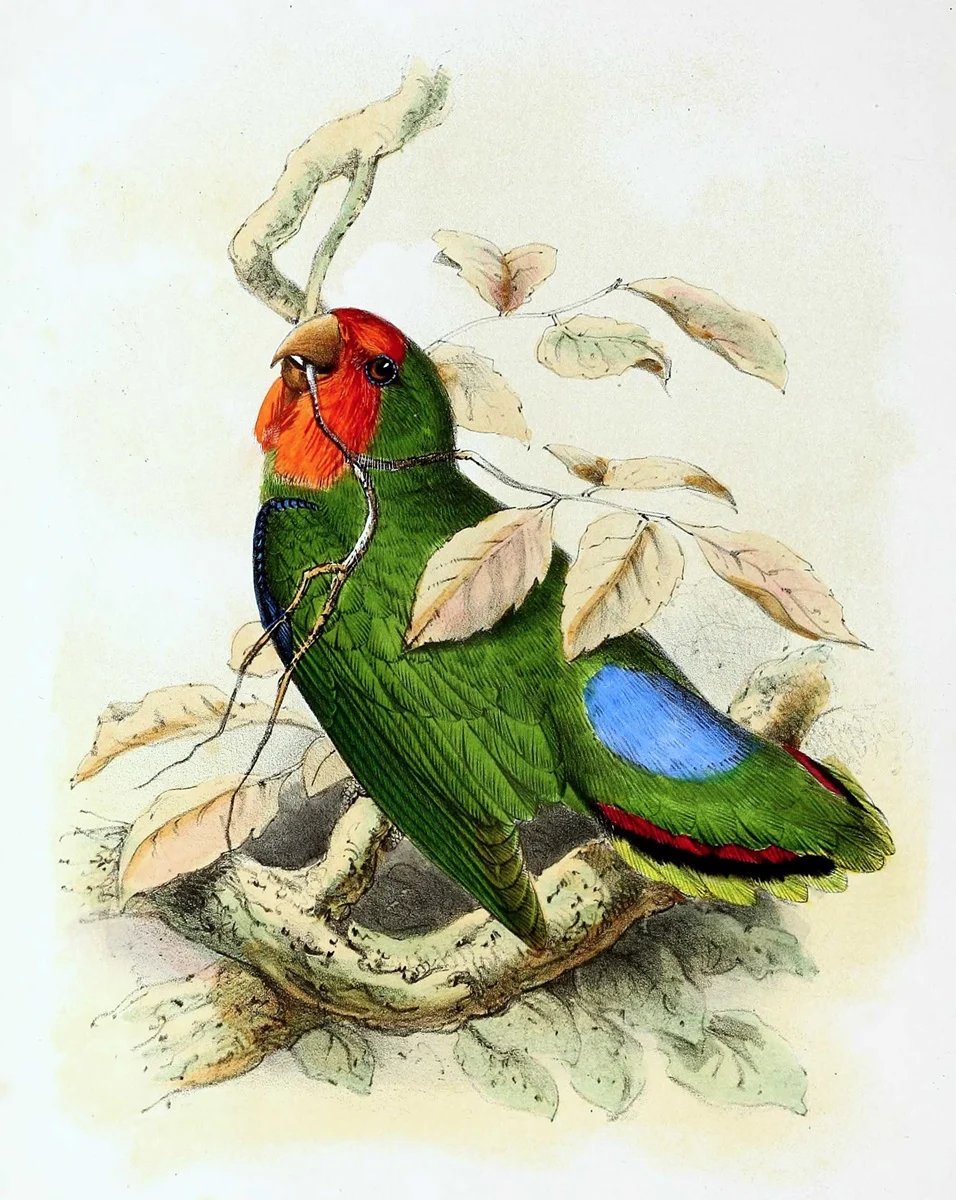
The Red-headed Lovebird, scientifically known as Agapornis pullarius, stands as a lesser-known jewel within the vibrant genus of lovebirds. Unlike its more commonly encountered relatives, such as the Peach-faced or Fischer’s Lovebird, this species remains a rarity in captivity, primarily due to its highly stress-prone nature. While many lovebird species thrive as popular companion parrots globally, Agapornis pullarius presents unique challenges, making it a subject of particular interest for ornithologists and dedicated aviculturists alike. This comprehensive overview delves into the natural history, conservation status, physical characteristics, diet, and the intricate complexities of keeping and breeding this fascinating African parrot.
Natural Habitat and Distribution Across Africa
Agapornis pullarius is endemic to the African continent, a characteristic shared by all members of the Agapornis genus. Its natural range extends across a broad, albeit patchy, band stretching from western sub-Saharan Africa eastward through Central Africa. This distribution encompasses countries from Guinea in the west to Ethiopia in the east, traversing diverse landscapes across the equatorial belt.
Within this extensive territory, the Red-headed Lovebird primarily inhabits tropical lowland savannah ecosystems. Unlike species that prefer dense primary forests, A. pullarius demonstrates a clear affinity for areas featuring a mosaic of scattered trees and open grasslands. These environments provide both foraging opportunities and crucial nesting sites. The species is largely sedentary within its preferred range, showing limited nomadic tendencies unless environmental pressures, such as food scarcity or habitat degradation, necessitate movement. Observations indicate that these birds typically occur at altitudes up to 2,000 meters (approximately 6,550 feet), though they are more commonly found at lower elevations. Socially, Red-headed Lovebirds are usually observed in pairs or small flocks, which can occasionally swell to a few dozen individuals, particularly during foraging expeditions or at communal roosting sites.
Conservation Status and Emerging Threats
Despite its broad geographical distribution, the Red-headed Lovebird is officially classified as a species of "Least Concern" by the International Union for Conservation of Nature (IUCN) Red List. This designation, however, belies a more nuanced reality on the ground. The IUCN’s assessment notes that Agapornis pullarius is locally uncommon across much of its natural range, indicating a fragmented and often sparse presence even within suitable habitats.
Alarmingly, scientific data suggests a probable decline in the global population of Red-headed Lovebirds. This downward trend is attributed to a confluence of anthropogenic pressures. Habitat destruction stands as a primary threat, driven by widespread deforestation for agriculture, logging, and human settlement expansion across its range. As tropical savannahs are converted or degraded, the specialized habitat requirements of A. pullarius are increasingly compromised.
Furthermore, the species faces direct persecution from farmers. Like many granivorous bird species, Red-headed Lovebirds are known to feed on agricultural crops, particularly millet, leading to their perception as pests. This conflict often results in the killing of birds by local communities attempting to protect their livelihoods.

Perhaps one of the most significant historical threats, and one that continues to exert pressure, is capture for the international pet trade. A 2018 study highlighted a staggering statistic: nearly 40,000 Red-headed Lovebirds were exported from their natural habitats since 1975. This large-scale removal of individuals for commercial purposes undeniably contributes to population declines, especially given the species’ already localized uncommonness. While specific CITES (Convention on International Trade in Endangered Species of Wild Fauna and Flora) listings for Agapornis pullarius are not as restrictive as for some more endangered parrots, the sheer volume of historical trade underscores the impact of human demand on wild populations. Ornithologists Parr and Juniper, in their 2010 seminal work "Parrots: A Guide to Parrots of the World," specifically noted: "Abundance also varies owing to nomadic habits, but a genuine overall decline appears to have occurred in many areas this century. Trapped for live bird trade with large numbers in captivity outside range." This statement reinforces the critical need for ongoing monitoring and targeted conservation efforts, despite the relatively stable "Least Concern" categorization.
Physical Characteristics and Subspecies
The Red-headed Lovebird is a visually striking small parrot, typically reaching up to 15 centimeters (6 inches) in length and weighing around 45 grams. Its plumage is characterized by two dominant, vibrant colors: a brilliant grass-green covers the majority of its body, contrasting sharply with a vivid scarlet red adorning its face and beak. Subtle accents include a splash of blue on the lower back and a narrow band of red on the tail feathers, particularly noticeable during flight.
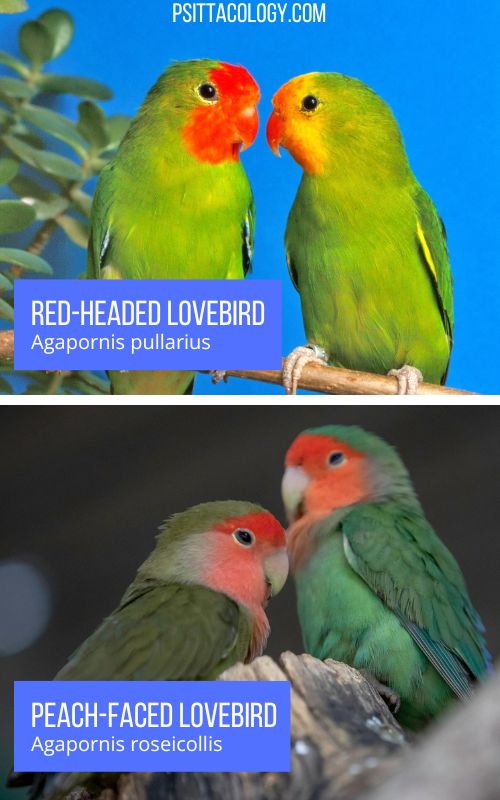
A common point of confusion arises when comparing Agapornis pullarius with the Peach-faced Lovebird (Agapornis roseicollis), a species far more prevalent in aviculture and arguably the most popular lovebird overall. While both share a similar body shape and green plumage, key distinguishing features allow for differentiation. The most prominent difference lies in the beak color: A. pullarius possesses a bright red beak, perfectly complementing its facial coloration, whereas A. roseicollis has a distinct beige or horn-colored beak. Subtle variations in the exact shade and extent of facial coloring also exist, but the beak serves as the most reliable identifier.
Within the species, two recognized subspecies exist, although their differences are often subtle and primarily pertain to geographical distribution and minor variations in plumage intensity:
- Agapornis pullarius pullarius: The nominate subspecies, found across the majority of the species’ western and central range.
- Agapornis pullarius ugandae: Found in the eastern parts of the range, notably Uganda, distinguished by a slightly darker green plumage and potentially a more intense red on the face.
Sexual dimorphism, the visual distinction between males and females, is present in Agapornis pullarius, though it can be subtle. Males typically exhibit a brighter, more intense scarlet red on their face and beak. Females, conversely, display a slightly duller facial coloration, often leaning towards an orange-red hue rather than a deep scarlet, and their beaks may also be less vibrantly colored. This difference is more pronounced in adult birds and can be a useful, albeit not always definitive, indicator for experienced observers.
Dietary Habits in the Wild
Like many parrot species, Red-headed Lovebirds are primarily granivorous, meaning their diet largely consists of seeds. They show a particular preference for grass seeds, which are abundant in their savannah habitats. This dietary inclination brings them into direct contact with human agriculture, as they readily exploit cultivated crops such as millet, a staple grain in many parts of Africa. This predilection for millet is a significant factor contributing to their classification as agricultural pests in certain regions.
Beyond grass seeds, their diet is supplemented with other plant matter available seasonally. Wild fruits, including various species of figs (Ficus spp.) and guava (Psidium guajava), constitute an important part of their foraging repertoire when available. They are opportunistic feeders and will likely consume other berries, blossoms, and possibly even small insects or larvae, especially during breeding season when protein requirements increase. Their ability to adapt their diet to local availability underscores their resilience in varied environments, while also highlighting their potential for conflict with human interests.

The Red-headed Lovebird in Aviculture: A Challenging Endeavor
In stark contrast to its numerous popular cousins, such as the Fischer’s Lovebird (Agapornis fischeri) or the Peach-faced Lovebird, Agapornis pullarius holds a niche position in aviculture. It is rarely encountered as a pet and is primarily maintained by a small circle of highly dedicated and experienced parrot enthusiasts, often within specialized aviary settings. The primary reason for its limited presence in captivity stems from its exceptionally nervous and stress-prone disposition.
Wild-caught Red-headed Lovebirds, in particular, are notorious for their fragility. They can succumb to stress from seemingly minor disturbances, such as sudden loud noises, abrupt changes in environment, or even the presence of boisterous cage mates. This sensitivity makes them incredibly challenging to acclimate to captive conditions. Furthermore, they are often described as "picky eaters," which complicates dietary transitions to commercially available feeds.
For individuals considering this species, it is crucial to understand that the Red-headed Lovebird is not a suitable candidate for a conventional companion parrot. Its inherent shyness and anxiety mean that it rarely, if ever, becomes tame or enjoys direct human interaction. Instead, these birds are best appreciated from a distance, where their natural behaviors can be observed without causing undue distress. The focus in aviculture for this species is primarily on conservation breeding and maintaining genetically healthy populations, rather than developing pets.
Specialized Care Requirements in Captivity
For the rare, experienced aviculturist who successfully acquires captive-bred Red-headed Lovebirds (a much preferred option over wild-caught birds due to better acclimatization), specialized care is paramount.
Housing: These parrots thrive in spacious, heated aviaries, ideally designed for solitary pairs. The enclosure should offer ample flight space and a sense of security, perhaps with dense foliage or visual barriers. If housed indoors, a generously sized cage is essential, with dimensions of at least 80 cm (30 inches) wide, ensuring sufficient room for movement. Bar spacing should be narrow, around 1.25 cm (0.5 inches), to prevent escape or injury. The cage should be furnished with a variety of natural wood perches of varying diameters to promote foot health and provide enrichment. Providing a consistent and comfortable environment, free from sudden changes in temperature, humidity, or light cycles, is crucial for minimizing stress.
Captive Diet: Historically, Red-headed Lovebirds in captivity have been maintained on dry or sprouted seed mixes. However, contemporary avian veterinary science strongly advocates for a balanced diet centered around high-quality pelleted formulations, which provide comprehensive nutrition lacking in seed-only diets. A reputable, species-appropriate pelleted diet should form the foundation.
This base should be supplemented daily with a wide array of fresh vegetables, particularly leafy greens like kale, spinach, and romaine lettuce, as well as carrots, bell peppers, and broccoli. A limited amount of fresh fruits, such as apples, berries, and melon, can be offered as treats. Cooked grains (e.g., quinoa, brown rice) and carefully sourced, pesticide-free foraged weeds (e.g., dandelion greens, chickweed) can also enhance dietary variety. During breeding periods or for younger birds, an increase in protein intake is beneficial, which can be provided through boiled egg, sprouted legumes, or even small quantities of live or dried mealworms. Careful monitoring of food intake and waste is necessary to ensure the birds are consuming a balanced diet.
Enrichment: Due to their intelligence and propensity for stress, providing appropriate enrichment is critical for the mental and physical well-being of Red-headed Lovebirds. However, new items must be introduced gradually to avoid alarming these sensitive birds. Essential enrichment elements include:
- Chew Toys: An abundance of safe, natural wood toys, branches, and untreated cardboard items for shredding and chewing, which satisfies their natural urge to gnaw and keeps their beaks healthy.
- Foraging Opportunities: Devices that encourage natural foraging behaviors, such as treat dispensers, toys where food needs to be extracted, or food hidden within safe, destructible materials.
- Bathing Opportunities: Shallow water dishes or misters for bathing, which are important for feather hygiene.
- Privacy and Security: Nest boxes or hideaways, even outside of breeding season, can provide a sense of security and reduce stress.
- Natural Elements: Incorporating natural branches, leaf litter, and substrate can mimic their wild environment.
Noise Level: Compared to many other parrot species, Agapornis pullarius is considered relatively quiet. However, like all psittacines, they are capable of producing loud calls, especially when alarmed or seeking attention. Their calls are often described as shrill and can be quite piercing. Resources like Xeno-Canto provide recordings of Agapornis pullarius vocalizations, allowing interested individuals to familiarize themselves with their typical sounds.
Reproduction Challenges and Successes
In their natural habitat, Red-headed Lovebirds time their breeding cycles to coincide with the rainy season, when food resources are most abundant. A unique aspect of their reproductive biology is their choice of nesting sites. The species predominantly nests in arboreal (tree-dwelling) termite or ant nests, meticulously burrowing into these structures to create a secure chamber. The female is solely responsible for this intricate construction, lining the excavated cavity with plant materials such as grass leaves. Occasionally, they may also utilize ground-level termite mounds or natural tree hollows created by woodpeckers. A typical clutch consists of up to six eggs.
The specialized nesting requirements and the species’ inherent nervousness make captive breeding of Agapornis pullarius notoriously difficult. Traditional nest boxes often fail to replicate the specific environmental cues and structural security these birds require. However, dedicated aviculturists have made significant strides in understanding and meeting these needs. Innovations such as nest boxes crafted from cork have proven effective. Cork, with its natural insulating properties and earthy texture, appears to mimic the qualities of natural termite nests, providing the necessary sense of security and a substrate conducive to burrowing for the female. Breeders like Dominique Veeckmans have shared their experiences and insights, demonstrating that with meticulous attention to detail, environmental enrichment, and a deep understanding of the birds’ psychological needs, successful reproduction in captivity is achievable. These breeding successes are vital for maintaining viable captive populations and potentially reducing pressure on wild stocks.
Broader Implications: Conservation and Responsible Aviculture
The Red-headed Lovebird exemplifies the complex interplay between conservation status, ecological roles, and human interaction. While categorized as "Least Concern" globally, its localized rarity and documented population declines highlight the fragility of even widely distributed species in the face of escalating anthropogenic pressures. The historical impact of the pet trade and ongoing habitat destruction underscore the need for stricter enforcement of wildlife protection laws and sustainable land management practices.
For the avicultural community, Agapornis pullarius serves as a powerful reminder of the responsibilities associated with keeping exotic birds. Its stress-prone nature and specialized care requirements mean it is not a species for casual ownership. Instead, it demands the highest level of expertise and dedication, often from individuals committed to species preservation through responsible captive breeding programs. Such efforts are crucial not only for understanding the species better but also for maintaining a genetic reservoir that could, in the long term, support conservation initiatives in its native range. The journey of the Red-headed Lovebird, from the dense savannahs of Africa to the specialized aviaries of dedicated enthusiasts, is a testament to the beauty and challenge of avian biodiversity.

