


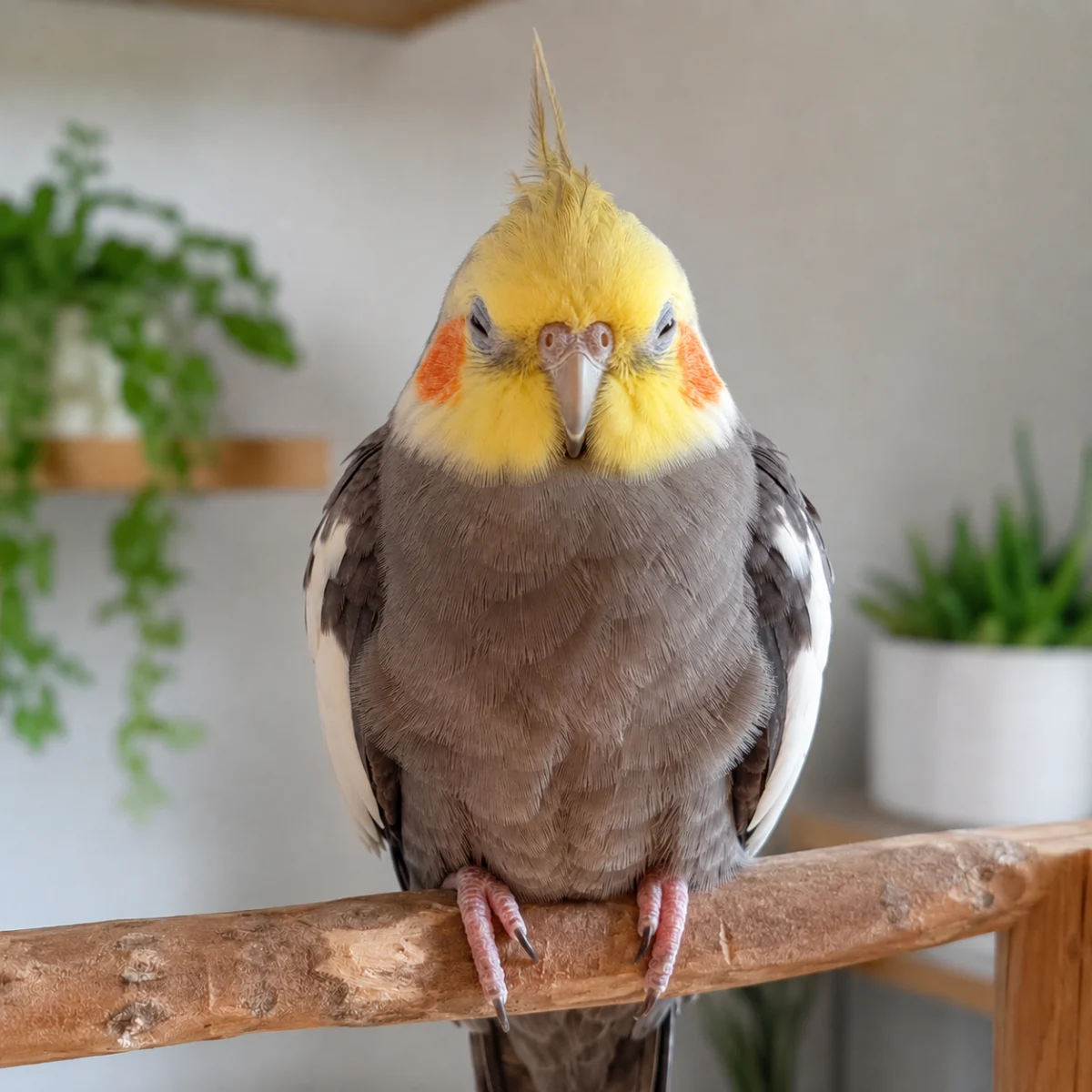
In the world of companion bird care, the ability to distinguish between a routine nap and a physiological crisis is one of the most critical skills a pet owner can possess. Avian species, by nature, are prey animals that have evolved to mask physical weakness to avoid attracting predators in the wild. Consequently, by the time a bird displays obvious symptoms of illness, the condition is often advanced. A recurring point of concern for many owners is the "half-closed eye" behavior—a subtle, often ambiguous signal that can either indicate a content bird at rest or serve as the first warning sign of a systemic health issue.
The Physiology of Avian Rest
To understand when this behavior warrants intervention, one must first establish the baseline for healthy avian behavior. Healthy parrots and other companion birds typically engage in brief, sporadic bouts of sleep throughout the day. These naps are usually characterized by a relaxed posture, perhaps standing on one foot, with feathers slightly puffed to retain body heat. Crucially, a healthy bird remains easily rousable. Upon hearing a familiar sound or seeing their owner, they should transition quickly to a state of alertness, resuming normal activities such as foraging, preening, vocalizing, or climbing.
The clinical concern arises when this state of partial closure becomes persistent. If a bird, which is typically high-energy and inquisitive during daylight hours, remains stationary with eyes partially or fully closed for extended periods, the behavior deviates from the norm. When this sedentary state is accompanied by "fluffing"—where the bird holds its feathers away from its body to maintain temperature—it is a strong indicator of an energy deficit or a feverish state.
Chronology of Symptom Progression
In a clinical setting, avian veterinarians often categorize the progression of illness into three stages. The initial phase is marked by subtle behavioral changes, such as a decrease in the volume of vocalizations or a slight reduction in the time spent engaging with enrichment toys. During this period, the bird may still appear physically normal to an untrained eye.
The second stage is characterized by the onset of lethargy. This is where the "half-closed eye" symptom becomes prevalent. At this stage, the bird is effectively conserving metabolic energy to fight an underlying pathogen or metabolic stressor. If the condition remains unaddressed, the third stage—decompensation—sets in. This is marked by visible respiratory distress, a loss of the ability to grip a perch, or the bird moving to the bottom of the cage. At this point, the situation has transitioned from a concerning observation to a life-threatening emergency.
Supporting Data and Clinical Context
Data from avian pathology studies suggest that metabolic rate is a key factor in how quickly a bird’s condition can deteriorate. Because birds have high metabolic requirements, they possess limited energy reserves. Research indicates that a bird that has stopped eating for even 24 hours can quickly become hypoglycemic and dehydrated. Therefore, the common owner assumption—"my bird is still eating, so it cannot be that sick"—is a dangerous fallacy.
Veterinary practitioners emphasize that while appetite is a positive sign, it is not a diagnostic test for health. A bird may visit the food bowl out of habit or primal instinct, cracking seeds without actually consuming enough calories to sustain its weight. Clinical examinations frequently reveal that birds presenting with lethargy are suffering from underlying issues ranging from nutritional deficiencies and chronic infections (such as psittacosis or aspergillosis) to heavy metal toxicity or organ failure.
Diagnostic Perspectives: The "Whole Bird" Approach
When a bird is brought to a clinic with the complaint of "looking sleepy," the veterinarian does not focus solely on the eyes. The diagnostic process is holistic, often beginning with visual observation in the carrier to assess respiratory rate and effort. A tail-bob—where the tail moves up and down in synchronization with each breath—is a classic sign of respiratory compromise.
Veterinary diagnostic protocols involve:
- Physical Examination: Assessment of pectoral muscle mass to determine if weight loss has occurred.
- Cloacal and Choanal Swabs: To check for bacterial or fungal infections.
- Radiography (X-rays): To evaluate heart size, organ enlargement, and the presence of foreign objects.
- Blood Chemistry Panels: To assess kidney and liver function, which are often the first systems to suffer during systemic illness.
The significance of eye-specific issues should not be ignored, however. In some cases, the eyes appear closed because of localized pain, such as conjunctivitis, sinusitis, or corneal abrasions. If a bird keeps one eye closed while the other remains open, it is a clear indicator of localized discomfort. Conversely, if both eyes are closed, the issue is more likely systemic.
The Role of the Owner as a Primary Observer
The most effective diagnostic tool an owner can provide is a detailed history. Because a veterinary visit is inherently stressful, a bird may temporarily "perk up" due to adrenaline, masking the symptoms that were present at home. Recording a short video of the bird during its period of lethargy allows the veterinarian to observe the true nature of the inactivity.
Proactive monitoring should be part of a daily routine. This includes:
- Dropping Analysis: A sudden reduction in the number or change in the consistency of droppings is often the earliest indicator of illness.
- Environmental Audit: Has the bird interacted with its toys today? Is the water bowl as dirty as usual, or does the cage look "too clean," suggesting a lack of movement?
- Weight Monitoring: Utilizing a gram scale to track weight on a weekly basis is perhaps the most reliable way to detect early-stage illness, often weeks before external symptoms appear.
Emergency Indicators
There is a distinct threshold where professional veterinary intervention must be sought immediately, bypassing the "wait and see" approach. The presence of the following signs constitutes an emergency:
- Respiratory Distress: Open-mouth breathing, wheezing, or audible clicking sounds.
- Incoordination: The bird is unable to maintain balance on a perch or is falling off the perch.
- Collapse: The bird is sitting on the floor of the cage, unable or unwilling to climb.
- Unresponsiveness: A lack of reaction to stimuli that would normally provoke an alert response.
Implications for Long-Term Avian Welfare
The implications of ignoring subtle behavioral changes are significant. Delayed treatment decreases the likelihood of a successful recovery and increases the cost and complexity of veterinary intervention. In the avian community, the consensus among veterinary professionals is that it is far better to have a "false alarm" visit that concludes with a healthy bird than to risk the loss of a bird due to hesitation.
As noted by long-term avian caregivers and researchers, the "masking" behavior is a biological imperative, not a sign of poor ownership. It is the responsibility of the caregiver to bridge the gap between the bird’s instinct to hide illness and the need for medical care. By cultivating a keen eye for subtle changes in behavior—such as the transition from an active, curious pet to a quiet, half-closed-eyed bird—owners can ensure that their companions receive care when it is most effective.
In conclusion, the presence of half-closed eyes during active hours should be treated as a clinical symptom, not a personality trait or a temporary mood. While it may occasionally be the result of a long, tiring day, the risk of misinterpretation is too high. Owners are encouraged to maintain a low threshold for contacting their avian veterinarian when they observe consistent shifts in energy, posture, or alertness. Through diligent observation and prompt action, the lifespan and quality of life of companion birds can be substantially improved.

