


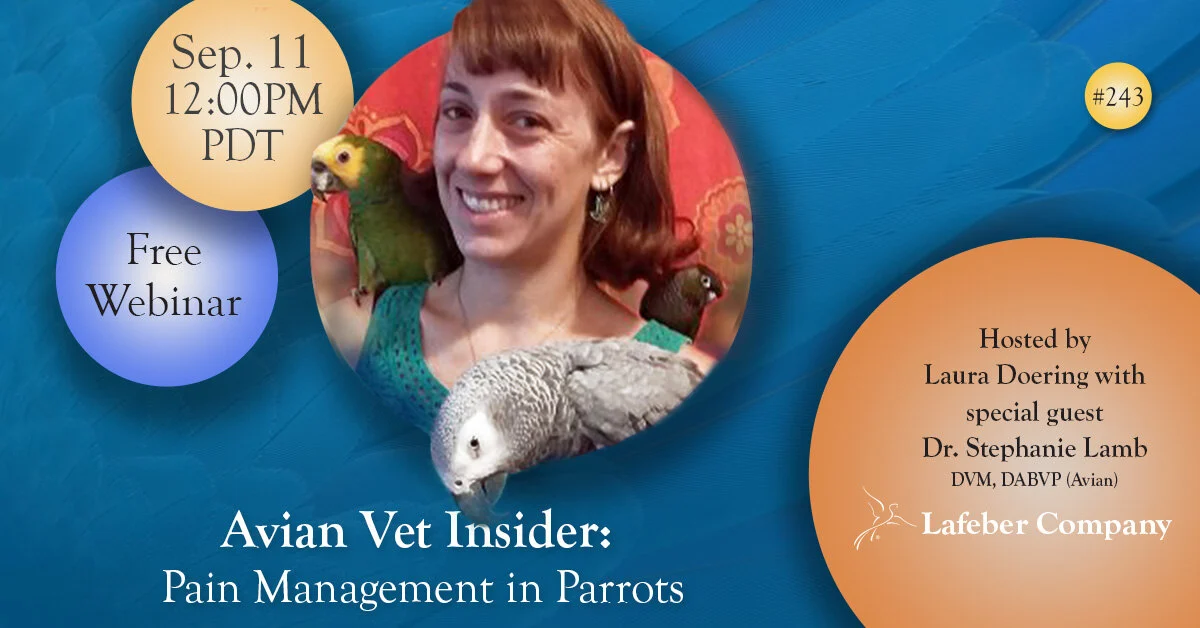
September is internationally recognized as Animal Pain Awareness Month, a period dedicated to increasing clinical knowledge and public understanding regarding the identification and mitigation of suffering in domestic and exotic animals. As part of this global initiative, the upcoming webinar titled "Avian Vet Insider — Pain Management in Parrots," scheduled for Friday, September 11, 2026, at 12:00 p.m. PDT, seeks to address the often-overlooked diagnostic challenges associated with avian health. Led by Dr. Lamb, the session aims to provide bird owners and veterinary professionals with a framework for recognizing subtle behavioral indicators of pain, navigating the pharmacological landscape of avian analgesics, and exploring integrative, alternative therapies.
The Diagnostic Challenge in Avian Medicine
The difficulty in managing pain in parrots stems primarily from their evolutionary history as prey species. In the wild, birds that exhibit visible signs of weakness or illness are significantly more likely to be targeted by predators. Consequently, parrots have evolved to mask their symptoms, often appearing healthy until a condition has progressed to a critical state. This "masking" phenomenon represents one of the most significant hurdles in avian veterinary practice.
Veterinary researchers note that by the time an owner observes clinical signs of discomfort—such as lethargy, ruffled feathers, or a loss of appetite—the underlying condition may already be advanced. The webinar will emphasize the necessity of monitoring for subtle behavioral shifts. These can include changes in vocalization patterns, alterations in preening behavior, reduced interaction with human companions, or changes in perching posture. Recognizing these "silent" indicators is essential for early intervention, which historically leads to better clinical outcomes and reduced morbidity.
Timeline of Pain Management Evolution
The field of avian analgesia has undergone a significant transformation over the past three decades. During the 1990s and early 2000s, there was a prevalent, though scientifically flawed, belief among some practitioners that birds had a higher pain threshold or that their neurological pathways were less sensitive to noxious stimuli than those of mammals.
This perception shifted significantly in the mid-2000s as pharmacokinetic studies began to validate the efficacy of various non-steroidal anti-inflammatory drugs (NSAIDs) and opioids in avian species. The following chronology outlines the progression of the field:
- Late 1990s: Increased academic focus on avian anatomy and neurobiology, moving away from anecdotal observation toward evidence-based medicine.
- 2005–2010: Development of standardized analgesic protocols for common surgical procedures in parrots, such as orthopedic repairs and soft-tissue surgeries.
- 2015–2020: Integration of multimodal pain management strategies, acknowledging that combining different classes of medications often yields superior results while minimizing side effects.
- 2026: Contemporary focus on preventative pain management and the inclusion of alternative, holistic modalities alongside traditional pharmacology.
Pharmacological and Alternative Approaches
A central pillar of the September 11 presentation is the categorization of pharmacological interventions. Dr. Lamb is expected to categorize pain management into three primary tiers: local anesthetics, NSAIDs, and opioid-based therapies. Each class of medication carries distinct risks, particularly regarding avian renal and hepatic function, which are highly sensitive to drug metabolism.
The discussion will also address the growing interest in alternative therapies. As veterinary science increasingly embraces integrative medicine, modalities such as cold laser therapy (photobiomodulation), physical therapy, and acupuncture are being adapted for avian patients. These methods are frequently used as adjuncts to traditional medication, potentially allowing for lower doses of systemic drugs and reducing the risk of toxicity. For example, photobiomodulation has shown promise in managing chronic inflammatory conditions, such as arthritis, which is common in older, captive parrots.
Supporting Data and Clinical Significance
Data from various avian specialty hospitals indicate that chronic pain is a leading cause of behavioral disorders in captive parrots, including feather destructive behavior (FDB). While FDB has traditionally been classified as a psychological or environmental issue, modern veterinary diagnostics increasingly reveal a physical, often painful, underlying cause.

According to recent clinical audits, approximately 30% to 40% of birds presented for behavioral issues exhibit underlying physical pathologies that, once treated with appropriate analgesics, result in a cessation or significant reduction of destructive behaviors. This finding underscores the importance of the webinar’s focus: viewing behavioral health through the lens of physical comfort. By training owners to identify the signs of discomfort, the veterinary community can reduce the incidence of chronic, untreated suffering that leads to long-term psychological damage.
The Role of Veterinary Advocacy
The choice to host this webinar during Animal Pain Awareness Month is not coincidental. Organizations like the International Veterinary Academy of Pain Management (IVAPM) have long advocated for the inclusion of non-mammalian species in global pain awareness initiatives. By bringing this topic to the forefront, the organizers are attempting to bridge the gap between specialized veterinary knowledge and the day-to-day care provided by bird owners.
Public health implications are significant. As more birds are kept as household companions, the demand for high-quality, evidence-based care is rising. However, there remains a shortage of veterinarians with specialized training in avian medicine. The democratization of information through digital platforms, such as the upcoming Zoom-based webinar, serves as a vital resource for owners in regions where avian specialists may be geographically inaccessible.
Broader Impact and Implications
The implications of this training extend beyond the individual bird. Enhanced owner awareness leads to better communication with veterinary professionals. When an owner can provide a detailed, accurate history of behavioral changes, the veterinarian can reach a diagnosis more efficiently, reducing the time a bird spends in pain and decreasing the financial burden of prolonged diagnostic testing.
Furthermore, the discussion of pain medication—how they work and in what situations they are appropriate—serves as a crucial educational tool regarding the dangers of "home treatment." The misuse of human over-the-counter medications can be fatal for avian species, as their metabolic rates and organ systems differ drastically from those of humans or even dogs and cats. Emphasizing the expertise required to prescribe and dose these medications safely is a core objective of the session.
Looking Ahead
As the veterinary community continues to advance its understanding of avian physiology, the standard of care for parrots is expected to rise. The upcoming webinar serves as a snapshot of this progress, reflecting a commitment to patient welfare that encompasses both acute surgical pain and the management of chronic conditions that impact the quality of life for long-lived species.
Interested participants are encouraged to utilize the provided time zone converter to ensure attendance, as the webinar will be presented in a live format. Given the complexity of the subject matter, the interactive component—allowing for direct questioning of the expert—is likely to provide high value to both novice bird owners and those with extensive experience in avian husbandry.
For those seeking to improve their capacity to advocate for the welfare of their birds, the September 11 event represents a significant opportunity to engage with current standards of practice. As the veterinary profession continues to refine its approaches, events of this nature ensure that the knowledge gained in clinical settings is effectively translated into improved outcomes for parrots in home environments across the globe.

