


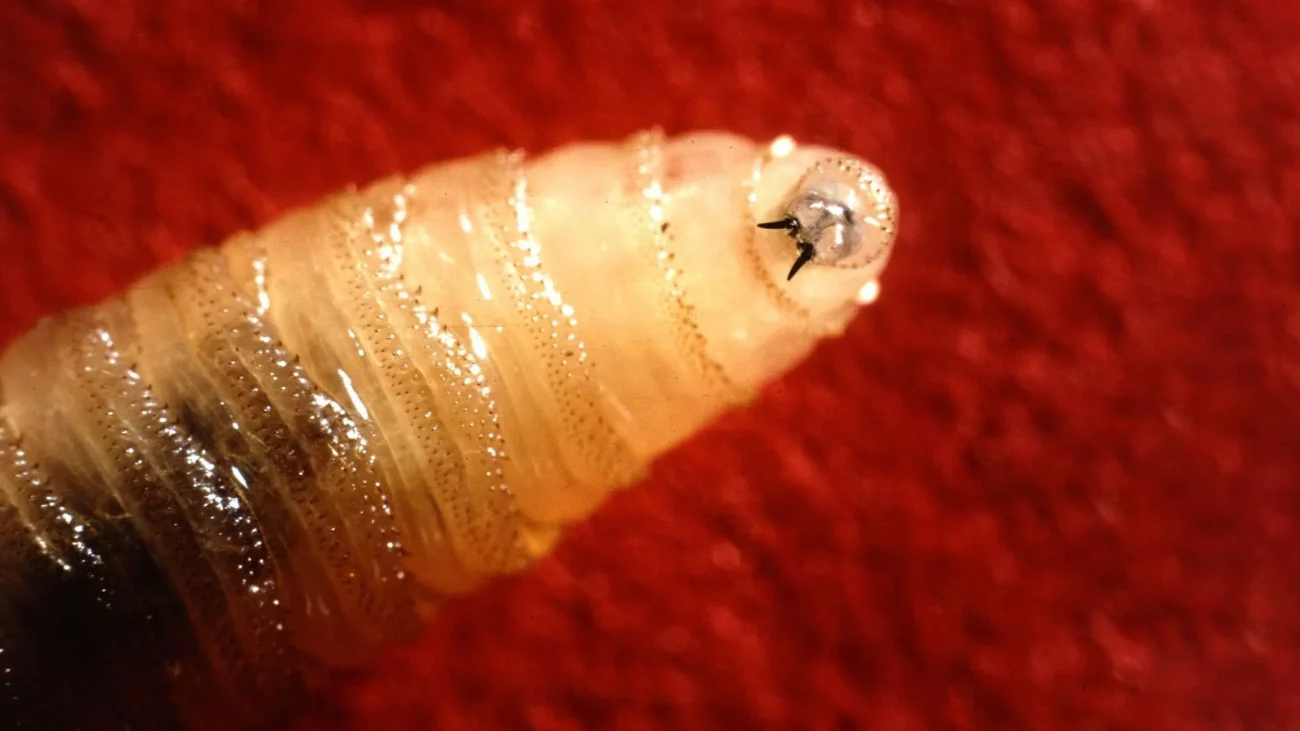
Decades after a monumental eradication campaign pushed the dangerous flesh-eating parasite far south into Panama, the New World screwworm has officially returned to the United States. Recent detections in Texas and New Mexico have ignited serious concerns among agricultural producers, wildlife conservationists, public health officials, and pet owners alike. Unlike typical fly larvae that feed exclusively on dead or decaying matter, the parasitic larvae of the Cochliomyia hominivorax species actively burrow into the living tissue of warm-blooded animals. This biological trait makes infestations exceptionally painful, destructive, and potentially fatal if left untreated. In response to this rapidly escalating threat, researchers at the University of California San Diego (UC San Diego), in close collaboration with the County of San Diego Health and Human Services Agency (HHSA) Public Health Services, have engineered an advanced, real-time tracking dashboard to anticipate the parasite’s next moves and safeguard vulnerable populations.
Historical Context and the Threat of the Past
To understand the gravity of the current situation, agricultural historians often look back to the mid-twentieth century when the New World screwworm was an economic and humanitarian nightmare for the American agricultural sector. During the 1950s, uncontrolled infestations caused astronomical financial devastation across the United States. In the American Southwest alone, the pest inflicted an estimated $50 million to $100 million in annual damages—a staggering sum at the time—by devastating cattle herds, sheep, and other livestock.
The crisis eventually spurred one of the most successful biological control operations in human history. Scientists and agricultural authorities formulated the sterile insect technique (SIT), a revolutionary approach that involved mass-producing male screwworm flies, sterilizing them using radiation, and releasing millions of them into the wild. Because female screwworm flies mate only once in their lifetimes, mating with sterile males produced zero viable offspring. Over time, this biological attrition caused the wild population to collapse. The concerted federal and state campaign eventually eradicated the pest from the United States entirely, steadily pushing its endemic range thousands of miles southward through Mexico and Central America until it was successfully established as far south as Panama. For decades, a permanent biological barrier maintained by the United States Department of Agriculture (USDA) kept the pest at bay, protecting the nation’s multi-billion-dollar livestock industry from its destructive footprint.
The Resurgence: Speed, Spread, and Vulnerable Populations
The recent re-emergence of the New World screwworm in Texas and New Mexico has caught many modern epidemiologists off guard. While federal authorities anticipated that shifting environmental conditions and shifting trade routes might eventually encourage northward migration, the velocity of the current spread has exceeded early models.
Mark Beatty, MD, MPH, assistant medical director for the County of San Diego’s Epidemiology and Immunization Services Branch, noted the unexpected momentum. "We knew in 2023 that New World screwworm was going to move northward, but I wasn’t expecting it to move as fast as it has," Beatty stated. Although investigations remain active regarding the precise vector and exact origin points of the current U.S. infections, the reality of its presence is indisputable. "Once it entered Texas, we quickly saw an increase in detections. It’s in a place where it used to live, so it’s not surprising it’s taking a hold again."
The biological mechanics of the screwworm make it uniquely threatening. Adult female flies are naturally attracted to open wounds, cuts, abrasions, or natural mucous membranes of warm-blooded mammals, where they deposit hundreds of eggs. Within hours, these eggs hatch into voracious larvae equipped with hook-like mouthparts that dig deep into healthy, living flesh. As the larvae feed and grow, they deepen and widen the wounds, creating an environment highly susceptible to secondary bacterial infections and severe tissue necrosis. Without prompt physical removal of the larvae and rigorous veterinary or medical intervention, severe infestations can rapidly kill livestock, wildlife, and domestic pets.
While human infections are rare, they are entirely possible if individuals have untreated wounds or compromised skin exposed to active adult flies. Public health experts emphasize that the screwworm does not transmit directly from person to person through casual contact or airborne vectors in the manner of respiratory viruses like influenza or COVID-19. Nevertheless, human cases require immediate surgical or manual extraction of the larvae to prevent permanent disfigurement or systemic complications.
Innovative Surveillance: The UC San Diego and San Diego County Dashboard
Recognizing the urgent need for enhanced situational awareness, public health officials in Southern California turned to their academic partners to bridge a dangerous gap in early detection systems. Eliah Aronoff-Spencer, MD, PhD, a professor of medicine at UC San Diego School of Medicine and an affiliate of the UC San Diego Design Lab and Qualcomm Institute, spearheaded the creation of a specialized risk-assessment dashboard designed to map the parasite’s potential trajectories.
"Our County public health partners alerted us to the need for better situational awareness of New World screwworm," Aronoff-Spencer explained. "We built a dashboard to generate regional risk profiles. This is just one example of how we are responding to County needs with a focus on real-world issues. It’s a model that has brought us great success, like the Tijuana River Crisis Environmental Dashboard."
The newly developed tracking tool functions by synthesizing multiple complex streams of data. It aggregates confirmed laboratory detections of the parasite, meteorological and environmental conditions that favor the survival and reproduction of the fly, and automated scans of news media coverage from across North America. Currently, access to the dashboard is strictly limited to authorized public health officials, agricultural regulators, and project partners, though developers intend to release a streamlined, public-facing version in the future.
Seema Shah, MD, MPH, medical director of the Epidemiology and Immunization Services Branch for San Diego County’s Public Health Services Department, highlighted that integrating news media reports into a public health model represents a critical methodological innovation. Traditional public health reporting networks are frequently plagued by administrative and laboratory bottlenecks. Confirming a parasitic infection through standard diagnostic channels can take anywhere from several days to multiple weeks. By capturing early news reports, blog posts, and localized field accounts, the dashboard allows epidemiologists to bypass bureaucratic delays and spot emerging hotspots before official laboratory confirmations clear the pipeline.
"Traditional reporting mechanisms for public health are often delayed," Shah noted. "Lab confirmation can take days or weeks. By incorporating media reports, we can identify potential threats sooner and stay one step ahead."
Echoing this sentiment, Mark Beatty emphasized how the predictive nature of the tool aids tactical planning. "The tool gives you a sense of where you might expect to see cases next. That’s helpful in determining how we should be preparing. Is the threat imminent, or do we have six months? We’re in a very concerning phase right now, and the tool backs that up."
A Model of Cross-Sector Collaboration: The Resilient Shield Initiative
The screwworm tracking dashboard was not constructed in isolation; it is the direct product of "Resilient Shield," an advanced research initiative funded by the Centers for Disease Control and Prevention (CDC) and co-led by Aronoff-Spencer and fellow principal investigators. Resilient Shield operates as one of thirteen core facilities constituting the CDC’s Insight Net, a national consortium dedicated to modernizing outbreak modeling and disease threat forecasting.
The underlying philosophy of Insight Net focuses on bridging the gap between theoretical academic research and immediate, boots-on-the-ground public health requirements. Instead of academic institutions attempting to forecast what tools municipal agencies might find useful, frontline public health departments submit urgent, real-world problems directly to the network. Researchers then rapidly engineer modular, scalable, and adaptable technical solutions.
"In public health, we always know our most urgent priorities, but too often we don’t have the immediate resources or in-house technical solutions to achieve them," Shah observed. "The screwworm is a perfect example. It is a critical threat, but it is an issue our academic partners might never have prioritized without our direct ticket. This partnership solves our immediate problem while providing shareable, open reference designs that demonstrate exactly how public health, academia, and industry can successfully work together."
The architecture of the Resilient Shield platform is inherently modular, drawing upon technological infrastructure supported by industry leaders such as Google and MITRE. When a new public health emergency arises—whether it involves tracking novel influenza strains, monitoring environmental crises, or mapping vector-borne parasitic threats—researchers can rapidly assemble custom toolkits from a shared resource hub. Depending on the crisis, these components can range from secure computing databases and advanced mathematical simulation engines to AI-driven agent builders and public-facing situational awareness portals.
"Our central innovation is the true convergence of partner priorities with scalable engineering," Aronoff-Spencer emphasized. "We do not build in a vacuum. Our infrastructure is built directly on the priorities dictated by our partners. In addition, because our platform is built on an open, modular architecture, every solution we develop strengthens the system and makes it more adaptable for the next public health challenge."
Modern Eradication Strategies and Inter-Agency Preparedness
As federal and state authorities mobilize to halt the northern migration of the New World screwworm, officials are leaning heavily on proven historical methods paired with cutting-edge 21st-century biotechnology. The USDA is spearheading the overarching national eradication campaign, coordinating large-scale releases of sterile insects across affected zones, implementing strict quarantine protocols on livestock transport, and deploying targeted pesticides to suppress wild populations.
Furthermore, agricultural authorities are actively seeking authorization from the U.S. Environmental Protection Agency (EPA) to deploy a genetically modified, all-male strain of the screwworm fly currently undergoing rigorous field testing. Simultaneously, geneticists at UC San Diego are developing next-generation genetic technologies designed to enhance future vector control and ensure that if the parasite attempts to establish permanent footholds in the American West, researchers possess the biological tools to suppress them efficiently.
At the local level, regional agricultural and veterinary networks are ramping up surveillance to protect domestic animals, livestock, and vulnerable wildlife populations. Emily Trumbull, DVM, a veterinarian and lead for the San Diego County Epidemiology Unit’s One Health Program, stressed the vital importance of multi-disciplinary cooperation.
"We are working closely with the California Department of Food and Agriculture to connect local veterinarians with screwworm resources for surveillance in our region," Trumbull explained. "The flies can affect any warm-blooded animal, so working together with veterinarians serving livestock, pets and wildlife is critical for identifying suspect cases and preventing cases in people. The dashboard takes into account environmental factors that can help us understand how the risk to our local region is changing before the fly arrives. That’s why the dashboard is valuable."
Broader Economic and Public Health Implications
The re-establishment of the New World screwworm within the continental United States carries profound implications for the agricultural economy, animal welfare, and public health infrastructure. If left unchecked, a widespread infestation could cost the U.S. meat and livestock industries billions of dollars in lost productivity, veterinary treatment expenses, and stringent international trade restrictions. Ranchers across the Southwest face the prospect of intense herd management challenges, requiring constant wound inspections, frequent applications of larvicides, and the quarantine of potentially exposed animals.
Beyond economic calculations, the return of the parasite underscores the growing vulnerability of regional ecosystems to vector-borne diseases driven by shifting climatic patterns, global trade, and animal movement. Public health experts warn that biological threats are increasingly dynamic, requiring agile, technology-driven responses that transcend traditional administrative silos.
By marrying academic engineering prowess with the urgent operational needs of frontline public health departments, initiatives like UC San Diego’s Resilient Shield and the newly deployed screwworm risk dashboard offer a promising blueprint for modern epidemic and epizootic response. As federal agencies intensify their sterile insect releases and local veterinarians remain on high alert, the integration of real-time data science, media monitoring, and predictive modeling will play a pivotal role in determining whether the United States can once again push the flesh-eating parasite back across its borders.

