


Virginia is a state rich in biodiversity, and among its most captivating inhabitants are its eight species of owls. These nocturnal and crepuscular hunters, often heard before they are seen, play a vital role in the state’s ecosystem. While some species, like the ubiquitous Great Horned Owl and the adaptable Barn Owl, can be found gracing various regions throughout the year, others are more elusive, appearing only under specific conditions or during particular seasons. Understanding these magnificent birds requires a closer look at their habitats, behaviors, and identifying characteristics, offering a deeper appreciation for the wild beauty of the Commonwealth.
The Majesty of the Great Horned Owl
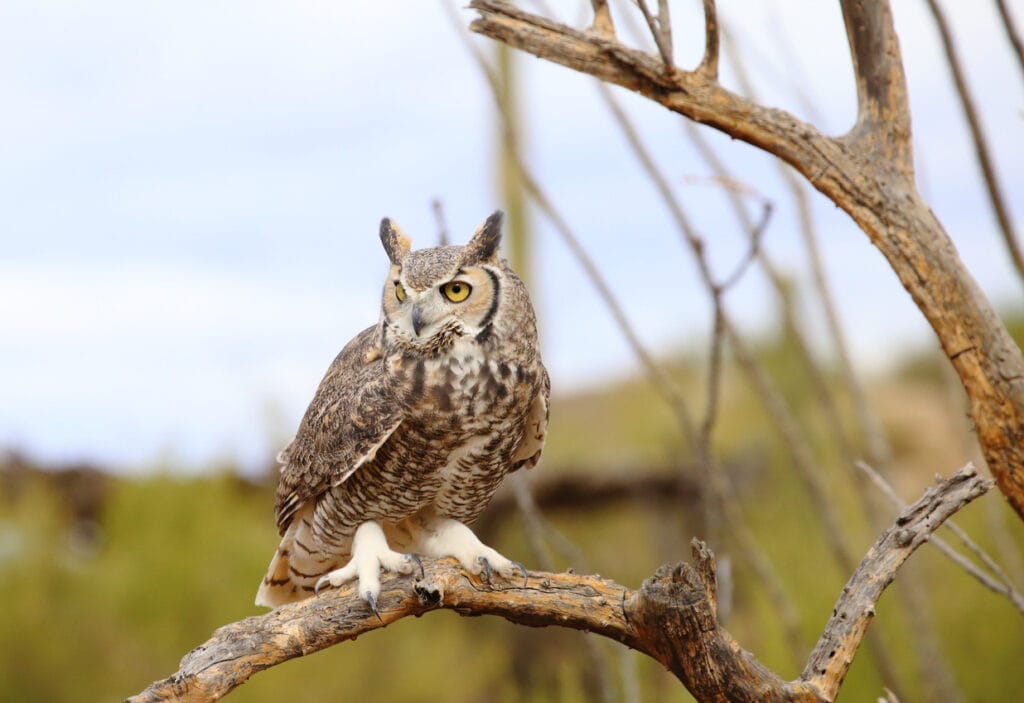
The Great Horned Owl ( Bubo virginianus ) is arguably the most iconic owl species in North America, and Virginia is no exception. These formidable birds are a common sight and sound across the state, inhabiting a wide range of environments from dense forests and suburban woodlands to open country and even urban parks. Their year-round presence makes them a constant fixture in Virginia’s avian landscape.
Physical Characteristics and Identification:
Great Horned Owls are the largest owls in Virginia and the third largest in the world, surpassed only by the Eurasian Eagle-Owl and Blakiston’s Fish Owl. Adult individuals can measure up to 26 inches in length, with a wingspan that can reach an impressive four feet. Their most distinctive feature, lending them their name, are the prominent feather tufts, or "horns," that rise from their heads. These are not true ears but rather serve to break up their outline against the sky, aiding in camouflage. Their plumage is a mottled dark brown, providing excellent camouflage against tree bark. They possess broad, barrel-shaped bodies, mahogany-colored faces, and large, piercing yellow eyes that are a hallmark of their predatory prowess.
Behavior and Diet:
Known for their territorial nature and powerful hunting abilities, Great Horned Owls are apex predators within their niche. They are not shy about defending their territory and will aggressively attack perceived threats, including humans and other animals, if they feel cornered or their nests are endangered. Their diet is remarkably varied, reflecting their opportunistic feeding habits and immense strength. While they are adept at catching smaller prey such as rodents, rabbits, skunks, opossums, and squirrels, they are also capable of taking down larger animals, including birds of prey like falcons and ospreys, as well as waterfowl such as geese and ducks. Their diet can also include reptiles, amphibians, insects, and occasionally fish, though they are not specialized fish eaters.
Habitat and Distribution:
Great Horned Owls are highly adaptable and can be found in nearly every habitat across Virginia. They prefer areas with a mix of trees for roosting and open spaces for hunting. They often utilize abandoned nests of other large birds, such as crows or hawks, or natural cavities in trees. Their adaptability allows them to thrive even in areas with significant human development, provided there are sufficient food sources and nesting sites.
The Elusive Eastern Screech-Owl
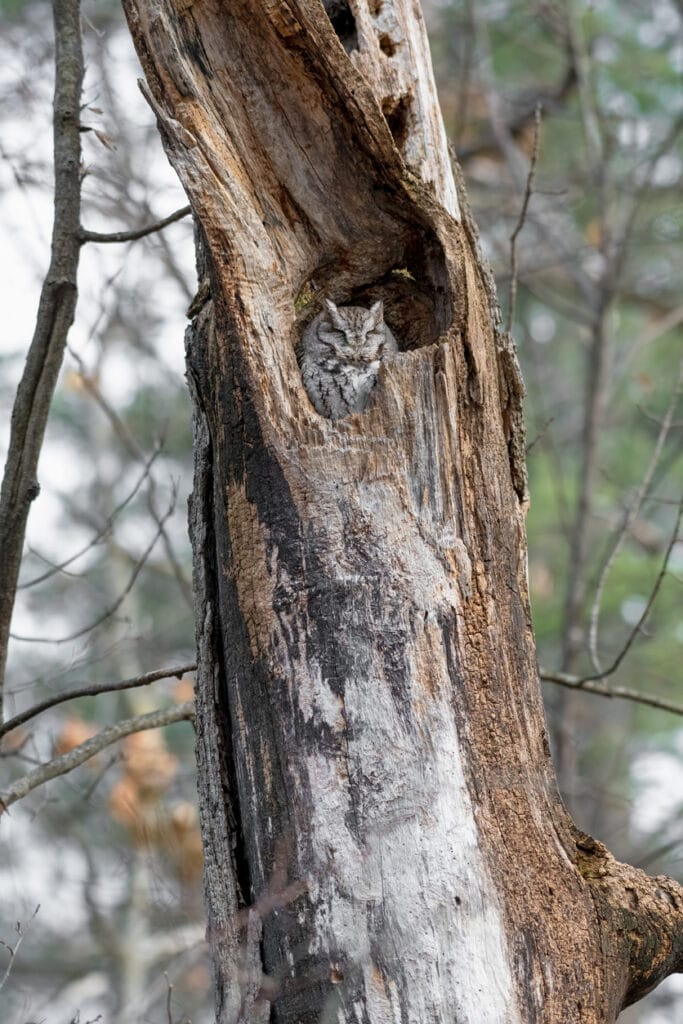
The Eastern Screech-Owl ( Megascops asio ) is another common resident of Virginia, known for its distinctive, haunting screeching call that often echoes through the night. Despite their commonality, their exceptional camouflage makes them difficult to spot, particularly during daylight hours when they typically rest.
Physical Characteristics and Identification:
These are small to medium-sized owls, typically measuring between 6 to 10 inches in length. They are stocky birds with prominent, pointed ear tufts, round wings, and square tails. A fascinating aspect of the Eastern Screech-Owl is its dimorphism in plumage color; they exist in two color morphs: a gray morph and a rufous (reddish-brown) morph. Both morphs exhibit intricate barring and mottling that allows them to blend seamlessly with tree bark and foliage. Their eyes are large and yellowish, providing excellent night vision.
Behavior and Diet:
Eastern Screech-Owls are primarily nocturnal hunters, though they may be active at dusk and dawn. They are known for their camouflage, often perching in tree cavities or dense foliage, making them nearly invisible to the untrained eye. Their diet consists mainly of small mammals, such as mice and shrews, but they also consume insects, earthworms, frogs, and other invertebrates. Occasionally, they will snatch small birds or even a fish if the opportunity arises. While they share the "screech-owl" name with their western counterparts, Eastern Screech-Owls are far more prevalent in Virginia.
Habitat and Distribution:
These owls are found throughout Virginia in a variety of wooded habitats, including deciduous forests, mixed woodlands, and even suburban backyards with mature trees. They often utilize nest boxes and natural tree cavities for nesting and roosting. Their adaptability to human-altered landscapes contributes to their widespread distribution across the state.
The Rare and Striking Snowy Owl
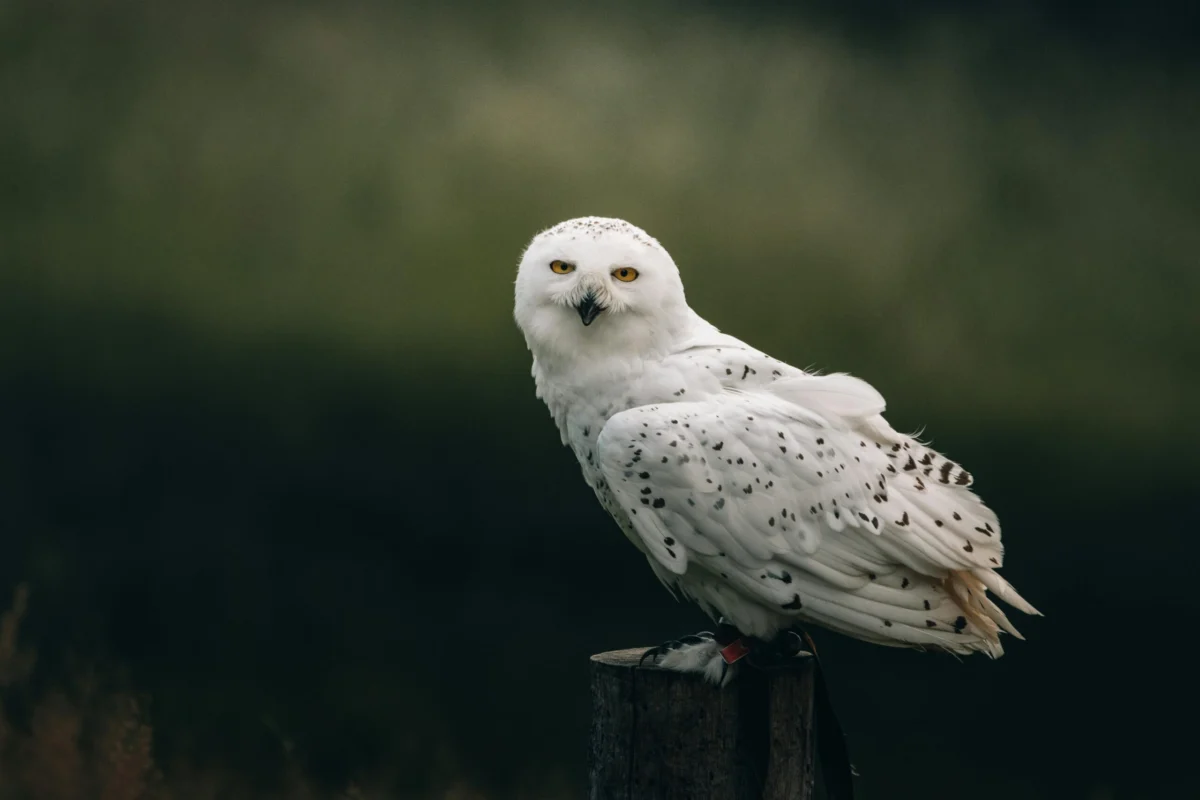
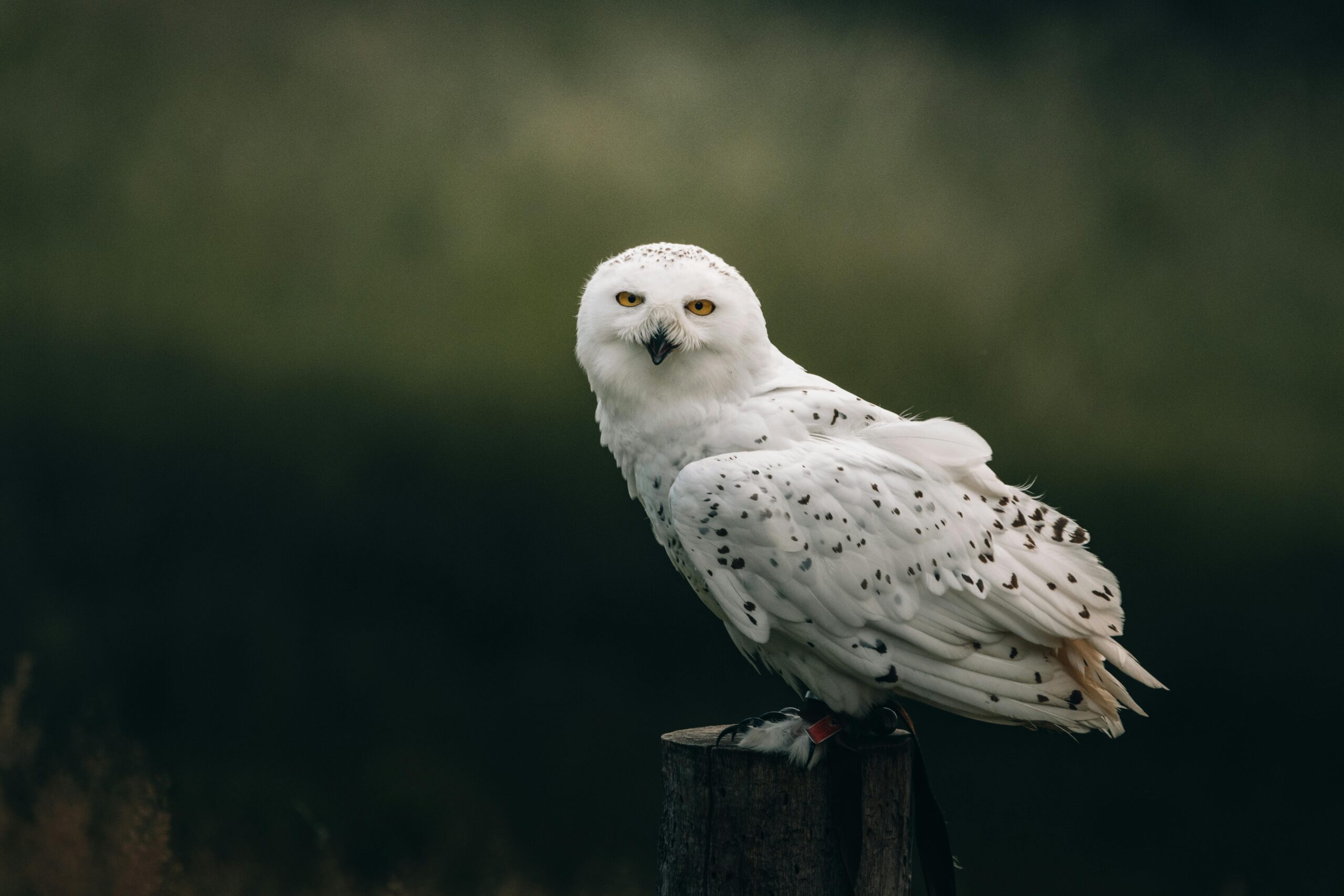
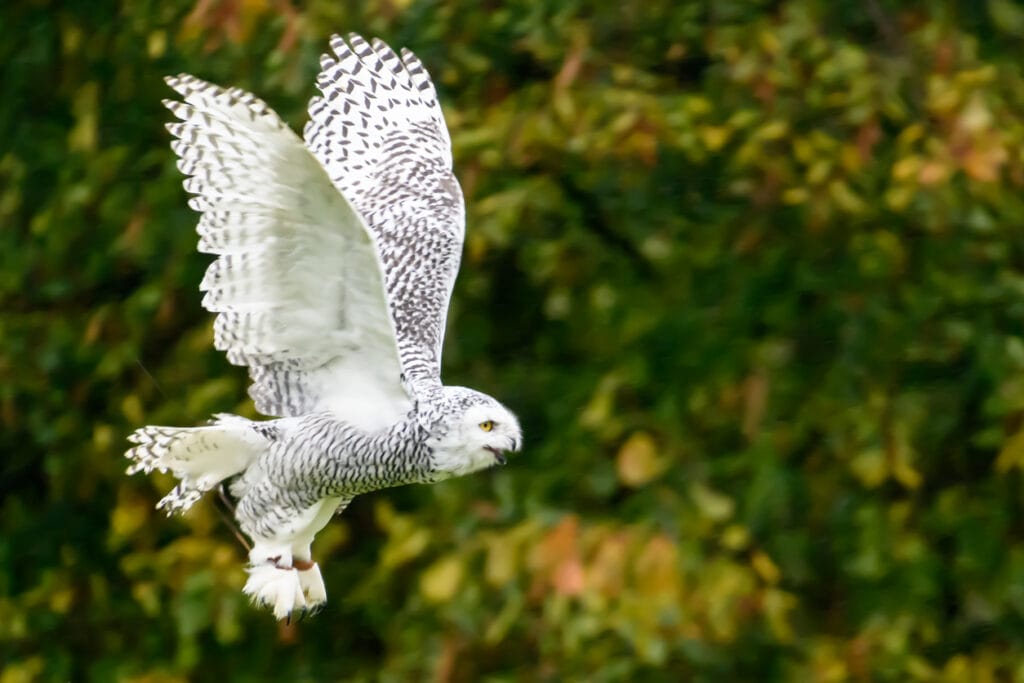
The Snowy Owl ( Bubo scandiacus ) is a bird of stark beauty and a rare visitor to Virginia, typically appearing during periods known as "irruptions." These phenomena occur when populations of their primary prey, lemmings, boom in the Arctic, leading to an increase in breeding success and subsequent dispersal into more southerly regions.
Physical Characteristics and Identification:
Snowy Owls are among the largest owl species, comparable in size to the Great Horned Owl, with some individuals reaching up to 28 inches in length. Their most striking feature is their predominantly white plumage, which is heavily barred or spotted with black, particularly in females and younger birds. Adult males are often nearly pure white. Their eyes are a deep yellow, and they possess dense, feather-covered legs and feet, an adaptation for the cold Arctic environment from which they originate.
Behavior and Diet:
Unlike most owls, Snowy Owls are often diurnal, meaning they hunt during daylight hours, especially in their Arctic breeding grounds where the sun remains up for extended periods. In Virginia, their appearance is a significant event for birdwatchers. They are powerful predators, primarily feeding on small mammals, with lemmings being their staple in the Arctic. When in Virginia, they will prey on rodents, rabbits, and other small mammals found in open habitats. They are known to be quite defensive of their territory and nesting sites, even exhibiting bravery in confronting larger predators.
Habitat and Distribution in Virginia:
Snowy Owls in Virginia are typically observed in open, treeless areas that mimic their Arctic tundra habitat. This can include coastal regions, large agricultural fields, and open marshlands. Their presence in Virginia is unpredictable, usually occurring every few years during irruptions. The last significant irruption in Virginia was noted in 2015, drawing considerable attention from both the public and scientific communities.
The Diligent Long-eared Owl
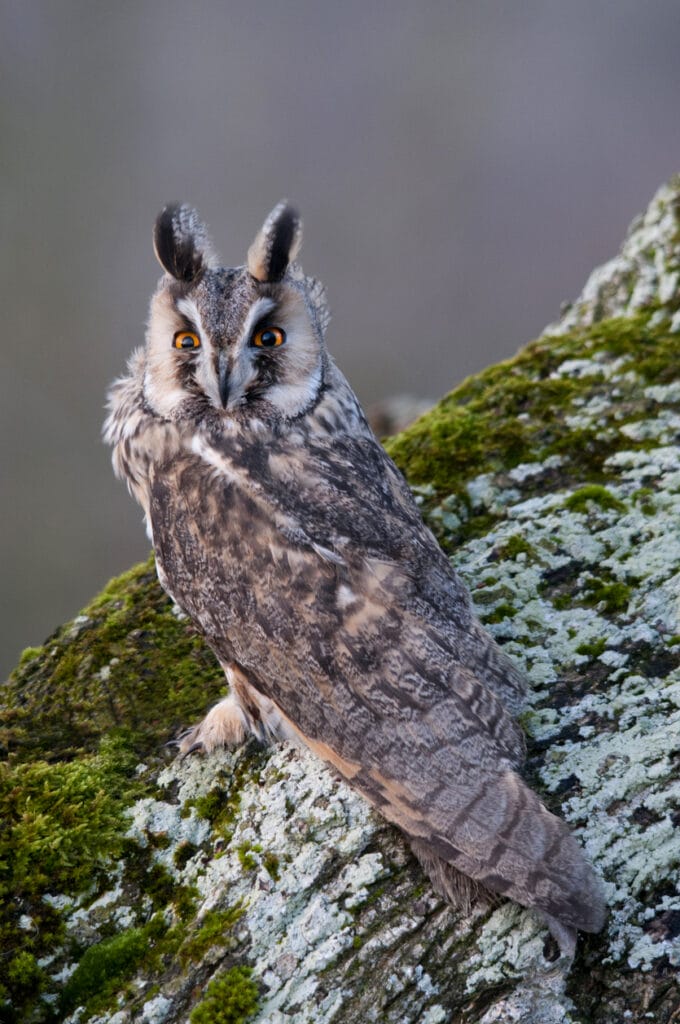
The Long-eared Owl ( Asio otus ) is a more secretive species, often overlooked due to its excellent camouflage and preference for dense vegetation. While not as common as some other Virginia owls, their presence adds another layer to the state’s diverse owl population.
Physical Characteristics and Identification:
As their name suggests, Long-eared Owls possess notably long, prominent ear tufts, which can be raised or lowered depending on their mood and alertness. These tufts are often the most distinguishing feature, though they can sometimes be confused with the Great Horned Owl. However, Long-eared Owls are considerably smaller, typically measuring around 14 to 16 inches in length. They have slender bodies, mottled brown and buff plumage that provides superb camouflage, and large, striking orange-red eyes. Their facial discs are pronounced and are a buff color, bordered by black.
Behavior and Diet:
These owls are primarily nocturnal and are known for their elusive nature. They are often found roosting during the day in dense thickets, conifers, or hedgerows, making them challenging to locate. Their diet consists mainly of small rodents, such as voles and mice, and they are adept at hunting in open fields and grasslands. They are also known for their extensive vocal repertoire, producing a variety of sounds, including soft hoots, barks, and squeals, making them one of the more vocal owl species.
Habitat and Distribution in Virginia:
Long-eared Owls are more commonly found in the northern parts of Virginia during the winter months. They prefer open woodlands, shrublands, grasslands, and agricultural areas with scattered trees. They typically roost in dense vegetation for protection and camouflage and forage in more open areas. Their breeding season often occurs in spring, and they build their nests in trees, often in abandoned nests of other birds.
The Widespread Short-eared Owl
The Short-eared Owl ( Asio flammeus ) is a fascinating species that, despite its rarity in some areas, boasts an exceptionally wide global distribution, including Virginia. These owls are often found in open habitats and are notable for their diurnal hunting habits.
Physical Characteristics and Identification:
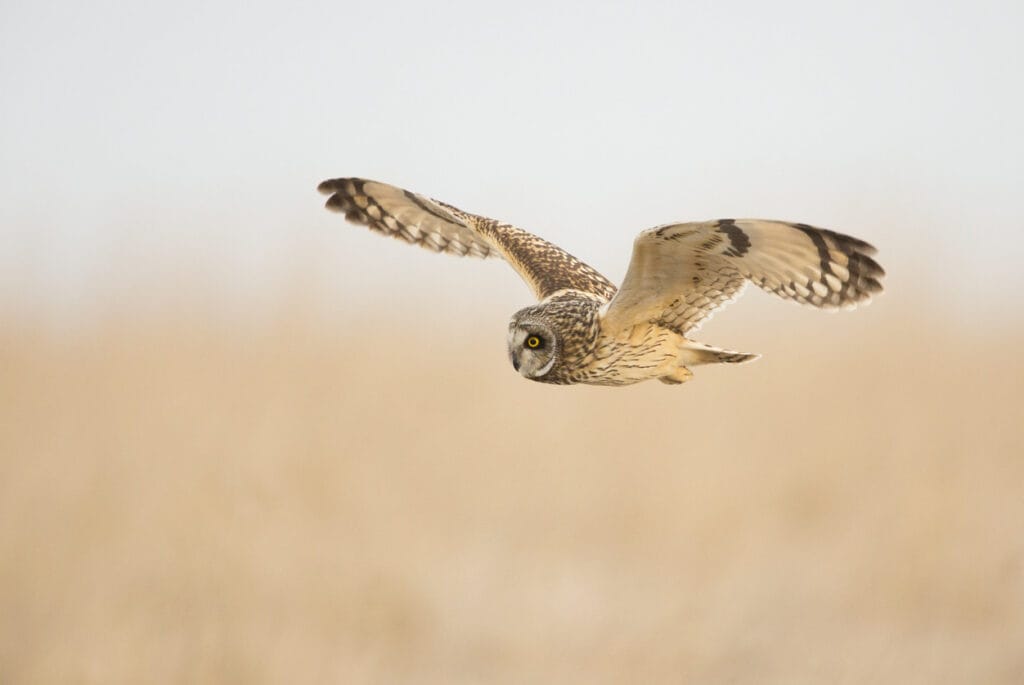
Short-eared Owls are medium-sized owls, measuring about 13 to 17 inches in length. Their name derives from their short ear tufts, which are often barely visible, especially when the owl is relaxed. They possess a mottled "flame-colored" or buffy plumage with dark streaks, giving them a distinctive appearance. Their facial discs are large and round, and their eyes are yellow. A key identifying feature is their habit of flying low over open fields with slow, deliberate wingbeats, often with their wings held in a shallow "V" shape.
Behavior and Diet:
A significant characteristic of the Short-eared Owl is its diurnal hunting behavior, making it one of the few owl species that are active during daylight hours. They are often observed hunting at dawn and dusk, as well as throughout the day, especially during overcast conditions. Their primary diet consists of small mammals, particularly voles, mice, and lemmings, but they also consume small birds and insects. They build their nests on the ground, often in a shallow scrape lined with grass and feathers.
Habitat and Distribution in Virginia:
Short-eared Owls can be found in various open habitats across Virginia, including grasslands, meadows, agricultural fields, marshes, and coastal dunes. They are particularly drawn to areas with abundant small mammal populations. While they are considered rare in terms of consistent sightings, their extensive range means they can appear in different regions of the state, making them a sought-after sighting for bird enthusiasts.
The Ethereal Barn Owl
The Barn Owl ( Tyto alba ) is one of Virginia’s most recognizable owls, often described as having a ghostly or ethereal appearance. They are year-round residents and are known for their unique heart-shaped facial disc and silent flight.
Physical Characteristics and Identification:
Barn Owls are medium-sized owls, typically measuring between 13 to 16 inches in length. Their most striking feature is their distinctive white, heart-shaped facial disc, which surrounds their dark eyes. Their plumage is a mix of tawny brown and gray on the back, with a lighter, often white or buff underside, finely speckled with dark spots. Their wings are long and broad, enabling incredibly silent flight, a crucial adaptation for hunting. Their legs are long and feathered, giving them a somewhat ungainly appearance on the ground but aiding in snatching prey.
Behavior and Diet:
Primarily nocturnal, Barn Owls are adept hunters of small mammals, with rodents like house mice, cotton rats, and young rabbits forming the bulk of their diet. They hunt by gliding silently over open fields and grasslands, listening for the tell-tale sounds of their prey and then swooping down to capture them with their sharp talons. They are known for their eerie, raspy calls, which can sound like hisses or shrieks, though they are generally more silent in flight. Barn Owls do not build elaborate nests; instead, they seek out sheltered locations such as barns, church steeples, hollow trees, and cliff ledges where they can lay their eggs on a simple platform.
Habitat and Distribution in Virginia:
Barn Owls are widespread throughout Virginia, favoring open country with scattered trees and access to hunting grounds. They are often found in agricultural areas, meadows, and along the edges of woodlands. Their preference for man-made structures like barns has led to their common name and often allows them to coexist with human populations, although habitat loss and rodent control practices can pose challenges to their populations.
The Tiny Northern Saw-whet Owl
The Northern Saw-whet Owl ( Aegolius acadicus ) is one of the smallest owl species found in Virginia, a tiny predator with an oversized head and a surprisingly loud call. Their diminutive size and secretive nature make them one of the most challenging owls to spot.
Physical Characteristics and Identification:
Northern Saw-whet Owls are truly miniature, typically measuring only 7 to 9 inches in length. They possess large, round heads, a fluffy, streaked brown and white body, and remarkably large, cat-like yellow eyes. Their facial discs are also heart-shaped, contributing to their undeniably cute appearance. The streaking on their chest is fine and dark, and their backs are a rich brown.
Behavior and Diet:
These owls are predominantly nocturnal and are known for their distinctive call, which sounds like the "whetting" of a saw, hence their name. This call is often heard during their breeding season or when they feel threatened. Despite their small size, they are effective predators, feeding primarily on small rodents like mice and voles, as well as insects and small birds. Their small size and camouflage allow them to hide effectively in dense foliage during the day. In Virginia, non-breeding populations are typically observed, suggesting they migrate south for the winter from more northerly breeding grounds.
Habitat and Distribution in Virginia:
Northern Saw-whet Owls prefer dense woodlands, including oak forests, coniferous forests, and riparian woodlands. They are often found in areas with thick undergrowth, which provides ample cover for hunting and roosting. Their small size and habit of roosting in dense foliage make them incredibly difficult to find, even for experienced ornithologists.
The Resonant Barred Owl
The Barred Owl ( Strix varia ) is a large, vocal owl that is a common resident of Virginia’s forests and wetlands. They are easily recognized by their distinctive "who cooks for you, who cooks for you all?" call and their striking barred plumage.
Physical Characteristics and Identification:
Barred Owls are substantial owls, measuring between 17 to 20 inches in length, with a broad wingspan. Their plumage is characterized by dark brown barring on a lighter brown or grayish background, particularly on their chest and belly. They have large, dark brown eyes, a round head without ear tufts, and a stocky build. Their facial discs are dusky and vaguely heart-shaped.
Behavior and Diet:
Unlike many owl species that are strictly nocturnal, Barred Owls are both nocturnal and diurnal, meaning they are active and hunt during both day and night. This characteristic, combined with their preference for forests and wetlands, makes them one of the more frequently encountered owls in Virginia. Their diet is varied and includes small mammals, rodents, amphibians, reptiles, and birds. They are also known to hunt fish from shallow waters. Barred Owls are highly territorial, especially during the nesting season, and will defend their territory aggressively with loud calls and sometimes physical strikes.
Habitat and Distribution in Virginia:
Barred Owls are found throughout Virginia, inhabiting a wide range of forested environments, including evergreen forests, swamps, and uplands. They are often found near water sources, such as rivers, lakes, and marshes. Their tendency to remain in the same territory year-round makes it possible to observe the same individuals repeatedly if one knows their favored haunts. They typically nest in tree cavities or on large branches.
Final Thoughts on Virginia’s Owl Population
Virginia’s diverse landscapes provide a critical habitat for a remarkable array of owl species. From the powerful Great Horned Owl to the tiny Northern Saw-whet Owl, each species plays a unique role in the state’s ecological balance. While some owls are year-round residents found across broad regions, others, like the Snowy Owl and Long-eared Owl, visit under specific migratory or environmental conditions, offering fleeting glimpses of their extraordinary lives.
Observing these magnificent birds requires patience, respect, and a commitment to their well-being. Understanding their natural behaviors, preferred habitats, and feeding patterns is crucial for successful and ethical wildlife viewing. The vast majority of owls are best admired from a distance, ensuring their safety and allowing them to continue their vital ecological functions undisturbed. Virginia’s commitment to conservation and habitat preservation is paramount in ensuring that these captivating nocturnal predators continue to grace the skies and forests of the Commonwealth for generations to come.

Frequently Asked Questions about Virginia Owls
What is the most common owl species in Virginia?
The Great Horned Owl and the Barn Owl are generally considered the most common owl species found throughout Virginia. Their adaptability to various habitats and widespread distribution contributes to their frequent sightings.
Where can I find more information about recent owl sightings in Virginia?
For up-to-date information on owl sightings and distribution in Virginia, resources like eBird are invaluable. This platform allows birdwatchers to report sightings, search for specific species in particular areas, and view recent observations, providing a dynamic snapshot of avian activity across the state.

