


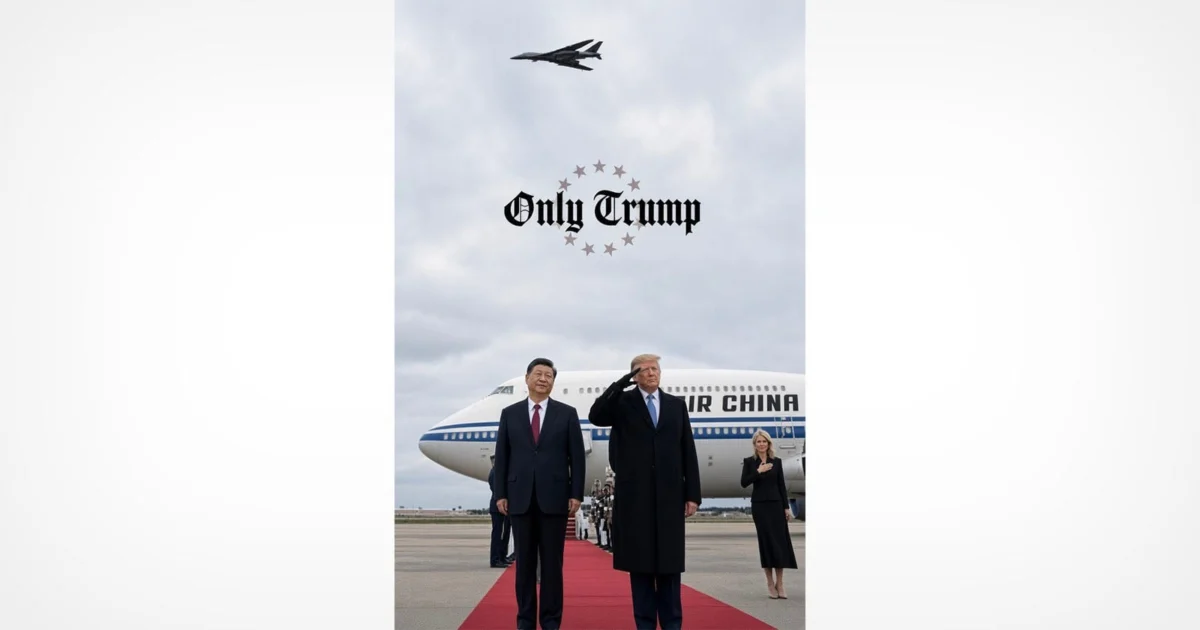
The arrival ceremony for Chinese President Xi Jinping at Joint Base Andrews in Maryland this past Wednesday has become the focal point of a significant controversy surrounding the integrity of digital media in political discourse. A photograph shared by former President Donald Trump on his Truth Social platform depicts a seemingly stoic and composed scene, yet subsequent forensic analysis by multiple media outlets and independent experts has confirmed that the image was substantially altered. The doctored version of the photograph contrasts sharply with the original imagery captured by professional news agencies, such as Getty Images, Reuters, and the Associated Press, which documented the event as it unfolded in real-time.
The Chronology of the Incident
The official arrival of President Xi at Joint Base Andrews was intended to be a high-stakes diplomatic engagement, marked by the traditional military honors afforded to visiting heads of state. During the tarmac ceremony, the proceedings were interrupted by a scheduled military flyover. The acoustic impact of such a maneuver is significant, and the resulting visual documentation from reputable news organizations shows President Trump reacting to the sudden noise.
In the authentic footage and photography captured by press pool journalists on the ground, President Trump is observed grimacing—a natural physiological reaction to the sudden, loud screech of a jet engine. Conversely, the image uploaded to Truth Social presents a markedly different narrative. In this manipulated version, the former president is shown standing with a stoic, unflinching expression while saluting. The discrepancy between the authentic documentation and the social media post became immediately apparent to digital forensics experts and political commentators alike, leading to a swift investigation into the provenance of the file.
Forensic Evidence and Technical Discrepancies
BBC Verify, an investigative unit dedicated to confirming the authenticity of digital media, conducted a detailed analysis of the image shared by Trump. The investigation identified several technical inconsistencies that confirm the image is not a genuine representation of the events at Joint Base Andrews.
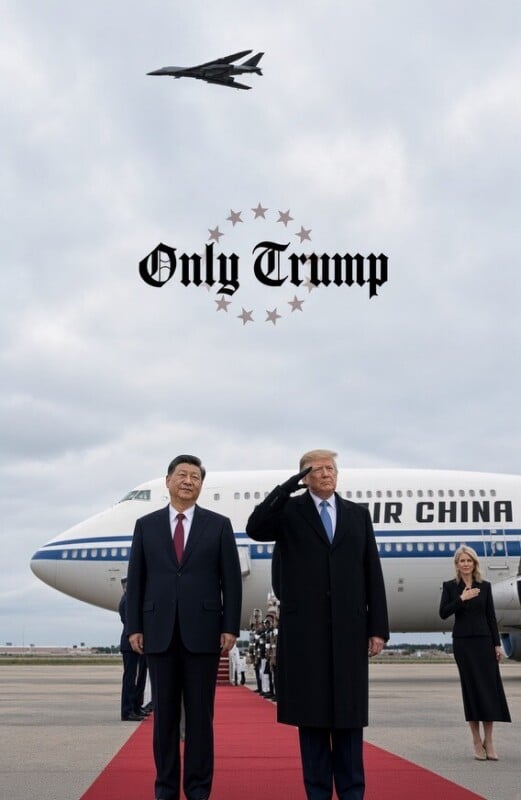
One of the most prominent errors involves the former president’s attire. In all legitimate news agency footage, including high-definition video coverage of the arrival ceremony, Trump is clearly wearing a pair of black gloves. However, the image posted to Truth Social shows him wearing only one glove, a detail that suggests a lapse in the image editing process.
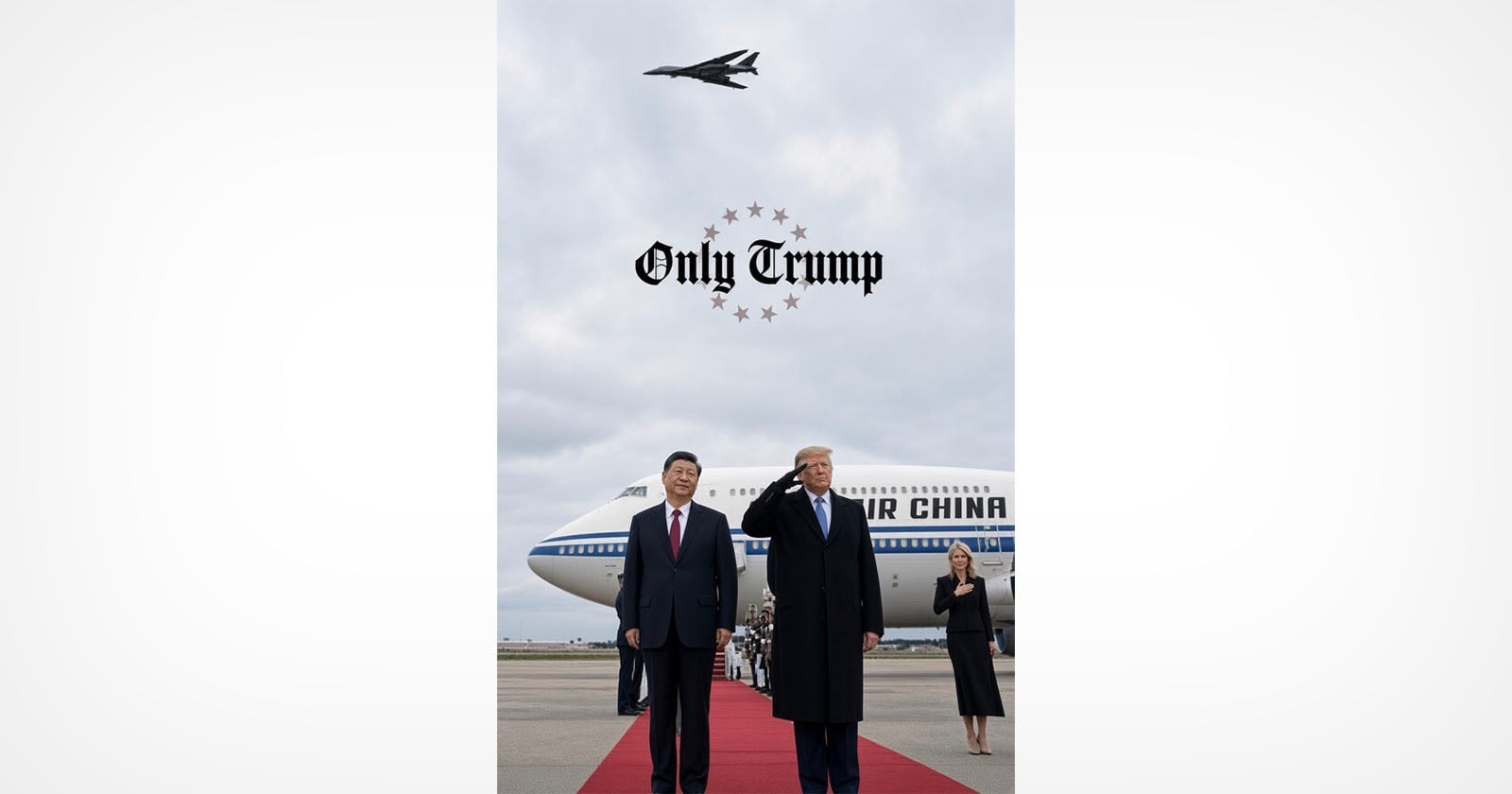
Furthermore, the personnel composition of the background was altered. In the original imagery, Monica Crowley, the Chief of Protocol, is positioned behind the former president. In the edited version, her figure has been replaced by another individual who bears a striking resemblance to Natalie Harp, a staffer frequently associated with the former president’s operations and often referred to by the moniker "human printer" due to her role in providing him with physical briefing materials.
Additional anomalies noted by investigators include the erasure of specific red markings on the fuselage of the Air China aircraft, which were visible in original photographs. Furthermore, forensic analysts noted inconsistencies in the rendering of Trump’s hair, which appeared differently textured and styled compared to the raw media files. These cumulative edits point toward a deliberate attempt to curate the visual narrative of the event, rather than a mere cropping or color-correction exercise.
Expert Perspectives on Digital Alteration
Henry Farid, a leading researcher in digital forensics and co-founder of GetReal Security, has emphasized the significance of these findings. "The changes are the types of cosmetic edits that you often see to ‘clean up’ photos," Farid noted during his analysis for the BBC. He added that the presence of multiple, disparate errors—ranging from missing gloves to swapped personnel—strongly indicates that the image was modified using sophisticated digital or AI-assisted software.
The implications of such modifications are broad. In an era where deepfakes and AI-generated imagery are becoming increasingly accessible, the role of verified, raw-source photography is more critical than ever. When public figures or political entities distribute manipulated media, it challenges the public’s ability to distinguish between historical record and curated propaganda.
Broader Context and Diplomatic Implications
The arrival of President Xi in Maryland was already a sensitive diplomatic event, closely scrutinized by international observers. Chinese state media outlets reportedly focused on the fact that President Xi maintained a composed expression during the military flyover, using the moment to project an image of calm leadership. By contrast, the manipulation of the photograph on the American side appears intended to achieve a similar objective—recasting the former president as unflappable in the face of the same event.
The use of this doctored imagery sits within a larger trend of political communication where visual narratives are increasingly prioritized over raw reporting. When official channels bypass traditional media verification, the risk of misinformation spreading through social networks increases exponentially. Because the original imagery was provided by independent photojournalists working under professional standards, the discrepancy between the truth and the shared image serves as a clear case study in the vulnerability of visual media.
The Role of Independent Verification
The rapid debunking of the photograph highlights the essential function of "verification desks" in modern journalism. By cross-referencing metadata, cross-checking with video feeds from multiple angles, and utilizing forensic software, organizations like the BBC and independent investigative journalists were able to provide a definitive rebuttal within hours of the image’s circulation.
This incident serves as a reminder of the "liar’s dividend," a phenomenon where the proliferation of manipulated media makes it easier for bad actors to cast doubt on authentic imagery by claiming it, too, might be fake. However, in this specific instance, the availability of multiple, independent, and high-quality sources—including video evidence from major news agencies—effectively insulated the public record from being successfully rewritten by the doctored social media post.
Official Responses and Future Considerations
As of this writing, there has been no formal statement from the former president’s office regarding the origin of the image or why it was posted to Truth Social. The incident has, however, prompted a wider discussion regarding the policies of social media platforms concerning the labeling of manipulated media. While many platforms have implemented fact-checking protocols, the speed at which such images can be shared often outpaces the moderation process.
The incident at Joint Base Andrews serves as a critical junction for political communications. As AI tools for image manipulation become more powerful and easier to use, the reliance on transparent sourcing and rigorous journalistic verification remains the primary defense against the erosion of visual truth. Future political cycles will likely see an increase in such challenges, necessitating a more media-literate public and robust mechanisms to ensure that the historical record remains accurate.
Ultimately, the event underscores a permanent shift in how political history is documented and perceived. The intersection of high-stakes diplomacy and digital artifice creates a complex environment where the image is no longer simply a reflection of reality, but a contested site of narrative control. As digital forensics capabilities advance, the ability to detect such manipulations will continue to act as a necessary check on the dissemination of misleading information, ensuring that while an image may be edited for effect, the reality of the moment remains preserved through the lens of independent observation.

