


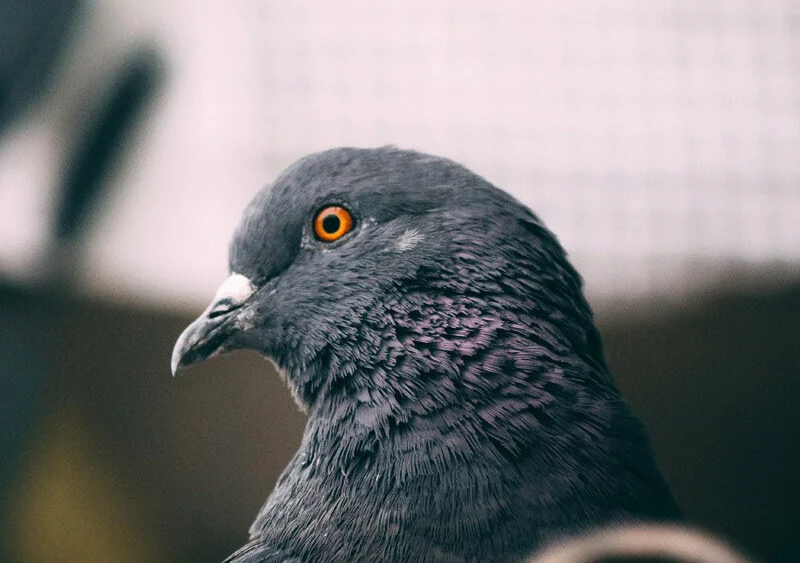
The natural world has long served as a primary blueprint for engineering breakthroughs, but rarely has the bridge between biology and robotics been as clearly defined as in recent research regarding avian vision. A groundbreaking study conducted by researchers at the University of British Columbia (UBC) and the University of Alberta has shed new light on the sophisticated ocular maneuvers utilized by homing pigeons. By deploying miniature, head-mounted computer-camera systems, scientists have decoded how these birds manage the overwhelming flood of visual data—known as "optic flow"—that occurs during high-speed flight. This discovery is not merely a contribution to ornithology; it is a critical pivot point for the development of autonomous systems, offering a biological template for the next generation of drone navigation and image processing technology.
The Biological Challenge of High-Speed Navigation
To understand the significance of this research, one must first appreciate the computational burden placed on a bird in flight. As a pigeon travels through the air, every movement creates optic flow, a continuous stream of visual information that shifts across the retina. For humans, navigating a crowded room is a complex task; for a bird traveling at speeds exceeding 40 miles per hour, the rate of visual input is exponential. Without a mechanism to filter, stabilize, and interpret this data, the brain would suffer from sensory overload.
Pigeons have evolved a dual-strategy approach to this challenge. Their lateral eye placement, which provides a near-panoramic view of the horizon, allows them to monitor for aerial predators while simultaneously tracking ground-level landmarks. However, the UBC study reveals that the key to their precision lies in active eye movement. Unlike many mammals that rely almost exclusively on head stabilization to steady their gaze, pigeons actively rotate and shift their eyes to refine the information reaching their brains.
Chronology of the UBC Study
The research project, which represents a multi-year effort to quantify avian sensory processing, involved a rigorous experimental framework. The team, led by Anthony B. Lapsansky and Douglas L. Altshuler from UBC, alongside Douglas R. Wylie from the University of Alberta, focused on a cohort of 16 homing pigeons. These birds were selected for their familiarity with established flight paths, ensuring that the researchers were observing navigational behavior in a controlled, known environment.
The chronology of the study can be summarized as follows:
- Preparation and Calibration: Each subject was trained to wear a lightweight, custom-fitted hood equipped with a miniaturized camera and computer system. This technology was designed to remain unobtrusive, allowing the birds to maintain natural flight mechanics.
- Data Acquisition Phase: The pigeons were released on specific flight paths. Throughout the transit, the miniaturized hardware tracked the precise ocular rotation of the birds, recording how the eyes responded to changes in altitude, speed, and environmental obstacles.
- Landing Analysis: Researchers specifically isolated the landing phase. During this transition, the data showed a distinct shift: the pigeons converged their eyes inward. This action, known as stereopsis, allows the pigeon to synthesize two slightly different images into a single, three-dimensional perception, which is essential for calculating the exact distance to a landing perch.
- Data Synthesis and Peer Review: The final phase involved analyzing the massive dataset generated by the onboard recorders. The researchers compared the flight-path optic flow with the landing-approach optic flow, successfully mapping the correlation between ocular movement and flight stabilization.
Data-Driven Insights: Understanding Stereopsis and Optic Flow
The data collected by the UBC team provides empirical evidence for what was previously only hypothesized: birds do not simply "look" at their environment; they actively manage their visual intake. The findings indicate that during mid-flight, pigeons utilize slow, rhythmic eye movements to stabilize the image of their target. By doing so, they counteract the blurring effect of their own velocity.
Furthermore, the study quantified the mechanics of stereopsis in pigeons. When a pigeon initiates its descent, it transitions from a wide-angle search mode to a depth-perception mode. The data showed that the birds perform a coordinated inward rotation of the eyes, which effectively narrows their field of vision to the immediate landing zone. This shift is critical, as it allows the bird to make micro-adjustments in its wing position and speed in real-time. For engineers, this confirms that vision-based navigation does not require a static camera lens; rather, it requires a "smart" sensor capable of dynamic refocusing based on the velocity of the vehicle.
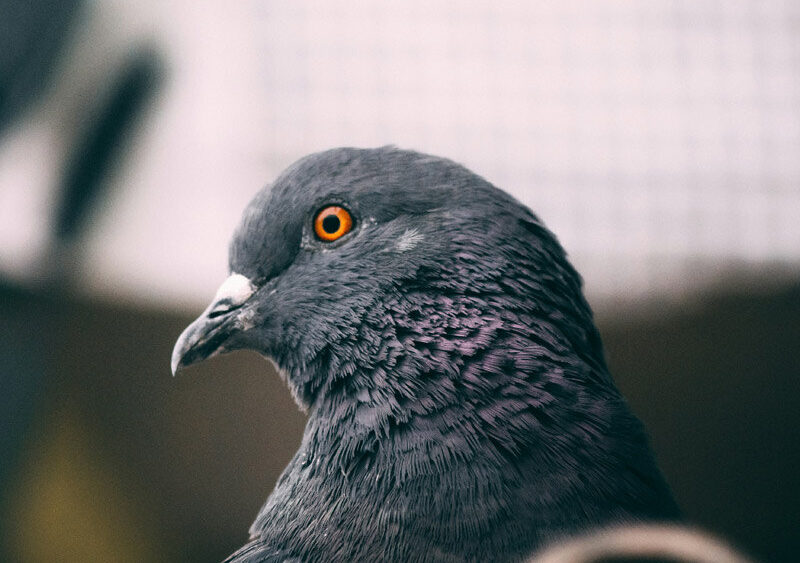
Implications for the Robotics Industry
The most immediate application of these findings lies in the field of Unmanned Aerial Vehicles (UAVs). Modern drone technology typically relies on Global Positioning System (GPS) data and fixed-lens cameras. While effective, these systems are prone to failure in environments where GPS signals are blocked or where high-speed maneuvers are required to avoid obstacles.
By mimicking the pigeon’s ocular rotation, engineers could develop "active-vision" cameras. These sensors would not be fixed to the drone’s frame; instead, they would be mounted on a gimbal-like mechanism that mimics the biological eye’s ability to scan and converge. This would allow drones to:
- Improve Obstacle Avoidance: By processing optic flow as a bird does, drones could better interpret the movement of surrounding objects, allowing for safer flight in cluttered urban environments.
- Enhance Landing Precision: Current drone landing sequences are often computationally heavy and sensitive to wind. By adopting a "stereopsis" mode, autonomous drones could calculate distance and approach velocity with higher accuracy, reducing the risk of landing gear failure.
- Reduce Computational Load: By focusing only on relevant visual data—as the pigeon does through its eye movements—onboard computers could ignore extraneous visual noise, thereby increasing the drone’s processing efficiency and battery life.
Perspectives from the Scientific Community
While the UBC study has been praised for its precision, it also highlights the limitations of current artificial intelligence. As noted by the researchers, the avian brain processes visual data in a way that is vastly more energy-efficient than current silicon-based processors.
"We are looking at a system that has been perfected by millions of years of evolution," says one researcher associated with the broader study of animal cognition. "The pigeon isn’t just seeing; it’s predicting. Every eye movement is a calculated response to the environmental flow. Integrating this level of biological intuition into software is the next great frontier in robotics."
There is a consensus among the scientific community that this study underscores the necessity of interdisciplinary collaboration. Ornithologists, who understand the "why" of animal behavior, must work closely with engineers, who understand the "how" of machine implementation. This synergy is already beginning to influence the design specifications of upcoming aerospace projects, where "biomimetic navigation" is becoming a buzzword for high-reliability drone platforms.
Broader Impact and Future Directions
The study published in Current Biology (and available via the Cell.com abstract) is expected to have a lasting impact on how we perceive animal intelligence. We often measure animal cognition by problem-solving or social interaction, but the "invisible" intelligence—the way an animal processes its sensory environment—is arguably just as complex.
Looking ahead, the research team intends to explore how other species, particularly those that navigate over long distances or through dense forests, manage their vision. The ability to isolate the specific eye movements that contribute to successful navigation could eventually lead to "bio-inspired" navigation software. Such software could be deployed not just in drones, but in autonomous automobiles, search-and-rescue robots, and deep-space probes.
As we continue to observe the natural world, it becomes increasingly clear that the solutions to many of our modern technological challenges have been flying right over our heads. The pigeon, often dismissed as a common urban dweller, has revealed itself to be a master of sensory data management. By decoding these biological signals, we are not just learning more about birds; we are unlocking the potential for machines that can navigate the world with the same fluidity, grace, and precision as the creatures that inspired them. The era of biological mimicry in robotics is no longer a distant possibility; it is a tangible, data-driven reality, defined by the steady, scanning gaze of the homing pigeon.

