


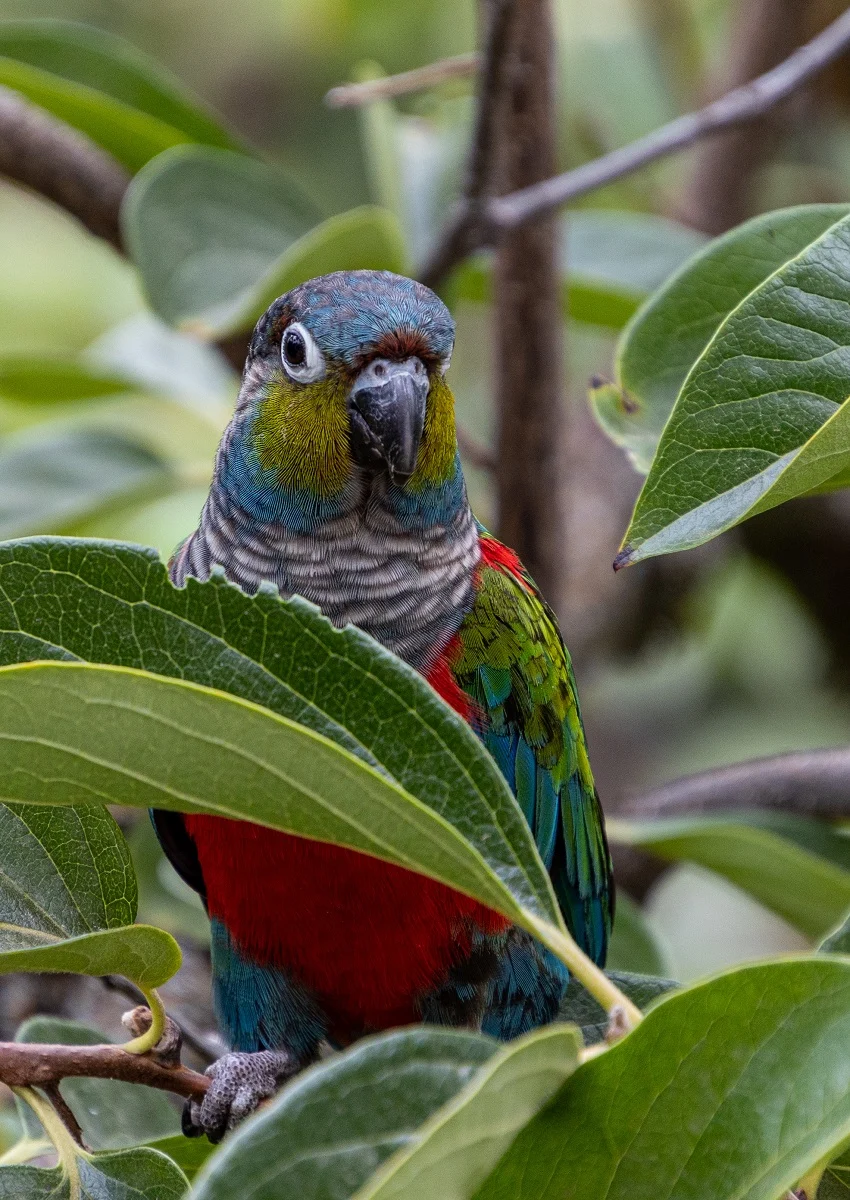
The crimson-bellied conure, scientifically classified as Pyrrhura perlata and frequently referred to as the crimson-bellied parakeet, has steadily emerged as one of the most captivating small parrot species sought after by avian enthusiasts globally. Hailing from the dense rainforests of the Brazilian Amazon basin and northern Bolivia, this species bridges the gap between wild Amazonian biodiversity and domestic companionship. As prospective pet owners increasingly look toward compact yet charismatic avian companions, understanding the nuanced requirements of the crimson-bellied conure has become essential. With a striking appearance characterized by a vivid crimson abdomen, a lifespan exceeding two decades, and a famously clownish disposition, these birds present a unique set of husbandry challenges and rewards that require careful research before adoption.
Historical Context and Natural Habitat
The geographical distribution of Pyrrhura perlata is primarily centered in central South America, with a heavy concentration in the Brazilian Amazon Basin—particularly within the state of Rondônia—as well as extending northward into Bolivia. Within these regions, the species predominantly inhabits the "terra firme" forests, which are lush, primary, and secondary rainforests characterized by an absence of seasonal flooding. Unlike wetland-dwelling avian species, these conures navigate dense canopy environments and forest edges, living in small, dynamic flocks that occasionally intermingle with related conure species such as the painted conure.
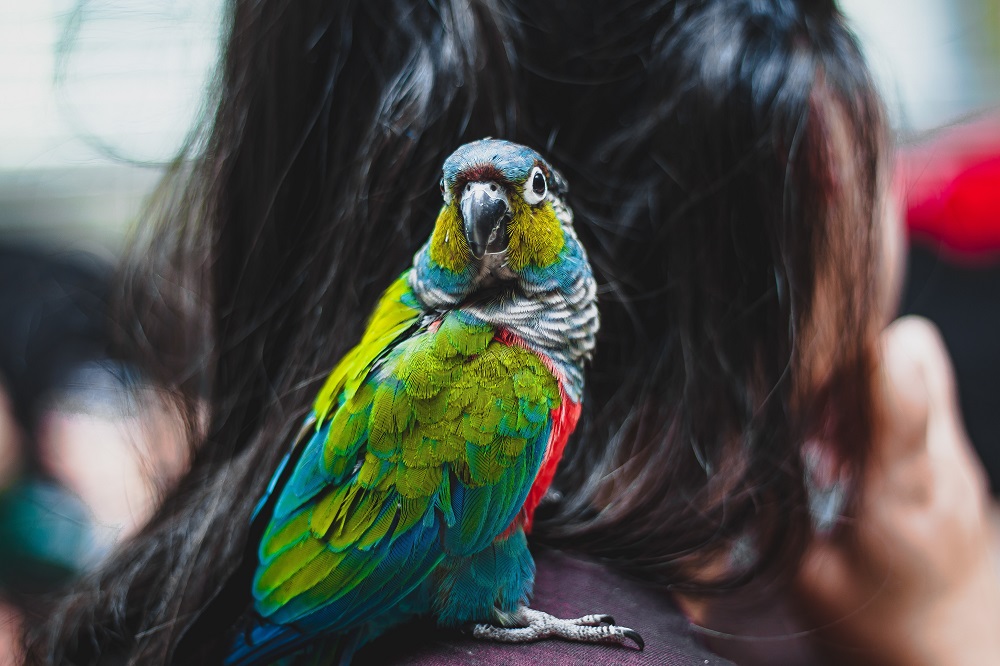
Historically, these birds have relied heavily on hollowed-out mature trees for nesting and roosting, a reliance that ties their reproductive success directly to the health of the primary rainforest. According to the International Union for Conservation of Nature (IUCN) Red List, Pyrrhura perlata is currently categorized as a species of Least Concern. However, conservation biologists note a troubling downward trend in wild populations. This decline is largely driven by ongoing deforestation within the Amazon basin, driven by agricultural expansion and logging, alongside localized trapping for the international pet trade. As wild habitats shrink, the preservation of captive breeding standards and ethical sourcing has become a paramount concern for aviculturists dedicated to protecting the species’ genetic diversity.
Physical Characteristics and Biological Development
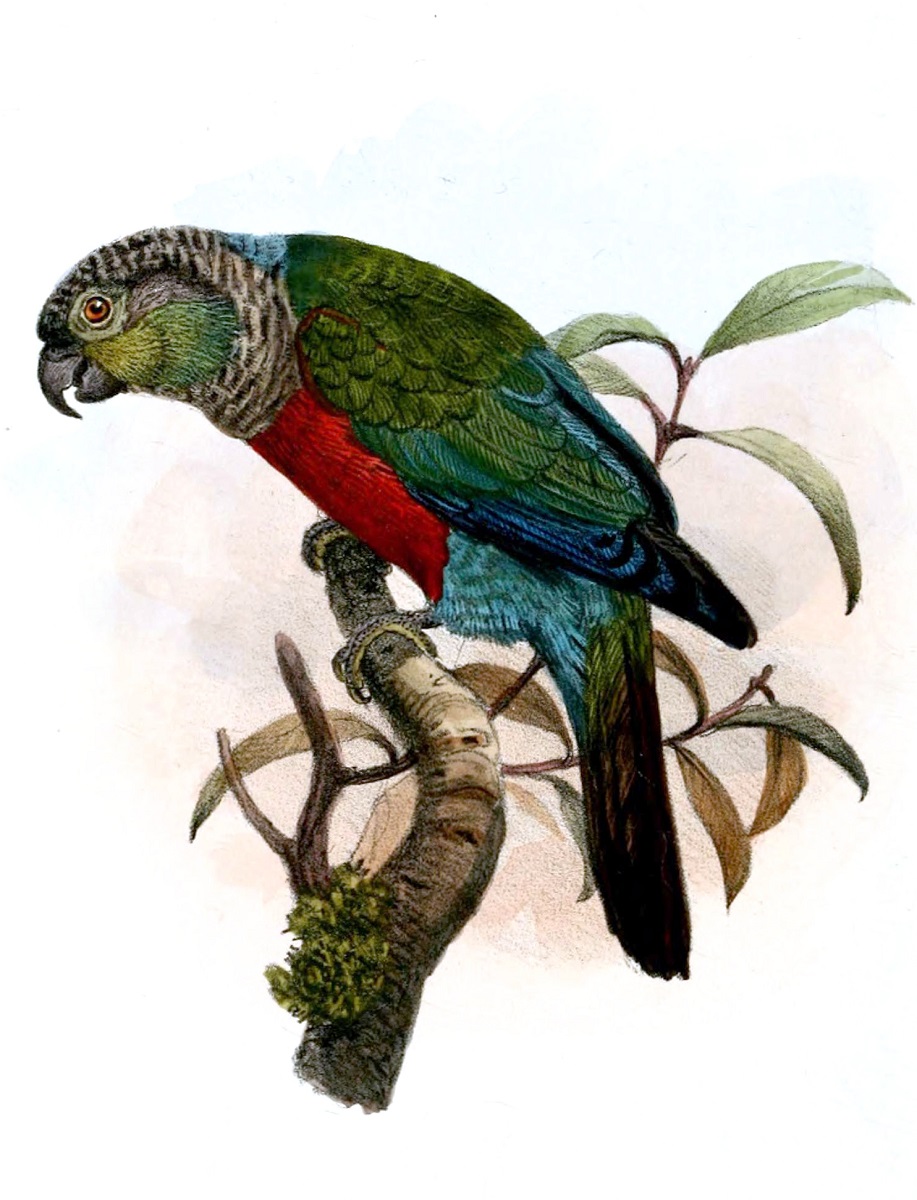
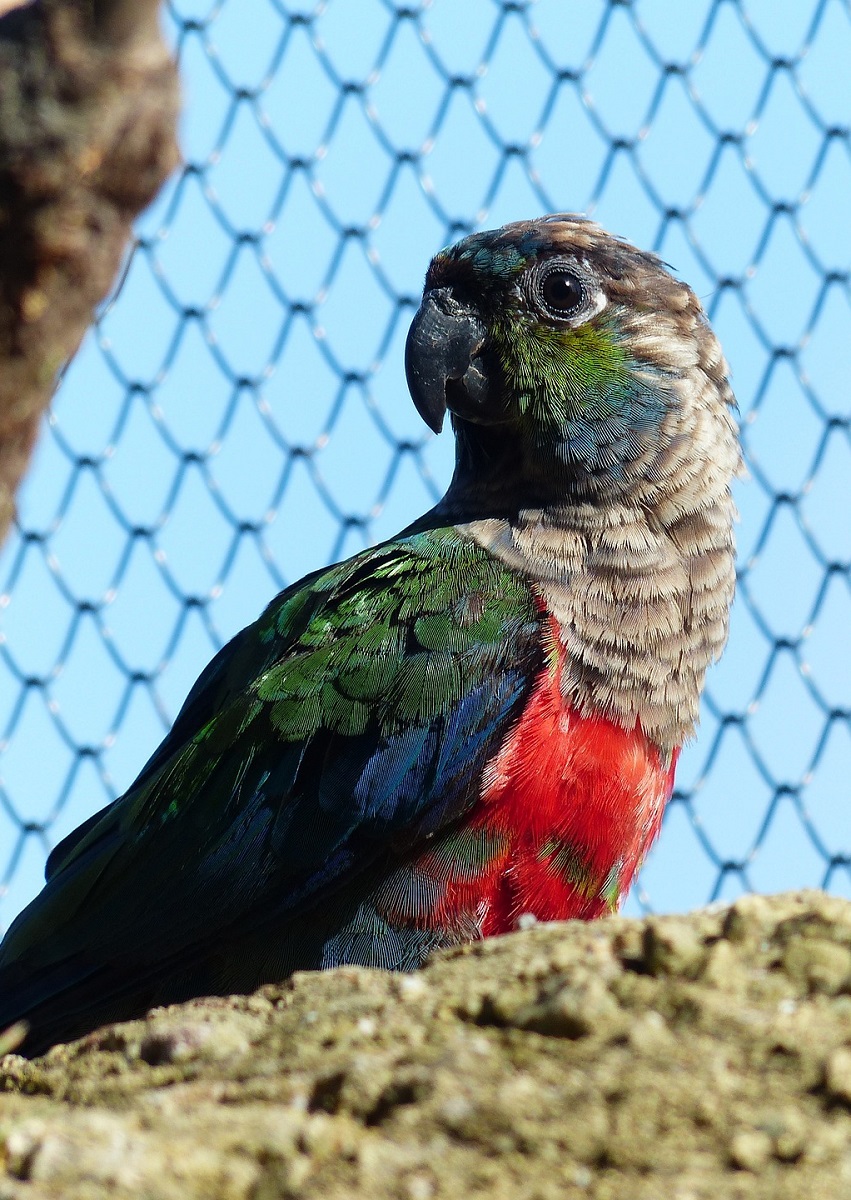
Even when evaluated against the notoriously vibrant spectrum of the parrot family, the crimson-bellied conure stands out for its extraordinary coloration. Reaching an average adult length of approximately 10 inches (25 centimeters) and a weight of up to 90 grams, this small, long-tailed parakeet possesses a distinct physical profile highlighted by a stark black beak, prominent white eye rings, and, true to its name, a brilliant red belly.
However, prospective owners must note that this signature crimson coloration is not present at hatching. It can take up to a full year for juveniles to molt and develop their vibrant adult plumage, transitioning through developmental phases where their coloration is significantly more muted. Furthermore, sexual dimorphism is entirely absent in crimson-bellied conures; males and females are visually identical. Consequently, determining the sex of an individual bird requires DNA feather or blood testing rather than physical observation, a standard procedure recommended by avian veterinarians for breeding and ownership documentation.
Nutritional Requirements and Dietary Science
In the wild, the ecological niche of the crimson-bellied conure exposes it to an immense variety of botanical resources. Because their native forests are among the most biodiverse ecosystems on earth, wild specimens have evolved to consume a varied diet consisting heavily of wild figs, seasonal fruits, flowers, and catkins. A notable behavioral adaptation observed in these and other Amazonian parrots is geophagy—the regular visiting of riverine clay licks. By consuming specific types of soil, the birds ingest essential micronutrients, minerals, and clay particles that neutralize plant toxins found in their raw diet.
Translating this complex natural diet into a domestic setting requires careful dietary management by the owner. Avian veterinarians, including specialists like Dr. Daisy, consistently caution against relying on traditional seed-based diets, which frequently lead to severe malnutrition, fatty liver disease, and shortened lifespans due to excessive fat and carbohydrate content. Instead, modern captive care mandates a balanced daily intake anchored by high-quality commercial pellets.
This staple diet must be extensively supplemented with fresh, pesticide-free vegetables daily, regular portions of safe fresh fruits, and cooked whole grains such as quinoa and whole-wheat rice. Additionally, captive birds require constant, twenty-four-hour access to fresh, clean water from multiple sources. Providing foraging toys filled with appropriate dried grains or safe foraged grasses can also simulate the natural foraging behaviors essential for psychological well-being.

Housing, Environmental Enrichment, and Safety
Despite their modest physical size—weighing under 100 grams and measuring roughly 10 inches—crimson-bellied conures possess exceptionally high energy levels. This high metabolic and psychological output dictates strict housing requirements. Avian welfare organizations recommend acquiring the largest cage feasible for the living space, establishing a strict horizontal minimum width of 36 inches (90 centimeters) unless the cage remains open during all waking hours for free-flight access. For owners unable to permit daily out-of-cage flight, an indoor walk-in aviary is often necessary to prevent muscular atrophy and stress-induced behavioral pathologies.
Cage furnishings are equally critical to long-term health. Standard plastic or smooth wooden dowel perches can cause chronic foot injuries, such as pressure sores and bumblefoot; consequently, they must be replaced with a diverse arrangement of natural wood perches varying in diameter and texture.
Furthermore, because these birds are exceptionally intelligent, intellectual enrichment is not optional. Boredom in Pyrrhura conures reliably leads to severe psychological distress, manifesting in destructive behaviors such as excessive screaming, compulsive feather plucking, stress-induced self-mutilation, and territorial aggression. Mitigation strategies require rotating a vast array of foraging toys, shreddable wooden blocks, and puzzle feeders. Because these birds are naturally curious and possess strong, inquisitive beaks, any room providing out-of-cage access must be rigorously bird-proofed—removing toxic houseplants, securing heavy metals, sealing hazardous gaps, and eliminating operational hazards like ceiling fans and open windows.
Temperament, Behavioral Profile, and Socialization
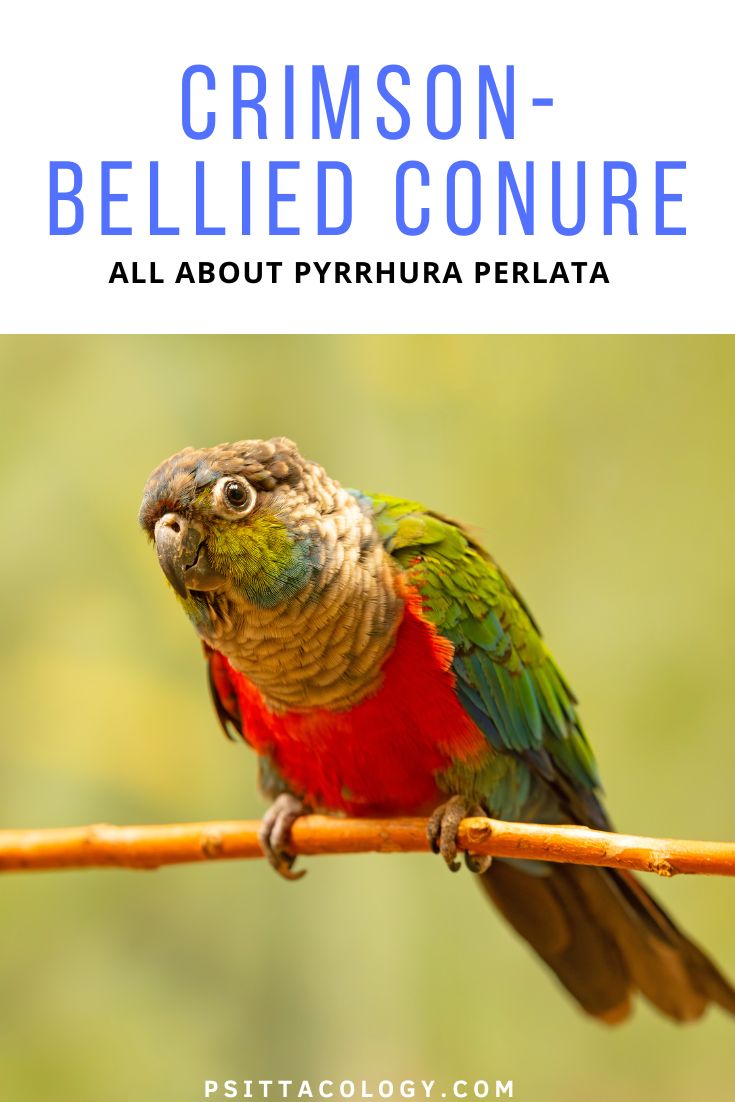
Referred to affectionately by many experienced handlers as "lovable rogues," crimson-bellied conures strike a unique balance between affectionate companionship and mischievous high jinks. When properly socialized from a young age, they bond deeply with their human family members, frequently seeking out physical contact, cuddling on shoulders, and accepting gentle head scratches. Their clownish antics provide constant entertainment, though this is invariably paired with a propensity for chewing household items, clothing, and furniture if left unsupervised.
This high level of social engagement means that acquiring a crimson-bellied conure is a long-term commitment. With proper care, optimal nutrition, and a stress-free environment, these birds routinely achieve a lifespan exceeding 20 years. This multi-decade commitment requires owners to plan for the bird’s long-term welfare, including emergency veterinary care provisions. Because these curious animals possess an uncanny knack for finding trouble, owners are strongly advised to establish a relationship with a certified avian veterinarian and maintain familiarity with basic emergency bird care protocols.
Vocalizations and Mimicry Capabilities
Acoustically, crimson-bellied conures occupy a moderate position on the avian volume scale. While they are significantly quieter than larger parrot species such as macaws or cockatoos, they are by no means silent. Their natural vocalizations include high-pitched contact calls, excited chirps, and sharp screams delivered when the bird experiences sudden excitement, fear, or frustration. Before integrating a crimson-bellied conure into a multi-family housing complex or noise-sensitive environment, prospective owners should review authentic audio recordings—such as those archived on platforms like xeno-canto—to ensure they can comfortably accommodate the species’ vocal range.
Regarding speech and mimicry, Pyrrhura conures are not celebrated talkers. While individual birds possess a biological capacity for vocal imitation, they rarely achieve the linguistic clarity or extensive vocabulary of an African Grey or an Amazon parrot. Many crimson-bellied conures never articulate recognizable human words, though they frequently display a talent for mimicking familiar household sounds, such as microwave timers, telephone rings, and whistling patterns.
Broader Implications and Avian Welfare
The rising popularity of exotic pets like the crimson-bellied conure underscores a broader ecological and ethical responsibility within the global pet trade. As consumer demand grows, the pressures of habitat destruction, climate change, and illegal wildlife trafficking place an increasingly fragile burden on wild populations in South America. Consequently, responsible acquisition—sourcing birds exclusively from captive-bred, ethical aviculturists rather than wild-caught channels—remains vital to the conservation of Pyrrhura perlata.
Ultimately, successfully keeping a crimson-bellied conure requires bridging the gap between its wild Amazonian heritage and the realities of modern domestic life. By prioritizing rigorous nutritional standards, expansive housing, robust mental enrichment, and a comprehensive understanding of the species’ behavioral and acoustic profile, owners can ensure a mutually rewarding relationship that honors the complex needs of these remarkable South American parrots for decades to come.

