


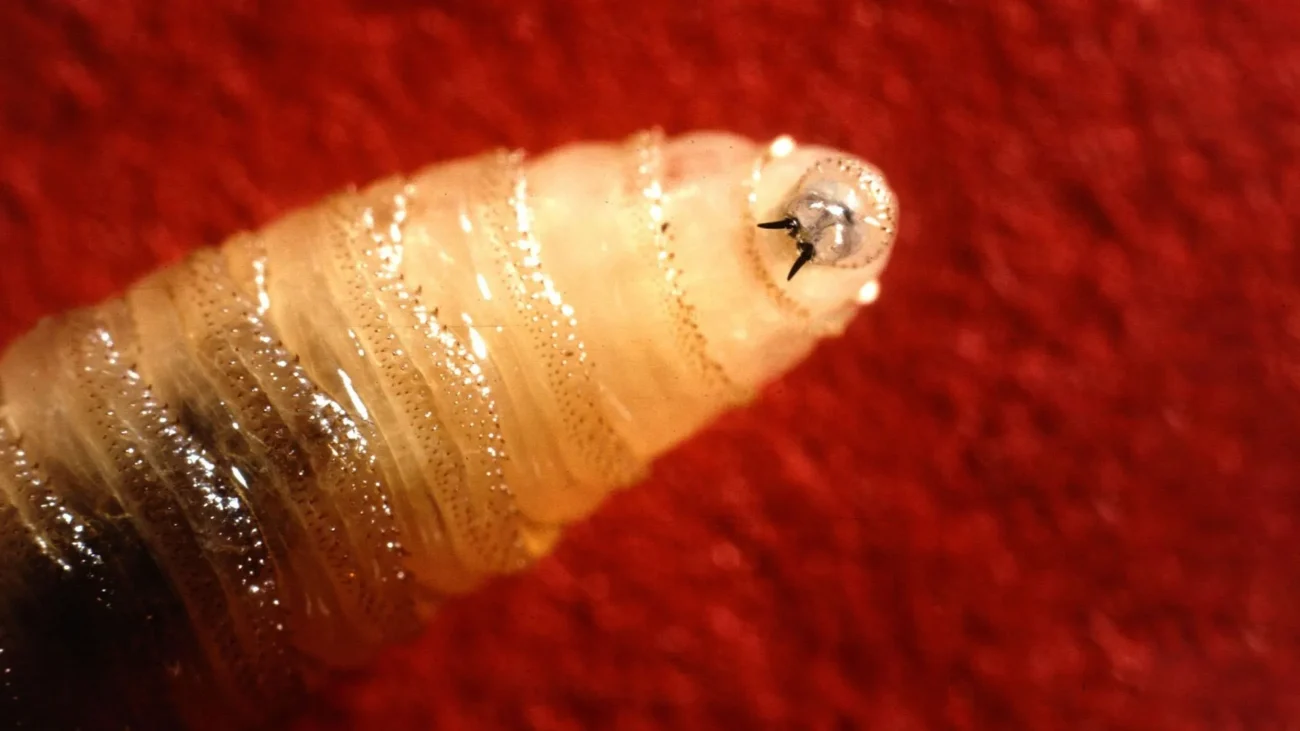
In the shifting landscape of 21st-century epidemiology, the resurrection of historical agricultural and biological threats has presented unprecedented challenges to state, federal, and local public health networks. Chief among these resurgent dangers is the New World screwworm (Cochliomyia hominivorax), a parasitic fly whose larvae possess the devastating biological capability to consume living mammalian tissue. Once nearly eradicated from the United States through a monumental mid-20th-century biological control campaign, the flesh-eating pest has crossed national borders, reestablishing a foothold in parts of Texas and New Mexico.
The geographic expansion of the parasite has prompted deep concern among livestock producers, wildlife conservationists, pet owners, and public health officials alike. In response to this rapid and unexpected northward march, researchers at the University of California San Diego (UC San Diego), in close collaboration with the County of San Diego Health and Human Services Agency (HHSA) Public Health Services, have engineered an advanced, data-driven tracking tool. This specialized regional dashboard integrates confirmed biological detections, localized environmental variables, and real-time media intelligence to forecast the trajectory of the screwworm, offering public health authorities a crucial strategic window for intervention.
Historical Context and the 1950s Eradication Campaign
To understand the gravity of the current resurgence, epidemiologists must look back to the mid-20th century, a era when the New World screwworm was an omnipresent economic and biological menace across the southern tier of the United States. During the 1950s, infestations of the parasite inflicted catastrophic financial losses upon American livestock producers, particularly throughout the Southwest. Annual damages in this region alone were estimated to range between $50 million and $100 million—a staggering sum adjusted for inflation that reflects the sheer scale of livestock mortality and hide degradation.
Faced with an agricultural crisis, federal authorities and entomologists developed what remains one of the most successful biological control campaigns in human history. Utilizing a methodology known as the sterile insect technique, scientists reared massive quantities of male screwworm flies in laboratory settings and sterilized them using ionizing radiation. These sterile males were subsequently released by the millions across known infested zones. When wild female flies mated with the sterile males, they produced zero viable offspring. Over time, this biological attrition drove the wild screwworm population into a steep, terminal decline.
By the late 20th century, the cooperative eradication efforts—bolstered by strict quarantines on animal transport and localized pesticide use—succeeded in pushing the northern range of the New World screwworm out of the United States entirely, eventually establishing a protective biological barrier stretching down to the Darién Gap in Panama. For decades, American agriculture enjoyed a relative sanctuary from the parasite, save for occasional intercepted outbreaks managed swiftly by the United States Department of Agriculture (USDA).
The Biological Threat: Why the New World Screwworm Devours Living Tissue
Unlike the vast majority of blowfly species, whose maggots exclusively consume necrotic, dead, or decaying organic material, the New World screwworm is obligatorily parasitic in its larval stage. Its life cycle begins when an adult female fly, seeking a host for reproduction, deposits her eggs along the edges of open wounds, lacerations, or natural mucosal body openings of warm-blooded mammals.
Within hours, the eggs hatch into voracious larvae that immediately begin burrowing deep into healthy, living tissue. As the larvae feed, they secrete proteolytic enzymes that liquefy host tissue, progressively deepening and widening the wound. This pathological progression creates an environment highly susceptible to secondary bacterial infections, myiasis, and systemic sepsis. Without prompt veterinary intervention, severe infestations can lead rapidly to the death of livestock, working animals, and vulnerable wildlife.
Although mammalian hosts like cattle, sheep, goats, and deer bear the brunt of the ecological impact, humans can also become accidental hosts. While human infections remain rare, they typically occur when flies deposit eggs into existing cuts, abrasions, or exposed mucous membranes. Crucially, the New World screwworm is not a contagious pathogen; it does not transmit directly from person to person through respiratory droplets or casual contact in the manner of influenza or SARS-CoV-2. Nevertheless, human cases require immediate medical extraction of the embedded larvae to mitigate localized tissue destruction and prevent disfigurement or secondary complications.
The Modern Resurgence and Rapid Northward Spread
The current crisis began taking shape as the parasite breached traditional containment zones, moving steadily northward through Central America and Mexico before crossing into the southern United States. Public health officials note that adult screwworm flies are robust fliers capable of traversing significant distances in search of hosts, while the illicit or commercial transport of infested livestock, domestic pets, and migrating wildlife has further accelerated the parasite’s geographic diffusion.
Dr. Mark Beatty, assistant medical director for the County of San Diego’s Epidemiology and Immunization Services Branch, reflected on the unexpected velocity of the current biological incursion. "We knew in 2023 that New World screwworm was going to move northward, but I wasn’t expecting it to move as fast as it has," Beatty stated. "Although the source of the infections in the U.S. is still under investigation, the fact that it’s in the U.S. is 100% clear. Once it entered Texas, we quickly saw an increase in detections. It’s in a place where it used to live, so it’s not surprising it’s taking a hold again."
The appearance of the pest in states like Texas and New Mexico has triggered a high-alert status among animal health agencies. Because the screwworm can utilize virtually any warm-blooded animal as a host, the ecological and economic implications extend far beyond the ranching sector, threatening endangered wildlife populations, domestic companion animals, and human health infrastructure in border and western regions.
Engineering a Solution: The UC San Diego and San Diego County Dashboard
Recognizing the urgent need for enhanced situational awareness, local public health practitioners approached academic engineers at UC San Diego with a specific directive: build a predictive mechanism that can anticipate where the screwworm threat might manifest next.
The resulting digital tracking tool was spearheaded by Dr. Eliah Aronoff-Spencer, professor of medicine at UC San Diego School of Medicine and an affiliate member of the UC San Diego Design Lab and Qualcomm Institute. "Our County public health partners alerted us to the need for better situational awareness of New World screwworm," Aronoff-Spencer explained. "We built a dashboard to generate regional risk profiles. This is just one example of how we are responding to County needs with a focus on real-world issues. It’s a model that has brought us great success, like the Tijuana River Crisis Environmental Dashboard."
The dashboard functions by aggregating multiple streams of heterogeneous data. It synthesizes confirmed laboratory detections of the parasite, dynamic environmental and meteorological conditions favorable to the fly’s survival and reproduction, and—in a novel methodological twist—real-time news media reports.
Currently, access to the platform is strictly restricted to authorized public health officials, veterinarians, and institutional partners directly involved in the eradication effort, though researchers harbor long-term ambitions to release a public-facing variant.
The inclusion of media intelligence represents a critical structural innovation designed to bypass the bureaucratic lag inherent in traditional public health surveillance systems. Dr. Seema Shah, medical director of the Epidemiology and Immunization Services Branch for San Diego County’s Public Health Services Department, emphasized the value of this approach. "Traditional reporting mechanisms for public health are often delayed," Shah noted. "Lab confirmation can take days or weeks. By incorporating media reports, we can identify potential threats sooner and stay one step ahead."
By tracking early signals, local health agencies can model temporal risks with greater precision. "The tool gives you a sense of where you might expect to see cases next," added Dr. Mark Beatty. "That’s helpful in determining how we should be preparing. Is the threat imminent, or do we have six months? We’re in a very concerning phase right now, and the tool backs that up."
The CDC’s Insight Net and the "Resilient Shield" Model
The creation of the screwworm risk dashboard did not occur in a vacuum; it is the direct product of an avant-garde public health infrastructure known as Resilient Shield. Operating as a core facility funded by the U.S. Centers for Disease Control and Prevention (CDC), Resilient Shield is one of 13 specialized centers comprising Insight Net, a national network dedicated to advanced disease modeling, outbreak forecasting, and rapid technical response.
The operational philosophy of Resilient Shield challenges traditional academic silos. Instead of university researchers attempting to predict what tools public health organizations might require, frontline agencies confronting real-world emergencies submit urgent, practical problems directly to the academic center. Researchers then rapidly engineer modular, scalable, and open-source technological solutions tailored to those exact operational parameters.
Dr. Seema Shah praised this collaborative paradigm, noting its exceptional utility in crisis management. "In public health, we always know our most urgent priorities, but too often we don’t have the immediate resources or in-house technical solutions to achieve them," Shah said. "The screwworm is a perfect example. It is a critical threat, but it is an issue our academic partners might never have prioritized without our direct ticket. This partnership solves our immediate problem while providing shareable, open reference designs that demonstrate exactly how public health, academia, and industry can successfully work together."
The framework’s versatility has already been proven across multiple domains. The very first request submitted to Resilient Shield involved tracking influenza patterns, an initiative co-led by Ruy Ribeiro at Los Alamos National Laboratory. For the screwworm project, Aronoff-Spencer collaborated closely with mathematical epidemiologist Dr. Natasha Martin, professor of medicine and vice chief in the Division of Infectious Diseases and Global Public Health at UC San Diego School of Medicine.
Working alongside technological heavyweights such as Google and MITRE, Resilient Shield utilizes a modular resource hub that integrates human epidemiological records, livestock movement data, environmental telemetry, weather patterns, and social listening algorithms. When a new crisis emerges, engineers can rapidly assemble bespoke digital toolkits—ranging from secure computing environments and simulation engines to AI-driven agent builders and public portals.
"Our central innovation is the true convergence of partner priorities with scalable engineering," Aronoff-Spencer asserted. "We do not build in a vacuum. Our infrastructure is built directly on the priorities dictated by our partners. In addition, because our platform is built on an open, modular architecture, every solution we develop strengthens the system and makes it more adaptable for the next public health challenge."
Multilateral Eradication Efforts and Veterinary Preparedness
While predictive dashboards provide vital situational intelligence, halting the physical spread of the New World screwworm requires an aggressive, multifaceted eradication campaign on the ground. The USDA is currently leading national mitigation efforts, combining large-scale releases of sterile insects with targeted pesticide applications and strict interstate animal quarantines designed to limit the transport of potentially infected livestock.
Concurrently, regulatory authorities are pursuing approval from the U.S. Environmental Protection Agency (EPA) for an advanced, genetically modified all-male strain of the screwworm fly currently undergoing field trials. Simultaneously, UC San Diego researchers are laying the groundwork for next-generation genetic technologies that could permanently transform the future of insect vector control.
At the regional level, local health departments are mobilizing veterinary networks to ensure comprehensive surveillance. Dr. Emily Trumbull, a veterinarian and lead for the Epidemiology Unit’s One Health Program within the California Department of Public Health and local agricultural structures, highlighted the importance of cross-disciplinary cooperation.
"We are working closely with the California Department of Food and Agriculture to connect local veterinarians with screwworm resources for surveillance in our region," Trumbull stated. "The flies can affect any warm-blooded animal, so working together with veterinarians serving livestock, pets and wildlife is critical for identifying suspect cases and preventing cases in people. The dashboard takes into account environmental factors that can help us understand how the risk to our local region is changing before the fly arrives. That’s why the dashboard is valuable."
Broader Implications and Future Outlook
The re-emergence of the New World screwworm in the United States serves as a sobering reminder of the dynamic, ever-changing nature of biological security in the modern era. Climate shifts, international trade, and ecological pressures continue to erode historical boundaries that once protected North American agriculture from tropical and subtropical parasites.
The partnership between UC San Diego and San Diego County Public Health Services—empowered by CDC funding and the Insight Net framework—demonstrates a promising template for 21st-century disease response. By uniting academic computational power, public health agency pragmatism, and cutting-edge data integration, institutions are forging proactive defenses capable of anticipating biological threats before they materialize into full-scale ecological disasters.
As federal agencies scale up sterile fly releases and local veterinarians remain vigilant for signs of myiasis, tools like the screwworm risk dashboard offer a vital strategic advantage. In the ongoing battle to protect livestock, wildlife, and human health from a flesh-eating parasite, data-driven foresight may well prove to be the most effective weapon in the modern public health arsenal.

