


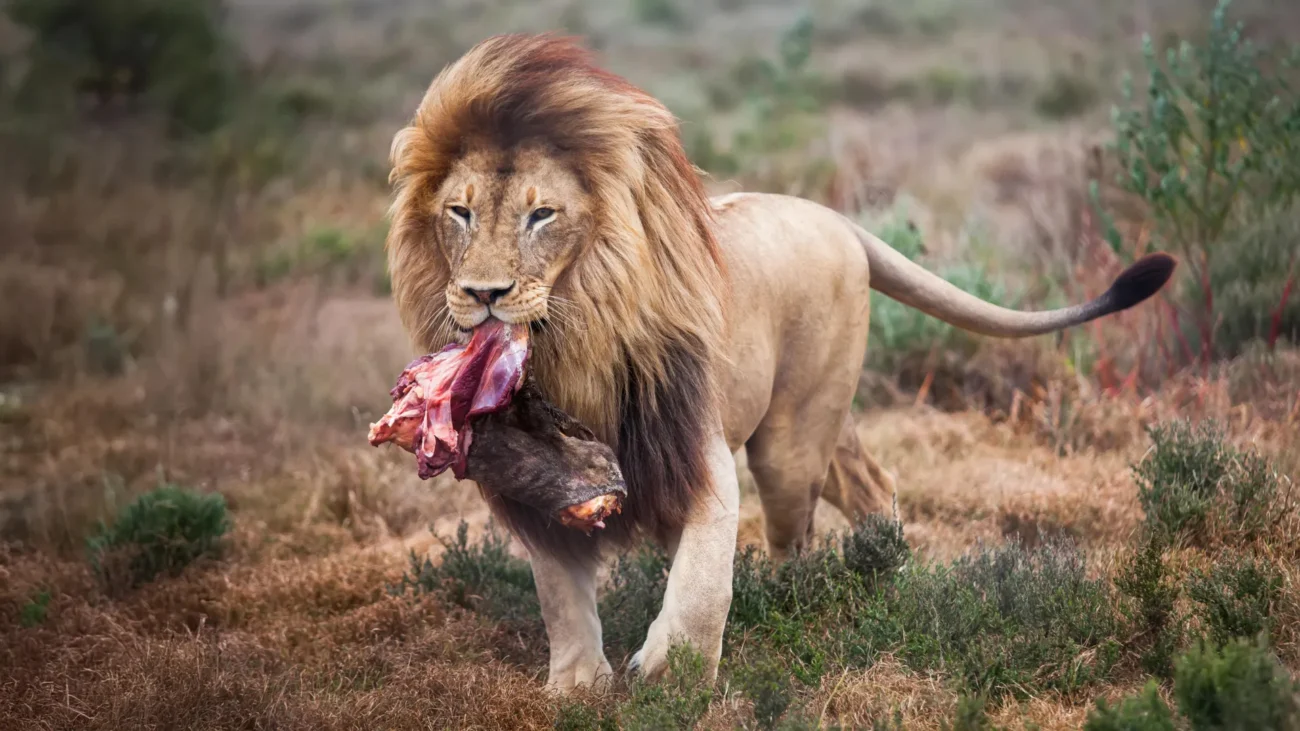
Recent findings published in the academic journal Applied Animal Behaviour Science have shed new light on the psychological and physical well-being of apex predators living in human care. Conducted through a collaborative effort between the University of Adelaide and Monarto Safari Park in South Australia, a groundbreaking study demonstrates that adult male African lions can exhibit behaviors remarkably similar to their wild counterparts when introduced to a specific dietary regimen. By integrating whole animal carcasses into a cyclical feast-and-fast feeding schedule, researchers observed profound shifts in how these majestic animals eat, rest, and move throughout their enclosure.
The research team, which included international academic collaboration from the University of Liege in Belgium, monitored a coalition of adult male African lions over an intensive three-month observation period. The core objective was to move away from conventional, highly predictable zoo feeding practices and evaluate how a more naturalistic culinary routine influences the daily lives of captive carnivores. The results offer a compelling argument for modernizing zoological husbandry standards to better accommodate the evolutionary wiring of large carnivores.
Recreating the Savanna in South Australia: The Background and Context
For decades, modern zoological institutions have shifted their focus from mere exhibition to sophisticated conservation, education, and animal welfare. Providing optimal welfare requires understanding not only the nutritional needs of a species but also its behavioral ecology. In the wild, African lions do not enjoy the luxury of a predictable, scheduled meal delivered by caretakers at precisely the same hour every single day. Instead, their lives are dictated by the harsh and unpredictable realities of the hunt.
Wild lions experience natural cycles of feast and famine. A successful hunt results in a massive consumption of food, where pride members gorge themselves on large prey such as zebras, wildebeests, or cape buffalos. This intense feeding bout is invariably followed by prolonged periods of lethargy and digestion, which can stretch across several days. Only as hunger slowly sets in do the animals resume active roaming and hunting behaviors.
In contrast, traditional zoo environments often necessitate daily feeding routines. Animals typically receive pre-portioned, bite-sized pieces of meat at consistent times. While this ensures steady nutrition and minimizes logistical challenges for animal care staff, it strips away the physical labor and psychological stimulation associated with processing large prey. Over time, researchers have questioned whether this predictability contributes to stereotyped behaviors, chronic under-stimulation, and a disconnect from natural behavioral repertoires.
To address this gap, researchers at the University of Adelaide’s School of Animal and Veterinary Sciences partnered with Monarto Safari Park—one of the largest open-range zoos in the world, situated in South Australia. They sought to determine whether reintroducing the physical challenge of whole carcasses within a discontinuous feeding cycle could bridge the gap between captive management and wild ecology.
Tracking the Pride Around the Clock: A Methodological Breakdown
The study focused on a coalition of three adult male African lions housed at Monarto Safari Park. Prior to the experimental phase, the research team established a baseline of the lions’ normal daily routines. Following this baseline assessment, animal care staff modified the feeding schedule by introducing whole animal carcasses every nine days, integrating this novel approach into the existing environment.
During the experimental window, the three lions collectively consumed approximately 200 kilograms of whole carcasses. Rather than being quickly devoured and removed, these large food items were left accessible within the habitat for up to three consecutive days. This design allowed the lions to return to the carcass repeatedly, mimicking the protracted feeding sessions observed in wild prides. Following the depletion of the carcass, the animals entered a naturalized fasting and digestive phase before the cycle repeated.
To capture the nuances of this behavioral shift, the research team deployed an advanced monitoring infrastructure. Eight high-definition infrared cameras were strategically positioned around the enclosure, providing continuous 24-hour surveillance. This technological setup generated one of the most comprehensive, uninterrupted datasets ever assembled regarding the behavioral patterns of African lions under a carcass-feeding regime.
Florence Demoulin, a visiting Master’s student from the University of Liege in Belgium, worked alongside lead author Lesia Hryhorenko and senior researchers to meticulously code and analyze the video footage. Every minute of the lions’ day—spanning feeding, resting, locomotion, and stereotypic habits—was logged and categorized.
Quantitative Findings: The Dramatic Impact of Whole Carcasses
The observational data revealed striking differences between traditional feeding days and the experimental carcass-feeding intervals. The introduction of whole animal carcasses fundamentally altered how the lions allocated their time and energy.
Most notably, the duration of time spent eating increased exponentially. On carcass-feeding days, the lions spent nearly three times as long engaged in feeding activities compared to their standard baseline routine. This was not merely a matter of swallowing more food; rather, the physical properties of the carcass required immense exertion. The lions had to tear, pull, tug, and forcefully manipulate the large animal remains to access the meat.
These physical demands provided crucial behavioral enrichment. In the wild, tearing flesh off bone engages specialized muscle groups in the neck, jaw, and shoulders, while also promoting dental health through natural abrasion. In a zoo setting, these muscle groups are rarely utilized in such a dynamic manner.
Furthermore, the feeding pattern extended across multiple sessions over the multi-day availability window. Rather than consuming a meal in a single sitting, the lions returned to the carcass periodically, mirroring the guarding and grazing behaviors seen in territorial wild coalitions.
The Ripple Effect: Rest, Digestion, and Locomotion Cycles
The behavioral alterations did not cease when the lions stopped eating. The researchers observed a clear, cascading effect on the animals’ daily rhythms that persisted long after the food was gone.
Once the initial feast concluded, the lions entered an extended phase of physical inactivity. They spent considerably more hours lying down and resting, a direct physiological response to the massive intake of food and the subsequent metabolic demands of digestion. This prolonged rest period lasted for days, matching the post-prandial lethargy documented among lions in sub-Saharan Africa.
As the fasting period progressed and digestion neared completion, a secondary behavioral shift occurred. The lions’ movement levels began to rise steadily. Their locomotion within the enclosure increased day by day, culminating just as the next feeding cycle approached.
This predictable triad of intense feeding, prolonged rest, and gradually escalating activity formed a robust feast-and-fast rhythm. According to the research team, this cycle is the closest approximation of natural lion ecology ever successfully replicated and documented in a managed facility.
Investigating Anticipation and Stereotypic Pacing
One of the primary concerns among animal welfare scientists regarding modified feeding schedules is the potential increase in anxiety, frustration, or stereotypic behaviors. Pacing—a repetitive, purposeless walking pattern often observed in captive carnivores—is frequently used as an indicator of psychological stress or intense anticipation.
To determine whether the unpredictable nature of the feast-and-fast schedule caused undue stress, the researchers closely monitored pacing frequency throughout the three-month study. Interestingly, the data challenged common assumptions about hunger and stereotypic behavior.
While pacing showed slight fluctuations over the course of the study, it did not consistently increase as the duration of the fast lengthened. The lions did not become increasingly frantic or stressed as days passed without food. Instead, the most significant spikes in pacing occurred around highly predictable, routine events. Specifically, the animals paced more frequently in anticipation of animal care staff arriving or when they were being shifted between different holding areas of their habitat.
This finding suggests that pacing in these animals was more strongly linked to temporal conditioning and environmental cues—such as keeper schedules—than to physiological hunger. Furthermore, the researchers noted that the introduction of whole carcasses did not lead to any observable increase in aggression or disruption within the social stability of the male lion coalition. The animals shared the large food resources harmoniously, mirroring the cooperative dynamics of wild coalitions.
Expert Perspectives and Methodological Implications
The study’s authors emphasize that the implications of this research extend far beyond the dietary habits of a single pride of lions at Monarto Safari Park. Lead author Lesia Hryhorenko highlighted the profound shift in perspective required when evaluating animal welfare in managed care.
"Providing whole carcasses changes much more than the nutritional content of the diet," Hryhorenko stated. "It gives lions the opportunity to engage in behaviors such as tearing, pulling, and manipulating food over extended periods, which are important components of their natural feeding ecology."
By moving beyond simple nutritional metrics, zoos can begin to address the psychological and behavioral needs of large carnivores in a more holistic manner.
Associate Professor Alexandra Whittaker, a co-author on the study from the University of Adelaide, pointed out a critical methodological takeaway for future zoological research. She noted that many traditional studies evaluate welfare based solely on immediate observations captured right after a stimulus, such as a feeding event, is introduced.
"Many zoo studies focus only on what happens immediately after food is provided," Associate Professor Whittaker explained. "Our results show that feeding schedules can influence behavior for days afterwards, making it essential to look at behavioral patterns across the entire feeding cycle rather than a single feeding event."
This insight suggests that short-term observational studies may miss critical delayed effects, highlighting the necessity for longitudinal research designs in modern animal management.
Broader Impact and Future Directions for Zoological Management
The successful implementation of the feast-and-fast carcass feeding schedule at Monarto Safari Park offers a practical blueprint for other zoological institutions worldwide. As modern animal husbandry continues to prioritize ethological well-being—ensuring animals are not only healthy but are also able to express natural behaviors—modifying feeding protocols represents a powerful tool for enclosure managers.
Implementing such routines, however, requires careful logistical planning. Sourcing whole animal carcasses, managing biosecurity protocols, and ensuring equitable access for all members of a social group demand close collaboration between veterinarians, curators, and animal care staff. Yet, the behavioral dividends—reduced boredom, enhanced physical conditioning, and the restoration of natural activity cycles—significantly outweigh the operational complexities.
Looking ahead, the research team suggests that future studies should build upon these behavioral findings by incorporating physiological measurements. By combining continuous video monitoring with biomarkers of stress and metabolism—such as fecal cortisol metabolite analysis or heart-rate telemetry—scientists can obtain an even more granular understanding of how dietary strategies influence internal health and overall welfare.
Ultimately, this Australian study bridges the gap between the wild savannah and the modern safari park. By honoring the evolutionary heritage of African lions and allowing them to feast, rest, and roam according to nature’s ancient rhythm, zoological facilities can offer a higher quality of life for the magnificent animals in their care.

